Maximizing Coverage With Wide-Angle Lenses for Indoor and Outdoor Surveillance Systems
You can cover more area with fewer cameras by using wide-angle lenses, cutting costs and minimizing blind spots indoors and out. They’re ideal for lobbies, driveways, and parking lots, offering up to 180-degree views. While edge distortion occurs, modern systems correct it digitally without losing clarity. Look for dewarping, weather resistance, and IR support. Position thoughtfully to capture key zones. You’ll find setup is faster, and long-term maintenance drops-especially when the right lens matches your space. There’s more to evaluate about optimizing each environment effectively.
Notable Insights
- Wide-angle lenses provide up to 180-degree views, reducing blind spots and the number of cameras needed for full coverage.
- Position cameras at entry points, hallways, or perimeters to maximize field of view while minimizing edge distortion.
- Use dewarping software and image correction to maintain facial and object recognition accuracy across the wide field.
- Pair wide-angle cameras with WDR or supplemental lighting to handle challenging indoor and outdoor lighting conditions.
- Choose surveillance-grade lenses with weather resistance, vandal protection, and IR compatibility for reliable indoor and outdoor performance.
Why Wide-Angle Lenses Cut Blind Spots and Save Money
While standard lenses often leave gaps in coverage, wide-angle lenses give you a broader field of view-sometimes up to 180 degrees-so you can monitor more area with fewer cameras. You’ll reduce blind spots markedly, meaning intruders are less likely to find hidden zones. This directly boosts cost efficiency, since fewer cameras mean lower equipment and maintenance expenses. You also gain installation simplicity-less wiring, fewer mounts, and quicker setup save labor time and reduce complexity. With wide-angle models, you get solid coverage for large rooms, driveways, or entryways without over-deploying devices. Just remember: extremely wide views can distort edges, so position cameras carefully. Overall, you’re investing in smarter coverage that balances performance and savings.
Where to Use Wide-Angle Lenses: Indoor and Outdoor Security
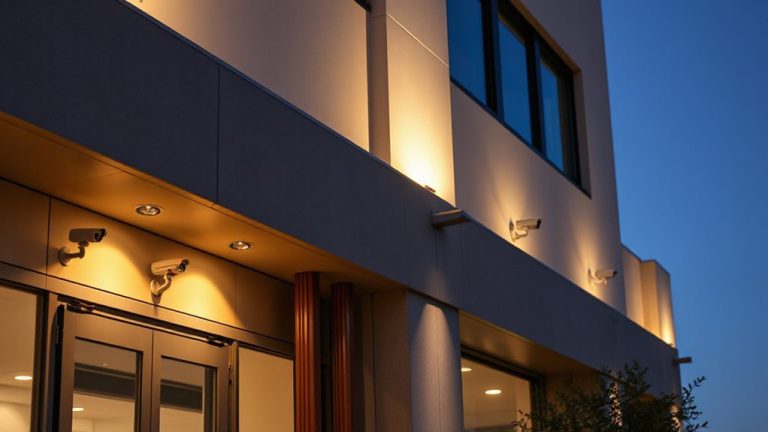
Where should you place wide-angle lenses for maximum effectiveness? Indoors, use them in open areas like lobbies, hallways, and warehouses where camera placement can cover broad spaces with fewer units. Outdoors, position them at entry points, parking lots, and perimeter boundaries to monitor large zones at once. Proper camera placement guarantees full coverage without excessive distortion at edges. Consider lighting conditions-wide-angle lenses capture more ambient light but may struggle in uneven lighting, so pair them with supplemental lighting or models with wide dynamic range (WDR) to balance bright and dark areas. While they reduce blind spots, they can reduce detail at distances, so avoid using them where facial recognition is critical unless complemented by narrower-field cameras. Plan placement carefully to maximize efficiency and maintain image clarity across all lighting conditions. For optimal results, choose cameras with high-resolution sensors that enhance image detail even at wide angles.
Top Real-World Uses for Maximum Surveillance Coverage
You already know where to place wide-angle lenses for broad indoor and outdoor coverage, but now it’s time to see how they perform in real-world scenarios. These lenses excel in environments where facial recognition and motion tracking are critical. Whether monitoring entryways, parking lots, or retail floors, wide-angle cameras capture more data with fewer blind spots. For optimal indoor use, consider models with high-resolution sensors and best indoor security cameras that integrate seamlessly with wide-angle systems.
| Application | Benefit | Consideration |
|---|---|---|
| Retail Stores | Covers aisles, entryways | Overlap helps facial recognition |
| Parking Garages | Tracks motion across zones | Low light may affect clarity |
| Office Lobbies | Monitors multiple entrances | Calibration needed for focus |
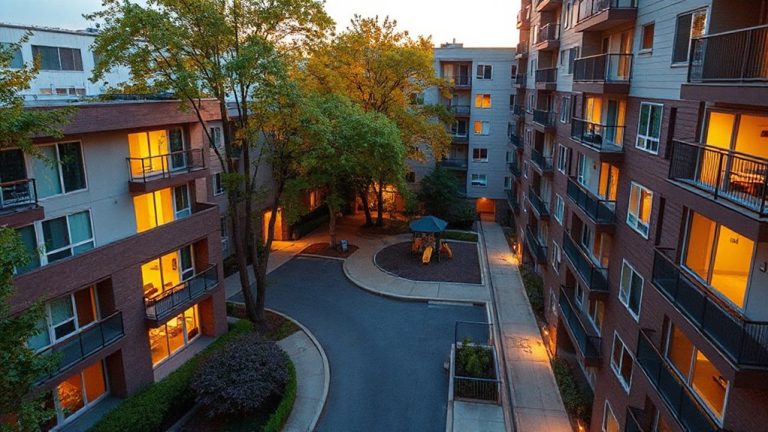
| Residential Driveways | Detects perimeter movement | Weather resistance required |
| Warehouses | Reduces camera count | Storage needs increase with coverage |
They’re practical for home security and large facilities alike, offering scalable solutions with measurable improvements in detection accuracy and response time.
How Wide-Angle Lenses Work: And Why Distortion Isn’t a Dealbreaker?
Because wide-angle lenses capture a broader field of view than standard lenses, they let you monitor larger areas with fewer cameras, which can lower installation costs and reduce blind spots. These lenses work by bending light more aggressively using optical physics principles, allowing more of the scene to reach the camera’s sensor. You’ll often see some edge distortion, especially in fisheye models, but it doesn’t ruin the core functionality. That’s because modern systems account for this during sensor alignment, ensuring critical details remain clear and usable. While distortion near the edges can stretch objects, central areas stay accurate for identification. Most video management software also corrects geometry automatically. Don’t let distortion scare you off-focus instead on placement, resolution, and lens quality. With proper setup, wide-angle lenses offer unmatched coverage without sacrificing reliability. When used outdoors, pairing wide-angle coverage with best outdoor security cameras ensures durable, comprehensive surveillance in all weather conditions.
Fixing Edge Distortion Without Losing Image Clarity
While edge distortion is common in wide-angle lenses, especially with fisheye models, you don’t have to sacrifice image clarity to correct it. Modern systems use image correction algorithms that reshape distorted edges while preserving details. You’ll want a camera that balances clarity retention with accurate geometry, so check specs for real-time dewarping. Some models process correction on-device, reducing strain on your NVR. Others rely on software, which may affect playback smoothness. Look for lenses with low chromatic aberration and sharp center-to-edge focus. Higher-resolution sensors help, too-12MP or more maintains clarity after correction. Test footage before buying, especially at corners. While digital fixes help, over-processing can blur edges, so balance is key. Built-in correction saves time and storage, compared to post-processing. For best results, pair solid hardware with smart software, ensuring you get both wide coverage and usable detail where it matters most.
Must-Have Features in a Surveillance-Grade Wide-Angle Lens
Image correction helps manage distortion, but it’s only one part of what makes a wide-angle lens effective for surveillance. You also need durable construction that stands up to real-world conditions. Look for lenses with solid weather resistance so they perform in rain, snow, or extreme heat without foging or degrading. For outdoor or public spaces, vandal proofing is essential-metal housings and reinforced glass resist tampering and impacts. Optical quality matters too; choose lenses with low chromatic aberration and consistent edge-to-edge clarity. Infrared compatibility guarantees night vision remains sharp across the full field of view. While higher-end models cost more, they often save money long-term by reducing maintenance and replacement. Always match the lens to your camera’s sensor size for best results. Prioritize these features to guarantee reliable, clear coverage no matter where you install the system.
On a final note
You cut blind spots and save money with wide-angle lenses by covering more area per camera. They work well indoors and out, especially in tight or open spaces needing broad views. Distortion at edges is manageable with smart placement and software correction. Look for lenses with high resolution, low-light performance, and weather resistance. While wider views mean some detail loss at the edges, the trade-off favors fewer cameras and lower installation costs.