Maximizing the Use of Natural Surveillance Opportunities in Apartment Complexes
You can maximize natural surveillance by designing your apartment complex so visibility is clear day and night. Place windows to overlook entrances and walkways, keep landscaping low-under 30 inches-and prune trees above 8 feet. Use straight, well-lit paths with 300–500 lumen lighting and motion sensors to boost safety. Combine these with resident watch groups to cut opportunistic crime by up to 30%, especially when planned during initial design to save on retrofit costs. Key features include unobstructed sightlines, LED lights, and open common areas where eyes gather naturally-simple, proven steps that work best when integrated early and maintained consistently. There’s more to how each element multiplies the next.
Notable Insights
- Position windows at eye level to maintain clear views of entrances, paths, and common areas.
- Keep landscaping low and well-maintained to eliminate hiding spots near buildings and walkways.
- Design straight, well-lit walkways that encourage foot traffic and visibility between units and amenities.
- Use consistent, bright lighting (300–500 lumens) with motion sensors in key outdoor areas.
- Integrate natural surveillance into initial planning to reduce costs and maximize long-term security.
What Is Natural Surveillance: and Why It Stops Crime Before It Starts
Safety begins with sight-natural surveillance relies on clear visibility to deter crime before it happens. You don’t need cameras or guards; just open sightlines that let people see and be seen. When potential offenders know they can be easily spotted, the risk of getting caught increases-this is visual deterrence in action. Well-lit pathways, trimmed landscaping, and unobstructed windows all contribute. Studies show these features reduce opportunistic crime by up to 30%. You also build neighborhood trust when residents naturally watch out for one another. This social cohesion strengthens safety over time. Natural surveillance works best when planned into layout and design-costing little to implement if considered early. Retrofitting may require pruning shrubs or repositioning furniture, usually under $200. It’s simple, evidence-based, and effective. You’re not just improving views-you’re creating a safer environment through awareness and presence.
Place Windows to Boost Resident Watchability
When designed with intent, your windows can do more than let in light-they become active tools for security. Proper window placement encourages residents to naturally monitor shared spaces, increasing the chance of spotting suspicious activity. You should position windows so they offer clear views of entrances, parking areas, and stairwells. This is where sightline optimization comes in-removing obstructions like landscaping or architectural barriers guarantees unbroken visibility. Studies show that apartments with well-placed windows experience fewer break-ins, as potential offenders avoid areas where they’re easily seen. Avoid placing windows too high or at sharp angles, which limit visibility. Instead, align them at seated and standing eye levels. Though this may require minor layout adjustments during planning, the long-term safety benefits outweigh the costs. Strategic window placement is a low-cost, high-impact method to strengthen community security through passive observation.
Design Walkways That Invite Foot Traffic and Observation
You can shape how people move through an apartment complex just by how you design the paths they walk on. Well-planned walkways encourage foot traffic flow, increasing natural surveillance as residents pass by. Use walkway symmetry to create predictable, balanced routes-this not only looks organized but also helps people move efficiently. Straight, wide paths with clear signage guide residents naturally toward common areas, parking, and building entrances, reducing detours and isolated spots. Avoid overly winding designs that might discourage use or create blind corners. Paved surfaces with good lighting make walkways more inviting at night, boosting both safety and use. You’ll get better observation from more eyes when paths feel convenient and open. Prioritize direct connections between units and shared spaces to maintain steady movement. Proper design supports consistent visibility, making it easier to spot anything unusual without extra security costs.
Keep Landscaping Low to Eliminate Hiding Spots
While well-trimmed landscaping enhances curb appeal, keeping plants low near walkways and building entrances also plays a critical role in safety by removing potential hiding spots. You should keep shrubs under 30 inches tall and trees pruned above 8 feet to maintain clear sightlines. Pruning foliage regularly guarantees visibility isn’t blocked and deters loitering. Tall plants near windows or entryways can shield suspicious activity, so replacing them with low-growing ground covers helps. Securing perimeters with strategic plant placement makes it harder for intruders to approach unseen. Thorny or dense bushes may deter climbers but avoid overcrowding. Maintaining this balance improves natural surveillance without sacrificing aesthetics. Landscaping this way costs little more than routine maintenance, typically $50–$150 monthly per property. It’s a smart, evidence-backed trade-off: minor effort for markedly improved safety and resident awareness.
Light Pathways and Entrances After Dark
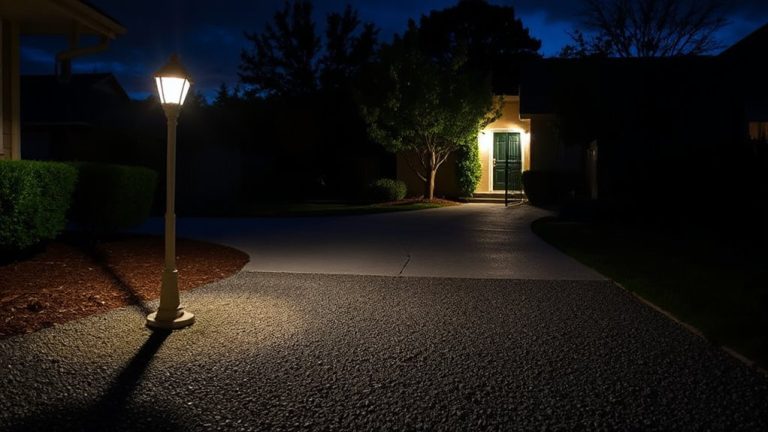
Because visibility drops sharply after sunset, lighting pathways and entrances becomes essential for deterring crime and helping residents feel secure. You should install bright, consistent lighting along walkways, stairs, and building entrances to guarantee clear visibility. Motion lighting works well for side paths or rear exits-these lights activate when someone approaches, saving energy and drawing attention to movement. Combine this with security signage to amplify deterrence; signs warning of monitored areas make intruders think twice. Use LED fixtures for longer life and lower utility costs, aiming for 300–500 lumens per light. Avoid dark corners or uneven coverage, which create blind spots. Place lights at regular intervals, about 15–20 feet apart, and shield them to reduce glare. Proper maintenance ensures reliability-replace bulbs promptly and clean fixtures quarterly. With smart placement and quality equipment, you enhance safety without overspending. For reliable performance, consider installing best wireless motion sensor lights.
Create Common Areas Where Eyes Naturally Gather
How can apartment living feel safer without relying solely on cameras or alarms? You can leverage natural surveillance by designing common areas where eyes naturally gather. These spaces encourage residents to interact, increasing passive oversight. Community gatherings in well-placed shared amenities make your complex feel more secure through constant activity.
| Area Type | Pros | Consideration |
|---|---|---|
| Courtyards | Encourages social interaction | Needs regular maintenance |
| Rooftop decks | Offers wide visibility | Higher initial cost |
| Shared lounges | Supports community gatherings | Requires indoor lighting |
| Poolside spaces | Draws consistent traffic | Supervision needed for safety |
Choose layouts where foot traffic and visibility overlap. When residents use shared amenities daily, natural surveillance becomes a reliable safety layer-simple, effective, and built into everyday life.
Pair Natural Surveillance With Active Resident Watch Groups
What if the people around you could be your most effective safety feature? When you pair natural surveillance with active resident watch groups, you boost security through visibility and involvement. You benefit from neighbors who know what’s normal, spot suspicious activity, and respond quickly. Community patrols increase foot and vehicle presence, especially during high-risk hours, making crime less likely. These efforts support trust building, turning isolated units into connected, vigilant blocks. You don’t need expensive tech-just organized communication and scheduled walks. Studies show neighborhoods with regular patrols report fewer break-ins. You may invest time, not money, meeting monthly and sharing contact lists. There’s a balance-avoid overstepping or profiling. With clear guidelines and cooperation, you create a safer environment. You’re not just watching; you’re building a safer community together.
On a final note
You can reduce crime by designing spaces where residents naturally see and are seen. Place windows to overlook walkways, keep landscaping short, and light entrances well. Shared areas and foot traffic increase observation. Pair these with active watch groups for best results. These strategies cost little, work over time, and boost safety when planned together.