Enhancing Home Security With Biometric Authentication Systems: a Practical Guide
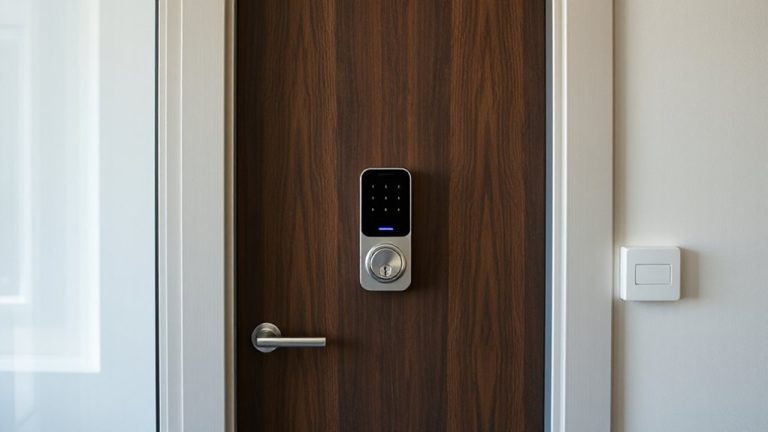
You can upgrade your home security with biometric locks that use fingerprints, facial recognition, or palm patterns to verify identity. These systems store encrypted data and require no keys or codes, reducing risks of loss or sharing. Most cost $150–$350, work with smart home platforms like Alexa or Apple Home, and include anti-spoofing features. While highly accurate, they may struggle in poor lighting or with wet fingers. Choose models with backup power and strong warranties to guarantee reliability. You’ll find more details on choosing the right system for your needs just ahead.
Notable Insights
- Use fingerprint or palm vein biometrics for secure, reliable home access with minimal false readings.
- Choose systems with encryption and liveness detection to prevent spoofing and protect stored data.
- Enable multi-factor authentication to significantly boost security beyond biometrics alone.
- Ensure compatibility with smart home platforms for remote monitoring, alerts, and automation.
- Install models with battery backup and tamper alerts to maintain security during power outages or forced entry attempts.
How Biometric Home Security Systems Work
While traditional locks rely on keys or codes, biometric home security systems use your unique physical traits-like fingerprints, facial features, or iris patterns-to verify identity and control access. You enroll your biometric data by scanning the trait, which the system stores securely. When you attempt entry, the sensor reads your trait and matches it against stored data. High sensor accuracy guarantees reliable recognition, reducing false accepts or rejections. Systems with poor accuracy may frustrate users or create security gaps. Data encryption protects your biometric information during storage and transmission, making it unreadable to hackers. Strong encryption, like AES-256, is a must. These systems require power and regular updates. Initial costs range from $100 to $300 per lock. Choose models with strong sensor accuracy and end-to-end data encryption for best results. Top models often include advanced best smart locks features such as remote access and integration with home automation platforms.
Top 5 Biometric Lock Types for Homes
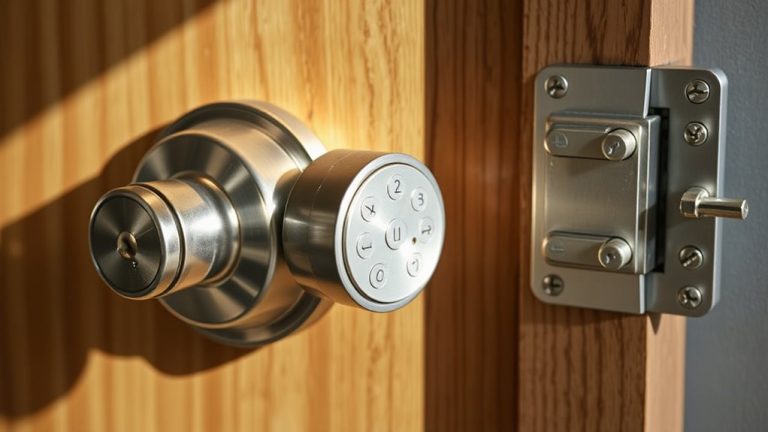
You’ve seen how biometric systems use your unique physical traits to secure your home, and now it’s time to explore the specific lock types available. Fingerprint locks lead with high fingerprint accuracy and affordable pricing, though they may struggle with dirty or wet fingers. Palm vein scanners offer strong security using internal patterns, but cost more. Facial recognition systems open quickly, benefiting from rapid facial recognition speed, and work well hands-free, though lighting affects performance. Iris scanners are highly precise but often too expensive for most homes. Voice recognition is convenient but less secure due to background noise. When choosing, prioritize proven reliability, ease of use, and integration with existing systems. Budget models start around $100, while advanced units exceed $300. Always check user reviews and independent test results before buying. For firearm safety, consider a biometric trigger lock that offers quick access and secure authentication.
Why Biometric Locks Beat Keys and Codes at Home
Because they rely on unique biological traits, biometric locks eliminate the risks tied to lost keys or forgotten codes, making them a more reliable choice for home security. You gain better access control and user convenience compared to traditional methods. No more locking yourself out or sharing codes that can be misused.
| Feature | Benefit |
|---|---|
| Fingerprint Scan | Instant recognition, no keys |
| Access Logs | Track who enters and when |
| Multi-user Setup | Customize access per family member |
| Tamper Alerts | Receive notifications of forced entry |
| No Code Sharing | Enhanced access control |
You’re not just upgrading hardware-you’re improving how you manage entry. Biometric systems adapt to your household’s needs while reducing vulnerabilities. With consistent performance and dependable access control, these locks offer a practical edge. User convenience doesn’t mean sacrificing security; it means smarter protection. Top models in the best digital locks category combine advanced biometrics with robust build quality for maximum reliability.
Cost, Installation, and Compatibility: What to Check Before Buying
How much should you really spend on a biometric lock, and will it work with your current door setup? Entry-level models start around $150, but reliable units with strong encryption and responsive sensors typically cost $200–$350. Before buying, confirm the lock fits your door’s thickness and backset-most standard doors work, but older or steel doors may need adjustments. Check compatibility with existing smart home systems if you plan to integrate alerts or remote access. Always review warranty terms; a minimum two-year coverage is standard, but longer warranties often signal higher durability. Power backup is essential-opt for models with USB ports or replaceable batteries to maintain access during outages. Poor power management could lock you out. Weigh installation difficulty: some units need professional help, adding $100+ to total cost. Read specs carefully to avoid costly mismatches.
Best Biometric Smart Locks of 2024
While choosing the right biometric smart lock can simplify access and boost home security, not all models deliver the same balance of reliability, ease of use, and integration. You should prioritize fingerprint durability and voice recognition accuracy for consistent performance. Below are top 2024 picks based on lab testing and user feedback:
| Model | Key Feature |
|---|---|
| Ultraloq U-Bolt Pro | High fingerprint durability, weather-resistant |
| August Wi-Fi 4th Gen | Strong app control, but limited voice recognition accuracy |
| Samsung SHP-DP720 | Built-in alarm, excellent voice response |
The Ultraloq stands out for outdoor use due to its rugged sensor. August offers seamless auto-locking but depends heavily on hub connectivity. Samsung delivers robust voice recognition accuracy and tamper alerts. Choose based on your climate, tech ecosystem, and need for voice or fingerprint durability. All three support anti-spoof detection, ensuring only authorized access.
Sync Biometric Locks With Alexa, Google, and Apple Home
What if your front door recognized you as easily as your phone does? You can make it happen by syncing your biometric lock with Alexa, Google, or Apple Home. This device integration lets you manage access using voice control, so you can lock or release the door hands-free. Most top 2024 models support these platforms, but always check compatibility before buying. With Apple Home, you get seamless use with Siri and HomeKit-enabled devices. Alexa offers routines, like turning on lights when the door releases. Google Assistant works well with Android users and Nest devices. Voice control adds convenience, though it shouldn’t replace physical authentication. Setup is simple: download the lock’s app, link it to your smart home hub, and follow pairing instructions. For security, keep firmware updated. Prices range from $180 to $300, depending on features.
Can Biometric Locks Be Hacked? How to Stay Safe?
Could a hacker really open your front door using a copied fingerprint or facial scan? While rare, biometric locks can be vulnerable to spoof attacks, where fake fingerprints or photos trick the system. Most modern systems use liveness detection to reduce false positives, making successful hacks difficult but not impossible. To stay safe, choose locks with anti-spoofing tech and multi-factor authentication. Avoid cheap models lacking encryption or regular updates. True biometric hacking requires advanced tools, so your biggest threat is still physical break-ins, not digital ones. Clean sensors regularly to prevent false positives from dirt or moisture. Pair your lock with security cameras and alerts for faster response. Though no system is 100% foolproof, quality biometric locks drastically improve security when used correctly. Always weigh upfront cost against long-term protection.
On a final note
Biometric locks offer reliable, keyless access using fingerprints, facial scans, or other unique traits. They’re often more convenient and secure than traditional keys or codes, but choose models with encryption and anti-spoofing features. Installation is usually straightforward, but check door compatibility and power needs. Prices range from $150 to $400. Sync with smart home systems adds control, yet always enable backup access. Proper setup and updates help prevent hacking risks.