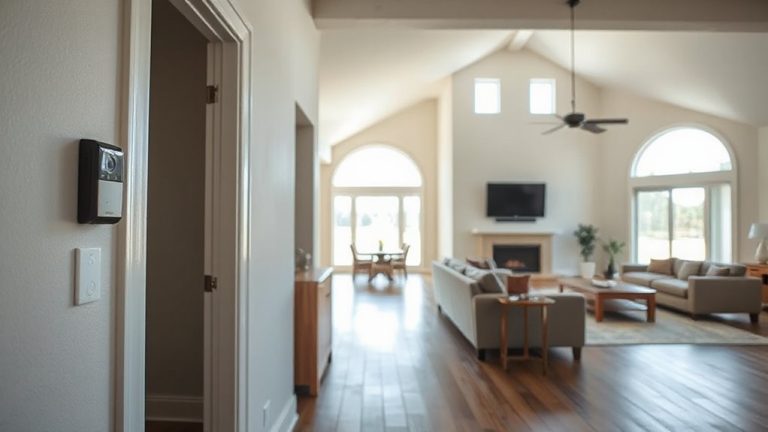
The Role of Dark Corners in Enabling Home Invasions and How to Eliminate Them
Dark corners help criminals hide near your home, making break-ins 2.3 times more likely. Shine light on high-risk spots like porches, garage sides, and basement windows using fixtures with at least 2,000 lumens. Install motion-sensor lights at entry points-they’re affordable, startle intruders, and work well with solar power. Trim shrubs within 3 feet of your home and prune trees yearly to eliminate hiding places. Add cameras with night vision to monitor blind spots, especially in alleys or near detached structures. Combine ambient, task, and motion-activated lighting for full coverage, and maintain visibility year-round with routine upkeep. A well-lit, well-kept perimeter isn’t just safer-it’s harder for intruders to exploit. More strategies can help strengthen every layer of your home’s defense.
Notable Insights
- Dark corners provide hiding spots for intruders, increasing the risk of undetected home invasions.
- Overgrown shrubs and poor exterior lighting create concealment areas; trim foliage and install lights to eliminate them.
- Motion-sensor lights at entry points deter intruders by activating upon movement and alerting homeowners.
- Focus lighting on high-risk zones like porches, garage sides, and basement windows using 2,000-lumen, weather-resistant fixtures.
- Combine lighting with security cameras and alarms in blind spots to actively monitor and deter potential break-ins.
Why Dark Corners Invite Break-Ins
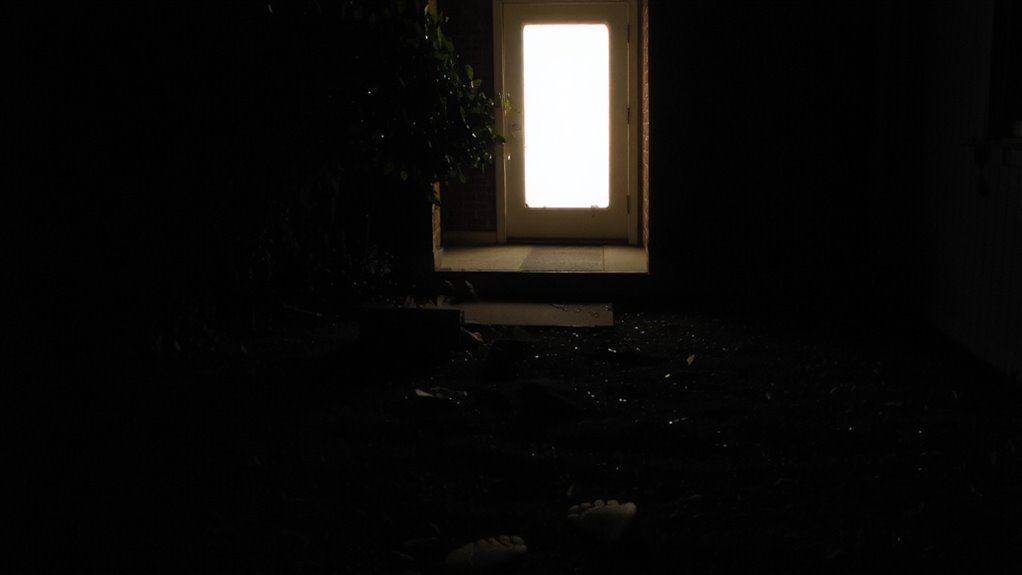
While criminals often look for easy targets, dark corners around your home might be giving them exactly what they’re after. Poor visibility creates areas where intruders can move unseen, increasing the risk of break-ins. These spots offer ideal criminal concealment, letting offenders scout for unsecured doors or windows without being noticed. Studies show homes with unlit exterior zones are 2.3 times more likely to experience attempted intrusions. You can reduce this risk by installing motion-sensor lighting or trimming back shrubs that create shadows. Though some lights require wiring and professional installation-adding upfront cost-the long-term security benefit outweighs the price. Solar-powered options offer easier setup and lower energy use. Regularly assess your home’s exterior at night, noting dim zones. Addressing poor visibility isn’t just about brightness; it’s about removing hiding spots that enable criminal concealment. A reliable way to enhance coverage is by choosing from among the best motion sensor flood lights.
Light These 5 High-Risk Spots First
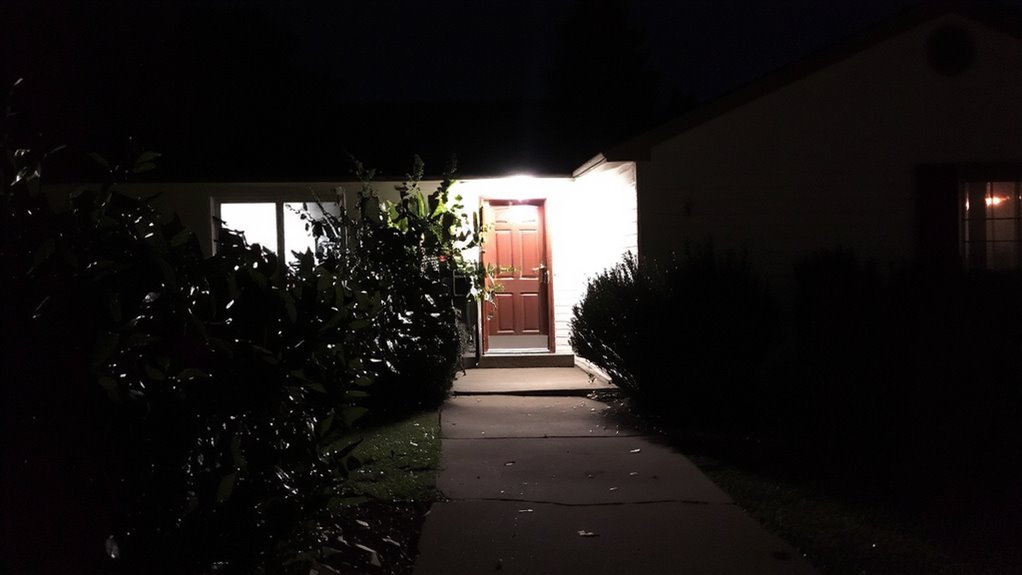
You’ve already seen how dark corners give intruders cover, making your home a more tempting target. Focus first on eliminating corner shadows in five key areas: the front porch, back patio, garage side, basement windows, and shed or fence corners. These spots are commonly exploited because they’re overlooked. Install bright flood lighting in each location to remove hiding places and increase visibility. Flood lighting works best when angled downward to cover ground-level access points. Use weather-resistant fixtures with at least 2,000 lumens for effective coverage. While permanent installation costs $150–$400 total, it reduces break-in risks substantially. Avoid placing lights too high or too far back, which can deepen corner shadows instead of removing them. Proper placement is cheaper and more effective than alarms alone. For hassle-free upgrades, consider installing best wireless motion sensor lights that provide reliable, no-wiring security for these vulnerable zones.
Install Motion-Sensor Lights at Entry Points
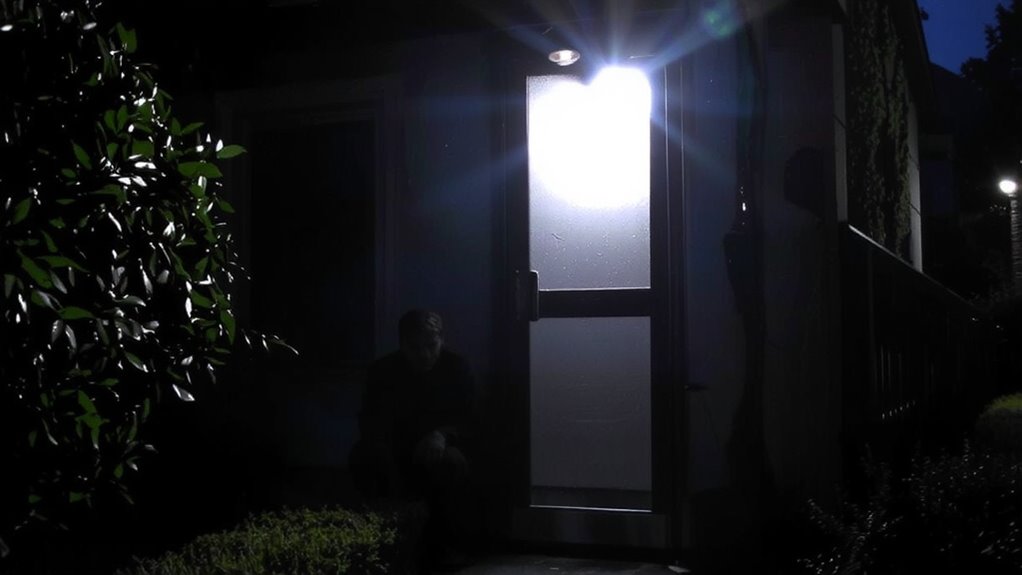
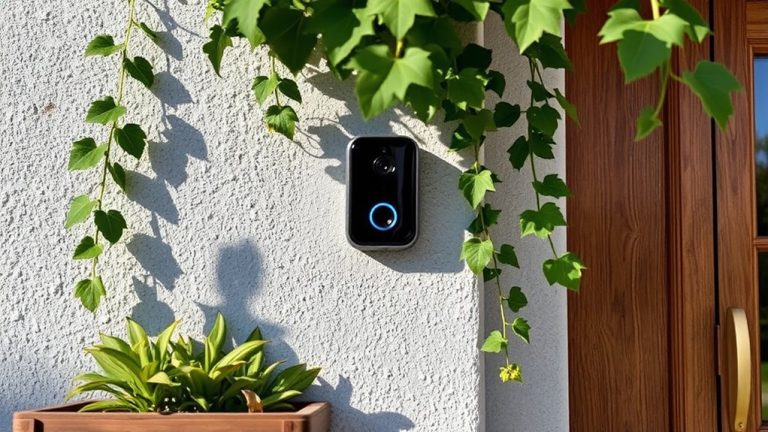
If you want to stop intruders before they reach your door, placing motion-sensor lights at all entry points is one of the most effective and affordable steps you can take. These lights activate when they detect movement, startling would-be intruders and alerting you to unexpected activity. They’re especially useful at front and back doors, garage entries, and side gates-common attack points. Modern options offer energy efficiency through LED bulbs and solar power, reducing long-term costs. With smart integration, you can link lights to security systems or apps, getting real-time alerts and remote control. While initial setup may cost $50–$150 per unit, the deterrence value is proven. Some models have adjustable sensitivity and timers, helping avoid false triggers. Choose ones with wide detection angles and weather resistance. Always position them 6–10 feet high, pointing slightly downward. For reliable performance and advanced features, consider selecting from the best outdoor security lights recommended by experts.
Trim Landscaping That Shelters Dark Corners
Since overgrown shrubs and trees can create hidden spots near doors and windows, trimming landscaping that shelters dark corners is a key step in reducing break-in risks. Dense foliage provides cover for intruders, so maintaining clear sightlines improves visibility and deterrence. Regular pruning keeps plants manageable and eliminates concealment zones.
| Plant Type | Maintenance Frequency | Cost Estimate (Annual) |
|---|---|---|
| Overgrown shrubs | Every 3–6 months | $100–$300 |
| Ground cover | Every 6 months | $50–$150 |
| Climbing vines | Every 4–5 months | $120–$200 |
| Tree branches | Once per year | $75–$250 |
| Dense foliage hedges | Every 3 months | $150–$400 |
Keep shrubs at least 3 feet from your home’s exterior to prevent easy access. Professional services guarantee precise cuts and long-term control. This proactive step reduces potential hiding spots and complements other lighting or monitoring efforts.
Add Cameras and Alarms to Blind Spots
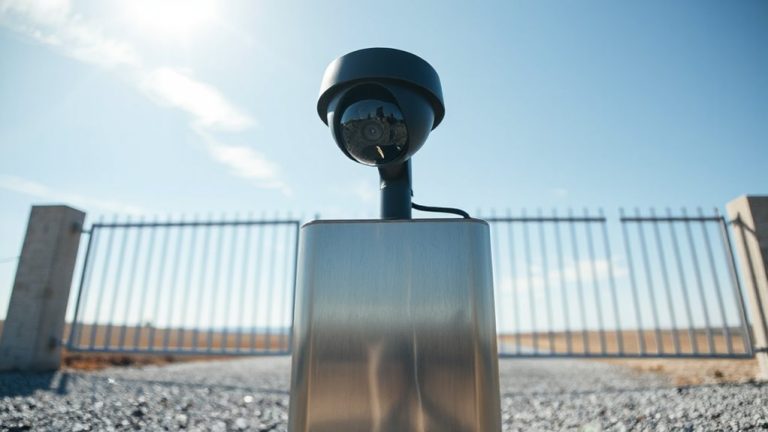
While lighting helps deter intruders by eliminating shadows, it can’t monitor activity on its own-adding security cameras and alarms to blind spots guarantees continuous surveillance where visibility is limited. You should install motion-activated cameras in areas like side alleys, rear windows, or detached garages, since these are common entry points. Opt for systems with wireless integration so you can easily expand coverage without running cables. Most modern setups send remote alerts to your phone when motion is detected, letting you respond quickly. Look for models with night vision and weather resistance for reliable performance. Cameras with two-way audio let you speak to delivery personnel or deter trespassers. Consider DIY systems starting around $200 for basic kits, or professional installation if you need more complex configurations. Regularly test devices and update software to maintain effectiveness.
Combine Lighting Layers for Full Coverage
Though lighting alone won’t stop every break-in, layering different types of outdoor lights gives you far better control over visibility and security around your property. Use ambient glow from low-level path lights to eliminate shadows near walkways, pairing them with motion-sensor floodlights for sudden illumination where it matters. This mix deters intruders by removing hiding spots. Decorative fixtures add style but should not replace functional lighting-prioritize coverage over appearance. Install lights at entry points, corners, and any areas adjacent to blind spots previously identified. LED bulbs last longer and perform better in cold weather, making them a smart long-term investment. Aim for even brightness without glare, which can create new dark zones. Properly layered lighting improves surveillance effectiveness, especially when combined with cameras. Plan your setup strategically: balance cost, energy use, and maintenance while ensuring full, consistent coverage.
Keep Your Perimeter Visible All Year
You’ve layered your outdoor lighting to cover entry points and reduce shadows, but maintaining that visibility throughout the year requires ongoing attention. Seasonal changes like overgrown bushes or snow buildup can create new dark zones, so trim shrubs and clear paths regularly. Replace burned-out bulbs promptly and adjust fixtures if landscaping shifts. Motion-sensor lights are cost-effective, averaging $25–$50 each, and deter intruders by drawing attention. Combine lighting with routine security patrols, either self-conducted or via a professional service, to reinforce deterrence. Join or establish neighborhood watches, where residents share observations and alert each other to suspicious activity. These groups reduce crime rates in many communities, per law enforcement data. Visibility isn’t a one-time fix-it needs yearly reassessment. Consistent upkeep guarantees your perimeter stays exposed, predictable, and less appealing to potential intruders all year.
On a final note
You reduce break-in risks by eliminating dark corners around your home. Well-lit entry points, trimmed landscaping, and motion-sensor lights deter intruders, while cameras and alarms add layers of detection. Combine ambient, task, and accent lighting for year-round coverage. These proven, cost-effective steps improve visibility and security. Plan strategically, focusing first on high-risk zones, and maintain your system regularly for lasting protection.