Setting Up Remote Monitoring Systems to Detect Suspicious Activity in Real Time
Set up smart cameras with AI to detect threats in real time, starting around $100 for indoor models and higher for weather-resistant outdoor units. Enable motion tracking and night vision to keep potential intruders in frame, even in darkness. Use AI analytics, costing $10–$30 monthly, to reduce false alerts by learning normal activity patterns. Get instant notifications only when unusual motion-like nighttime yard movement-triggers the system. Secure your live stream with end-to-end encryption and two-factor authentication. Calibrate sensors to ignore pets or windblown debris while catching human-sized movement. Proper setup can cut false alarms by up to 70%. You’ll find each feature fine-tunes reliability based on your home’s unique layout and risks.
Notable Insights
- Install smart cameras with night vision and motion tracking for real-time threat detection.
- Use AI-powered systems to analyze behavior and flag anomalies like loitering or climbing.
- Enable instant alerts based on unusual motion patterns to reduce false notifications.
- Secure live streaming via mobile apps with encryption and two-factor authentication.
- Calibrate sensors to ignore pets and environmental noise, minimizing false alarms.
Choose Smart Cameras for Faster Threat Detection
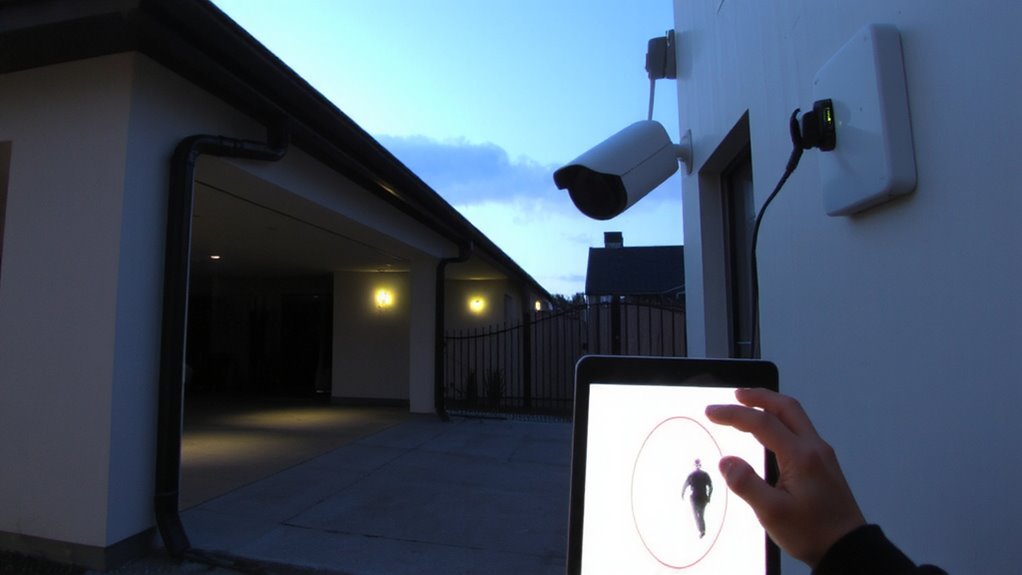
While traditional cameras record footage, smart cameras take security further by detecting and alerting you to suspicious activity in real time. You’ll want models with night vision so you can monitor property clearly after dark, even in low or no light. Motion tracking helps too-it follows movement automatically, keeping potential threats in frame. These features work together to reduce false alerts and improve detection accuracy. Units typically start around $100, with higher-end versions offering wider angles and better resolution. Look for weather-resistant designs if installing outdoors. Keep in mind, continuous recording may require cloud storage, which often involves a monthly fee. For best results, place cameras near entry points and at corners for full coverage. Smart cameras aren’t perfect, but they’re a measurable upgrade over standard systems when speed and awareness matter most. Consider exploring the best home security cameras for top-rated models that balance performance, features, and value.
Activate AI to Spot Suspicious Activity Remotely
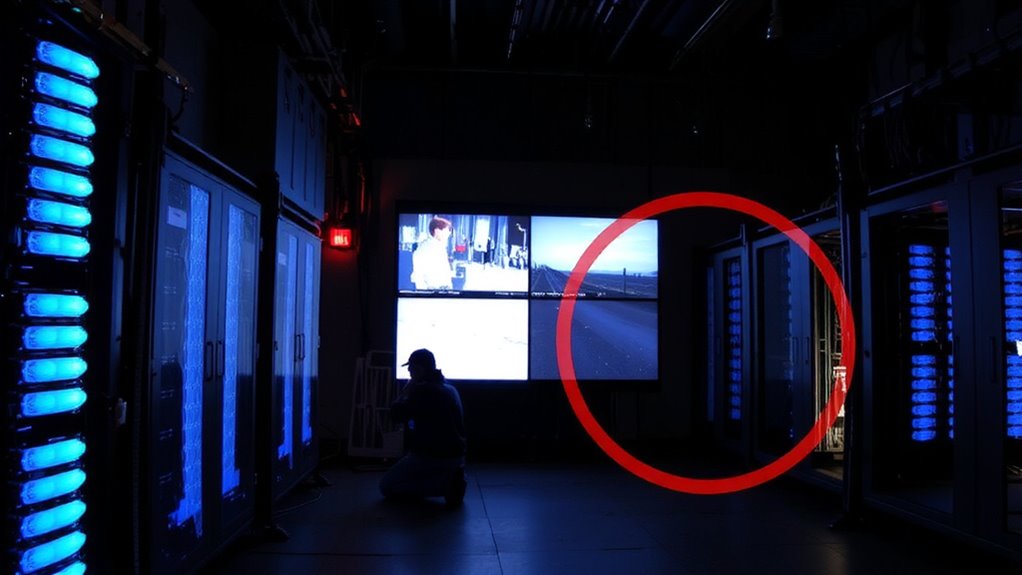
Smart cameras give you eyes on your property, but adding AI takes your monitoring a step further by identifying what those cameras see. You can rely on anomaly recognition to flag irregular events, like a person loitering near a back gate or a vehicle parked unusually long. The system learns normal patterns and alerts you only when deviations occur, reducing false alarms. Behavioral analysis goes deeper, detecting actions that suggest threats-such as someone climbing a fence or moving quickly across a yard. These AI tools work in real time, processing video feeds remotely without slowing down your network. Most systems start at around $10–$30 monthly, with varying accuracy based on model quality. While higher-end options offer better precision, even budget AI features improve detection over basic motion sensors. You’ll want to review retention policies and processing locations to guarantee your data stays secure. Pairing AI with smart cameras makes your remote surveillance smarter and more reliable.
Get Instant Alerts When Unusual Motion Occurs
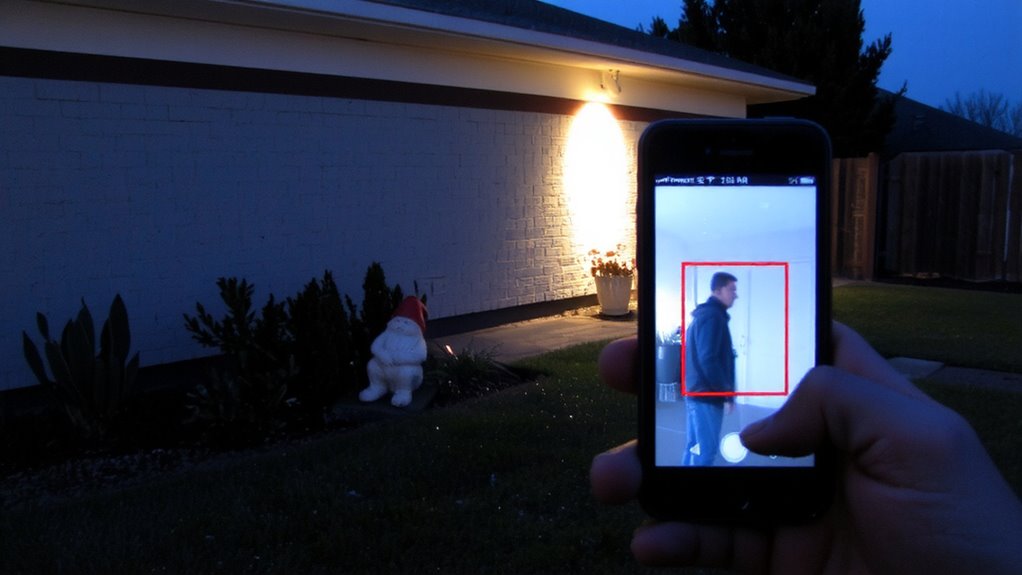
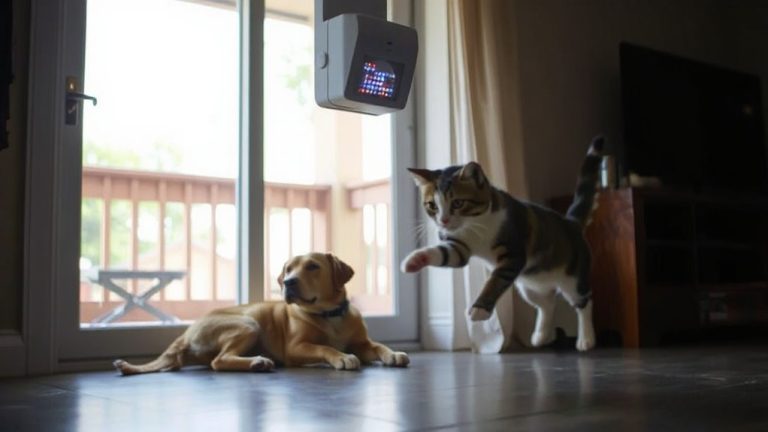
Since not all motion signals a threat, modern systems use AI to distinguish between ordinary movement and unusual activity, so you’re only alerted when it matters. By analyzing motion patterns over time-like when your dog walks through the living room or the sun shifts across the floor-the system learns what’s normal. You can adjust alert thresholds to reduce false alarms, ensuring you’re notified only for unexpected motion, like a figure moving through your yard at 3 a.m. Systems with high sensitivity may catch more threats but can trigger more false alerts, so balancing thresholds is key. Most platforms let you customize these settings through a simple app interface. Opt for models that offer detailed logs and timestamped events, helping you review triggers later. Proper setup reduces noise and keeps your monitoring effective, efficient, and focused on real risks. For reliable performance, consider installing one of the best motion sensors for lights that combine advanced detection with smart alert features.
Watch Live Feeds Securely From Your Phone
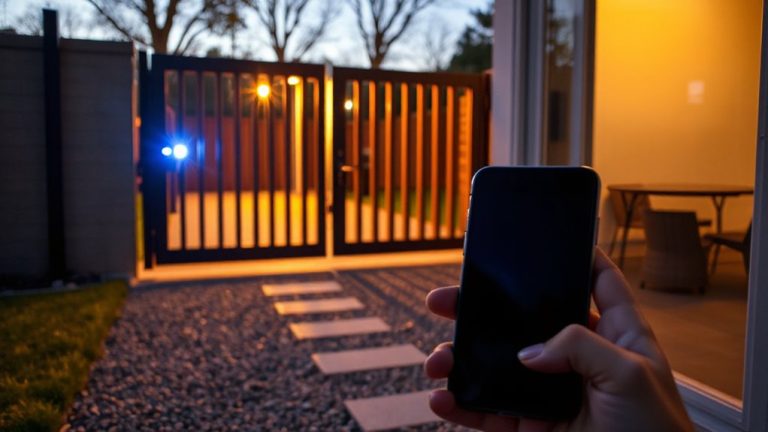
You get alerts when something’s off, but knowing what’s happening in real time gives you more control. With live streaming, you can check your cameras instantly from your phone, seeing exactly what triggered the alert. This helps you decide whether to contact authorities or dismiss it as harmless. Make sure your system offers secure access through encrypted connections, so no one else can view your feed. Look for apps that require two-factor authentication and strong passwords. Most reliable systems use end-to-end encryption, protecting your data. Live streaming works best with a stable internet connection, ideally 5 GHz Wi-Fi or a wired setup. Some services store footage in the cloud, usually for a monthly fee, while others use local storage. Either way, verify that access is restricted to authorized devices only. Top wireless cameras offer advanced motion detection and real-time alerts to enhance remote monitoring effectiveness.
Fine-Tune Sensors to Prevent False Alarms
Most security systems generate a few false alarms, but adjusting your sensors properly can cut those down by up to 70%. You can achieve this by focusing on sensor calibration and environmental filtering. Sensor calibration guarantees each device detects motion accurately based on your space’s size and layout. If a sensor’s too sensitive, it might react to pets or swaying curtains. Adjust the sensitivity settings so it ignores small animals but still catches human-sized movement. Environmental filtering helps ignore common disturbances like temperature shifts or shadows. For example, outdoor sensors should filter out wind-blown debris or headlights. Many modern systems offer smart algorithms that learn normal patterns over time. Always test each sensor after adjustments, using real-world conditions. While proper setup takes time, it boosts reliability. Systems with these features may cost slightly more, but they save effort and reduce alert fatigue in the long run.
On a final note
You can set up remote monitoring that detects suspicious activity in real time by choosing smart cameras with high resolution and fast processing. Activating AI helps identify threats accurately, while instant alerts keep you informed of unusual motion. View live feeds securely from your phone, ensuring access from anywhere. Fine-tune sensors to reduce false alarms, balancing sensitivity and reliability. This system offers evidence-based protection, with most setups costing $200–$500 depending on features.