Outdoor Cameras With Dual-Band Wi-Fi for Stable Long-Range Connectivity
You need outdoor cameras with dual-band Wi-Fi for stable, long-range connectivity that adapts to your home’s layout. Dual-band combines 2.4 GHz for reach and 5 GHz for speed, reducing interference and improving reliability. Look for models like Arlo Pro 4 or Ring Stick Up Cam Elite, which support seamless switching, IP65 weather resistance, and night vision up to 100 feet. Proper placement near the router and away from obstructions guarantees strong signal-there’s more to evaluate for best performance.
Notable Insights
- Dual-band Wi-Fi combines 2.4 GHz for long-range coverage and 5 GHz for fast, low-latency streaming.
- Outdoor cameras with dual-band support automatically switch bands to maintain stable connectivity.
- 5 GHz reduces interference in congested areas, improving signal reliability for long-range performance.
- Position cameras with line of sight to the router and within 100 feet for optimal connection stability.
- Models like Arlo Pro 4 and Ring Stick Up Cam Elite offer dual-band Wi-Fi under $150 with strong outdoor performance.
Why Dual-Band Wi-Fi Is Essential for Outdoor Cameras
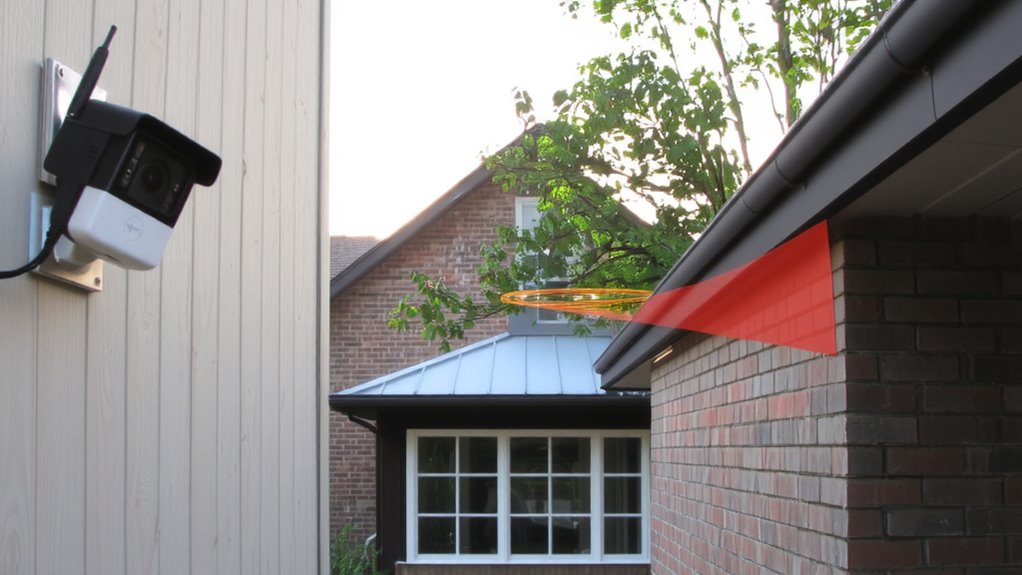
While a single-band Wi-Fi connection might seem sufficient, dual-band Wi-Fi makes a meaningful difference in how reliably your outdoor cameras perform. You’re likely dealing with multiple wireless devices and neighboring networks, all competing for bandwidth-especially on the crowded 2.4 GHz band. Dual-band systems let you switch to the 5 GHz band, where interference reduction is significant. That means fewer dropped signals and smoother video streaming. Signal reliability improves because the 5 GHz band offers more channels and less congestion. Though walls and trees can weaken 5 GHz signals slightly more than 2.4 GHz, the trade-off in stability is often worth it. Choose cameras that support automatic band switching for ideal performance. Look for models under $150 with dual-band compatibility-they’re common among mid-tier security systems. This feature isn’t a luxury; it’s essential for dependable monitoring. Top models in our best outdoor security cameras roundup highlight dual-band support as a standard feature for reliable connectivity.
How Dual-Band Wi-Fi Boosts Range and Speed
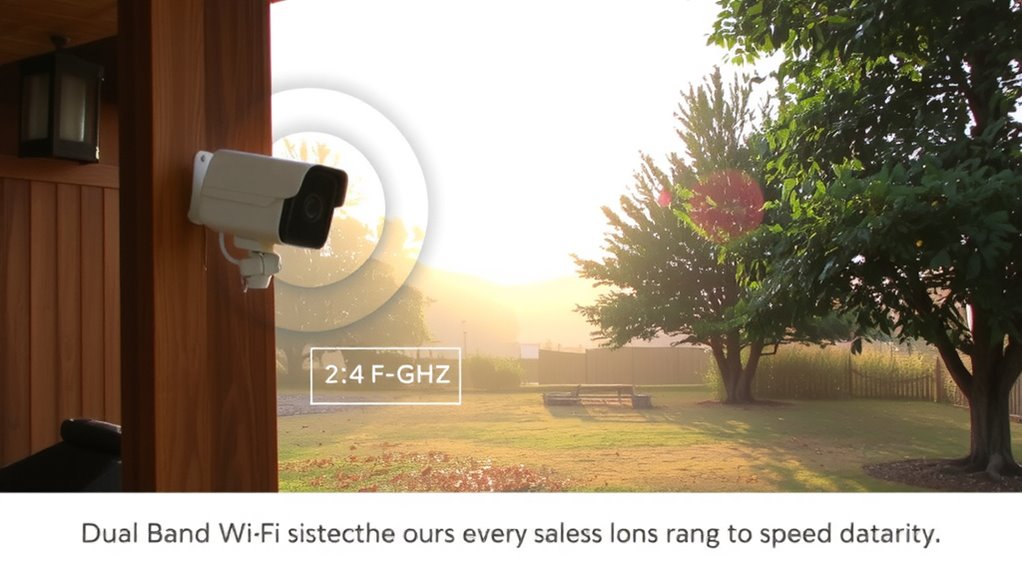
When you’re setting up outdoor cameras, having a strong and fast connection matters, and dual-band Wi-Fi helps you get both. It uses two frequency bands-2.4 GHz for range and 5 GHz for speed-so you balance coverage and performance. The 2.4 GHz band reaches farther and penetrates walls better, while 5 GHz offers faster data flow with less crowding. Together, they improve interference reduction by letting you switch bands in busy wireless environments. Smart bandwidth allocation guarantees high-demand tasks like live streaming use the faster band, while background updates run on the other. Top models in the best wireless security cameras for 2025 support advanced dual-band optimization for uninterrupted outdoor monitoring.
| Band | Best For |
|---|---|
| 2.4 GHz | Long-range, obstacle penetration |
| 5 GHz | High-speed streaming, low latency |
| Interference reduction | Switching bands in crowded areas |
| Bandwidth allocation | Prioritizing data-heavy camera use |
| Dual-band advantage | Stable, scalable outdoor coverage |
Must-Have Features in Dual-Band Outdoor Security Cameras
You’ve seen how dual-band Wi-Fi improves range and speed, making it a strong foundation for outdoor security cameras. Now, focus on key features that maximize performance. Look for strong night vision-you’ll need clear footage in low light, ideally up to 100 feet. Cameras with infrared or color night vision help identify people or objects accurately after dark. Motion detection is essential; choose models with adjustable sensitivity to reduce false alerts from pets or passing cars. Advanced options include person-specific detection, which uses algorithms to distinguish humans from other movement. Pair this with instant smartphone alerts so you respond quickly. Also, guarantee weather resistance and a wide viewing angle-100° or more-for full coverage. These features, combined with dual-band Wi-Fi, deliver reliable, real-time monitoring. Budget accordingly-cameras with these specs typically range from $80 to $150. For top-performing models, check expert picks in this best outdoor security cameras roundup.
5 Best Dual-Band Outdoor Cameras for Stable Connection
If you’re looking for reliable outdoor surveillance, choosing a dual-band Wi-Fi camera that maintains a stable connection is key, especially in areas with network congestion or interference. You’ll want strong weather resistance to endure rain, snow, and extreme temperatures without performance drops. Models like the Arlo Pro 4 and Ring Stick Up Cam Elite offer solid dual-band support, minimizing lag and buffering. Their night vision performs well, capturing clear footage in low light up to 30 feet. The Google Nest Cam (battery) provides consistent connectivity and sharp imaging, though it’s pricier. All three have IP65 or higher weather resistance ratings, ensuring durability. While the Arlo and Ring models support local storage, Nest requires cloud subscription for full features. Consider upfront cost versus long-term storage fees when deciding. Each delivers reliable performance if placed within range of your router.
Set Up Dual-Band Cameras for Maximum Signal Strength
How can you guarantee your dual-band outdoor camera delivers a strong, consistent signal? Start with proper antenna placement-position the camera so its antennas have a clear line of sight to your router. Avoid mounting near thick walls, metal surfaces, or large appliances, as these cause signal interference. Use the 5 GHz band for high-speed video when close to the router, and switch to 2.4 GHz for better range and penetration through walls. Keep your camera within 100 feet of the router when possible. Check for nearby devices like cordless phones or microwaves that may contribute to signal interference. Update firmware regularly to maintain peak performance. Most dual-band cameras allow you to monitor signal strength through the app, so test placement before final mounting. Proper setup guarantees reliable connectivity and clear footage.
On a final note
You now know dual-band Wi-Fi improves outdoor camera performance by reducing interference and extending range. Choose models with 2.4 GHz for distance and 5 GHz for speed. Look for weather resistance, strong encryption, and local or cloud storage. Position the camera within line of sight of your router when possible, and use a Wi-Fi extender if needed. These steps guarantee reliable, clear video monitoring over time.