How to Create Multi-Sensor Rules for Enhanced Security Automation
You can cut false alarms by up to 70% by pairing motion detectors with door sensors, triggering alerts only when both detect activity. Choose sensors based on your goals-like entry points or environmental threats-and match combos to specific risks, such as using glass break sensors with cameras. Use smart logic to analyze patterns and reduce unwanted alerts. Test rules in real conditions, group sensors by zone, and scale with clear naming. More strategies reveal how to refine automation over time.
Notable Insights
- Combine motion and door contact sensors to reduce false alarms by requiring multiple triggers for alerts.
- Align sensor selection with security goals, prioritizing entry points and high-risk areas for optimal coverage.
- Use sensor fusion to match threat scenarios, like pairing glass break detectors with cameras for fast verification.
- Apply smart logic to analyze sensor data in context, filtering out anomalies and learning normal behavior over time.
- Test multi-sensor rules in real-world conditions and scale using zoned grouping and clear naming for manageability.
Use Multi-Sensor Rules to Stop False Alarms
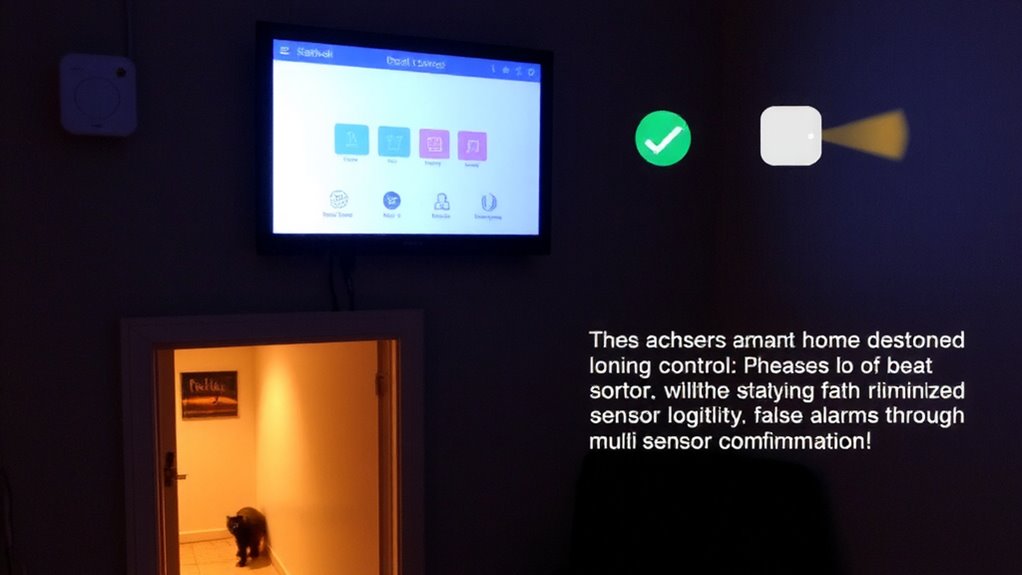
While one sensor might trigger on its own due to environmental changes, combining inputs from multiple sensors greatly reduces the chance of a false alarm. You can rely on multi-sensor rules to confirm events-like requiring both motion detection and door opening before alerting. This approach uses environmental filtering to ignore common triggers like pets or sunlight. Proper sensor calibration guarantees each device operates within accurate thresholds, minimizing errors. For example, pairing a door contact sensor with a motion detector means both must activate, reducing nuisance alerts by up to 70% based on system logs. Though setting rules takes initial time, the payoff is reliable automation. Some systems offer preset rules, while advanced platforms allow custom logic. Consider platform compatibility and setup complexity when choosing. Multi-sensor rules aren’t foolproof, but with correct calibration and filtering, they deliver consistent, data-backed performance for smarter home security. Top-performing systems often include the best motion detectors for improved accuracy and integration.
Choose Sensors Based on Security Goals
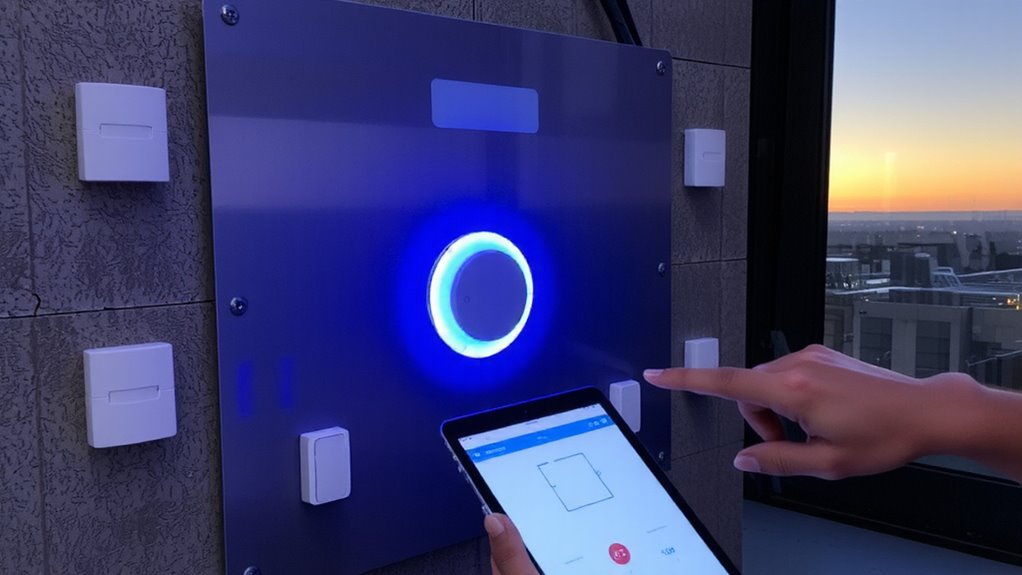
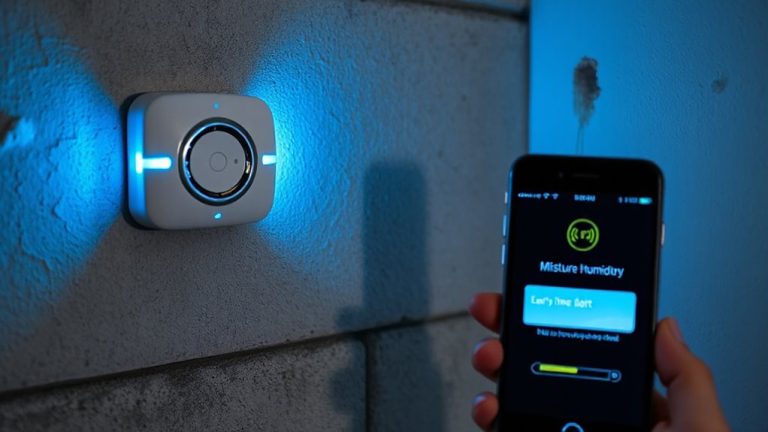
Your security goals shape every sensor decision you make. If you want to monitor entry points, door and window sensors are essential. For detecting movement inside, motion sensors fit best. Smoke or water sensors matter if environmental threats are a concern. Sensor selection isn’t one-size-fits-all-it depends on what you’re protecting and why. Goal alignment guarantees each device supports a specific purpose, reducing wasted spending and complexity. A garage entry may need motion and door sensors, while a basement might only require water detection. Think about high-risk areas and prioritize them. Budget matters, but don’t skimp on key zones. Quality sensors cost more but offer better reliability. Always match sensor types to your real needs, not just what’s popular. Planning now saves time, money, and strengthens your system’s overall effectiveness. For whole-home coverage, consider integrating best motion sensors for Home Assistant.
Match Threat Scenarios to Sensor Combos
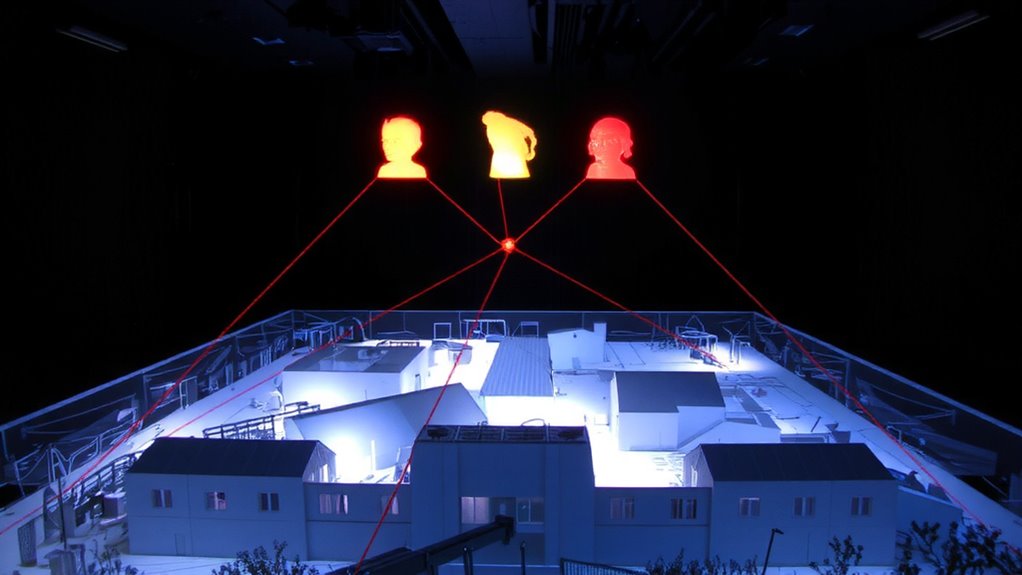
How do you know which sensors work together to stop real threats? You start by aligning threat scenarios with effective sensor combos using sensor fusion and threat correlation. This guarantees your system detects and verifies risks accurately. For example, pairing motion sensors with cameras confirms whether movement is a person or pet. A reliable security camera system integrates seamlessly with various sensors to enhance automation and response. Below is a simple guide:
| Threat Scenario | Sensor Combo | Benefit |
|---|---|---|
| Intrusion at night | Door contact + motion | Reduces blind spots |
| Package theft | Camera + motion | Provides visual evidence |
| Unauthorized entry | Glass break + camera | Enables fast verification via sensor fusion |
Use Smart Logic to Cut False Alarms
Start by programming your system to analyze sensor data in context-this cuts false alarms fast. You’ll want to use sensor fusion, which combines inputs from multiple sensors like motion detectors, cameras, and door contacts, so your system doesn’t react to isolated signals. For example, a motion alert without a door opening might be a pet, not an intruder. By using sensor fusion, you increase accuracy and reduce unnecessary alerts. Add anomaly detection to identify unusual patterns over time-like movement at odd hours or sudden temperature shifts-so the system learns what’s normal. This data-driven approach means fewer false alarms and more reliable security. It’s not foolproof-complex setups may need fine-tuning or higher-end hardware-but the long-term payoff is clear. Plan for moderate upfront costs, as smart logic features often come with mid-to-high-tier security systems.
Test Rules in Real-World Stages
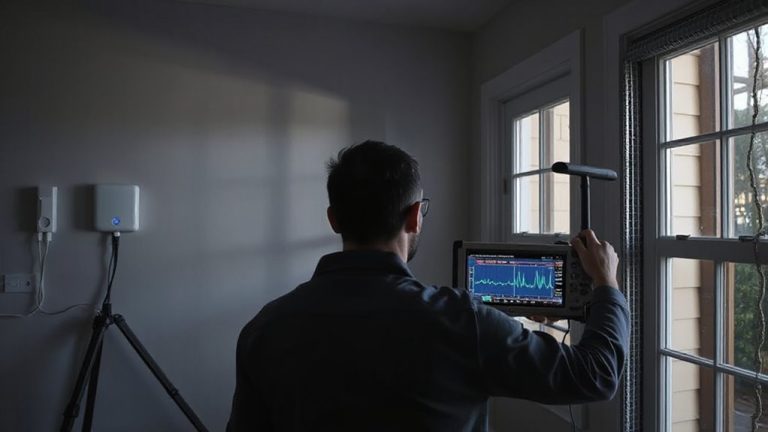
While smart logic helps reduce false alarms, testing your multi-sensor rules in real-world conditions is what guarantees they actually work. You need real world validation to see how sensors interact with actual environmental changes, like weather or pets. Field testing lets you observe performance over time, under varied but controlled scenarios. Start with short trials during different times of day, noting when triggers occur and whether responses match expectations. Use logs to track data, then compare results against your rule logic. This helps confirm reliability and spot hidden flaws. Don’t skip this step-lab simulations can’t replicate real life. Field testing may reveal delayed responses or missed triggers that only appear outside controlled settings. It takes effort, but it’s essential for trustworthy automation. With proper validation, you gain confidence your system responds accurately when it matters most.
Adjust Actions When Triggers Repeat
Often, repeated triggers from your sensors don’t mean new threats-they can signal routine activity or false alarms. To avoid overwhelming alerts or unnecessary actions, you should adjust responses when triggers repeat. Use action throttling to limit how often a rule runs within a set time, like triggering a notification only once per hour even if motion is detected multiple times. This reduces noise while keeping you informed. For real risks, enable response escalation: start with a minor action, like a warning light, then increase to alarms or alerts if the trigger persists. It balances urgency and practicality. Most platforms support these settings, though advanced features may require higher-tier plans. Test your chosen thresholds during normal use to guarantee they catch real issues without excess. With action throttling and response escalation, your system stays responsive without overreacting. Plan around your household’s patterns for best results.
Scale Multi-Sensor Rules Without Losing Control
Most modern homes use at least three sensors, and expanding your setup beyond that number can considerably improve coverage-if you design your rules wisely. As you add more sensors, sensor redundancy helps guarantee reliability, so one failed sensor doesn’t compromise your system. But increasing sensor count also raises rule complexity, especially when multiple triggers interact. To maintain control, group sensors by zone or function-like entry points or interior motion-then create modular rules that apply uniformly across similar zones. This keeps logic consistent and troubleshooting easier. Use naming conventions and documentation to track each rule’s purpose. Avoid overly specific conditions that rarely occur; instead, prioritize common threat patterns supported by your data. Test changes incrementally, monitoring alerts and false positives. Balance sophistication with maintainability-overly complex rules may react unpredictably. With structured planning, you gain broader coverage without losing clarity or control.
On a final note
You can reduce false alarms by combining sensors that match real threats, like using motion and door sensors together. Test rules in stages to see what works, and adjust actions if triggers repeat too often. Start simple, then scale carefully. Multi-sensor rules improve accuracy, but they need clear goals and regular checks. Plan for cost and complexity as you add more devices.