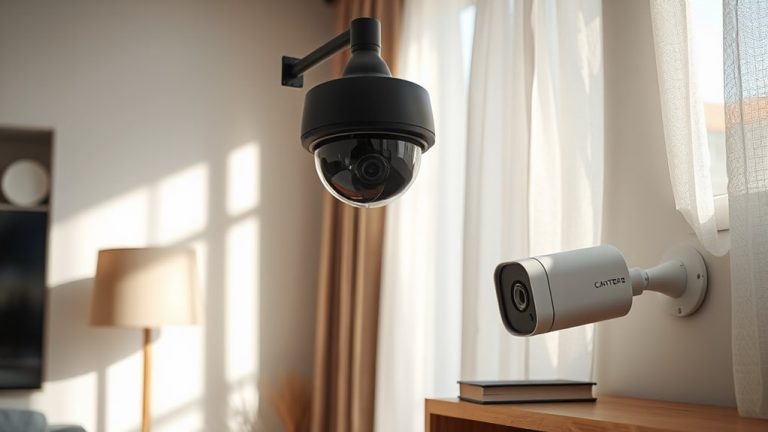
How Video Surveillance Integration Enhances Motion Detection With Visual Verification
You get fewer false alarms when motion detection pairs with video surveillance because the system checks for visual proof before alerting you. Cameras confirm whether movement comes from a person, pet, or shadow, cutting out unnecessary alerts. Integrated sensors trigger instant video clips, while AI learns your environment to tell real threats apart. Real-time streaming and two-way audio let you respond quickly. Verified alerts mean faster help if needed. There’s more you’ll want to know about smarter home security.
Notable Insights
- Integrating video surveillance with motion sensors enables visual confirmation of alerts, reducing false alarms from pets or environmental factors.
- Real-time video clips triggered by motion provide immediate context, helping distinguish between actual threats and benign activity.
- AI-powered systems analyze video to identify people, vehicles, and abnormal behaviors, improving detection accuracy and response reliability.
- Edge computing allows on-device video analysis, ensuring fast, secure processing without relying on constant internet connectivity.
- Live streaming and two-way audio enable remote monitoring and instant interaction, enhancing security response capabilities.
Why Traditional Motion Detection Fails
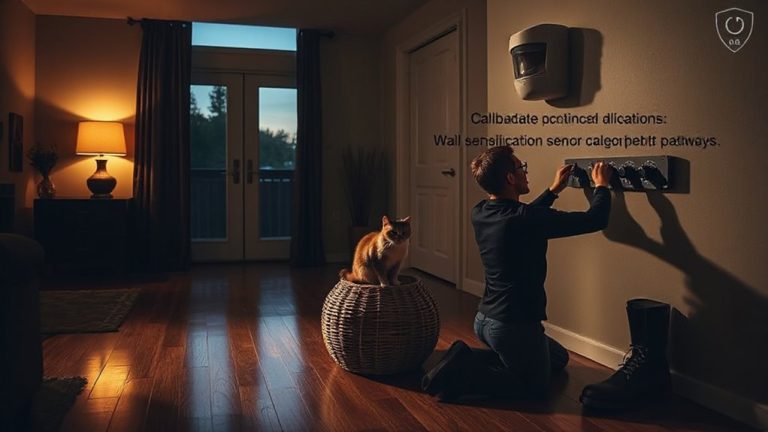
Why do so many traditional motion detection systems trigger false alarms? You’ve likely experienced it-your alarm goes off, but there’s no intruder. The problem often lies in sensor limitations and environmental interference. These systems rely on infrared or microwave sensors that detect heat or movement, but they can’t distinguish between a person and a pet, or even swaying trees. Airflow from vents, sunlight shifts, or heavy rain can all cause false triggers. Because they don’t analyze visual context, they react to any change in motion patterns. That means more nuisance alerts and less trust in your security. You’ll want to think about how placement affects performance-near windows or heat sources increases error rates. While these systems are usually affordable and easy to install, their lack of precision is a clear drawback. For reliable detection, sensor design and environment both matter. Best Motion Detectors for Every Home offer advanced solutions that integrate video verification to reduce false alarms.
How Visual Verification Reduces False Alarms
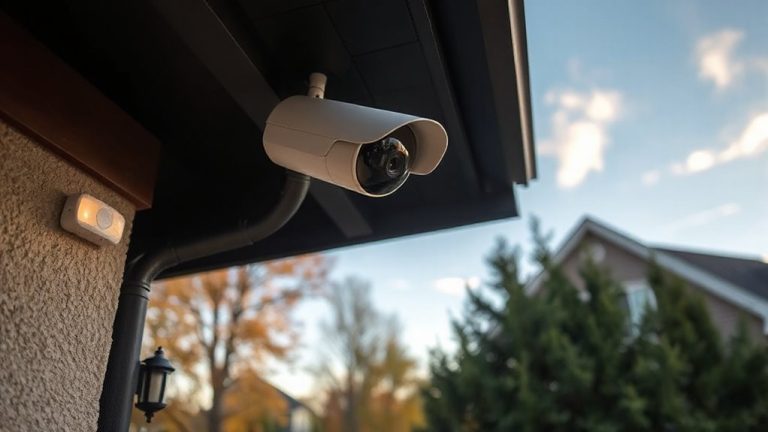
A growing number of modern security systems use visual verification to cut down on false alarms, and for good reason. You can avoid unnecessary stress and missed threats by confirming alarm triggers with actual video footage. Without visual verification, motion sensors often react to pets, swaying trees, or weather changes, leading to alarm fatigue over time. But when you pair alerts with immediate video clips, you can quickly assess the real risk. High image clarity lets you see details like faces or clothing, so you know if police dispatch is truly needed. Studies show verified alarms are taken more seriously by authorities and reduce false dispatches by up to 90%. This saves you time, money, and strengthens trust in your system. Visual verification isn’t foolproof-poor lighting or camera angles can limit effectiveness-but with proper setup, it’s one of the most reliable ways to guarantee your alerts are meaningful and actionable. For optimal performance, consider installing best outdoor security cameras that offer high-resolution video and advanced motion detection features.
Linking Motion Sensors To Video Surveillance Systems
You can boost your security system’s accuracy by linking motion sensors directly to video surveillance. This setup uses sensor fusion, combining data from multiple sources to confirm motion before triggering alerts. When a sensor detects movement, the linked camera instantly records, ensuring you capture relevant footage. With edge computing, processing happens on the device itself, reducing lag and decreasing false alarms caused by external factors like trees swaying. This means faster response times and less strain on your network. Systems with edge computing also maintain operation if internet service drops. Though these features may cost more upfront, they reduce long-term monitoring expenses. Choose devices compatible with your existing setup to avoid costly upgrades. Always test sensor placement to cover entry points effectively. This integration improves reliability, giving you a smarter, more efficient security solution backed by data and real-world performance. Top wireless cameras offer advanced sensor fusion and edge processing for optimal performance in integrated systems, making best wireless cameras a key consideration when upgrading.
Live Video Feeds Confirm Threats In Real Time
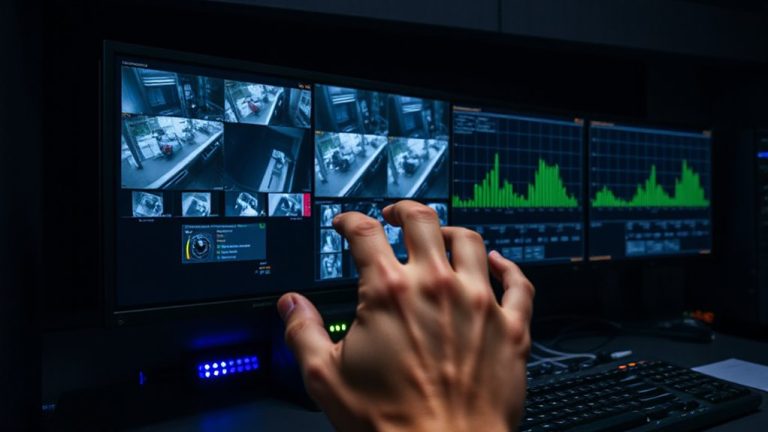
While you’re away, live video feeds let you see what’s happening at your property in real time, so you can confirm whether an alert is a real threat or just a false alarm. Real time monitoring gives you instant validation, helping you respond quickly and appropriately. Instead of guessing, you can watch what’s unfolding and decide if you need to contact authorities or ignore a harmless trigger.
| Feature | Benefit |
|---|---|
| Live streaming | See events as they happen |
| Remote access | View feeds from anywhere |
| Instant alerts | Get notified immediately |
| Two-way audio | Communicate directly |
| Mobile integration | Control systems on your phone |
This level of oversight boosts security effectiveness and reduces unnecessary responses. With live video, you gain clarity and confidence in every alert, making your system smarter and more reliable.
How AI Tells Real Threats From False Alarms
Because modern security systems generate countless alerts, AI helps distinguish actual dangers from everyday disturbances by analyzing patterns in motion and behavior. You’ll find it uses behavior patterns to determine whether a moving object acts like a person, animal, or vehicle. For example, a raccoon darting across your yard follows a different path than an intruder climbing a fence. AI systems learn normal activity over time, so they can flag deviations using anomaly recognition. This reduces false alarms from trees swaying or headlights flashing. Most advanced cameras now include built-in AI that filters out non-threats before sending alerts. Look for models with adjustable sensitivity and learning periods-some need 7 to 10 days to adapt. While these systems cost more upfront, they save time and increase reliability. You get fewer nuisance alerts and more accurate threat detection.
Faster, Smarter Responses With Verified Alerts
When alerts are backed by AI verification, you get faster and more accurate responses from both systems and security teams. You won’t waste time chasing false alarms from swaying trees or passing cars-instead, verified threats trigger immediate action. With edge computing, video analysis happens right on the camera, reducing lag and bandwidth use while speeding up detection. This means threats are identified in seconds, not minutes. Data encryption protects your video feed as it moves from camera to cloud, keeping your information secure. You can trust that alerts are both fast and safe. Systems using these features reduce response times markedly, especially when integrated with monitoring services. For best results, choose cameras supporting edge computing and end-to-end encryption. Though these models may cost more upfront, their precision and speed save time and money long-term.
On a final note
You can rely on video surveillance integration to improve motion detection by adding visual verification. It cuts false alarms caused by pets or weather, showing you real threats through live feeds. AI analyzes movement, distinguishing people from animals. Verified alerts mean faster, smarter responses. Systems range from DIY setups to professional installations, costing $200–$600. Consider camera placement, internet speed, and local storage or cloud options when planning.