Preventing False Alarms Caused by HVAC Drafts With Proper Sensor Placement
Place motion sensors at least 6–10 feet from HVAC vents to avoid false alarms caused by drafts. Choose draft-resistant models with dual-tech detection and adjustable sensitivity, ideally costing $25–$50. Mount them on central walls, 7–8 feet high, away from corners where air pools. Test airflow with a tissue before installing, and avoid spots with visible movement. Clean and inspect sensors twice a year. Proper setup guarantees reliable detection-there’s more to optimizing your system effectively.
Notable Insights
- Install motion sensors at least 6–10 feet away from HVAC vents to avoid draft interference.
- Place sensors on central walls, avoiding corners where airflow turbulence is strongest.
- Use draft-resistant motion detectors with adjustable sensitivity to ignore air shifts.
- Test airflow patterns with a tissue or smoke pencil before mounting sensors.
- Inspect and clean sensors twice yearly to maintain accuracy and prevent false alarms.
Avoid HVAC Drafts That Trigger False Alarms
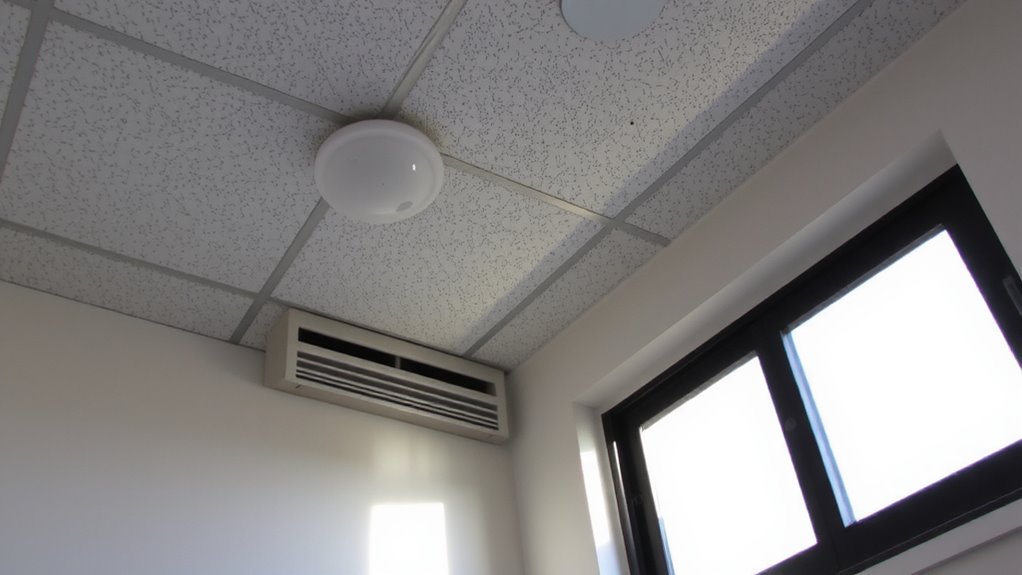
While your HVAC system keeps your home comfortable, it can also create drafts that interfere with security sensors and set off false alarms. These air movements cause environmental interference, especially when they hit motion sensors directly. Most sensors have high sensitivity, meaning even slight temperature shifts from vents can trigger them. To reduce this, you should check your sensor’s placement relative to airflow. Models with adjustable sensor sensitivity help, allowing you to lower responsiveness just enough to ignore minor disturbances without missing real threats. Some systems offer pet immunity and zone filtering, which also reduce false triggers. Though higher-end sensors cost more-often $25–$50 per unit-they often include better shielding against environmental interference. You’ll save time and avoid unnecessary alert fees in the long run. Review your home’s airflow patterns first, then adjust or reposition accordingly before buying new hardware. Upgrading to one of the best garage door alarm sensors can further minimize false alarms caused by environmental factors.
Install Motion Sensors Away From Vents and Ducts
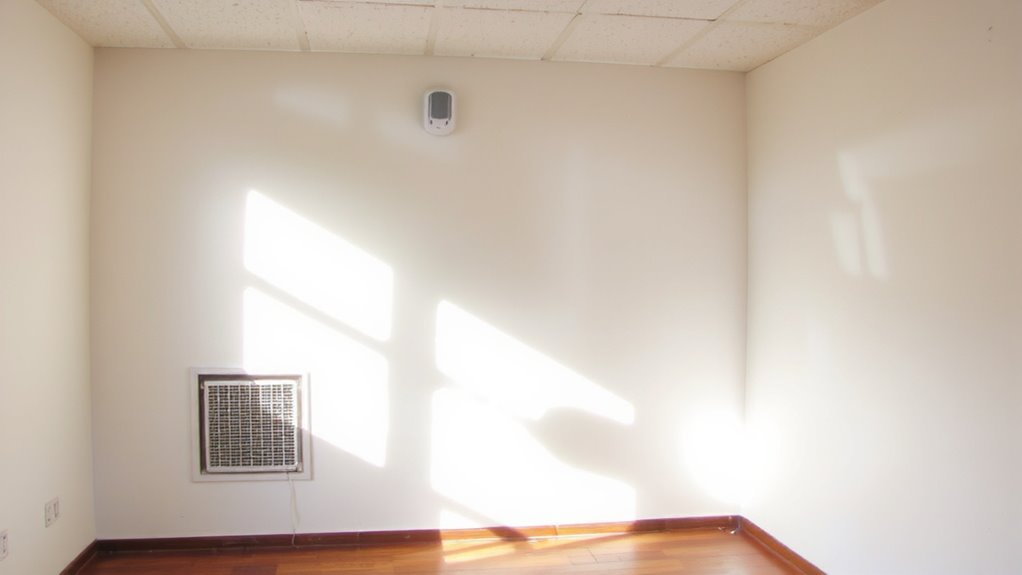
Since HVAC vents and ducts can direct airflow right into a sensor’s detection zone, placing motion detectors nearby increases the chance of false alarms. You should install sensors at least 6–10 feet away from any vent or duct to minimize air disturbance. Proper placement calibration guarantees the detection field covers entry points, not empty space or airflow paths. Avoid corners where drafts pool and instead choose central walls for maximum coverage. Sensor shielding can help reduce sensitivity to minor air shifts, but it’s no substitute for smart positioning. Keep sensors high enough to avoid pets but angled correctly for human detection. Remember, poor placement undermines even the best hardware. A small adjustment during setup can prevent repeated false triggers. Investing time in correct installation supports long-term reliability and lowers maintenance. Top-rated models in the best motion detectors category often include advanced environmental compensation to resist false triggers.
Pick Draft-Resistant Motion Detectors
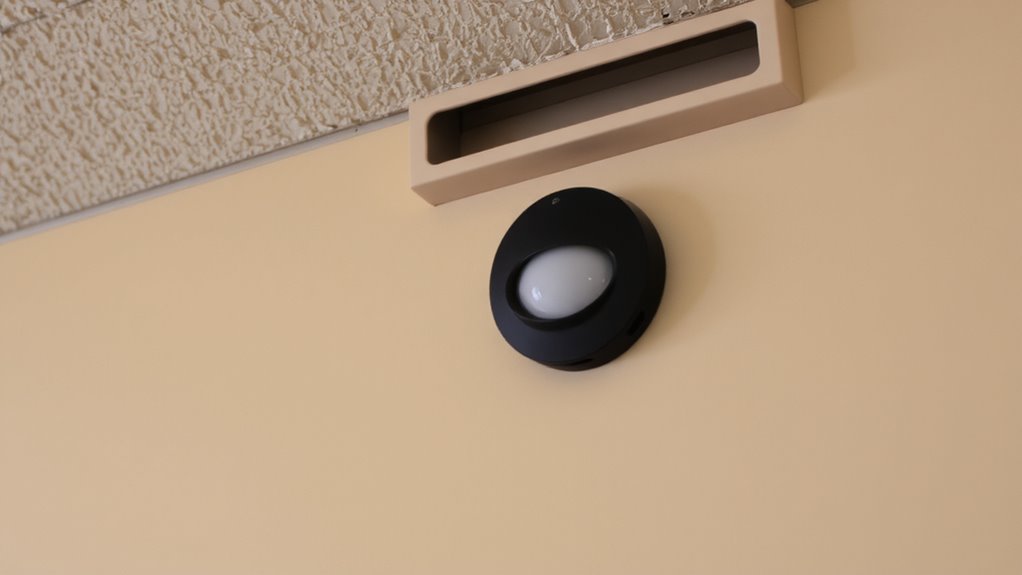
You’ve already taken steps to position your sensors away from vents and ducts, but even well-placed detectors can still react to airflow if they’re not built to handle it. That’s why picking draft-resistant motion detectors matters. These models are designed to ignore air movement while still detecting people. Look for units with adjustable sensor sensitivity so you can fine-tune performance-lower settings reduce false alarms but may miss slow motion. Mounting height also affects reliability; most manufacturers recommend 7 to 8 feet high for ideal coverage and stability. Draft-resistant sensors often use dual-tech (PIR and microwave) to confirm motion, reducing false triggers. They cost slightly more but offer better long-term value. Always check product specs for airflow tolerance before buying. A reliable option is choosing from the best motion sensors for lights, which are tested for performance in environments with HVAC interference.
Test Airflow to Find Safe Sensor Locations
How can you be sure your motion sensor won’t trigger when the furnace kicks on? Test airflow patterns before finalizing placement. Turn on your HVAC system and use a piece of tissue or smoke pencil near potential sensor locations to observe air pressure changes. If the tissue moves, that spot is prone to sensor interference from drafts. Avoid installing sensors directly across from vents or in ceiling corners where air collects and creates turbulence. Instead, choose walls away from airflow paths. This simple test helps you find stable zones with minimal air pressure shifts, reducing false alarms. Proper placement backed by airflow testing guarantees reliable detection without compromising security. It’s a small step that makes a big difference in system performance.
Inspect Sensors Twice a Year for Reliable Detection
Even with careful placement, motion sensors can develop issues over time due to dust buildup, shifting mounts, or environmental wear-so checking them twice a year keeps performance consistent. You should clean the lens gently with a soft cloth and inspect the mount to make sure it hasn’t moved. Changes in angle can affect detection sensitivity and create blind spots. Test each sensor according to the manufacturer’s instructions, verifying that it responds correctly to movement. Recheck sensor calibration if you’ve made changes to furniture layout or HVAC settings. Proper calibration ensures reliable operation and reduces false alarms. High detection sensitivity might pick up minor air disturbances, while low settings could miss intruders. Adjust based on seasonal use and nearby airflow. Twice-yearly maintenance, ideally during daylight saving time changes, supports consistent security. This small effort extends sensor life and maintains system accuracy.
On a final note
You can reduce false alarms by placing motion sensors away from HVAC vents and ducts, where drafts can interfere. Choose draft-resistant models for better reliability. Test airflow to find safer spots, and inspect sensors twice a year for consistent performance. While some sensors cost more upfront, their accuracy saves time and hassle. Proper planning and placement matter more than price when securing your home effectively.