A Detailed Analysis Of Security Cameras With Night Vision For Optimal Coverage During Dark Hours
You can rely on infrared or thermal imaging to monitor your property in total darkness, with infrared cameras using LEDs for up to 250 feet of night vision, while thermal models detect heat through smoke or complete blackness. Color night vision keeps hues but needs ambient light. Top models like Hikvision and Reolink offer 4K clarity, wide apertures, and smart motion tracking. Mount cameras 8–10 feet high for ideal coverage. Your ideal choice balances range, resolution, and lighting conditions-different features reveal what works best for your home’s layout and security needs.
Notable Insights
- Infrared and thermal imaging enable effective night vision, with thermal detecting heat signatures in total darkness or smoke.
- Infrared cameras provide reliable black-and-white footage in pitch-black conditions, while color night vision requires ambient light to retain hues.
- High-resolution models like Reolink RLC-810A (4K) and Hikvision DS-2DE4425IW-DE3 (2.5K) offer superior clarity and extended detection up to 250 feet.
- Cameras with wide apertures (f/1.0–f/1.6) and true WDR improve low-light performance and balance contrasting lighting in nighttime scenes.
- Optimal placement at 8–10 feet high on entry points like front doors or driveways maximizes coverage and facial detail capture.
How Night Vision Cameras Work After Dark
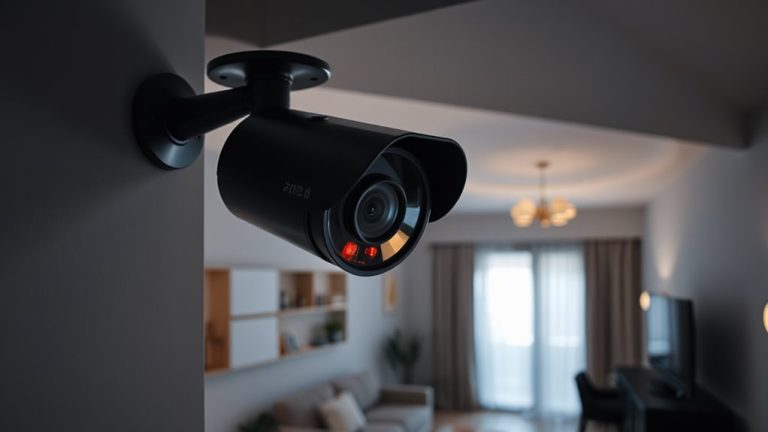
Even though you can’t see in the dark, security cameras with night vision can, and understanding how they work might help you choose the right system. Most night vision cameras use infrared (IR) LEDs to illuminate areas invisible to the human eye, capturing clear black-and-white footage in total darkness. Thermal imaging, while less common, detects heat signatures and works well in complete darkness or through smoke, though it’s typically more expensive. Some systems may experience signal interference from nearby electronics or poor wiring, leading to video distortion or dropped feeds. To reduce interference, use shielded cables and keep cameras away from strong electromagnetic sources. Thermal models perform better in large outdoor areas, while IR cameras suit most home uses. Consider your property size, lighting, and potential obstructions when selecting. Budget-friendly IR systems start around $50, while thermal options often exceed $200. For those seeking advanced capabilities, the best night vision devices combine high-resolution sensors with extended IR range for superior low-light performance. best night vision devices
Infrared vs. Color Night Vision: Which Camera Mode Is Best?
Why do some night vision cameras show black-and-white images while others capture color in the dark? In low lighting conditions, infrared cameras switch to night mode, using IR light to produce clear, grayscale video. This method boosts image quality when natural light is unavailable, making it reliable for total darkness. However, color night vision uses ambient light, like streetlights, to retain hues and deliver more natural-looking footage. While color can help identify objects or clothing, it often requires some existing light and may struggle in pitch-black settings. Infrared generally offers better performance in extreme darkness, with consistent image quality regardless of lighting conditions. Color mode works well in dimly lit areas but may appear grainy or fade to black-and-white when light drops. For most homes, infrared is more dependable, though dual-mode cameras give you both options. Consider your property’s lighting conditions and prioritize image quality when choosing. Top-performing models often feature best infrared cameras for superior clarity and range in complete darkness.
Top 5 Long-Range Night Vision Cameras
Now that you understand how infrared and color night vision perform in low-light environments, you can better evaluate cameras designed for long-range monitoring. You’ll want models that balance image clarity with reliable motion detection, especially at distances beyond 100 feet. The Arlo Pro 4 offers sharp 2K video and effective night vision up to 150 feet, though it’s pricier. Reolink RLC-810A delivers 4K clarity and detection up to 200 feet, ideal for large yards. Hikvision DS-2DE4425IW-DE3 provides 2.5K resolution and advanced motion tracking to 250 feet, but needs professional setup. Lorex 4K Nocturnal records sharply to 170 feet and includes AI-based motion alerts, reducing false triggers. Wyze Cam v3 reaches 150 feet with decent clarity and affordable pricing, though image detail lags in heavy darkness. Each camera varies in power needs, storage options, and app support-choose based on range, clarity, and detection needs. Best Long-Range Outdoor Security Cameras offer superior performance for extended surveillance in dark, expansive areas.
What Specs Make Night Video Clear and Reliable
A camera’s ability to deliver clear and reliable night video depends on several key specifications that work together to enhance image quality in low light. You’ll want at least 1080p image resolution to capture identifiable details like faces or license plates. Higher resolutions, like 2K or 4K, offer sharper clarity but require more storage and bandwidth. Low light performance is just as critical-look for cameras with wide apertures (f/1.0 to f/1.6) and large image sensors, which gather more light in dark conditions. Infrared (IR) strength and smart night modes also improve visibility, though overly bright IR can wash out close subjects. Cameras with true WDR (wide dynamic range) balance light and dark areas in a scene. Always check for reliable low light performance in real-world tests, not just specs, to guarantee dependable, clear footage when you need it most.
Best Places to Mount Night Vision Cameras
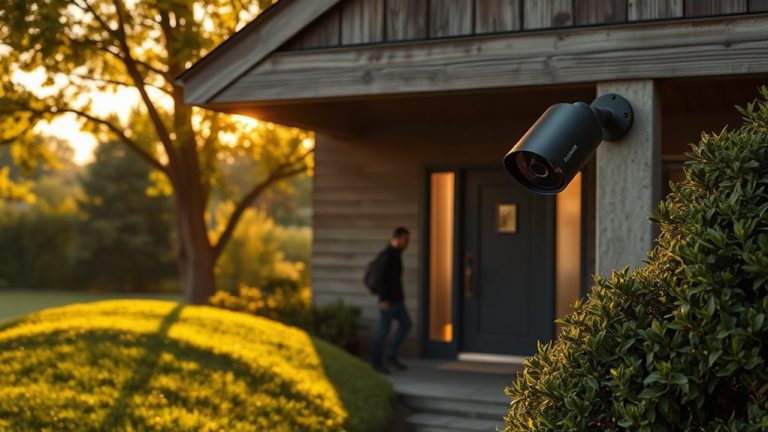
Where should you position your night vision cameras for maximum effectiveness? Focus on entry points and high-traffic areas to maximize security. Proper mounting height and camera angles are essential-too low, and you risk tampering; too high, and you lose facial details. Aim for 8–10 feet high to balance coverage and clarity. Angle cameras slightly downward to capture faces and movement.
| Location | Key Benefit |
|---|---|
| Front door | Monitors deliveries and visitors |
| Backyard gate | Covers secondary entry points |
| Garage entrance | Detects vehicle and tool theft |
| Side driveway | Tracks motion between house and street |
Adjust camera angles to avoid glare or blind spots. Guarantee night vision range matches the distance to the target area. Position units where lighting won’t affect infrared performance.
Pick the Right Night Vision Camera for Your Property
How do you choose a night vision camera that truly fits your property’s needs? Start by evaluating the layout of your home and identifying key areas to monitor. Look for strong image quality-cameras with at least 1080p resolution deliver clear footage, helping you recognize faces and details in low light. Infrared range matters too; models offering 30 feet or more provide broader coverage. Don’t overlook motion detection, as it alerts you to movement and reduces unnecessary recordings. Choose cameras with adjustable sensitivity to avoid false alarms from pets or trees. Wired systems often offer more reliable performance, while wireless ones are easier to install but may need frequent charging. Consider weather resistance for outdoor models. Budget-wise, expect to spend $50–$150 per camera. Prioritize features that match your security goals for long-term effectiveness.
On a final note
You’ll want a night vision camera with at least 1080p resolution and infrared range over 60 feet for reliable footage. Infrared works best in total darkness, while color night vision needs some ambient light. Mount cameras under eaves or porches, aiming slightly downward. Look for weather resistance, motion detection, and local storage to save on fees. Test angles at night to avoid glare or blind spots. Choose models with strong low-light performance and consistent reliability based on verified reviews.