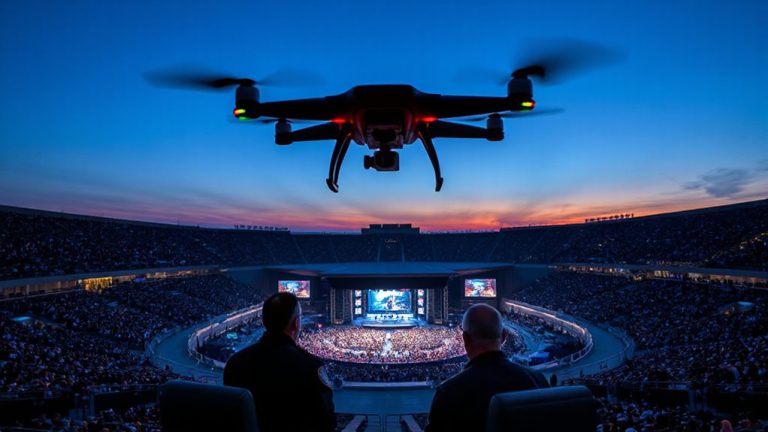
The Role of Technology in Modern Personal Safety Measures and Its Impact on Home Defense Strategies
You can strengthen home defense with smart locks, automated lighting, and AI-powered cameras that detect and deter threats in real time. Systems use motion tracking, facial recognition, and real-time alerts to identify risks, while remote access lets you respond instantly from your phone. Most devices cost $100–$500, with optional $3–$10/month subscriptions for cloud storage. End-to-end encryption and network isolation protect your privacy. Scalable, DIY setups integrate with voice assistants and support future upgrades. You’ll see how each feature works together to keep your home secure under changing conditions.
Notable Insights
- Smart locks and automated lighting enhance home defense by enabling remote access control and simulating occupancy to deter intruders.
- AI-powered cameras and sensors reduce false alarms using facial recognition and intelligent motion detection for accurate threat identification.
- Real-time alerts with cellular backup ensure immediate notification and response to security events, even during internet outages.
- AI-driven anomaly detection learns household patterns to predict and flag suspicious behavior before it escalates into a threat.
- Remote monitoring with end-to-end encryption and scalable smart home integration ensures secure, adaptable, and future-proof personal safety systems.
How Smart Homes Are Reshaping Home Defense
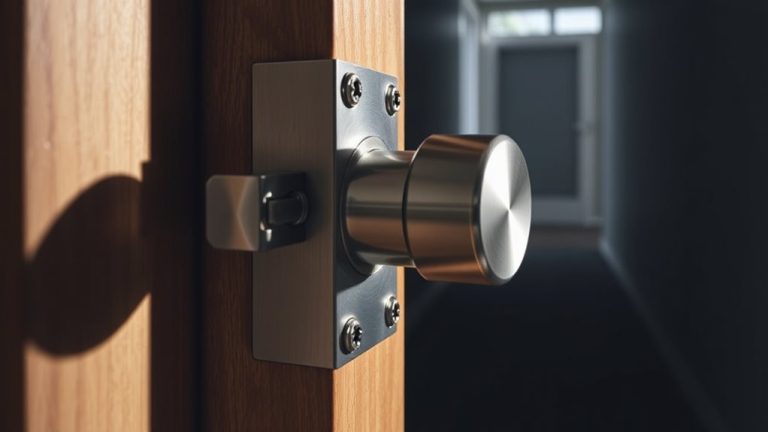
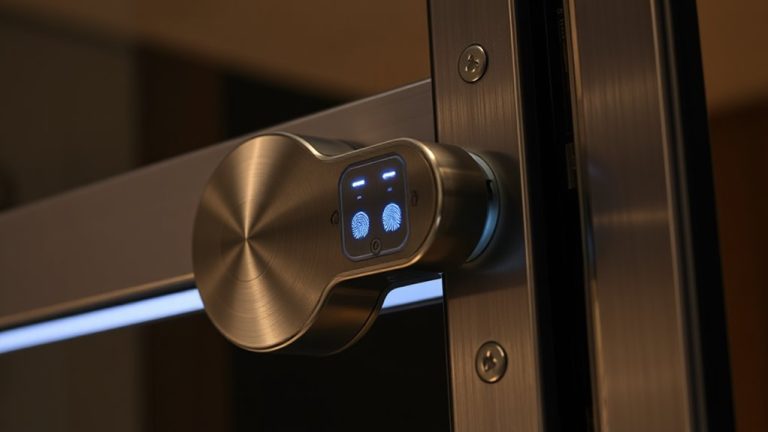
Smart technology is transforming how you protect your home, making traditional locks and alarms just one part of a broader defense strategy. You can now control access remotely using smart locks, which let you lock or open doors from your phone, grant temporary entry codes, and receive alerts when someone enters. These locks integrate with home systems for consistent monitoring. Automated lighting increases perceived occupancy, turning lights on and off at scheduled times or randomly, deterring potential intruders. Most systems work with voice assistants and apps, offering convenience and flexibility. Installation is typically DIY, costing $100–$300 per lock or lighting kit. While reliable, they depend on Wi-Fi and power, so backup options are wise. Smart locks and automated lighting reduce vulnerabilities, complementing physical safeguards. Together, they provide layered, proactive security tailored to modern living-without complexity or excess risk. Top models offer advanced features like auto-locking and best smart locks compatibility for enhanced peace of mind.
AI Cameras, Doorbells, and Sensors Explained
While basic security cameras simply record footage, AI-powered models now analyze what they see, giving you smarter, more reliable alerts. These devices use facial recognition to identify familiar faces and motion tracking to follow movement patterns, reducing false alarms from pets or passing cars. AI doorbells and sensors work together to monitor your home’s perimeter intelligently. Many of these systems integrate seamlessly with Alexa-compatible security cameras for enhanced voice control and automation.
| Device Type | Key Feature | Common Use Case |
|---|---|---|
| AI Camera | Facial recognition | Indoor/outdoor monitoring |
| Smart Doorbell | Motion tracking | Front porch surveillance |
| Entry Sensor | Instant alert on breach | Doors and windows |
| Motion Sensor | Heat and movement detect | Hallways and entry zones |
Most systems start around $100–$250 per device, with cloud storage adding $3–$10 monthly. Choose models with encryption and local storage for better privacy and control.
How Real-Time Alerts Stop Threats Faster
You already know AI-powered cameras, doorbells, and sensors can detect motion and recognize faces, but their real value shows up the moment something’s off. Real-time alerts instantly notify you of unusual activity, letting you respond before a situation escalates. These alerts are vital for threat prevention, giving you time to check live footage, warn intruders via two-way audio, or contact authorities. Immediate notifications also enhance emergency response, reducing delays when every second counts. Systems with cellular backup guarantee alerts still send during internet outages. Most top models offer customizable sensitivity, so you avoid false alarms from pets or passing cars. While subscription plans vary in cost, starting around $3–$10 monthly, they often include cloud storage and professional monitoring. For best results, pair alerts with smart lighting or alarms to deter intruders. Real-time alerts don’t just inform-you gain control, improving home defense with speed and precision. Top systems featured in the best home security cameras with apps offer advanced integration and reliable performance through dedicated mobile applications.
How AI Detects Intruders Before They Act
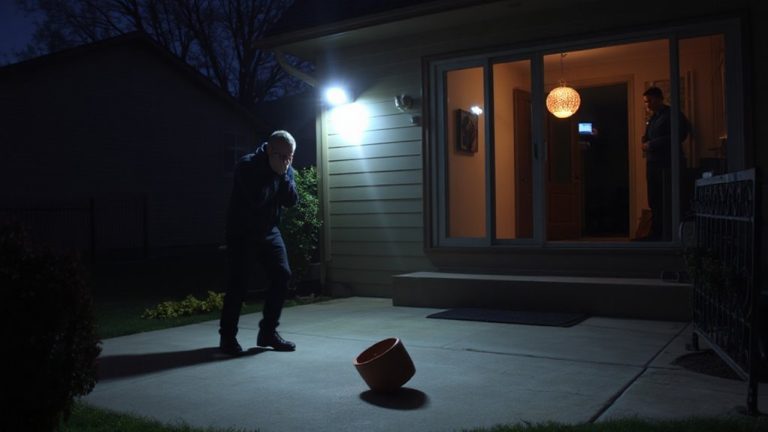
Because AI doesn’t just react to motion, it learns what normal activity looks like around your home-so it can spot subtle signs of suspicious behavior before a break-in occurs. You get early warnings because the system uses behavior prediction to assess patterns over time, like when neighbors walk by or pets move near sensors. It’s not easily fooled. Using anomaly recognition, AI flags deviations-say, someone crouching by a window at 3 a.m. or lingering near a back gate-then alerts you. These systems analyze data from cameras, sensors, and even door usage to build a baseline of normal activity. Most modern AI security tools offer adjustable sensitivity and integrate with existing alarms. They cost $200–$500 upfront, plus potential subscription fees. While false alerts can happen, proper setup reduces them. This proactive approach improves threat detection accuracy. You’re not just watching-you’re predicting.
Control Your Smart Security From Anywhere
What if you could lock a door, turn on lights, or check camera feeds while sitting at your office miles away? With smart security, you can. Remote monitoring lets you watch your home in real time using a smartphone or tablet, no matter where you are. You get instant access to alarms, locks, lights, and cameras, so you can respond quickly to alerts. Most systems work through apps that send notifications when motion is detected or a door opens. Some offer two-way talk, letting you speak through the device. Reliable internet is essential, and cellular backup helps during outages. Subscription plans often include cloud storage for video, usually $3–$10 per month. While convenient, delayed responses or poor signals can reduce effectiveness. Overall, instant access and remote monitoring improve control, helping you manage safety proactively and efficiently.
Protecting Privacy in Smart Homes
How secure is the data your smart home collects every day? You should know that devices like cameras, speakers, and thermostats gather personal information constantly. Without strong data encryption, that info could be exposed to hackers. Always choose devices using end-to-end encryption to keep your data protected in transit and at rest. Network isolation is another key step-set up a separate network for smart devices so a breach doesn’t reach your laptop or phone. This reduces risk and strengthens your home’s digital defenses. Check if your router supports VLANs or guest networks, both cost-effective ways to isolate traffic. While encryption may slightly slow performance, the privacy gains are worth it. Review device settings regularly, disable unnecessary data sharing, and update firmware often. These habits, combined with encryption and network isolation, form a practical, effective baseline for protecting your privacy in a smart home.
Upgrade-Ready Security Systems
While technology evolves quickly, investing in an upgrade-ready security system guarantees your home stays protected without requiring a full replacement every few years. These systems support future proof installations, letting you swap components as needs change. Scalable monitoring solutions grow with your household-add cameras, sensors, or smart locks seamlessly.
| Feature | Benefit |
|---|---|
| Modular design | Replace parts, not the whole system |
| Cloud integration | Access footage and alerts remotely |
| Z-wave/Zigbee support | Connect to expanding smart home networks |
| Professional monitoring | Optional 24/7 oversight for added safety |
| App-based control | Manage settings from your phone anytime |
You’ll save money long-term and adapt quickly to new threats. Choose systems labeled “open protocol” for better compatibility. Plan for at least 3–5 years of tech growth when budgeting. This approach secures lasting protection with minimal disruption.
On a final note
You can strengthen home defense by integrating smart technology like AI cameras, sensors, and connected doorbells. These systems provide real-time alerts and detect unusual activity before breaches occur. Remote access lets you monitor and respond from anywhere. While offering convenience and faster threat response, consider data privacy and subscription costs. Choose scalable, upgrade-ready systems to adapt over time. Smart security works best when planned around your home’s layout and specific needs.