Choosing the Right Personal Alarms for Optimal Protection Against Threats
Choose a personal alarm with at least 120 dB output and a frequency between 2,000–4,000 Hz for maximum attention. Look for lithium batteries lasting a year, low-battery alerts, and a range up to 600 feet. Wearable models offer convenience, while portable ones are louder and more durable. Test it monthly, replace batteries regularly, and pick features based on your environment-like strobes for urban use or weather resistance outdoors. You’ll soon see which models match your daily routine best.
Notable Insights
- Choose a personal alarm with at least 120 decibels to ensure it’s heard over noise and deters threats effectively.
- Opt for models with a signal range of 600 feet and LED strobes to maximize visibility and alert nearby people quickly.
- Select alarms with lithium batteries and low-battery indicators to maintain reliability and avoid unexpected power failure.
- Prefer wearable designs like wristbands for constant access, or portable units for louder sirens and longer battery life.
- Regularly test alarms monthly and replace batteries every six months to ensure consistent performance in emergencies.
What Makes a Personal Alarm Effective in an Emergency?
When seconds count, a personal alarm’s ability to draw attention can make all the difference. For you, effectiveness hinges on signal range and battery longevity. A strong signal range guarantees your alarm reaches others nearby, ideally up to 600 feet, so help can arrive quickly. You’ll want a model with at least a year of battery longevity to avoid constant replacements. Lithium batteries tend to last longer and perform better in extreme temperatures. Look for alarms with low-battery indicators so you’re never caught off guard. Some units combine LED lights or strobes, increasing visibility. Weigh the pros-reliability, portability-against potential cons, like limited range in dense buildings. Test your alarm monthly. Replacing batteries annually keeps it ready. For under $20, you gain peace of mind. Choose wisely-your safety depends on consistent, dependable performance when it matters most. Top-rated models often include best panic buttons for enhanced emergency response.
How Loud Should a Personal Alarm Be?
Though sound intensity alone doesn’t guarantee safety, a personal alarm should be loud enough to cut through ambient noise and alert nearby people, ideally producing at least 120 decibels-comparable to a rock concert or ambulance siren. You’ll want to check decibel levels carefully, as some models only reach 100 dB, which may not be effective in noisy environments. Higher decibel levels increase the chance of drawing help, but sound frequency also matters-a piercing tone between 2,000 and 4,000 Hz is more attention-grabbing because it aligns with human hearing sensitivity. While louder alarms are generally better, make sure the device won’t overwhelm you during testing. Look for alarms labeled with verified decibel outputs and avoid untested claims. Balancing adequate volume with manageable size and battery life will give you the most reliable alert when it counts. For seniors, integrating alarms into a broader personal safety device strategy can enhance overall protection and peace of mind.
Key Features That Make a Personal Alarm Reliable
Since reliability matters most when seconds count, choose a personal alarm with proven features that support consistent performance. Long battery life guarantees your device works when needed, reducing the risk of failure during emergencies. A wide signal range gives you coverage across larger areas, indoors or out. You’ll want both dependability and reach. Below are key traits to evaluate:
| Feature | Why It Matters |
|---|---|
| Loudness | Over 120 dB stops threats quickly |
| Battery life | Lasts months; avoid frequent swaps |
| Signal range | Up to 100 ft guarantees strong alerts |
| Durability | Withstands drops and weather |
| Activation | Simple pull-pin or button press |
Check specs before buying-reliable models balance strong battery life with wide signal range. Test monthly. Top picks in personal safety alarms often include models with 120 dB loudness for maximum effectiveness.
Wearable Vs. Portable Alarms: Which Fits Your Life?
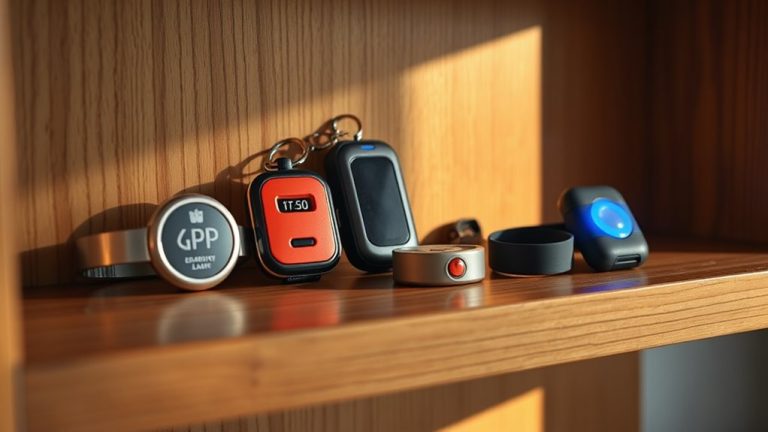
How do you plan to carry your personal alarm-on your wrist or in your pocket? Wearable alarms, like wristbands, offer convenience and are always within reach, making activation fast during emergencies. Their design aesthetics often resemble smartwatches, blending style with function, which suits daily wear. However, they may have shorter battery longevity due to smaller power cells. Portable alarms, typically clipped to bags or held in pockets, tend to pack louder sirens and longer battery life, since they’re not limited by size. Their design aesthetics vary widely, from discrete keychains to bulkier units, letting you choose based on visibility and portability. If you lead an active lifestyle, a wearable might sync better with your routine. For occasional use or added power, portable models deliver. Consider how often you’ll use it, your daily carry habits, and which design supports consistent, reliable access.
How to Keep Your Personal Alarm Ready
When you rely on a personal alarm for safety, keeping it in working order is just as important as choosing the right one. Regular battery maintenance guarantees your device won’t fail when needed most-replace disposable batteries every six months, or charge rechargeable models weekly, even if not used. A low battery can reduce sound output or disable the alarm entirely. You should also perform alarm testing monthly: press the trigger to confirm the loud sound activates and lasts at least 30 seconds. Do this in a quiet space so you can assess volume and clarity. Store the alarm in a dry place, free from dust or moisture that could damage internal components. Check for software updates if your model connects to an app. Treating maintenance like a routine habit increases reliability. A well-maintained alarm offers consistent protection, giving you confidence it will work precisely when seconds matter.
Best Personal Alarms by Use Case and Lifestyle
You’ve taken the steps to maintain your personal alarm, but now it’s time to contemplate which model fits your daily life and specific needs. For urban commuting, choose a compact, loud alarm (120+ dB) with a quick-trigger pin-ideal for crowded transit and sidewalk navigation. Models with LED lights increase visibility and deterrence. Consider rechargeable batteries to reduce long-term costs. For outdoor adventures, opt for weather-resistant alarms with longer sound duration and belt or backpack clips. Some include GPS locators or strobe signals, helpful in remote areas. Testing activation speed is essential-under three seconds is best. Weigh ease of carry, battery life, and false alarm risks. High-end models exceed $30 but offer proven reliability. Match features to your environment for maximum protection.
On a final note
You should choose a personal alarm with at least 120 decibels to guarantee it’s heard clearly in emergencies. Look for reliable features like a loud siren, easy activation, and long battery life. Wearable models offer convenience, while portable ones may be more discreet. Keep your alarm charged and test it monthly. Based on your lifestyle, pick one that balances cost, durability, and ease of use for consistent protection.