Understanding the Legal Implications of Using Drones for Personal Surveillance and Security Purposes
You must follow FAA rules if your drone weighs over 0.55 pounds-it needs registration, and you can’t fly above 400 feet or beyond your line of sight. Many states ban flying over private property or recording without consent, even if FAA rules allow it. Avoid hovering near neighbors’ homes, and never record audio without permission. Delete footage within 30 days or store it securely. Local laws may restrict flights near public spaces or at night. Permissions, clear boundaries, and encryption reduce legal risks. There’s more to contemplate when balancing security and compliance.
Notable Insights
- Drones over 0.55 pounds must be registered with the FAA, and flights are limited to 400 feet above ground level.
- Flying over private property without permission may constitute trespassing or violate state privacy laws.
- Audio recording without consent can violate wiretapping laws, even if video recording is permitted.
- Driveways, sidewalks, and public areas may be restricted under local ordinances for drone surveillance.
- Personal surveillance data should be securely stored and deleted within 30 days to minimize privacy risks.
Understand FAA Drone Laws for Homeowners
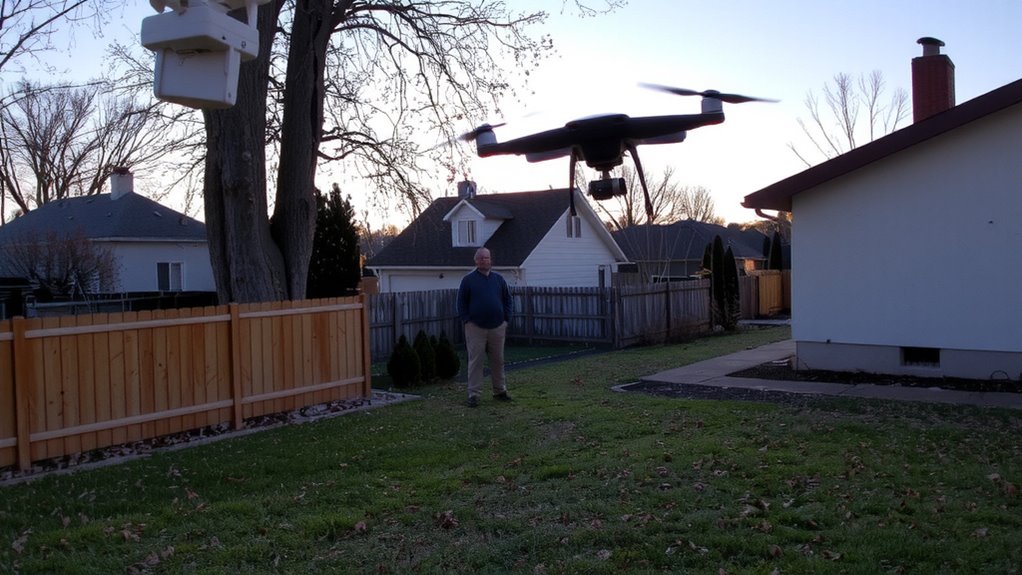
While you might think flying a drone over your own property gives you full control, federal regulations from the FAA still apply-even for personal use. You’re required to register your drone if it weighs more than 0.55 pounds, a rule known as drone registration. Failure to register can result in fines. Flight restrictions also limit where and how high you can fly. For example, you can’t fly above 400 feet or near airports without approval. Drones must stay within your line of sight at all times. These rules help maintain airspace safety for manned and unmanned aircraft. While drones can improve home security, they’re not exempt from federal oversight. Knowing these basics helps you avoid penalties and use your device responsibly. Planning your flights around these limits makes your surveillance efforts both legal and effective. Always check the FAA’s website for updates.
Know Your State’s Drone Privacy Rules
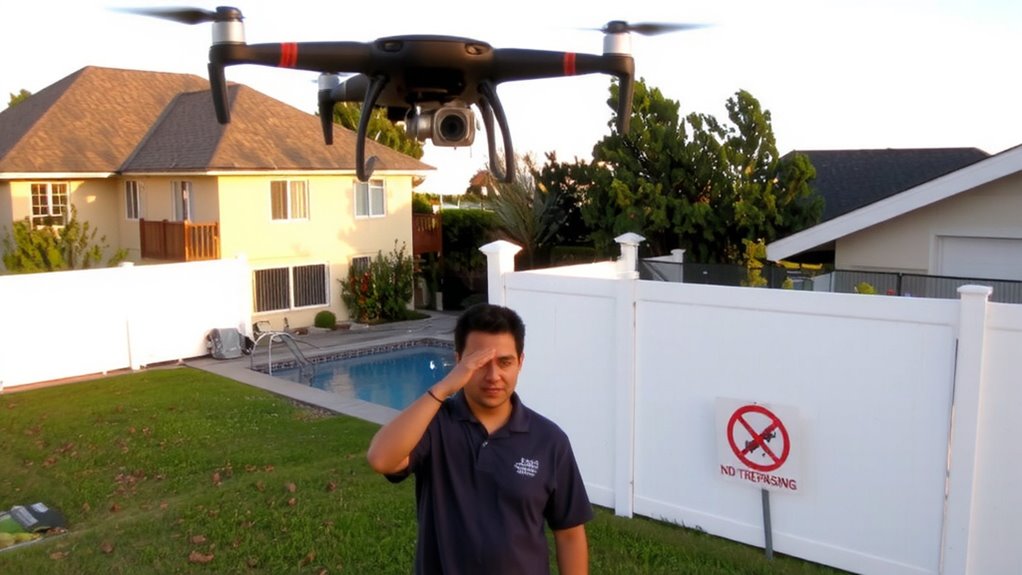
Why should you care about where your drone’s camera points? Because your state may have strict privacy laws limiting what you can record, even near your own home. While federal rules cover basics like flight altitude and Drone registration, state laws add another layer. Some states ban flying over private property or capturing images without consent, even if you’re staying within FAA altitude limits. You’re responsible for knowing both. Drone registration with the FAA is mandatory, but it doesn’t shield you from state penalties. Check your state’s statutes-some impose criminal or civil liability for misusing drone cameras. Always fly below 400 feet, avoid sensitive areas, and document compliance. Understanding these rules helps you use your drone effectively without legal risk. Stay informed, stay compliant, and protect your rights-and others’.
Don’t Fly Over Neighbors Without Consent
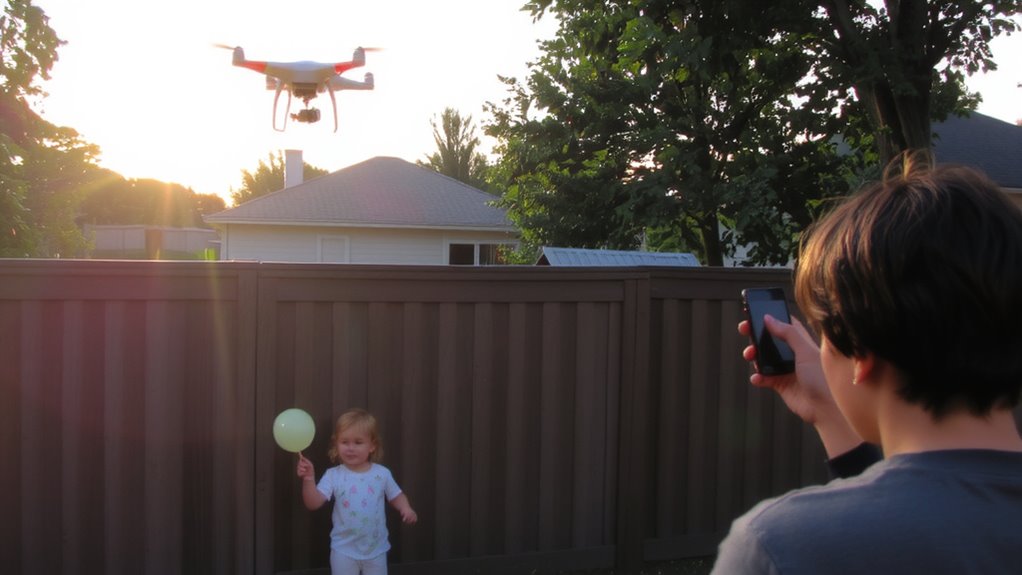
Flying your drone near home might seem harmless, but pointing it toward a neighbor’s property without permission could lead to legal trouble, even if you’re following FAA altitude rules. You may unintentionally cross property boundaries, which can spark neighbor disputes over privacy and airspace use. Courts have ruled that repeated flights over private land may constitute trespassing, especially when close to the ground. To avoid conflict, talk to nearby residents before flying and mark your operational limits clearly. Respecting property boundaries isn’t just courteous-it’s a preventive legal step. Documenting consent from neighbors can also protect you if misunderstandings arise. Many drone users find that setting flight zones in their drone’s app helps avoid accidental overreach. Planning responsible flight paths reduces risks, maintains good relationships, and supports safe, lawful drone operation around your home.
Avoid Recording People Without Permission
How would you feel if someone captured your image without asking while you were relaxing in your backyard? You’d likely consider it a breach of privacy-and the same standard applies when using your drone. Avoid recording people without permission to prevent consent violations, which can lead to legal consequences. Many states treat unauthorized audio capture as illegal wiretapping, even in public spaces. Always disable audio recording unless absolutely necessary and informed consent is obtained.
| Feature | Pro | Con |
|---|---|---|
| Video-only mode | Reduces legal risk | Limits situational awareness |
| Audio capture | Captures critical context | High risk of consent violations |
| Motion detection | Focuses recording on activity | May still capture people unintentionally |
Respect others’ privacy as you’d expect them to respect yours.
Delete or Secure Personal Footage Immediately
Your drone’s footage might seem harmless today, but leaving it unsecured or undeleted could lead to serious privacy risks tomorrow. You should delete recordings as soon as they’re no longer needed or store them securely using data encryption. Without encryption, anyone accessing your device can view sensitive footage. Limit storage duration to only what’s necessary-most home users don’t need to keep files longer than 30 days. Shorter storage duration reduces the chance of data breaches. If you must keep footage longer, use encrypted cloud services or password-protected external drives. Unsecured files on memory cards or phones are easy targets. Immediate action protects not only your privacy but others’ too. Plan your storage strategy ahead: choose devices with built-in encryption and automatic deletion features. These tools help maintain compliance and minimize risk without extra effort.
Follow Local Laws on Drone Surveillance
Why do some drone operators face legal penalties even when flying over their own property? Because local laws often restrict how close you can fly to property boundaries or public access areas. Even on your land, drones can capture images beyond your yard, infringing on neighbors’ privacy or recording public spaces where people expect anonymity. Many municipalities set flight limits near sidewalks, streets, or parks-places with public access-requiring operators to stay a certain distance away. Ignoring these rules risks fines or legal action. Always check county and city ordinances before flying. Some areas ban nighttime surveillance or require registration. Respect property boundaries, not just legally but visually-angle your drone’s camera inward. Know zoning rules and no-fly zones. Following local laws protects you from liability while ensuring responsible use.
Weigh Security Benefits Against Legal Risk
Flying a drone over your property can boost home security by monitoring blind spots, detecting trespassers, or spotting package theft, but these benefits come with legal trade-offs you need to evaluate. While drones offer real-time surveillance and deterrence, they may breach privacy laws if they record neighbors or public areas without consent. That risks eroding public trust and crossing ethical boundaries, especially if footage is shared or stored improperly. Some communities restrict flight altitude and operating hours, so check local regulations before routine use. Drones with geofencing and automatic privacy modes can help you stay compliant. Though prices range from $200 to over $1,000, the right model balances capability with legal safety. Always document your use policies and limit recordings to your property. Weighing security gains against legal exposure helps prevent fines and community conflict.
On a final note
You can use a drone for home security, but you must follow FAA rules and respect privacy laws. Flying over neighbors without consent or recording people without permission risks legal trouble. Know your state’s rules, store footage securely, and delete it quickly. Balance added security with potential risks and costs. Plan flights carefully, avoid sensitive areas, and stay informed-laws change. Drones help, but only when used responsibly and within limits.