Choosing Between Wired and Wireless Access Control Systems: A Practical Guide
You should choose wired access control if you need reliable, tamper-resistant security with low long-term maintenance, especially in permanent buildings with existing infrastructure. Wireless systems offer quicker, cheaper installation and adapt easily to layout changes, ideal for rented or newer spaces. Consider power needs, signal stability, and integration with cameras or alarms. Each option has trade-offs in cost, durability, and flexibility-knowing your priorities helps narrow the best fit for your property’s security goals.
Notable Insights
- Older buildings with existing wiring are better suited for wired access control systems due to integration and stability.
- Wireless systems are ideal for rented or newer spaces where minimal installation disruption is required.
- Wired systems offer higher security and reliability, making them suitable for high-risk or large-scale environments.
- Wireless access control provides flexibility for reconfiguration but risks signal interference and battery dependency.
- Consider long-term costs: wired has higher upfront expenses, while wireless incurs ongoing maintenance and battery replacements.
Start Here: Which Access Control Fits Your Building?
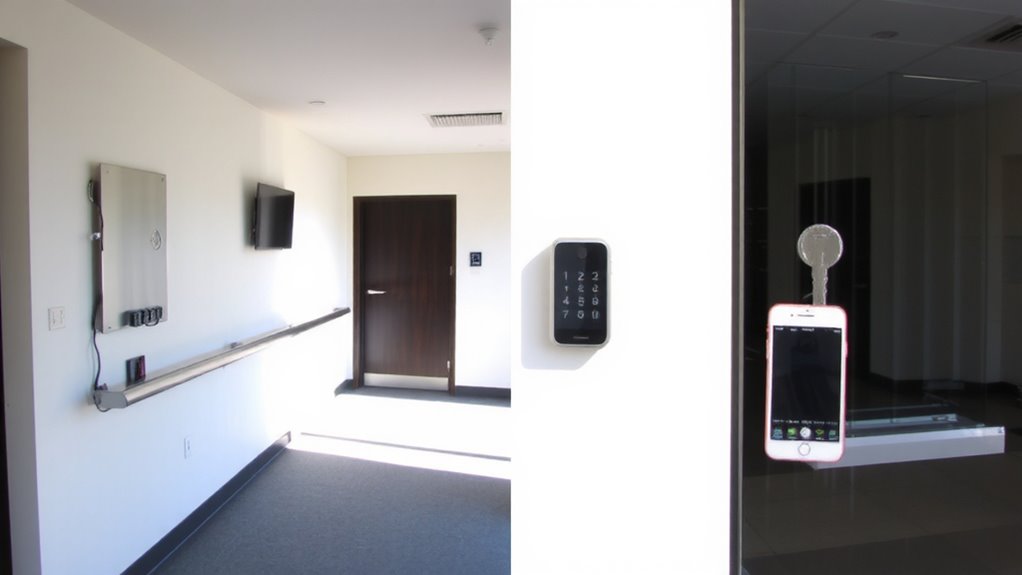
What kind of building are you securing? That’s the first question when choosing an access control system. For older buildings with existing wiring, wired systems often offer better reliability and lower long-term costs. Newer or rented spaces might benefit more from wireless setups, which avoid major construction. Consider integration complexity-wired systems can be harder to modify later, while wireless may need frequent battery checks. System compatibility matters too; guarantee your choice works with current security tools like cameras or alarms. Wired setups usually support larger networks, ideal for offices or schools. Wireless fits homes or small businesses needing flexibility. Installation costs for wired systems are higher upfront, but maintenance is minimal. Wireless units cost less to install but may require more updates. Plan around your building’s layout, use, and future needs to choose wisely.
Wired vs. Wireless: Key Differences That Matter
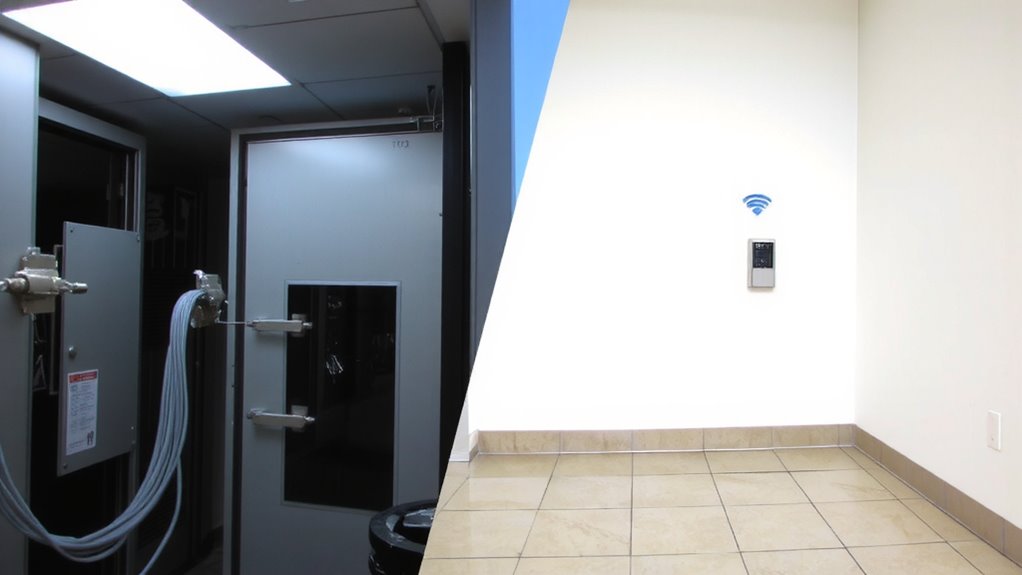
You’ve already considered your building type and its unique needs, but now it’s time to focus on the core technology behind access control: wired versus wireless. Wired systems use physical cables to connect components, ensuring reliable communication without signal interference. They’re powered directly from the building’s electrical supply, so there’s no battery dependency. Wireless systems, on the other hand, rely on radio signals, making installation faster and less invasive. However, they’re more vulnerable to signal interference from walls or electronic devices. You’ll also need to monitor battery dependency, as lost power can disable locks or readers. Wired setups usually cost more upfront due to labor, but they offer long-term stability. Wireless saves on installation but requires ongoing maintenance. Choose wired for reliability in large or complex buildings, wireless for flexibility in smaller or historic spaces.
Security vs. Flexibility: What’s Your Priority?
Reliability often hinges on the balance between strong security and adaptability. If security strength is your top concern, wired systems typically offer better protection against interference and tampering. They’re harder to disrupt and often integrate well with existing security networks. Wireless systems, on the other hand, give you greater flexibility-easy to install, reprogram, or expand without running cables. But that Flexibility trade offs includes possible signal jamming or battery failures. You’ll need to decide whether maintaining constant, secure connections outweighs the convenience of quick changes and remote access. For homes where layout changes often, wireless might suit you best. In high-risk environments, wired is usually the safer pick. Assess your priorities honestly: consistent Security strength or long-term Flexibility trade offs. Your choice shapes both protection and ease of use. A reliable setup begins with selecting the right foundation, such as investing in a Best Wired Security Camera Systems for mission-critical surveillance needs.
Compare Costs: Installation and Maintenance
While wireless systems often seem cheaper at first glance, their long-term costs can add up due to battery replacements, potential signal interference fixes, and firmware updates, whereas wired systems usually require a higher initial investment but tend to be more cost-effective over time. You’ll want to balance initial costs with long term savings when choosing. Below is a breakdown to help you compare:
| System Type | Initial Costs | Long Term Savings |
|---|---|---|
| Wired | Higher (cabling, labor) | High (low maintenance) |
| Wireless | Lower (easy setup) | Moderate (battery, updates) |
| Hybrid | Medium | Medium |
Wired systems pay off in durability and reduced upkeep, while wireless offers quicker deployment. Consider your budget now and down the road. Prioritize reliable performance and minimal recurring expenses for the best value.
Will It Last? Downtime, Power, and Reliability
What happens when the power goes out or a connection drops-will your access control system hold up? Wired systems typically offer greater system durability and consistent performance, since they’re less prone to signal interference and often include built-in power backups. They rely on physical connections, so internet or Wi-Fi disruptions won’t disable them. However, if the main power fails and backup batteries aren’t installed, even wired setups can go down. Wireless systems run on batteries and Wi-Fi, making them vulnerable to both power loss and signal interference from walls, appliances, or neighboring networks. While convenient to install, they require more monitoring to prevent downtime. For best reliability, choose systems with long-lasting batteries, low-power modes, and mesh network support. Always plan for outages-reliability isn’t just about technology, but how well you prepare for real-world disruptions.
Real-World Examples: Where Each System Wins
Many homes and businesses find that the right access control system depends on their specific environment and needs. If you’re securing a modern office with stable power and low signal interference, wireless systems offer quick installation and flexibility. Their battery life typically lasts 12–18 months, but frequent use or poor signal conditions can shorten that. Wired systems shine in large buildings where reliability is critical, since they aren’t affected by battery life or wireless congestion. They’re ideal when signal interference from walls or equipment is high. For a historic home where drilling is difficult, wireless avoids structural damage. In high-security facilities, wired systems provide consistent performance with less downtime. Plan for professional installation with wired setups, which cost more upfront but offer long-term stability. Weigh your building layout, tech infrastructure, and maintenance capacity before deciding.
On a final note
You’ll choose wired for reliability and strong security, especially in large buildings where downtime risks are high. Wireless fits smaller spaces or temporary setups, offering quick installation and easy changes. Wired systems cost more upfront but last longer with less maintenance. Wireless saves money at first but may need battery replacements and has slight signal risks. Pick based on your building size, budget, and need for flexibility or stability.