How to Design a Security-First Front Yard With Visibility and Obstacles
Trim shrubs under three feet high and keep space beneath them clear to eliminate hiding spots. Maintain full sightlines to your front door by avoiding tall plants or solid fences. Add layered lighting with motion sensors and LED bulbs for better nighttime visibility. Plant thorny bushes like roses near windows to deter intruders. Use gravel paths for audible detection and install low fencing or bollards to block unauthorized access-simple, cost-effective steps that enhance security while improving curb appeal. You’ll discover how these elements work together to strengthen your home’s defense.
Notable Insights
- Trim shrubs under 3 feet tall and keep space beneath them to eliminate hiding spots near doors and windows.
- Maintain clear sightlines to the front door from the street and sidewalks by avoiding tall plants and solid fences.
- Install layered outdoor lighting with motion sensors to eliminate dark zones and deter unauthorized access.
- Plant thorny shrubs like holly or rose bushes near entry points to create natural physical barriers.
- Use gravel paths and low, sturdy fencing to guide visitors while creating audible and visual deterrents to intruders.
Trim Shrubs to Block Intruder Hiding Spots
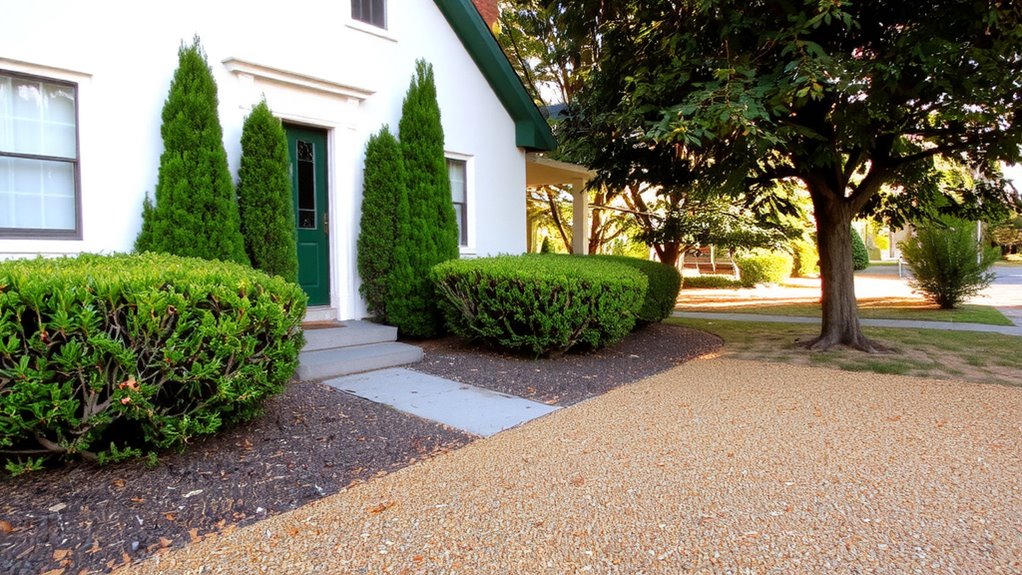
Keeping shrubs neatly trimmed isn’t just about curb appeal-it’s a smart security move. You reduce hiding spots when you maintain plants away from doors and windows. Dense foliage and overgrown hedges offer cover for intruders, making it easier for them to approach unnoticed. Experts recommend pruning shrubs to under three feet in height so visibility remains clear. This simple step deters would-be burglars who rely on concealment. Avoid letting branches grow low to the ground; instead, maintain open space beneath. Annual trimming, or biannual maintenance in fast-growing climates, keeps plants under control without excessive cost. For low-maintenance options, choose slow-growing species or install small fences to define boundaries. Though upkeep requires effort, the trade-off is increased home safety. Trimming your shrubs isn’t just landscaping-it’s a preventive measure backed by crime prevention research.
Ensure Full Sightlines to Your Front Door
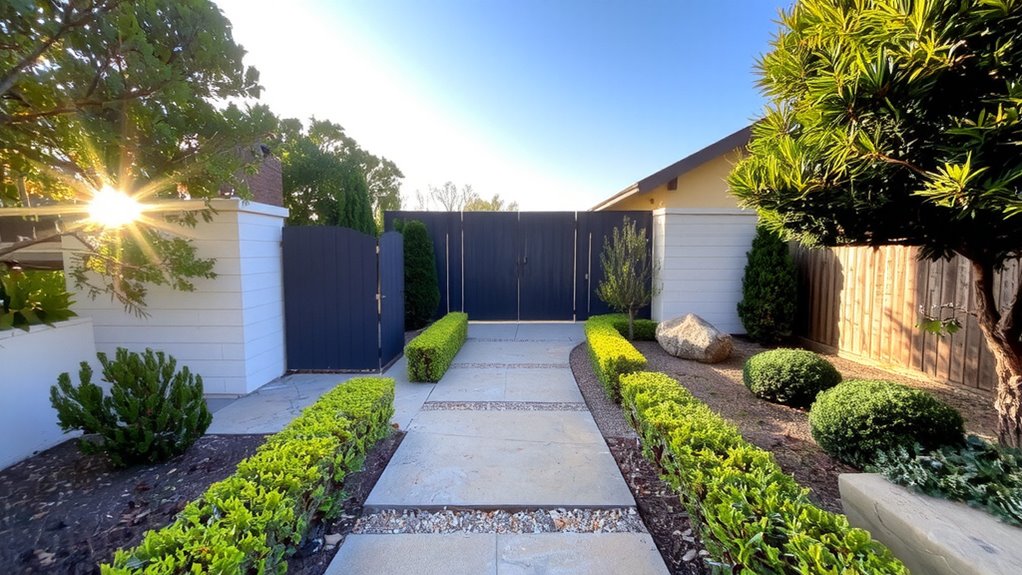
How clearly can you see your front door from the street? If the answer isn’t immediate, you may have a security gap. Clear sightlines to your front door discourage intruders, who prefer concealed entry points. Maintain unobstructed views by keeping pathways, steps, and porch areas free of tall plants, furniture, or decor. Position landscaping low-ideally under 3 feet-to allow visibility without blocking natural surveillance from neighbors or passersby. Avoid installing solid fences or dense hedges near the entrance, as they can create blind spots. Consider the sightline from multiple angles: from your curb, sidewalk, and adjacent driveways. Security improves when your home is passively monitored. Clear sightlines and unobstructed views not only enhance safety but also increase perceived occupancy. Plan now-it’s a low-cost strategy with measurable impact. Adding a best outdoor wired security camera systems can further enhance visibility by actively monitoring entry points even in low-light conditions.
Light All Zones With Layered Outdoor Lighting
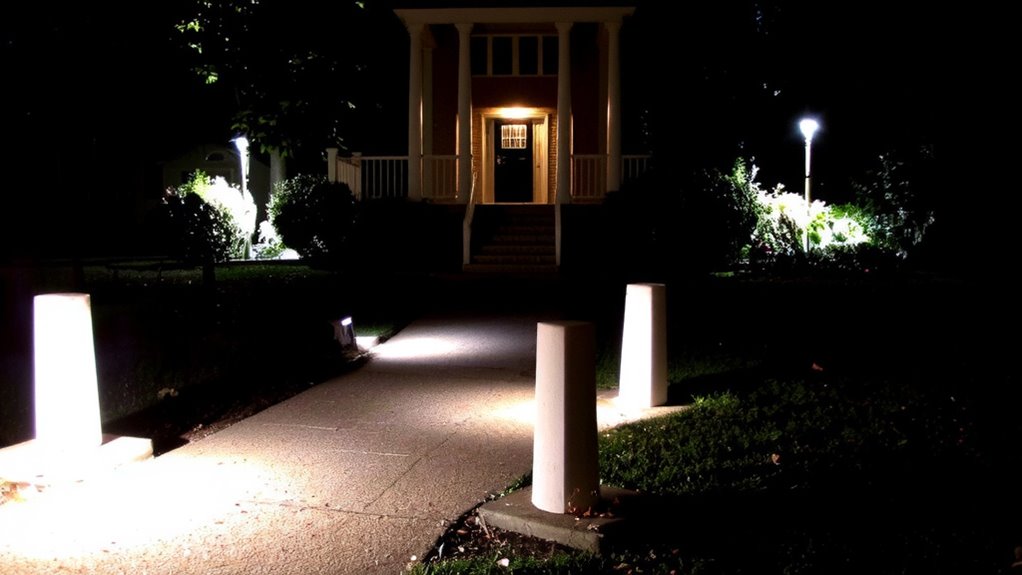
Even if you’ve secured your front door and trimmed back shrubbery, dark areas around your property can still provide cover for intruders, so lighting matters just as much as visibility. Use layered outdoor lighting to eliminate shadows and increase detection. Install fixtures at different heights-path lights, wall mounts, and overhead lamps-to create an ambient glow that guides guests while exposing movement. Include motion sensors to activate bright lights when someone approaches; these deter intruders and alert you to activity. LED bulbs last longer and use less energy, making them cost-effective over time. Position lights to avoid glare and dark spots, and point motion sensors away from busy sidewalks to reduce false triggers. A well-lit yard, combining consistent ambient glow with responsive motion sensors, improves both safety and surveillance. Plan your layout before installation to balance coverage, efficiency, and aesthetics. Integrating best outdoor security cameras can enhance visibility by capturing clear footage even in low-light conditions.
Plant Thorny Shrubs Near Entry Points
A surprising number of break-ins occur near ground-level entry points, and thorny shrubs can serve as a natural yet effective barrier. You can use plants like holly, barberry, or rose bushes to create thorny barriers that make access difficult for intruders. These shrubs provide natural deterrence by combining physical obstruction with minimal maintenance needs. Position them near windows, doors, and other vulnerable spots, but keep them trimmed so they don’t block sightlines. Thorny barriers work best when paired with clear visibility and lighting. Most thorny shrubs cost $20–$50 per plant and establish roots within one growing season. While they deter climbing and crawling, avoid overplanting-they shouldn’t become hiding spots. With proper placement, thorny shrubs enhance security without sacrificing curb appeal.
Use Gravel Paths to Detect Unexpected Movement
While intruders often rely on stealth, a well-placed gravel path can undermine their approach by creating audible cues with every step. You can use sound detection to your advantage-gravel crackles under pressure, making footstep tracking easy, even at night. Opt for medium-sized, angular stones, as they shift less and generate more noise than rounded pebbles. A 2- to 3-foot-wide path along entry points and side yards enhances visibility and forces potential trespassers into detectable areas. Installation costs run $2 to $4 per square foot, depending on base prep and gravel type. Though low-maintenance, gravel may require occasional raking to preserve its sound-producing texture. Avoid deep beds, as they can muffle noise. Paired with clear sightlines, gravel paths provide a simple, data-backed way to improve perimeter awareness without obtrusive barriers.
Install Bollards and Low Fencing to Block Access
Security bollards and low fencing serve as physical deterrents that guide movement while blocking unauthorized access to your front yard. Proper bollard placement at driveway entrances and near walkways stops vehicles from crashing through, while still letting foot traffic flow. You’ll want to space bollards close enough-typically 3 to 4 feet apart-to prevent slipping through. Choose fencing materials like wrought iron, aluminum, or pressure-treated wood; each offers durability and visibility, helping maintain sight lines. Low fences around 3 to 4 feet tall define boundaries without blocking surveillance views. Fixed bollards are more secure than removable ones, though pricier to install-expect $50 to $200 per bollard. Fencing costs vary by material, averaging $15 to $40 per linear foot. Together, these features add layered protection when planned strategically.
Place Security Cameras at Key Entry Zones
You’ve set up bollards and low fencing to control access and guide foot and vehicle traffic, but visual monitoring adds another layer of protection. Proper camera placement guarantees effective entry monitoring and deters intruders. Position cameras at main walkways, garage entries, and front doors-zones most used by visitors and potential threats. Use weather-resistant models with night vision and motion alerts for 24/7 coverage. For optimal performance, consider models reviewed in top home security camera rankings to ensure reliability and advanced features.
| Zone | Recommended Camera Type | Key Benefit |
|---|---|---|
| Front Door | Doorbell Camera | Live feed, two-way talk |
| Side Walkway | Bullet Camera | Long-range detection |
| Driveway Entry | PTZ (Pan-Tilt-Zoom) Camera | Covers wide area |
| Garage Door | Wireless IP Camera | Easy installation, no wiring |
Choose models with local storage or encrypted cloud backups. Good camera placement improves entry monitoring without creating blind spots.
On a final note
You can make your front yard more secure by combining visibility and smart obstacles. Trim shrubs below window level so no one can hide. Keep a clear view to your front door and use layered lighting to cover all zones. Thorny plants and gravel paths help slow intruders and alert you. Install bollards or low fencing to block access, and place security cameras at entry points for constant monitoring-simple changes that work together to deter crime.