Leveraging AES-256 Encryption in Yale Assure Lock 2 to Protect Wireless Communication Channels
Your Yale Assure Lock 2 uses AES-256 encryption to secure all wireless communication, including Bluetooth pairing and firmware updates. This military-grade encryption protects against eavesdropping, tampering, and brute-force attacks by using unique session keys and frequent key rotation. It guarantees data integrity from your phone to the lock, resists signal interference, and blocks hacks like replay attacks. Even if someone intercepts the signal, the data is useless without the key-keeping your home secure. There’s more to how this defense stays ahead of evolving threats.
Notable Insights
- AES-256 encrypts all wireless signals between the Yale Assure Lock 2 and app, ensuring military-grade security.
- Unique session keys are generated for each communication, making intercepted data useless to attackers.
- Frequent key rotation minimizes exposure and strengthens protection against potential decryption attempts.
- Encrypted firmware updates are delivered automatically, closing vulnerabilities in wireless communication channels.
- AES-256 resists brute-force and replay attacks, maintaining data integrity from command initiation to lock execution.
Why Wireless Security Is Critical for Smart Locks
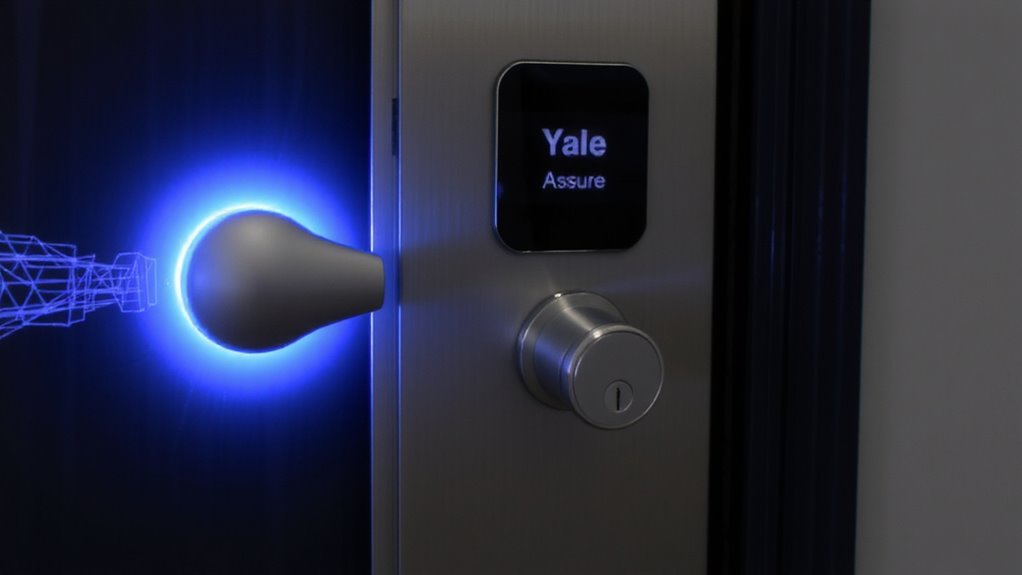
While wireless connectivity offers convenience, it also opens smart locks like the Yale Assure Lock 2 to potential security risks if not properly protected. You’re trusting your home’s safety to wireless signals, which can suffer from signal interference, causing delays or failed commands. This can leave you locked out or unknowingly unlocked. Device pairing must be secure and verified, or unauthorized devices could gain access. Without strong safeguards, intruders might exploit weak connections or intercept pairing processes. Signal interference from walls, appliances, or nearby networks can also reduce reliability. Proper setup minimizes these risks. You should place your lock and hub to reduce interference and guarantee solid connections. Always confirm device pairing through the official app, using strong passwords and two-factor authentication. Regular updates patch vulnerabilities. These steps help maintain both convenience and security in everyday use. For users integrating with home automation, choosing models compatible with platforms like Home Assistant ensures greater control and customization.
How AES-256 Keeps Your Yale Assure Lock 2 Secure
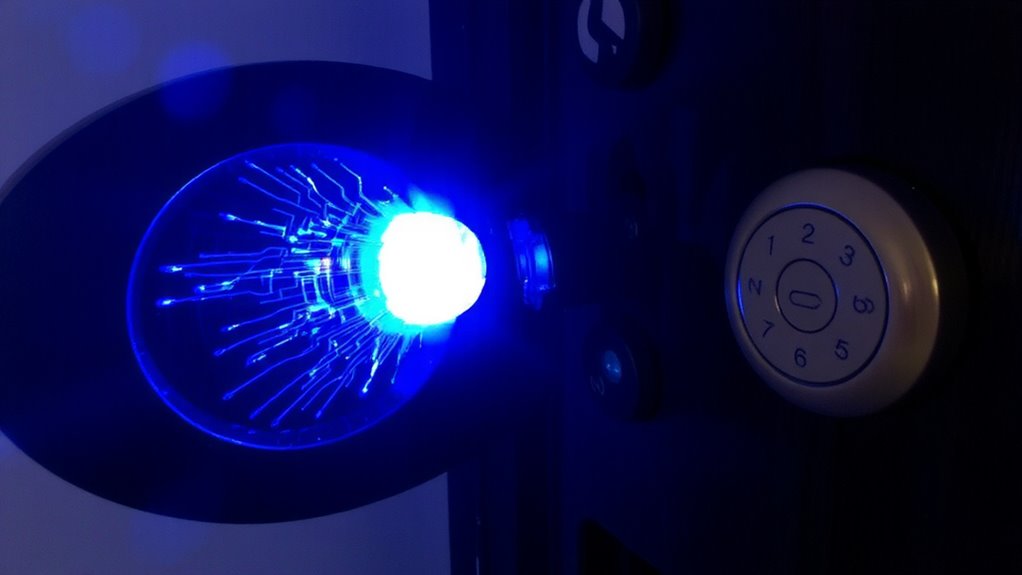
Strong encryption acts like a digital lockbox for your data, and AES-256 is the powerful standard protecting your Yale Assure Lock 2. It secures every wireless signal between your lock and app, ensuring only authorized commands get through. You benefit from military-grade protection, with frequent key rotation that regularly refreshes encryption keys to limit exposure. Though AES-256 isn’t fully quantum resistant yet, it remains highly secure against today’s classical computing threats.
| Feature | Benefit |
|---|---|
| AES-256 encryption | Blocks unauthorized access attempts |
| Key rotation | Reduces risk of key compromise |
| Wireless security | Keeps communication private and intact |
| Quantum resistance | Future-focused protection in development |
Why AES-256 Is the Best Encryption for Smart Locks Like Yale Assure
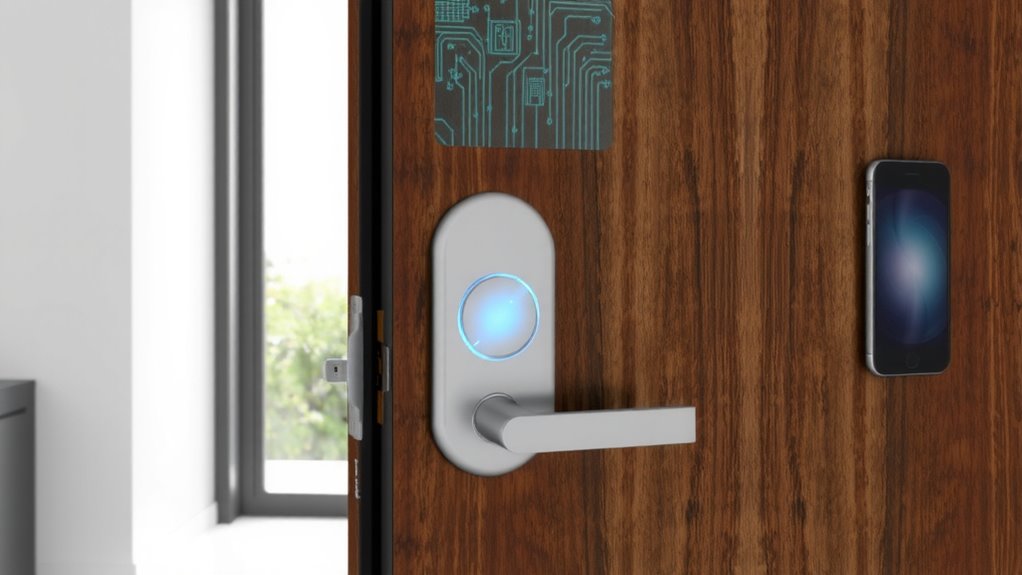
You already know AES-256 secures your Yale Assure Lock 2 with high-grade encryption and regular key updates, but what makes it stand out compared to other encryption options comes down to proven strength, widespread validation, and smart lock compatibility. It’s trusted by governments and financial institutions, so you know it’s reliable. Unlike weaker ciphers, AES-256 resists brute-force attacks effectively, giving your wireless signals strong protection. While not fully quantum-proof yet, it offers greater quantum resistance than most alternatives available today. Its design also allows for future scalability, meaning it can adapt as threats evolve. Plus, its low processing demands make it ideal for battery-powered smart locks. You won’t face slowdowns or compatibility issues. Other encryption methods might cut corners, but AES-256 gives you long-term security without sacrificing performance. That’s why it’s the smart choice for your home.
How the Yale Assure Lock 2 Uses AES-256 to Block Hacks
Because the Yale Assure Lock 2 encrypts every wireless communication with AES-256, hackers can’t easily intercept or mimic the signals needed to open your door. This applies to both Bluetooth pairing and firmware updates, ensuring your lock stays secure during setup and over time. Each communication session uses a unique encryption key, so even if someone captures data, it’s useless without the key.
| Feature | Benefit | Consideration |
|---|---|---|
| Bluetooth pairing | Secure, short-range connection | Requires phone proximity |
| Firmware updates | Patches security flaws automatically | Needs regular connectivity |
| AES-256 encryption | Industry-standard protection | Minimal impact on battery life |
You get reliable defense against common hacks, including replay and brute-force attacks. Plus, encrypted firmware updates mean your lock evolves with emerging threats.
How AES-256 Outperforms Other Smart Lock Encryption
While some smart locks rely on older or weaker encryption standards, the Yale Assure Lock 2 uses AES-256, which is widely recognized as one of the most secure encryption methods available. You get stronger protection compared to locks using basic 128-bit or outdated protocols. AES-256 offers better quantum resistance, meaning it’s harder for future quantum computers to break it-giving you real future proofing. Most competing locks don’t meet government or military-grade standards, but AES-256 does. It’s trusted by banks and agencies worldwide, so your front door deserves the same level of security. The extra encryption strength doesn’t slow performance, and it integrates seamlessly with your existing smart home setup. You won’t pay much more upfront, but you gain long-term peace of mind. Choosing AES-256 now means you’re making a smart, data-backed decision for lasting home safety.
What Hackers Try: and How AES-256 Stops Them
What could a hacker actually do to gain entry to your smart lock? They might try brute force, guessing your code through repeated attempts. But AES-256 stops that-its 256-bit key offers over a billion billion possible combinations, making success virtually impossible. Others use signal jamming, blocking your lock’s wireless signals to prevent locking or trigger false unlocks. However, Yale Assure Lock 2 detects abnormal communication patterns and resists interference, ensuring commands aren’t hijacked. Unlike weaker encryption models, AES-256 has never been cracked in real-world conditions. It’s trusted by governments and banks, not just smart locks. You’re shielded from both digital and wireless attacks, even if someone’s nearby with sophisticated gear. While no system is 100% foolproof, AES-256 drastically reduces risk. Upgrading your lock isn’t just about convenience-it’s a data-driven step toward proven, resilient home security.
How Yale Assure Lock 2 Secures Data From Phone to Door
Even if you’re sending a command from hundreds of miles away, the Yale Assure Lock 2 guarantees your data stays protected every step of the way. When you use your phone to lock or open the door, the signal travels securely through encrypted channels. Bluetooth pairing guarantees only your authorized device connects, blocking unauthorized access. Each communication session uses AES-256 encryption, making it extremely difficult for intercepted data to be decoded. The lock regularly receives firmware updates that strengthen security and fix potential vulnerabilities, so keeping your system up to date is essential. These updates are delivered securely and automatically, minimizing user effort. Unlike basic locks, the Assure Lock 2 validates every command, guaranteeing integrity from phone to door. You don’t need technical skills to stay protected-just enable automatic updates and maintain trusted Bluetooth pairing. Among the top smart locks recommended for home security, the Yale Assure Lock 2 stands out for its robust encryption and best access locks performance.
On a final note
You can trust the Yale Assure Lock 2 to protect your home, thanks to AES-256 encryption. It secures wireless signals between your phone and lock, blocking common hacks like eavesdropping and replay attacks. This encryption is stronger than older standards, offers proven security, and adapts well to future threats. While no system is perfect, AES-256 is a smart, reliable choice for everyday homeowners who value privacy and long-term performance without complex setup or high costs.