Optimizing Your Home’s Energy Efficiency While Maintaining High-Level Surveillance Capabilities
You can cut energy use by 30–60% with geothermal heating, costing $20,000–$30,000 upfront, while smart thermostats ($100–$250) learn your schedule and improve security with away-mode alerts. Switch to LED motion lights ($10–$25) that save 75% on lighting costs and boost outdoor safety. Solar-powered AI cameras ($100–$300 each) reduce grid reliance and cut false alarms by identifying people, animals, or vehicles. Use door and window sensors to trigger automatic lighting or HVAC shutoffs, saving energy and enhancing protection with minimal power use. Connect everything through Alexa, Google, or Apple HomeKit for unified control. Set schedules to activate cameras at dusk or disable sensors when you’re home. Track energy trends and security alerts in real time from a single dashboard that learns your habits and adapts. You’ll see how small upgrades work together to create a smarter, safer, more efficient home.
Notable Insights
- Install geothermal heating to cut energy bills by up to 60% while maintaining consistent indoor temperatures efficiently.
- Use smart thermostats with occupancy learning and away mode to boost energy savings and simulate presence for security.
- Deploy LED motion sensor lights with smart integration to reduce energy use and enhance perimeter safety.
- Set up solar-powered AI security cameras with local storage and remote access for reliable, grid-independent surveillance.
- Integrate door, window, and motion sensors with a unified smart home system for automated energy and security responses.
Build a Home That’s Both Energy-Efficient and Secure
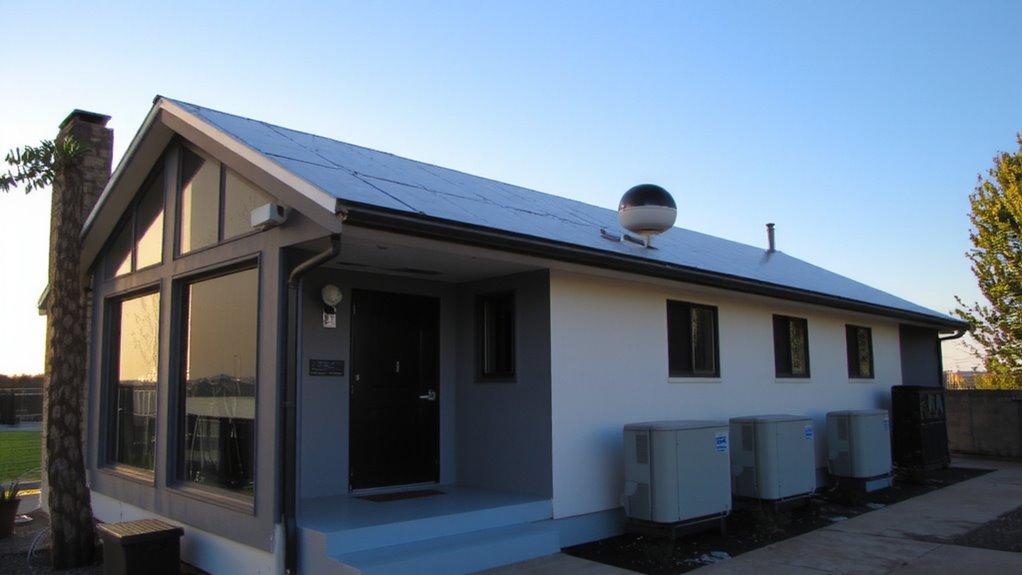
While you’re designing a new home or renovating an existing one, focusing on both energy efficiency and security can save you money and increase safety over time. Installing geothermal heating reduces energy bills by 30–60% compared to conventional systems, using stable underground temperatures for consistent climate control. Though upfront costs range from $20,000 to $30,000, incentives and long-term savings improve return on investment. Pair this with rainwater harvesting to cut water expenses and reduce strain on municipal supplies. A basic 1,000-gallon system costs $2,000–$5,000 and supports irrigation, toilet flushing, or laundry use. Use durable, non-potable plumbing separated from main lines. Combine these systems with reinforced doors, secure window locks, and perimeter lighting to integrate efficiency with physical security. Proper insulation, energy-efficient windows, and sealed envelopes not only lower energy use but also make forced entry harder. Plan early to align infrastructure with utility goals and local codes.
Choose a Smart Thermostat to Save Energy and Stay Alert
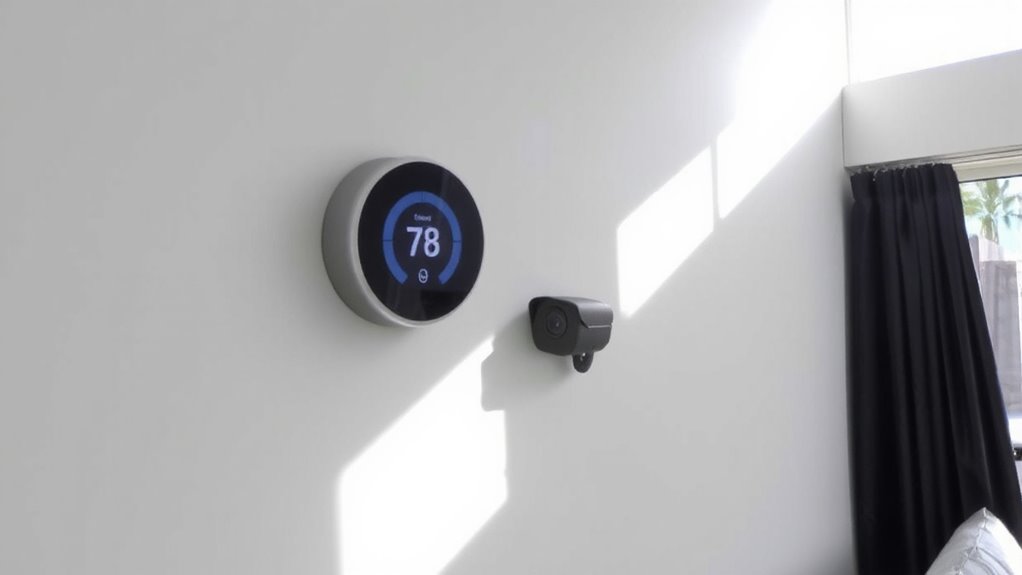
A smart thermostat does more than adjust the temperature-it learns your schedule, cuts energy waste, and keeps your home secure when you’re away. With remote access, you can monitor and tweak settings from anywhere, ensuring comfort and efficiency. Smart zoning lets you heat or cool only occupied areas, reducing strain on your HVAC system. This boosts savings and maintains consistent indoor conditions.
| Feature | Benefit |
|---|---|
| Learning Schedule | Automatically adjusts temps |
| Remote Access | Control via smartphone anytime |
| Smart Zoning | Target specific areas |
| Energy Reports | Track usage weekly |
| Away Mode | Simulates occupancy for security |
These thermostats integrate with surveillance systems, alerting you to unusual activity. Most models cost $100–$250, with DIY installation. Choose one with strong encryption to protect your data.
Switch to LED Lights With Motion Sensors for Safety and Savings
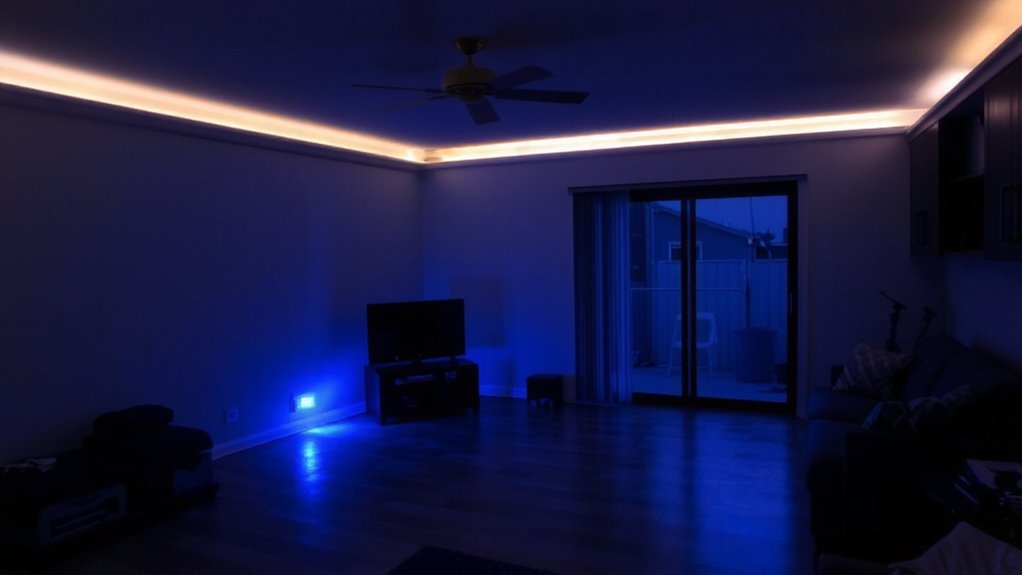
Since lighting accounts for about 15% of home energy use, switching to LED bulbs with motion sensors can substantially cut electricity costs while improving safety. You’ll gain better cost efficiency because LEDs use at least 75% less energy than incandescent bulbs and last up to 25 times longer. When paired with motion sensors, automated lighting guarantees lights only turn on when needed, reducing waste. This is especially useful around entryways, garages, and backyards, where illumination deters intruders without requiring manual control. Most systems install easily into existing fixtures and offer adjustable sensitivity and timer settings. While initial costs range from $10–$25 per fixture, the long-term savings on energy bills and bulb replacements add up. Some models even integrate with smart home hubs for remote monitoring. With automated lighting, you get reliable security and measurable energy savings-no guesswork involved.
Use Solar-Powered Cameras With AI to Cut Energy and Boost Security
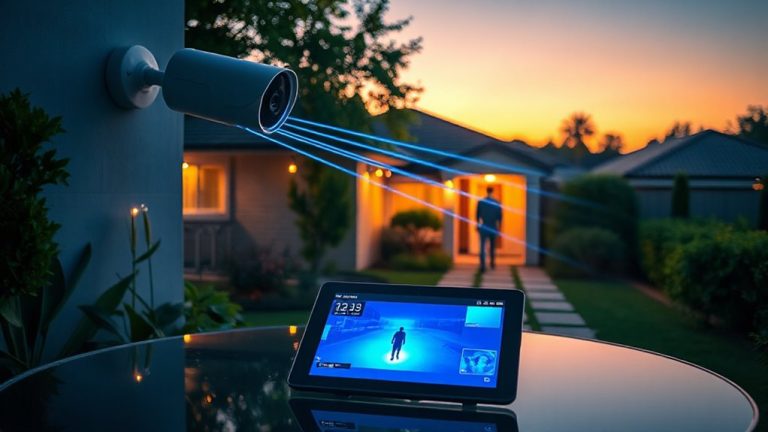
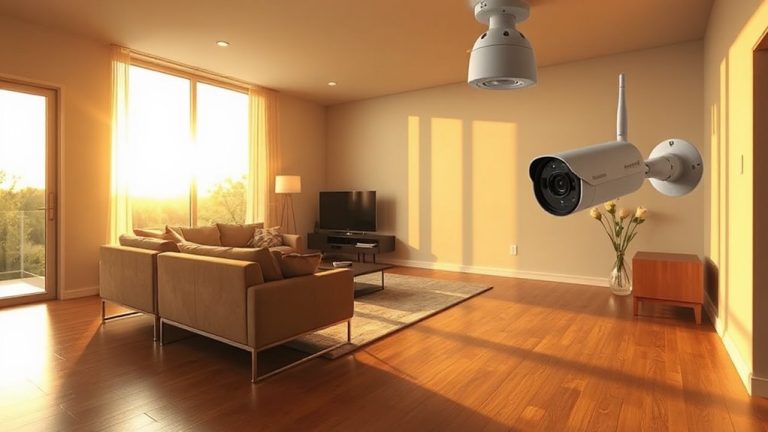
Many homeowners find solar-powered security cameras with AI features offer a practical way to maintain surveillance without increasing energy bills. With solar integration, these cameras rely on sunlight to power operations, reducing grid dependence and cutting electricity costs over time. You’ll avoid rewiring or frequent battery changes, especially in sunny climates. Pair that with AI analytics, and your system can distinguish between people, animals, and vehicles, minimizing false alerts. This means fewer unnecessary notifications and more accurate threat detection. Most models store footage locally or in the cloud, allowing remote access via smartphone apps. Initial costs range from $100–$300 per camera, but long-term savings are significant. Installation is straightforward, usually requiring only a sturdy mount and sun exposure. Just be sure to angle panels properly for consistent charging. For reliable performance in remote areas, consider the best cellular solar security cameras.
Connect Door and Window Sensors to Save Power Automatically
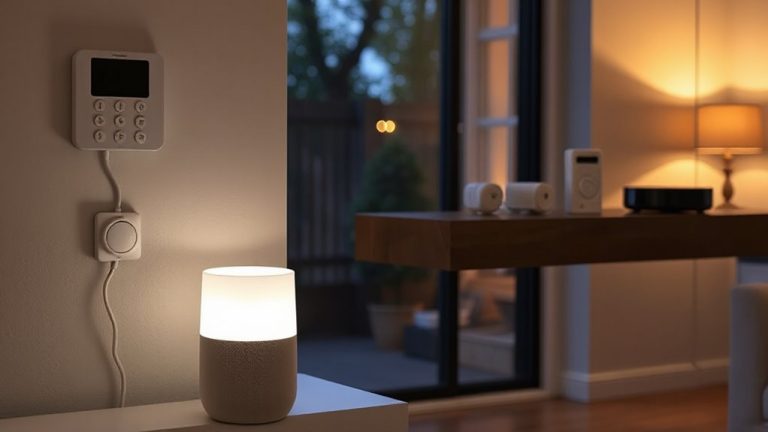
When you connect door and window sensors to a smart home system, they can automatically trigger energy-saving actions like turning off lights or adjusting the thermostat when a room is unoccupied. Sensor integration enables your devices to communicate, so openings or closings act as automated triggers for other systems. For example, if a window opens, the AC shuts off to prevent wasted energy. These sensors use minimal power and often last years on a single battery. Most systems work with Alexa, Google, or Apple HomeKit, allowing centralized control. Upfront costs range from $20–$60 per sensor, but savings on energy bills typically offset this within a year. Confirm compatibility with your hub before purchasing. While false alarms can happen, proper placement reduces them. With reliable performance and clear energy benefits, sensor integration offers a practical way to boost efficiency without sacrificing comfort or security.
Set Schedules to Run Security Devices Efficiently
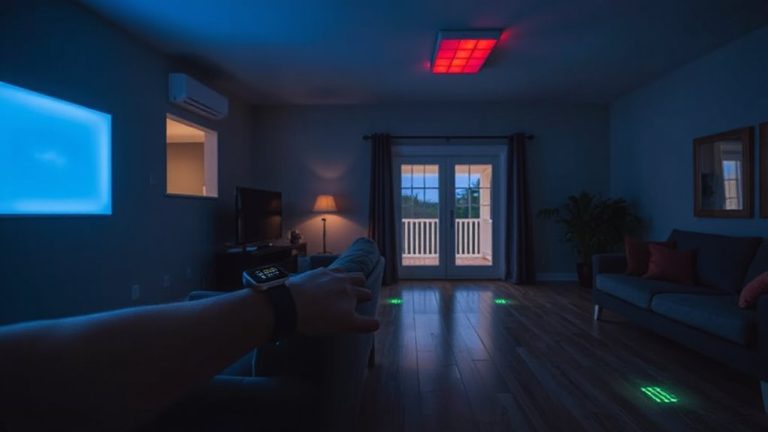
You’ve already seen how sensors on doors and windows can cut energy waste by automating lighting and climate systems-now you can apply similar logic to your security setup by setting schedules for your devices. Energy scheduling lets you run cameras, motion detectors, and smart locks only when needed, reducing power use without sacrificing safety. With device automation, you can program outdoor cameras to activate at dusk and turn off at dawn, or disable indoor sensors when you’re home. Most smart hubs support custom schedules, so you can align security routines with your household’s habits. This approach saves energy, extends device life, and avoids constant monitoring costs. Some systems offer learning features that adjust over time, though setup may require a few tweaks. For best results, start with simple on/off times and refine as needed. Budget models support basic scheduling, while premium ones integrate with voice assistants and offer remote adjustments.
Track Energy and Security on One Dashboard
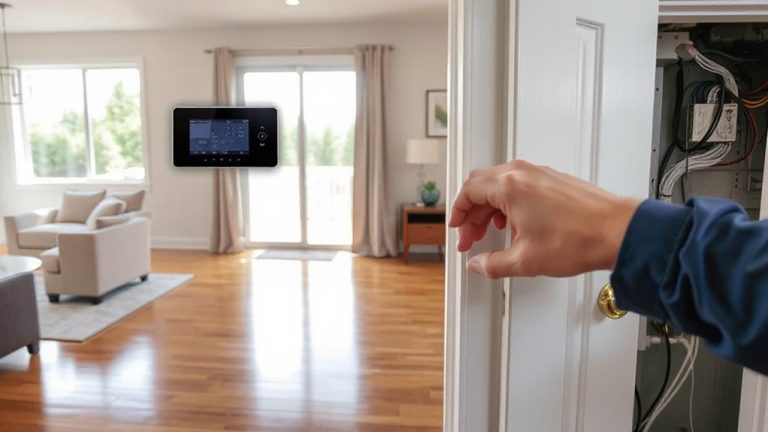
A unified dashboard gives you real-time control over both energy use and home security, letting you monitor devices, adjust settings, and review performance in one place. With real time monitoring, you see energy spikes and security alerts as they happen, so you can respond quickly. Predictive analytics help you anticipate issues-like a door left unsecured or an HVAC system drawing too much power-before they become problems. You’ll get alerts, review trends, and fine-tune automation rules based on actual data. Most systems start around $200, with subscription plans from $10/month for cloud storage and advanced insights. Look for dashboards that integrate with your existing smart devices and offer strong encryption. While setup takes some planning, the payoff is a smarter, safer, more efficient home. You’re not just reacting-you’re staying ahead.
On a final note
You can cut energy use and boost security by combining smart tech like thermostats, LED lights with motion sensors, and solar-powered AI cameras. Connecting door and window sensors helps automate energy savings while keeping your home alert. A single dashboard lets you track both systems efficiently. These upgrades cost more upfront but save money over time. Plan installations carefully to balance performance, cost, and convenience across your home.