Positioning Dome Cameras at Gate Pedestals to Monitor Visitor Behavior
Mount your dome camera high on the gate pedestal for clear, wide-angle views of visitors and vehicles. Its low profile resists tampering while infrared and vandal-resistant housing guarantee durability. Aim it 15–30 degrees down from 8–10 feet to capture faces and license plates. Use IP66-rated, wide dynamic range models for reliable daytime and nighttime performance. Sync with access control for real-time monitoring. Proper placement boosts identification accuracy by up to 40%-and there’s more to reflect on for best setup.
Notable Insights
- Mount dome cameras high on gate pedestals to expand field of view and deter tampering.
- Position camera at 15–30 degrees downward for clear capture of faces and license plates.
- Center camera above the gate midpoint to ensure balanced coverage of entry and exit lanes.
- Use vandal-resistant, weatherproof dome cameras with infrared for 24/7 visitor behavior monitoring.
- Align camera to avoid obstructions and test angles throughout the day for optimal visibility.
Why Dome Cameras Work Best at Gate Pedestals
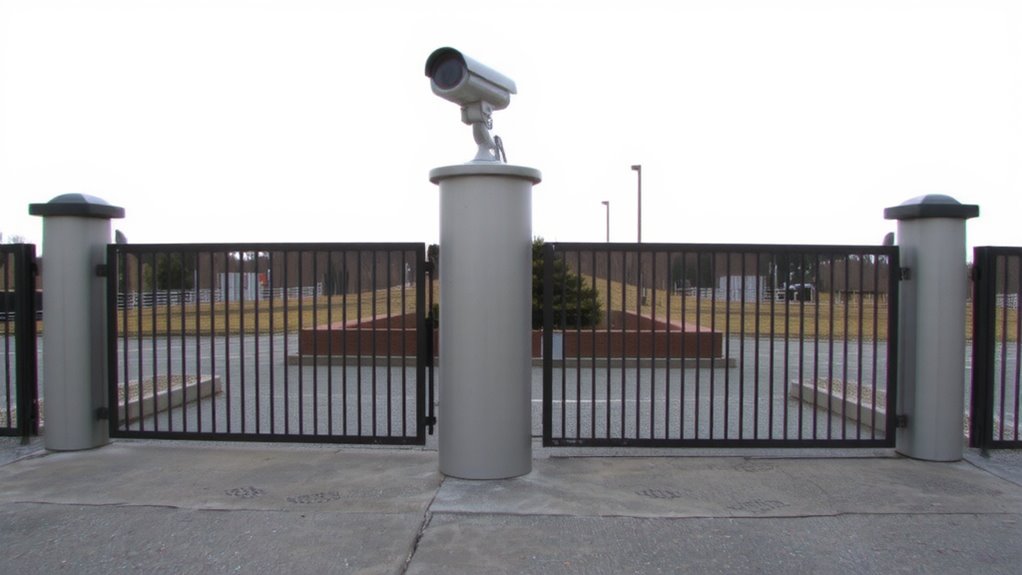
While many security cameras can be mounted at gate pedestals, dome cameras are often the best choice due to their design and performance in this specific role. You’ll find their compact, low-profile shape blends well with gate aesthetics, making them less intrusive than bulky models. Their discreet look supports visitor privacy by not drawing unnecessary attention, while still capturing clear footage. Dome cameras are usually mounted higher, reducing tampering risk and providing a wider field of view. Many include infrared for night use and vandal-resistant housing for durability. Though they can cost slightly more-typically $150–$300-they offer better concealment of lens direction, which helps avoid signaling exactly where they’re focused. This subtle advantage enhances monitoring without compromising camera aesthetics or guest comfort. Overall, their reliability, appearance, and ability to balance surveillance with visitor privacy make them ideal for gate pedestal use. For optimal results, consider models recognized in the best outdoor security cameras roundup for proven performance in similar applications.
How Gate Monitoring Boosts Security and Compliance
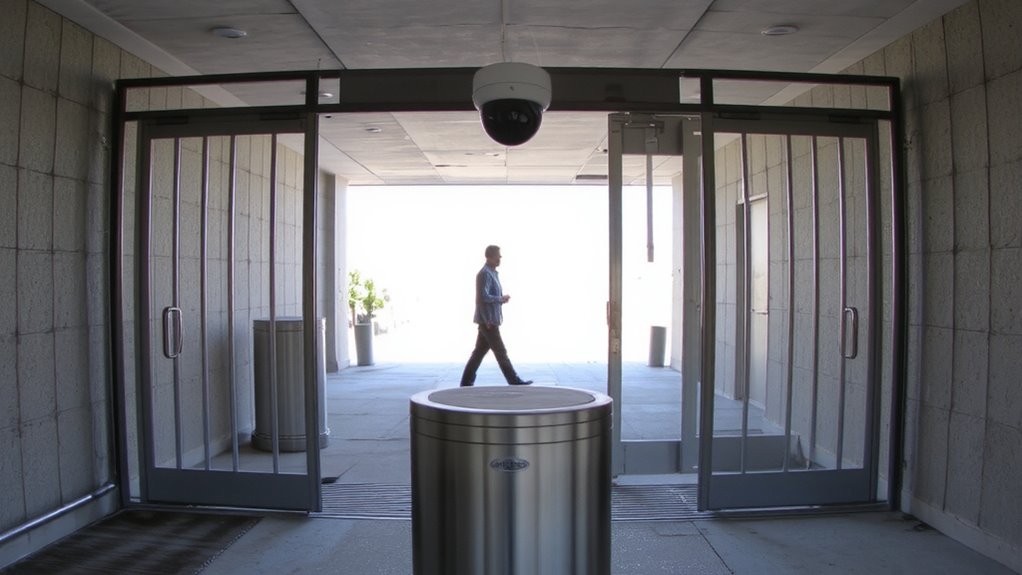
What makes gate monitoring such a critical part of your property’s security? It gives you real-time oversight of who enters and exits, helping prevent unauthorized access. With visitor profiling, you can log key details like vehicle type and check-in times, creating a reliable record for audits or incidents. You’re not just watching footage-you’re using behavioral analytics to detect unusual patterns, like loitering or repeated failed entry attempts. These insights let you act before threats escalate. Plus, consistent monitoring supports compliance with safety regulations, especially in gated communities or commercial sites. The data collected strengthens incident reports and can assist law enforcement when needed. While setup requires upfront planning and camera placement, the long-term benefits outweigh costs. You gain both deterrence and actionable intelligence, making your property safer and easier to manage. A reliable setup includes using best wired outdoor security camera systems for consistent, high-quality video transmission and minimal downtime.
Where to Mount Dome Cameras for Total Gate Coverage
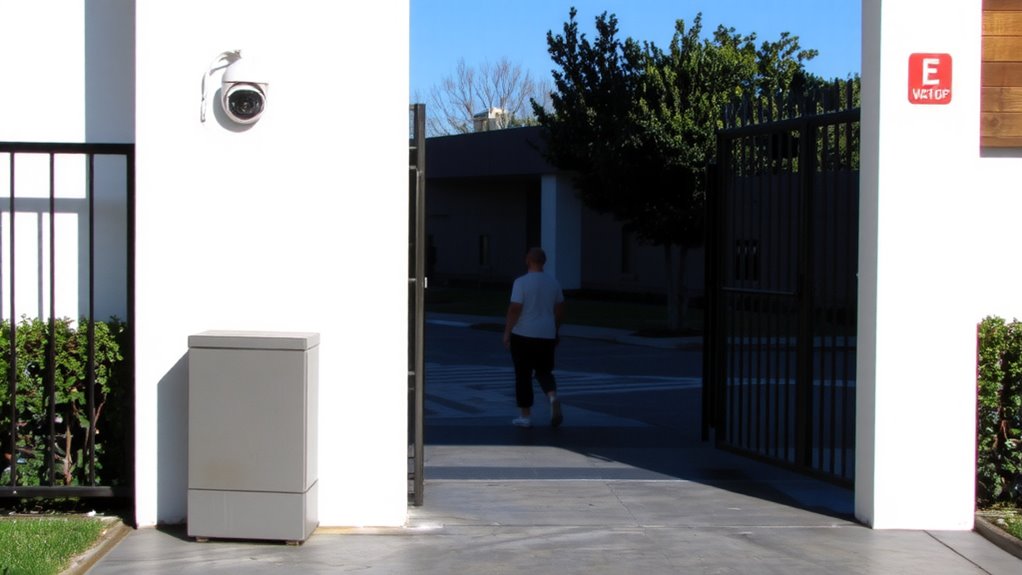
You’ve seen how gate monitoring strengthens security by tracking access and supporting compliance, and now it’s time to focus on the physical setup that makes it all work-camera placement. For total coverage, mount dome cameras high on gate pedestals or adjacent poles, where they can overlook entry and exit lanes. This position reduces blind spots and helps capture clear views of vehicle occupants and pedestrian movements. Avoid placing them too close to walls or canopies, since structural obstructions can block important sightlines. Center the camera above the gate’s midpoint for balanced monitoring. Choose weather-resistant models with wide-angle lenses to maximize field of view. Proper mounting guarantees reliable video evidence and supports automated systems. Invest in professional installation to align height and housing correctly. Consider integrating best camera floodlights for enhanced visibility during nighttime monitoring.
Maximize Sightlines With Optimal Camera Angles
Since camera height and tilt directly affect visibility, aim your dome camera at a slight downward angle-between 15 and 30 degrees-to capture clear facial details and license plates without distorting motion patterns. Proper camera height, usually 8 to 10 feet, combined with precise lens tilt, guarantees effective coverage of the entry zone while minimizing blind spots. Too steep a tilt can warp movement tracking; too shallow may miss critical details. Adjust the lens tilt during installation to balance field of view and image clarity, especially near gate barriers or intercoms. Test angles at different times of day to account for lighting changes. A stable mount prevents shift over time, preserving alignment. Always confirm the adjusted camera height and lens tilt capture the full approach path, allowing accurate behavior monitoring. Data shows correctly angled cameras increase identification accuracy by up to 40%. Position with care-small changes make measurable differences in effectiveness.
Pick the Right Dome Camera for Gate Entry Conditions
A well-chosen dome camera makes a real difference in securing gate entries, where lighting, weather, and viewing angles vary widely. You need reliable performance under tough conditions, so prioritize weather resistance and vandal proofing. Look for an IP66 rating or higher to guarantee protection from rain, dust, and extreme temperatures. A polycarbonate or metal housing adds durability, especially in high-traffic areas where tampering might occur.
| Feature | Why It Matters |
|---|---|
| Weather resistance | Keeps the camera working in rain, snow, or heat |
| Vandal proofing | Prevents damage from intentional impacts |
| Wide dynamic range | Balances light in high-contrast scenes |
Choose a model with infrared night vision and a wide-angle lens to cover more ground. Spending a bit more upfront saves money long-term by reducing replacements and maintenance.
Sync Dome Cameras With Gate Access Control Systems
When integrating dome cameras at gate pedestals, syncing them with access control systems boosts both functionality and security. You get real-time camera synchronization, so every time someone uses a keypad, card, or biometric scan, the system records the video instantly. This access integration guarantees you can match entry attempts with visual evidence, making audits easier and responses faster. Most modern systems support ONVIF or RTSP protocols, so compatibility isn’t usually an issue. Look for NVRs that support trigger-based recording from access events-this cuts down on unnecessary footage. While setup can be more complex than standalone cameras, the data you gain is far more reliable. Initial costs may be higher due to required networking and software features, but the long-term benefits in accuracy and deterrence are worth it. Always plan wiring and network bandwidth in advance to avoid performance lags.
Stay Compliant When Recording Visitors at Entry Gates
What if your security cameras accidentally broke privacy laws? You could face fines or lawsuits. To stay compliant when recording visitors at entry gates, you must follow legal requirements and address privacy concerns. Place cameras only where necessary-like at gate pedestals-and avoid pointing them at private areas such as nearby homes or sidewalks. Always display clear signage notifying visitors they’re being recorded. Laws vary by location, so check local regulations; some areas require data retention limits or visitor consent. Digital timestamping and secure storage protect footage integrity. Using encrypted systems helps prevent unauthorized access. While dome cameras offer wide-angle views and tamper resistance, misplacement increases privacy risks. Plan your setup carefully-factor in camera angles, recording duration, and compliance costs. Following these steps keeps your property secure and lawful.
On a final note
You should position dome cameras at gate pedestals to clearly monitor visitor behavior and improve security. They offer wide viewing angles and resist tampering, making them ideal for entry points. Mount them high enough to cover all access areas, and pair with access control systems for better tracking. Choose models with night vision and weather resistance. Always follow privacy laws when recording.