Maximizing the Use of Outdoor Floodlights to Complement Your Surveillance Cameras
Pair your surveillance cameras with LED floodlights to boost night vision beyond 30 feet, where infrared often fades. Place lights to cover blind spots like corners and side yards, using 4000K–5000K color temperature for clear, accurate video. Sync motion sensors to trigger recording and lighting together, reducing false alerts. Aim lights slightly downward, below or beside cameras, to prevent glare. Most quality models cost $30–$100 and pay off in better evidence and deterrence-there’s more to get right for peak performance.
Notable Insights
- Install LED floodlights with motion sensors to enhance camera visibility in low-light conditions and extend detection range beyond 30 feet.
- Position floodlights to eliminate shadows in corners, side yards, and behind structures, ensuring full coverage and reducing blind spots.
- Synchronize floodlight and camera motion sensors to activate simultaneously, minimizing false alerts and capturing well-lit footage of detected movement.
- Use neutral white light (4000K–5000K) for accurate color rendering and optimal facial recognition without excessive glare or washed-out images.
- Aim floodlights downward and mount them beside or below cameras to prevent lens glare, overexposure, and light spill on walls or windows.
How Floodlights Enhance Security Camera Night Vision
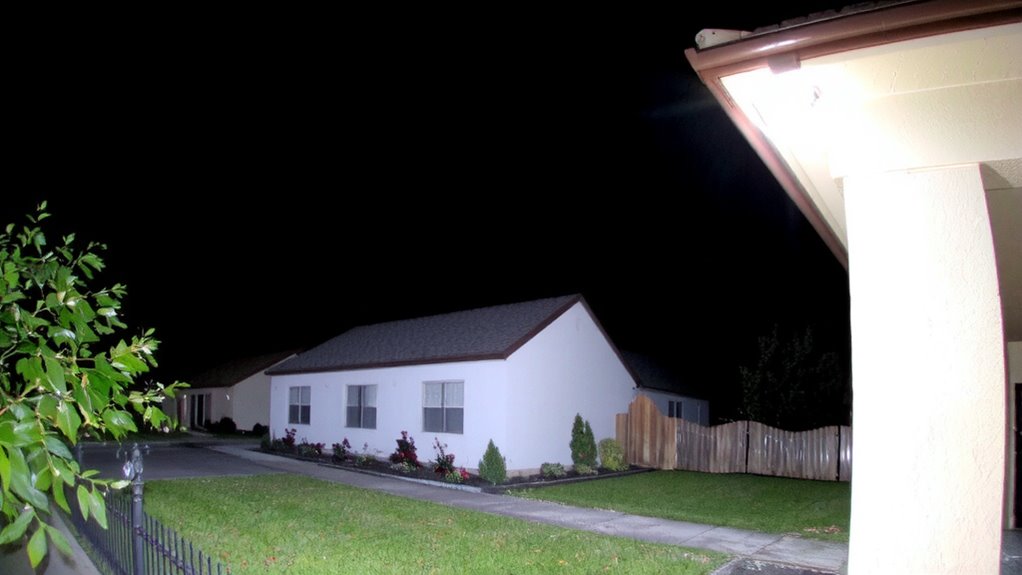
Clarity at night starts with proper illumination, and that’s where floodlights make a real difference for your security cameras. You rely on clear footage, and floodlights boost visibility when natural light fades. Most security cameras use infrared illumination to capture black-and-white images in the dark, but they often struggle beyond 30 feet. Adding floodlights extends that range dramatically. While thermal imaging detects heat signatures and works in total darkness, it doesn’t show facial details-so combining it with floodlights gives you both detection and identification. Bright, consistent light improves camera sensor performance, reducing grainy images. Choose LED floodlights with motion sensors and dusk-to-dawn settings for efficiency. They cost $30–$100 each, but the investment enhances overall system effectiveness. Properly lit areas deter intruders and guarantee your cameras deliver usable evidence when it matters most. For reliable performance, consider installing one of the best wireless motion sensor lights designed for outdoor use.
Place Floodlights to Cover Camera Blind Spots
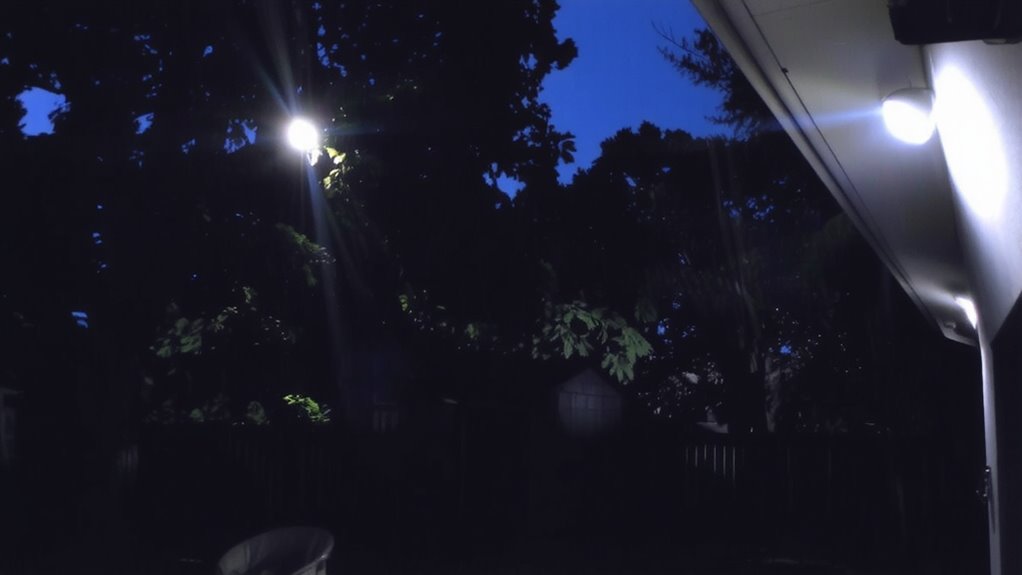
While your security cameras may cover key entry points, shadows and narrow angles often leave hidden gaps-so positioning floodlights to target those blind spots makes all the difference. Strategic placement of floodlights guarantees complete coverage, especially in corners, side yards, or behind structures where intruders might hide. Shadow elimination isn’t just about brightness-it’s about consistency in visibility. Use floodlights to wash dark zones with even light, so your cameras capture clear footage when it matters most. Choosing high-lumen LED models ensures reliable performance and better integration with surveillance systems, especially during extended nighttime hours when best outdoor security lights are most critical.
| What You Feel Without Light | What You Gain With Light |
|---|---|
| Anxiety in unseen areas | Confidence in full coverage |
| Doubt during nighttime events | Clarity from clear video |
| Fear of hidden threats | Peace from proactive defense |
This approach improves detection and supports reliable evidence collection-making strategic placement and shadow elimination essential for effective outdoor security.
Sync Floodlight and Camera Motion Sensors for Instant Alerts
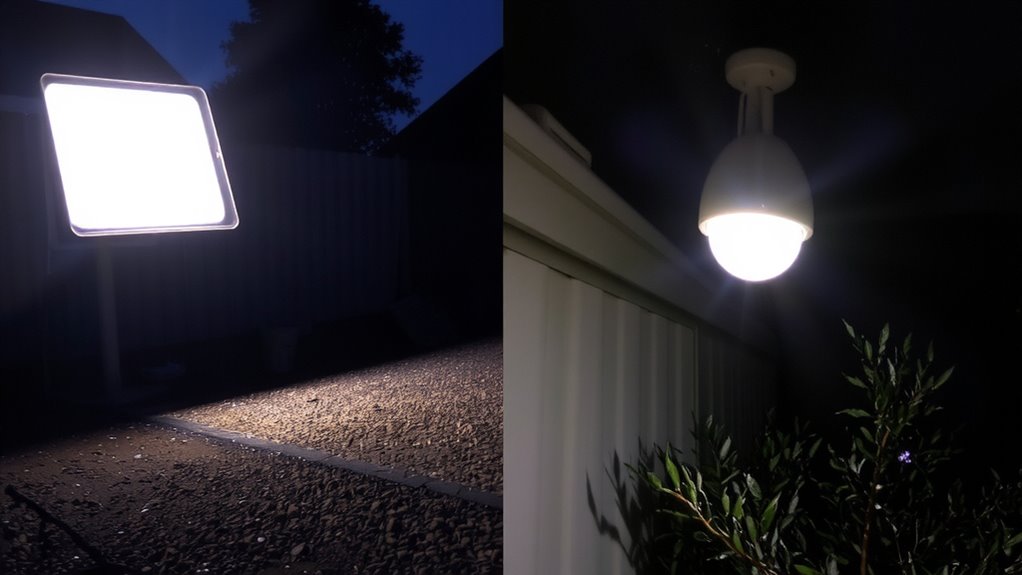
How often do you check your security app after a late-night motion alert, only to find a blurry clip of a raccoon or swaying tree? You can reduce false alarms by syncing your floodlight and camera motion sensors. When both devices share the same trigger zone, you get instant alerts only when real activity occurs. Proper sensor calibration guarantees both units detect motion at the same time and location. Adjust the motion sensitivity on each device so they match-too high, and you’ll get nuisance alerts; too low, and you might miss intruders. Most modern systems let you fine-tune these settings through a mobile app. Syncing also helps the camera begin recording the moment the floodlight activates, capturing clear, well-lit footage. This coordination improves response time and strengthens overall security without extra cost. Top-rated models offer optimized performance when paired with compatible cameras. Best motion sensor flood lights provide reliable detection and seamless integration.
Set Floodlight Color and Brightness for Clear Video
Light quality matters when your security camera relies on floodlights to capture nighttime footage. You’ll want to set the brightness high enough to illuminate key areas-but not so high that it drains power or causes hotspots. Opt for LED floodlights; they offer better energy efficiency and last longer than traditional bulbs. Adjust the color temperature to between 4000K and 5000K for a neutral white light, which helps your camera render accurate colors and improves image clarity. Lights with a lower color temperature (below 3000K) add a yellow tint, reducing contrast, while those above 6000K appear too blue and may wash out details. Most smart floodlights let you fine-tune both brightness and color temperature through an app, giving you control based on actual nighttime conditions. This balance supports clearer video without wasting energy.
Aim Floodlights to Avoid Glare and Overexposure
You’ve set the brightness and color temperature to get clear, accurate video, but if your floodlights aim directly at the camera lens or shine too broadly across reflective surfaces, you’ll still end up with washed-out footage. Adjusting the fixture angle and beam width is essential to prevent glare. Position lights below or beside the camera, not across from it, and aim slightly downward to cover entry points without spilling light onto walls or windows.
| Feature | Pro | Con |
|---|---|---|
| Narrow beam width | Reduces light scatter | Covers smaller area |
| Ideal fixture angle | Minimizes glare | Requires precise adjustment |
Use shields or housings to control spread, and test positioning at night. Proper alignment guarantees your surveillance system captures usable footage in the dark while avoiding overexposure.
On a final note
You boost nighttime surveillance when you pair floodlights with cameras. Position lights to cover dark zones cameras miss, but aim them carefully to prevent glare. Sync motion sensors so lights and cameras trigger together, improving response time. Use adjustable color temperatures and brightness to enhance image clarity. Proper setup costs more upfront but cuts long-term risks. Plan placement, wiring, and settings logically for reliable, evidence-based security.