Creating a Family Emergency Plan That Aligns With Your Home’s Safety Features
You should install working smoke detectors near bedrooms and on every level, test them monthly, and use hardwired models with battery backups for reliability. Map two escape routes from each room and add emergency lighting for visibility. Assign clear roles based on ability, use smart alerts to detect threats early, and run monthly drills to stay prepared. Update your plan after home or family changes to keep it effective-there’s more to optimize as you go.
Notable Insights
- Install smoke detectors on every level and near bedrooms, prioritizing hardwired units with battery backups for reliable alerts.
- Designate two escape routes per room and use emergency lighting to maintain visibility during power outages.
- Assign emergency roles based on age and ability, ensuring each family member knows their responsibilities during a crisis.
- Integrate smart alert systems that notify your phone of smoke, leaks, or unauthorized entry for early threat detection.
- Conduct monthly drills for various scenarios and update the plan quarterly to reflect home or family changes.
Locate Every Smoke Detector and Secure Exit

While every home should have a working smoke detector, your first step is to locate each one and make sure it’s properly installed near bedrooms and on every level of the house, including the basement. Test them monthly and replace batteries yearly to guarantee reliability. Smoke detectors are a cornerstone of fire prevention, cutting the risk of dying in a fire by nearly 50%. Pair them with emergency lighting along escape routes so you can see exits clearly if power fails. Install lights that activate automatically during outages for best results. Avoid placing detectors near kitchens or bathrooms to reduce false alarms. Hardwired systems with battery backups offer more consistency than battery-only units, but cost more to install. Check local building codes for required placement and number. Secure exits remain unobstructed and easy to open. A fully functioning detection system supports your family’s ability to respond quickly and safely.
Plan Your Escape Using Active Alarms and Doors
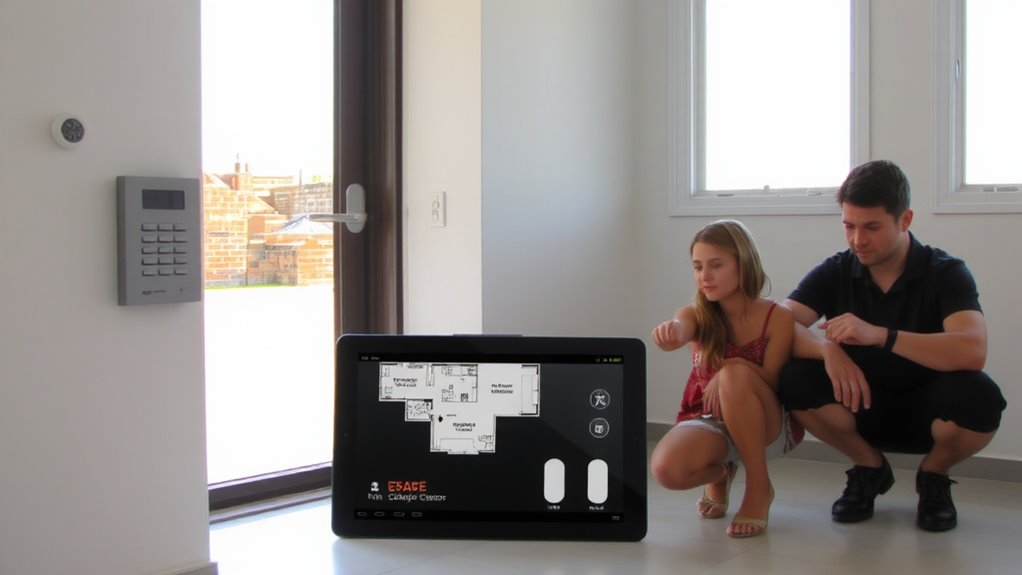
You’ll want to start by mapping out at least two escape routes from every room, especially bedrooms, so you and your family can get out quickly when an alarm sounds. Use active alarms connected to your smart home system to alert everyone simultaneously. Pair these with emergency lighting to guide paths during power outages. Test these systems monthly to guarantee they function properly. For upper-level rooms, consider a window escape route-make sure windows open easily and screens can be removed fast. Keep escape ladders nearby if needed. Investing in one of the best home alarm systems ensures reliable detection and faster response during emergencies, with professional monitoring providing added peace of mind.
Give Each Family Member a Clear Emergency Role
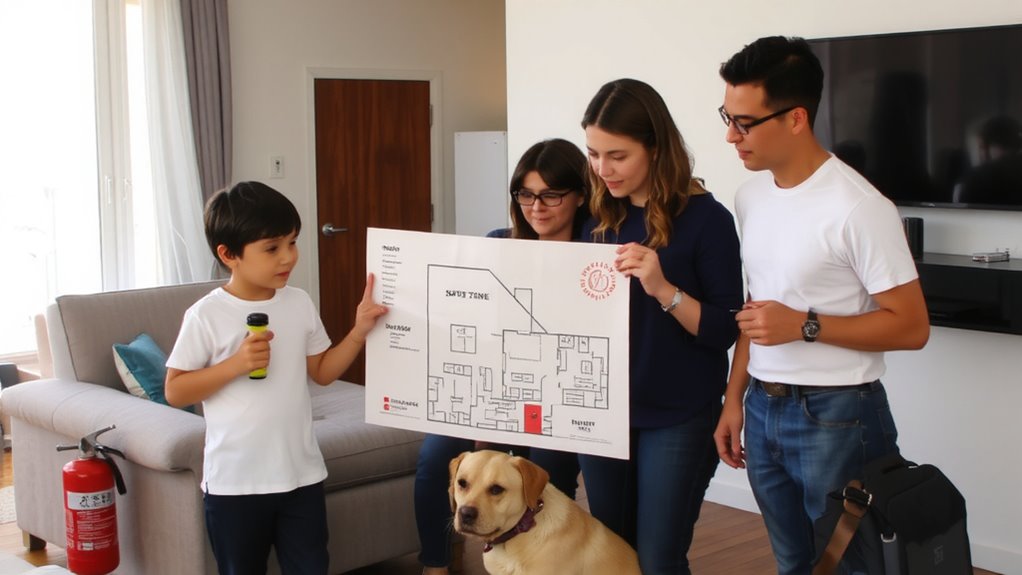
A family’s preparedness hinges on clearly defined emergency roles, ensuring everyone knows exactly what to do when an alarm sounds. You should designate one person as the Emergency coordinator, responsible for making decisions, confirming everyone’s safety, and contacting authorities if needed. Role assignment prevents confusion and speeds up response time during real emergencies. Assign tasks based on age and ability-older family members can handle more responsibility, while younger ones can have simpler duties like staying close or alerting others. Make sure each person practices their role during drills so actions become routine. Write down all roles and review them every six months. A clear plan reduces panic and improves effectiveness. Smart role assignment doesn’t require extra equipment or cost, just thoughtful planning. It works with your home’s existing safety features to create a coordinated, reliable response every time.
Use Smart Alerts to Trigger Your Response
If your emergency plan isn’t triggered automatically, you’re relying on someone noticing danger first-something smart alerts can fix. Smart alerts use sensors and connected devices to detect threats like smoke, flooding, or break-ins, activating your response plan even when no one’s home. This emergency automation guarantees faster reactions, reducing risk and damage. By integrating security systems, alarms, and notifications, your household gains critical time during emergencies.
| Alert Type | Benefit |
|---|---|
| Smoke detector | Sends phone alert if triggered |
| Water sensor | Detects leaks before major damage |
| Door/window | Notifies of unexpected openings |
| Motion sensor | Alerts to indoor movement at night |
| App integration | Centralizes alerts and automates responses |
Pair smart alerts with clear roles for full emergency automation. Most systems cost $200–$600 upfront, with optional monitoring plans. Choosing the right best motion sensor alarms can significantly improve detection accuracy and response speed.
Run Realistic Drills Every Month
Smart alerts can notify you of danger, but knowing how to respond is what turns awareness into action. Running realistic drills monthly guarantees everyone in your household reacts quickly and correctly during real emergency scenarios. This practice frequency builds muscle memory, reduces panic, and confirms your plan works as intended. Choose different situations each month-like fire, power outage, or intruder alerts-so your family learns varied responses. Time each drill to track improvement, aiming for evacuation in under three minutes. Include all safety features, such as alert systems and reinforced doors, to verify they’re used properly. Drills should involve every family member, even young children, using age-appropriate roles. Review actions afterward, noting delays or confusion. Monthly repetition strengthens coordination, highlights flaws, and increases confidence. Though it takes effort, consistent practice enhances preparedness more than any single safety device can.
Update Your Plan After Home or Family Changes
When your household evolves-whether through a new family member, a move, or physical changes to your home-your emergency plan can quickly become outdated, so revising it isn’t optional, it’s essential. A home renovation might add rooms or block former escape routes, requiring updated evacuation maps and exit strategies. Similarly, family expansion means more people to account for, possibly including infants, elderly members, or pets, each with unique needs during emergencies. Reevaluate meeting points, communication methods, and assigned roles after any change. Include updated contact lists and medical information, and guarantee all family members know the revised plan. Store documents securely but accessibly. Reviewing your plan quarterly helps maintain accuracy. These adjustments guarantee your emergency response remains practical, coordinated, and effective, aligning safety strategies with your current living situation and enhancing preparedness for all household members.
On a final note
You’ve mapped detectors, exits, and roles-now keep your plan effective by testing monthly and updating it after moves, births, or renovations. Smart alerts improve response times, but they require battery maintenance and Wi-Fi reliability. Drills build muscle memory, especially for children and pets. Rehearse different scenarios, like blocked exits or power outages, to strengthen readiness. This ongoing, data-backed approach reduces risk and increases survival odds during real emergencies.