Designing a Comprehensive Family Emergency Response Plan Based on Home’s Safety Features
Test smoke alarms monthly and replace them every 10 years-working alarms cut fire risk by 77% when combined with a practiced plan. Install CO detectors near bedrooms and on every level. Map primary and backup escape routes from each room, keeping paths clear. Assign roles based on age and ability, and practice fire, storm, and break-in drills regularly to refine your response. You’ll find even more ways to strengthen your family’s safety with a few simple updates to your routine.
Notable Insights
- Test and maintain smoke and carbon monoxide detectors monthly, replacing smoke alarms every 10 years and CO detectors every 5–7 years.
- Install smoke alarms on every level and in every sleeping area, with CO detectors near bedrooms and fuel-burning appliances.
- Map and practice primary and backup escape routes from each room, ensuring all exits are unobstructed and easily accessible.
- Assign emergency roles based on age and ability, such as guiding younger children or calling for help, to ensure efficient response.
- Conduct regular emergency drills under realistic conditions, rotating roles and updating the plan based on feedback and home safety changes.
Check Your Home’s Alarms, Exits & Safety Gear

Start with your smoke alarms-they’re your first warning in a fire, and they only work if they’re functional. Test them monthly-alarm testing takes less than a minute and can save lives. Replace batteries yearly, or use 10-year sealed models to reduce maintenance. Install alarms on every level, inside and outside bedrooms. Check expiration dates-most last 10 years. Beyond smoke, add carbon monoxide detectors near sleeping areas and test those monthly too. Exits must be unobstructed-ensure doors and windows open smoothly. Finally, inspect safety gear: fire extinguishers should be charged, easily accessible, and rated for home use. Review gear maintenance every six months-replace expired or damaged items. Store flashlights with working batteries in key spots. These steps are low-cost, high-impact. A well-maintained system increases survival odds by up to 50%. Stay consistent-routine checks keep your family protected when seconds count.
Map Primary and Backup Escape Routes From Every Room
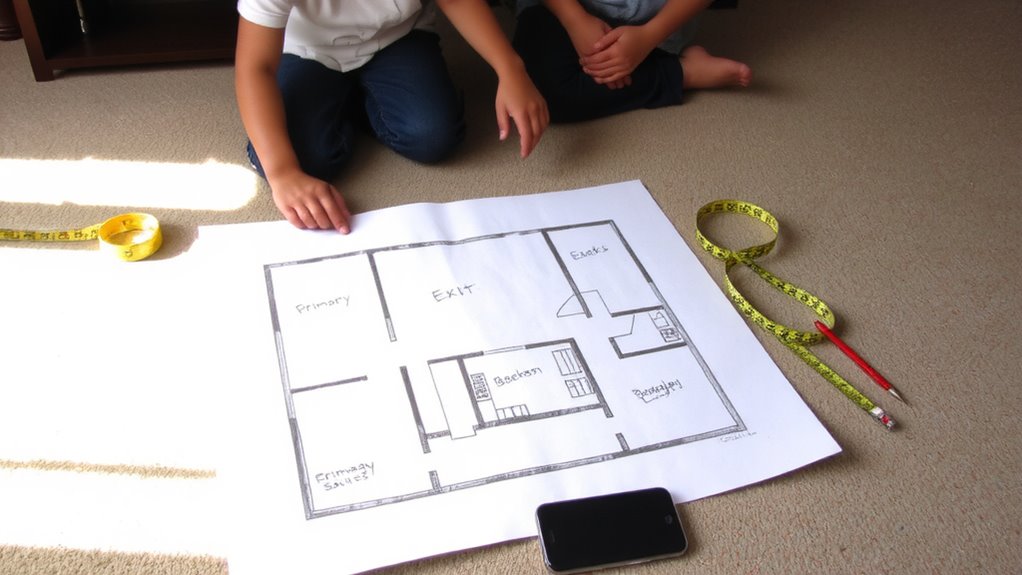
You’ve checked your alarms, exits, and safety gear-now it’s time to plan exactly how everyone will get out. Start by mapping a primary and backup escape route from every room, ensuring route redundancy so that if one path is blocked, another is ready. Use windows, doors, and alternative hallways-especially in bedrooms and upstairs areas. Practice these paths with all family members, including children and elderly relatives, at least twice a year. Install evacuation signage near key decision points, like hallway junctions or stairwells, to guide movement during low visibility. These signs should be glow-in-the-dark or illuminated for maximum effectiveness. Test each route for obstructions, locking mechanisms, or safety bars that could delay escape. Clear, well-practiced routes reduce evacuation time, a critical factor in fire survival. Document all routes on a household emergency plan posted in visible areas.
Install Smoke Alarms, CO Detectors & Window Sensors
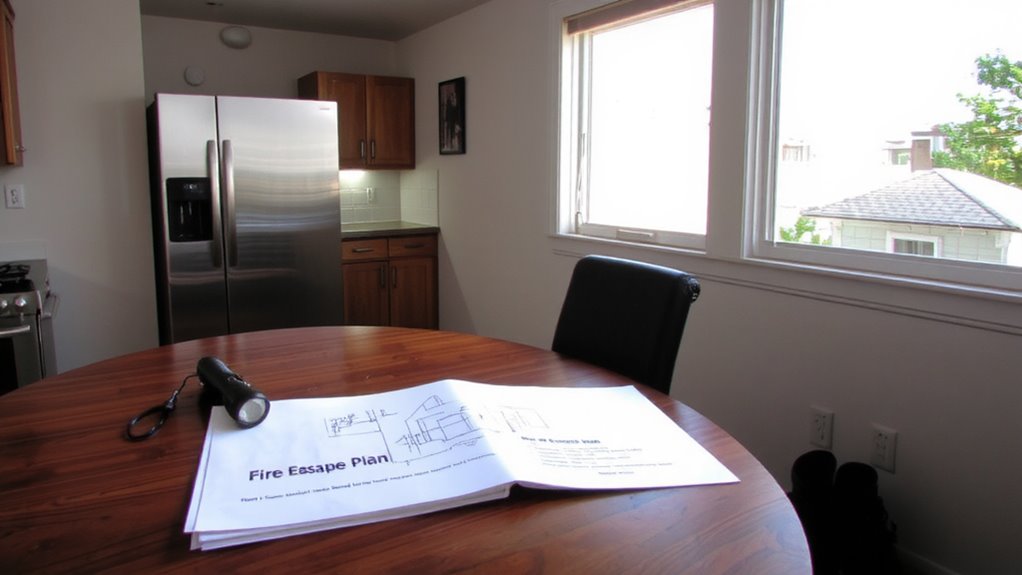
Early warning saves lives-installing smoke alarms, carbon monoxide (CO) detectors, and window sensors gives you critical time to respond during emergencies. You should place smoke alarms inside and outside each bedroom and on every level, including the basement. For CO detectors, install one near sleeping areas and on each floor, especially near fuel-burning appliances. Proper alarm placement reduces false alarms and increases detection accuracy. Window sensors alert you to unexpected openings, adding security during fires or break-ins. Test all devices monthly and replace batteries yearly, unless they’re hardwired or use long-life batteries. Detector maintenance is essential-replace smoke alarms every 10 years and CO detectors every 5 to 7 years. Combining these systems offers layered protection, improving your family’s ability to react quickly and safely.
Assign Roles by Age, Ability, and Location
Once alarms and sensors are in place, the next step is organizing your household so everyone knows what to do when an alert sounds. You should assign emergency roles based on age, ability, and location to guarantee a quick, effective response. Younger children can practice evacuating to a safe spot, while teens and adults take on specific family responsibilities like checking doors, guiding others, or making emergency calls. Match tasks to physical ability and maturity-don’t expect a five-year-old to operate complex equipment. If someone has mobility challenges, plan their role around communication or signaling for help. Consider where each person typically is during the day and night to assign roles efficiently. Clear emergency roles reduce confusion, speed up response times, and make your overall plan more reliable, especially when seconds count.
Practice Fire, Storm & Break-In Drills as a Family
While alarms and assigned roles are essential, they’re not enough on your own-regular practice turns plans into instinct, especially during high-stress emergencies. You should run monthly fire drills, seasonal storm simulations, and biannual break-in practice scenarios to reinforce safety habits. During these drills, everyone must follow their emergency roles exactly as planned, from alerting others to reaching the safe meeting point. Adjust tasks if someone’s ability or schedule changes. Include realistic details like power outages or blocked exits to improve response accuracy. Practice scenarios also reveal flaws in escape routes or communication methods. Rotate roles occasionally so each family member can handle different responsibilities. Keep drills consistent, brief, and focused to maintain engagement. Use feedback to refine your plan. Regular rehearsal builds muscle memory, cuts reaction time, and increases survival odds during real incidents. Make safety a practiced routine, not a guesswork reaction.
On a final note
You’ve now assessed your home’s alarms, exits, and safety gear, mapped escape routes, and assigned roles based on ability. Practicing drills regularly guarantees everyone responds calmly during real emergencies. Data shows homes with planned, rehearsed strategies reduce injury risk by up to 60%. Invest in interconnected detectors, secure window sensors, and clear exit paths. These evidence-based steps improve safety without high costs, offering practical, lasting protection for your family.