Integrating Smart Thermostats With Your Home’s Overall Safety Ecosystem
Your smart thermostat can boost home safety by detecting temperature drops that risk frozen pipes, alerting you when indoor temps fall below 40°F. It integrates with smoke and CO detectors to send alerts, shuts off the HVAC during fires, and pairs with security systems to simulate occupancy. Models range from $100–$250, often paying for themselves in energy savings within two years. Setup is quick, and no subscription is needed for core features-explore how these connections enhance your household’s protection.
Notable Insights
- Smart thermostats detect sudden temperature drops to prevent frozen pipes and send alerts when heating systems fail.
- They integrate with smoke and CO detectors to trigger phone alerts and shut off HVAC systems during emergencies.
- Real-time heat and air quality monitoring helps identify fire or dangerous carbon monoxide levels early.
- Automated HVAC shutdown during fire events limits smoke spread through ducts for enhanced safety.
- Linking thermostats with security systems enables coordinated responses like turning on lights during intrusions.
Use Your Smart Thermostat to Prevent Home Disasters
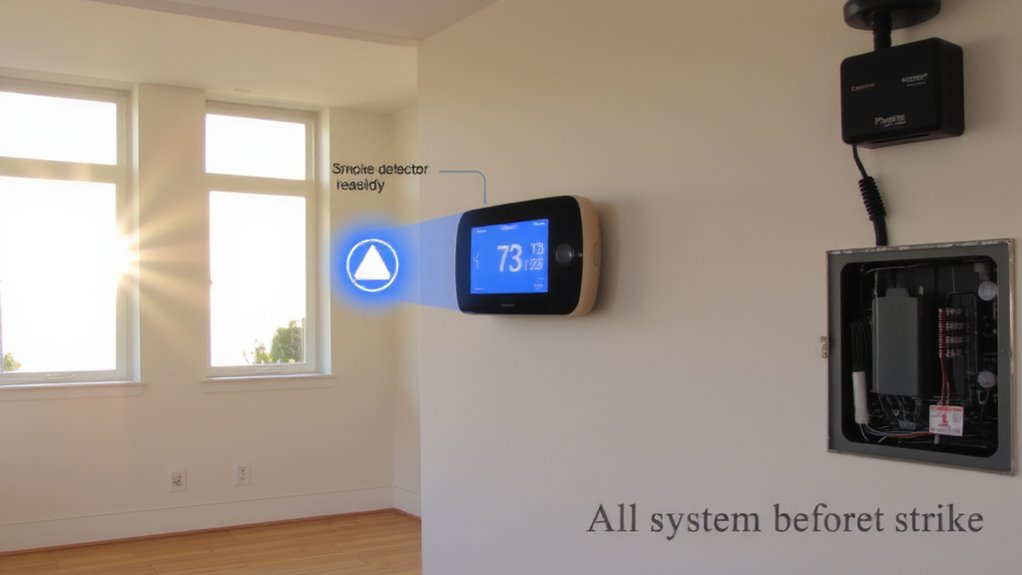
A smart thermostat isn’t just about comfort-it’s a tool you can use to help prevent serious home disasters. It monitors temperature trends and alerts you to sudden changes that could signal pipe freezes or overheating systems. By maintaining a stable indoor climate, you reduce the risk of frozen pipes in winter, especially when away. These devices support energy savings by automatically adjusting when you’re asleep or out, cutting unnecessary HVAC use. Programming for comfort optimization guarantees balanced temperatures, preventing strain on your system. Most models learn your habits within a week, offering personalized schedules. Units typically cost $100–$250, with professional installation adding $50–$100. They work with most HVAC systems and pay for themselves in 1–2 years through lower bills. Look for ENERGY STAR certification and humidity sensors when choosing.
Connect to Smoke and CO Detectors to Stop Fires Faster
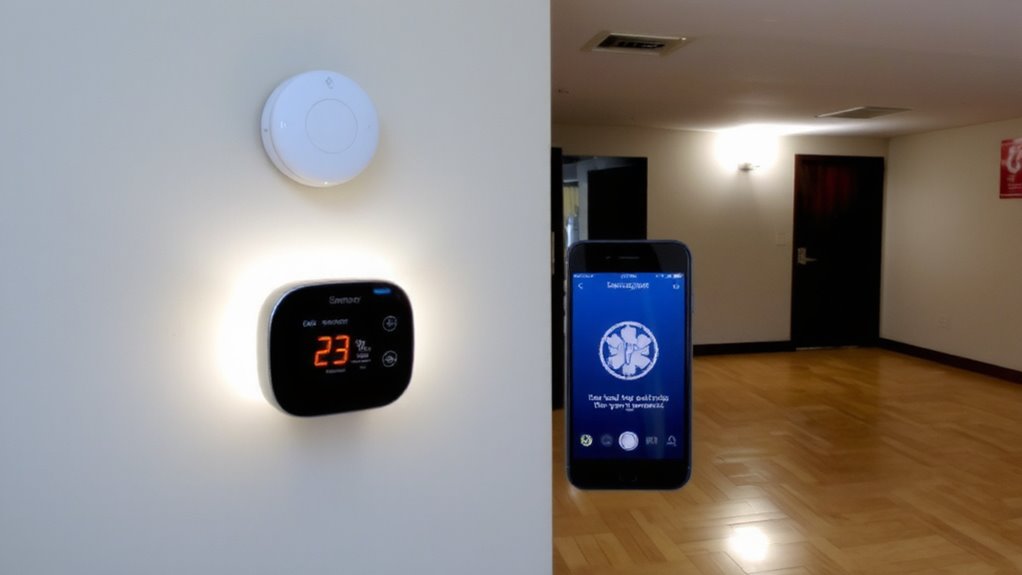
When your smart thermostat connects to smoke and carbon monoxide (CO) detectors, it can help stop emergencies faster by triggering early alerts and automated responses. You get real-time notifications on your phone, even when you’re away, so you can act quickly. This integration uses heat detection to sense unusual temperature spikes, which may signal a fire. It also supports air quality monitoring, identifying dangerous CO levels before they become life-threatening. Some systems automatically shut off your HVAC to prevent smoke or gas from spreading. Units like the Nest or Ecobee work with most smart detectors, but check compatibility first. Setup usually takes under 30 minutes. While these features add to upfront costs, they improve safety with minimal effort. No subscription is needed for core alerts. This link between thermostat and detectors strengthens your home’s response, giving you verified, timely data when it matters most.
Get Alerts When Freezing Temperatures Risk Burst Pipes
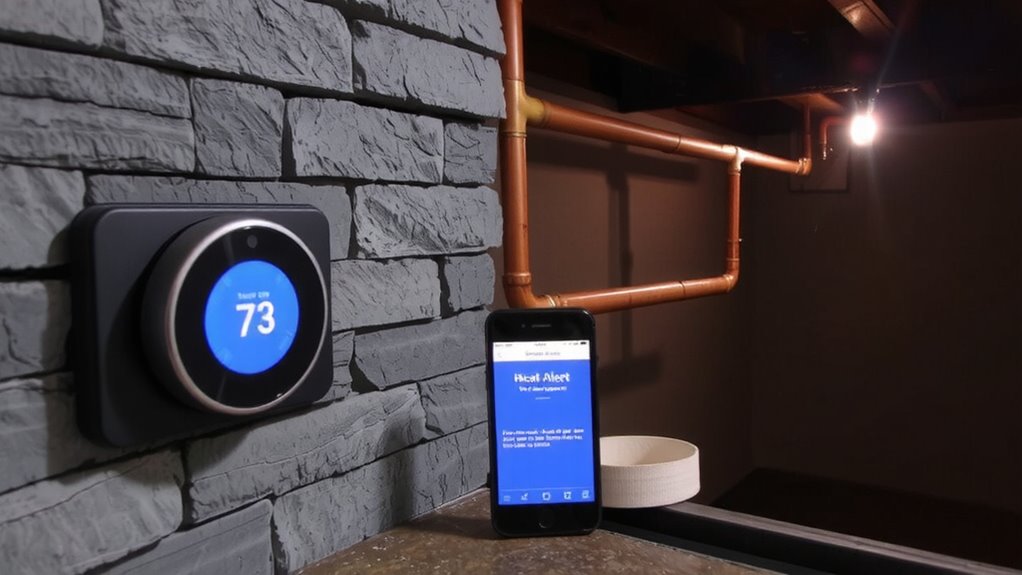
Smart thermostats don’t just help during fires-they also guard against another costly threat: frozen and burst pipes. You can set temperature thresholds so the system alerts you when indoor temps drop near freezing. Most experts recommend triggering alerts at 40°F or lower, especially in unheated areas like basements or garages. These warnings let you take action before pipes freeze. While pipe insulation helps reduce risk, it’s not foolproof-especially during prolonged cold snaps. A smart thermostat works with your insulation to provide active monitoring. Some models even notify you if the heat shuts off unexpectedly. For best results, pair the thermostat with remote sensors near vulnerable plumbing. Though basic systems start around $100, advanced models with alert customization cost up to $250. It’s a small price compared to water damage repairs.
Shut Off HVAC Automatically During a Fire
If your home’s HVAC system keeps running during a fire, it can spread smoke and toxic fumes throughout the house, making evacuation harder and increasing damage. Smart thermostats with integrated fire detection can trigger an automatic HVAC shutdown, stopping airflow and limiting hazard spread. This feature works when your thermostat connects to smoke detectors or uses built-in sensors to detect sudden temperature spikes. Once fire detection occurs, the system powers down the furnace, air conditioner, and fans within seconds. Experts recommend models that support UL-certified fire detection for reliability. While most high-end smart thermostats offer HVAC shutdown, compatibility depends on your existing HVAC setup and wiring. Installation typically costs $150–$250, with professional setup advised. Though rare, false shutdowns can happen, so make certain your system allows quick manual override. Enabling automatic HVAC shutdown improves safety by containing smoke, giving you critical time to exit safely.
Link to Security Systems to Respond to Break-Ins
Even though your smart thermostat’s main job is managing comfort, linking it to a security system adds a layer of protection during break-ins. When motion detection sensors in your security system trigger, your thermostat can support the intrusion response by adjusting environmental conditions to deter intruders. For example, lights can turn on automatically if motion is detected at night, making the home appear occupied. Some systems let your thermostat communicate with cameras and alarms, sending real-time alerts to your phone. This integration works best with a central hub that coordinates devices using protocols like Z-Wave or Zigbee. Setup typically takes under an hour, and compatible systems range from $200–$500, depending on features. While false alarms from pets can occur, proper sensor placement reduces errors. This联动 enhances overall situational awareness without requiring constant monitoring. For optimal performance, consider using best motion sensors for Home Assistant that offer reliable detection and seamless smart home integration.
Ensure Your Thermostat Works With Key Safety Devices
A reliable thermostat should seamlessly connect with essential safety devices like smoke detectors, carbon monoxide alarms, and water leak sensors to help protect your home and family. You’ll want strong device compatibility so your smart thermostat can communicate with these systems and respond properly during emergencies. For example, it can shut off the HVAC system if smoke or carbon monoxide is detected, reducing risk. This integration also supports energy efficiency by preventing heated or cooled air from being wasted during a detected leak or hazard. Make sure your devices use the same communication protocol, like Z-Wave, Zigbee, or Wi-Fi, to guarantee smooth operation. Always check manufacturer specifications before buying to confirm compatibility. Investing in a system with broad device compatibility may cost more upfront but improves both safety and long-term energy efficiency.
Turn on Emergency Warnings for Immediate Threats
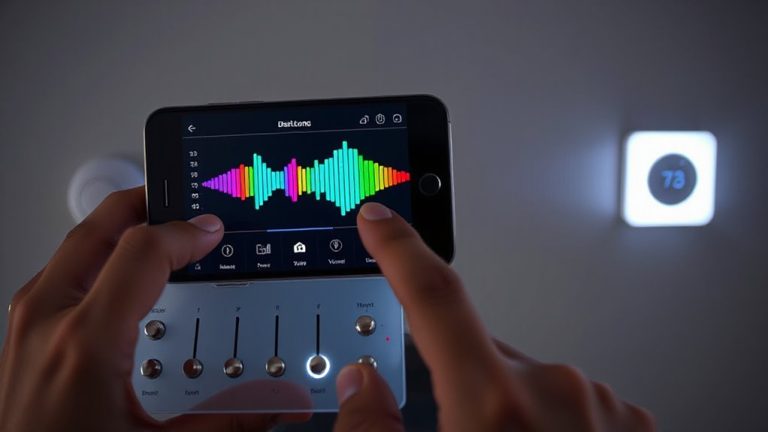
How quickly would you know if carbon monoxide started seeping into your home while you were asleep or away? With smart thermostats enabled for emergency alerts and hazard detection, you’ll get notified instantly-right to your phone or tablet. These systems communicate with connected sensors to detect dangers like extreme temperature shifts, smoke, or toxic gases, guaranteeing timely responses no matter where you are.
| Hazard Type | Alert Method | Response Time |
|---|---|---|
| Carbon Monoxide | Push + Sound Alert | < 30 sec |
| Overheating | App Notification | < 45 sec |
| Freeze Risk | SMS + App Alert | < 60 sec |
| Smoke Detection | Smart Speaker Chime | < 30 sec |
Enable emergency alerts in your thermostat’s safety settings to guarantee 24/7 hazard detection. Most platforms support instant notifications with minimal false alarms. Check device compatibility and consider a hub for seamless integration.
On a final note
You can strengthen your home’s safety by integrating your smart thermostat with smoke, CO, and freeze detectors. It sends alerts and can shut off HVAC systems during fires or extreme cold, reducing damage risks. Most models work with major security systems, but check compatibility first. Look for emergency notifications and automation features. While setup may cost more upfront, the prevention benefits are proven, offering reliable, data-backed protection when properly planned.