How Pet-Weight Thresholds in Motion Sensors Prevent False Alarms From Cats and Dogs
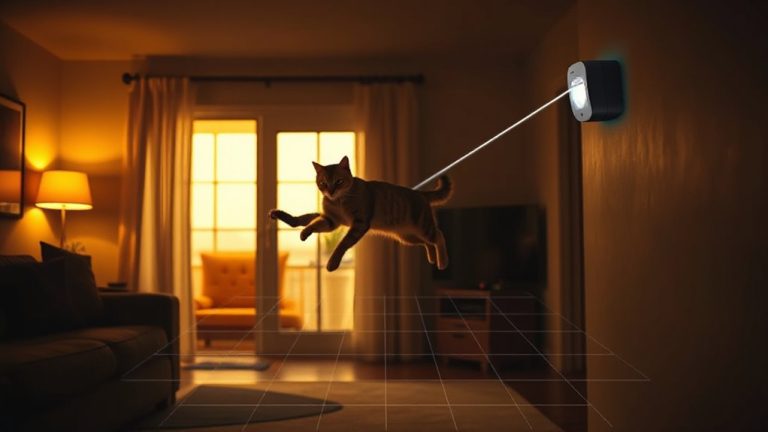
Your motion sensor’s pet-weight threshold ignores animals below a set weight-usually 40 to 100 pounds-so your cat or dog won’t trigger false alarms. It uses height detection, movement patterns, and dual-tech sensing to tell pets apart from people. For best results, pick a sensor rated above your pet’s weight and mount it 6–8 feet high in a corner. Placement and calibration matter just as much as specs, and getting it right means fewer误triggers and smarter home security. Choosing the right model opens the door to even more precision.
Notable Insights
- Pet-weight thresholds set the maximum weight a motion sensor ignores to avoid triggering on pets.
- Sensors use this threshold to distinguish between pet movements and human-sized intruders.
- Higher thresholds, like 80+ pounds, prevent false alarms from large dogs.
- Signal filtering and height detection help differentiate low-to-ground pet motion from human gait.
- Proper sensor placement and calibration ensure pets stay below the detection threshold.
What Is a Pet-Weight Threshold: And Why It Matters?
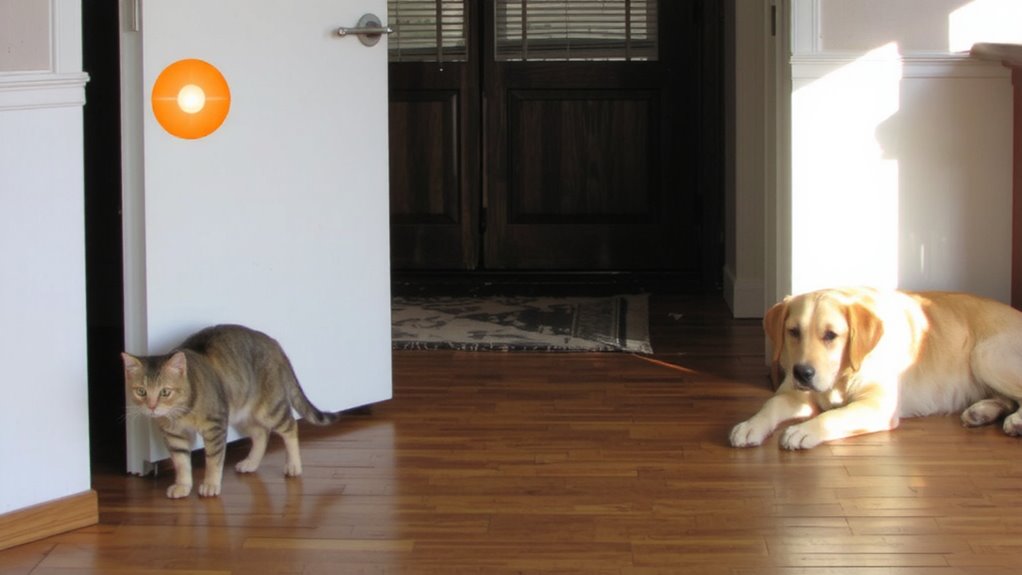
While you’re setting up a home security system, you might not think much about your pet’s size-but it can directly impact how well your motion sensors work. A pet-weight threshold is the maximum weight a sensor ignores before triggering an alarm, typically ranging from 40 to 100 pounds. This feature matters because it helps prevent false alarms caused by pets moving around the house. Sensors with higher thresholds accommodate larger dogs without compromising security. Your pet’s size and typical animal behavior, like jumping or running, influence which threshold you need. For example, a 50-pound dog may need a 60-pound threshold to avoid detection. Not all sensors offer adjustable settings, so check specifications before buying. Choosing the right threshold improves reliability, reduces unnecessary alerts, and guarantees your system responds only to real threats.
How Motion Sensors Tell Pets and People Apart
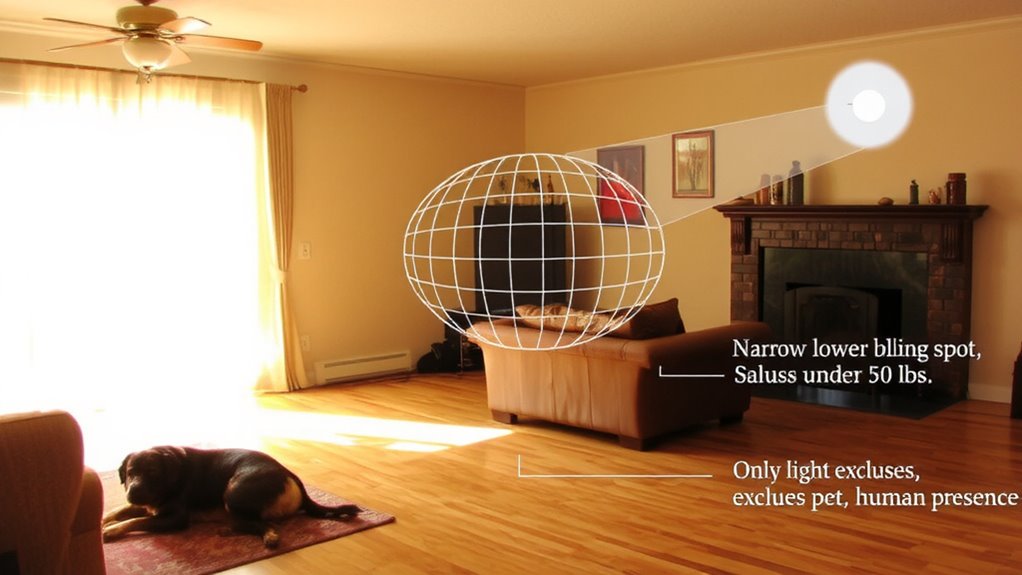
You’ve probably already considered your pet’s weight when choosing a motion sensor, and now it’s time to understand how these devices actually distinguish between a passing dog and an intruder. Using signal filtering and analysis of motion patterns, advanced sensors detect height and movement style. Pets move closer to the ground and with different rhythms than humans, allowing the sensor to make smart decisions. Many top models featured in the Best Motion Sensors for Home Assistant roundup include pet-immune technology specifically designed to prevent false alarms. Here’s how key features compare:
| Feature | Benefit |
|---|---|
| Dual-tech sensing | Reduces false alarms |
| Adjustable pet immunity | Supports pets up to 80 lbs |
| Signal filtering | Blocks small movements |
| Motion patterns analysis | Identifies human gait |
| Mounting flexibility | Optimizes detection angle |
These technologies work together so your system ignores your cat’s midnight stroll but alerts you to a human intruder.
Best Pet-Immune Motion Sensors for Cats and Dogs
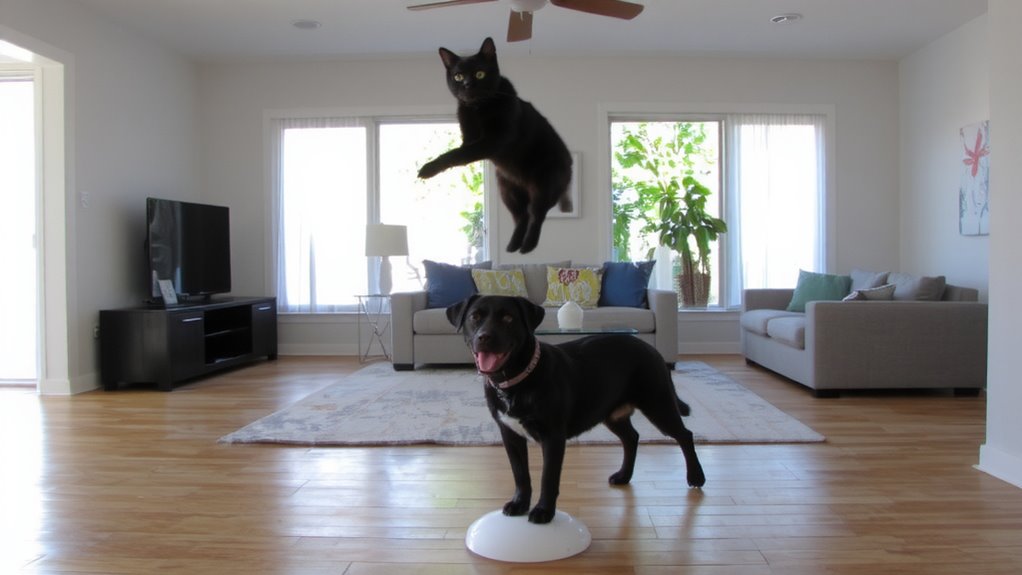
Since pet size and behavior vary widely, choosing a motion sensor that reliably distinguishes between animals and humans means looking at models with verified pet immunity up to at least 80 pounds, adjustable sensitivity settings, and dual-technology detection to minimize false alarms. You’ll want to check sensor sensitivity and detection range to guarantee coverage without overreacting to movement near ceilings or furniture. Top models like the Ring Alarm Motion Detector and the SimpliSafe Pet-Immune Sensor offer excellent detection range-up to 30 feet-and use passive infrared (PIR) with microwave technology. This combination reduces false alarms by confirming motion from multiple sources. Adjustable sensor sensitivity lets you fine-tune response levels based on pet activity. These sensors typically cost $25–$40 each and integrate easily with most smart home systems. Make sure placement avoids direct pet pathways to maximize effectiveness.
Match Your Pet’s Weight to the Right Sensor
A reliable motion sensor should account for your pet’s size, especially if they weigh 40 pounds or more. Choosing the right sensor means matching the pet-weight threshold to your animal’s actual weight to avoid unnecessary alerts. Most pet-immune sensors support pets up to 40, 50, or 80 pounds, so knowing your pet size is essential. Sensors use pet weight as a baseline for calibration-this sensor calibration helps distinguish between a passing cat and an intruder. For dogs over 50 pounds, select a model rated above your pet’s weight to guarantee reliable detection. Lower-end models may save money but often lack precise calibration, increasing false alarms. Higher-tier sensors offer adjustable sensitivity, better algorithms, and wider coverage. Always check manufacturer specs for confirmed pet size limits. Proper selection improves security without sacrificing pet freedom.
Where to Place Sensors (and Avoid False Alarms)
Once you’ve matched your pet’s weight to a suitable sensor, the next step is deciding where to install it for best performance. Proper sensor placement greatly reduces false alarms. Mount sensors in corners, 6 to 8 feet above the floor, where they can see pet movement below but aren’t pointing at heaters or windows. Avoid placing them where pets jump on furniture, since that elevates them into the detection zone. Most pet-immune sensors use dual-tech (PIR and microwave) to reduce errors, but correct positioning boosts reliability. Adjust alarm sensitivity to ignore small heat shifts from pets under the threshold weight. Sensors with narrower field-of-view lenses help target entry paths while skipping pet zones. Always test after installation by walking your pet through common routes. Good placement means fewer false alerts and stronger home security overall. Top models offer advanced pet-immune technology to further minimize false triggers from household animals.
On a final note
You can reduce false alarms by choosing motion sensors with pet-weight thresholds that match your pet’s size, typically 40 to 100 pounds. Sensors use height detection and advanced algorithms to distinguish pets from people. Place units higher or in corners to avoid pets’ movement zones. Look for models with adjustable sensitivity and pet immunity features. While pricier, pet-smart sensors offer reliability, cutting unnecessary alerts and improving home security performance over time.