How to Document Home Security Improvements for Insurance Discounts
You can qualify for a 15–20% insurance discount by installing smart sensors and surveillance cameras that alert you and authorities to intrusions. Keep receipts, warranties, and installation records to prove ownership and system value. Take clear, dated photos of devices from multiple angles, showing placement on entry points. Record model numbers, installation dates, and monitoring plans-especially 24/7 service with cellular backup. Submit all documentation through your insurer’s portal or email, and confirm in writing that your policy reflects the update. A full checklist guarantees no step gets overlooked.
Notable Insights
- Install smart sensors and cameras that meet insurer requirements for motion detection, night vision, and cloud storage to qualify for discounts.
- Keep detailed records including receipts, warranties, and serial numbers to verify ownership and installation of security devices.
- Take clear, well-lit photos of all devices from multiple angles, showing placement at entry points and system integration.
- Document the security system’s make, model, installation date, and monitoring plan, including 24/7 coverage and cellular backup.
- Submit all documentation through your insurer’s portal or email, and request written confirmation of the applied discount.
Identify Security Upgrades That Qualify for Discounts
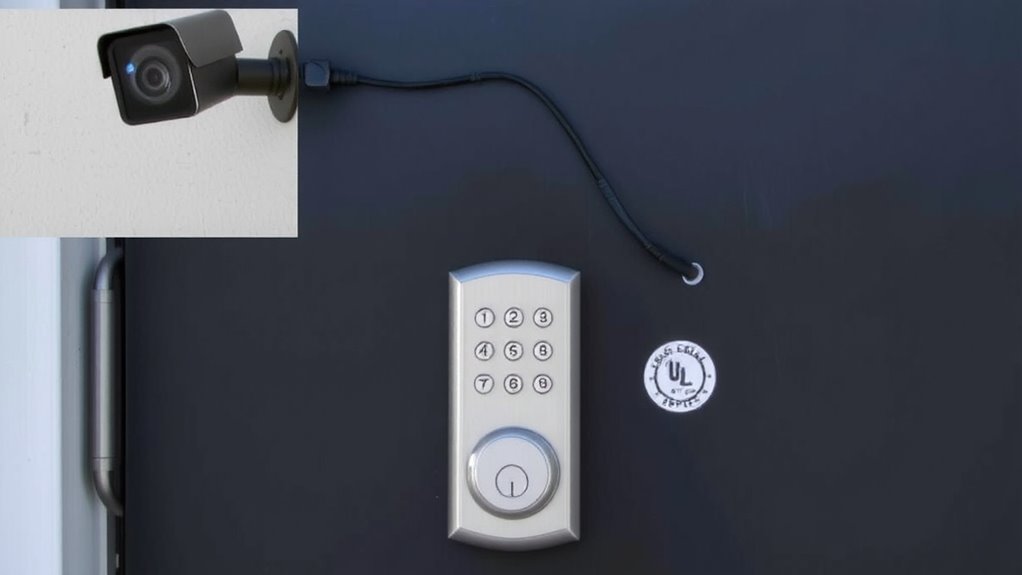
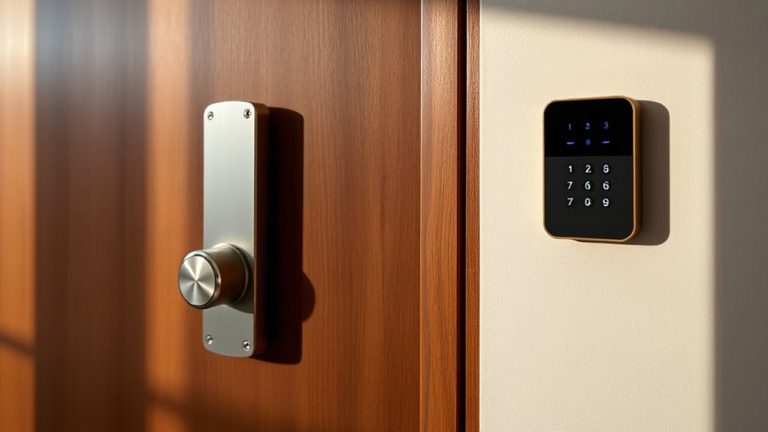
Home security upgrades can lower your insurance premiums-some systems cut costs by 15% to 20%, according to industry data. You’ll need to install qualifying features like smart sensors and surveillance cameras, both of which insurers commonly recognize. Smart sensors detect unauthorized entry on doors and windows, sending real-time alerts to your phone. Many insurance providers give discounts for monitored systems linked to emergency services. Surveillance cameras, especially those with night vision and continuous recording, strengthen your claim for reduced rates. Opt for models with cloud storage and motion detection to meet typical policy requirements. While wired systems offer reliability, wireless setups provide easier installation. Average costs for basic systems range from $200 to $600, depending on coverage. Confirm with your insurer which devices qualify, since approved brands and features vary by company. Planning guarantees your investment yields maximum savings. Top-rated systems often include features like best home security cameras for optimal protection and insurance eligibility.
Keep Receipts and Installation Records
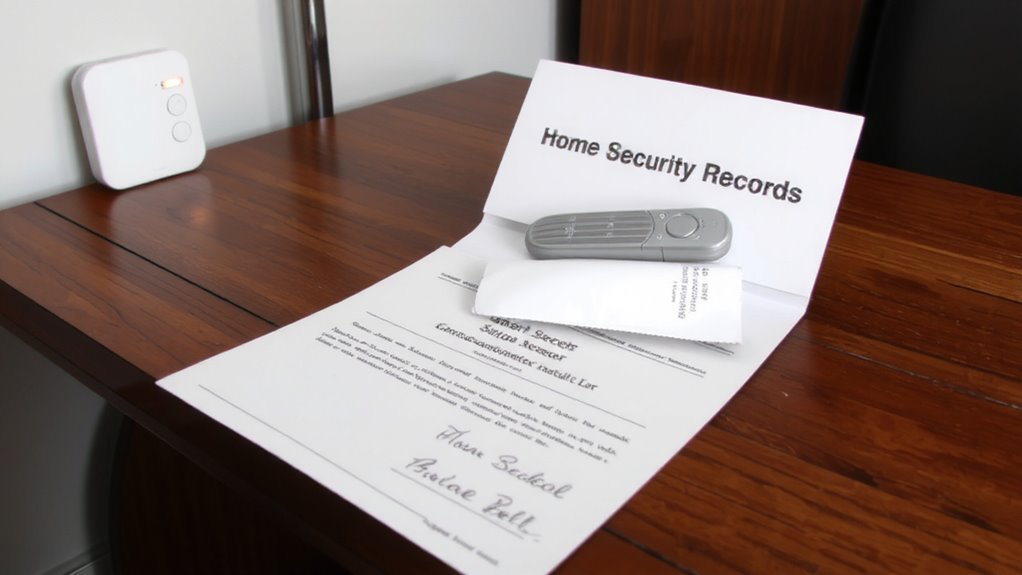
Once you’ve installed qualifying security upgrades like smart sensors or surveillance cameras, your next step is to document the investment properly. Keep all receipts, warranty documentation, and serial numbers in a secure file. These records prove ownership, installation dates, and value-key details insurers need when processing discount requests. Organize information systematically to simplify claims or audits later. Choosing reliable devices such as best IP cameras can enhance both home security and insurer confidence in your system’s effectiveness.
| Device Type | Purchase Date | Serial Number |
|---|---|---|
| Door Sensor | 03/15/2023 | DS9X72A |
| Security Camera | 04/02/2023 | CAM45L2 |
| Smart Alarm Panel | 04/05/2023 | AL88P90 |
| Motion Detector | 03/18/2023 | MD33K12 |
| Door Lock | 04/10/2023 | DL77M45 |
This table helps track critical device data. Receipts validate cost and date, while serial numbers and warranty documentation support verification and replacement eligibility. Insurers may require proof that systems are active and professionally installed, so retain all paperwork. Digital backups are recommended.
Photograph Your Security Devices Clearly
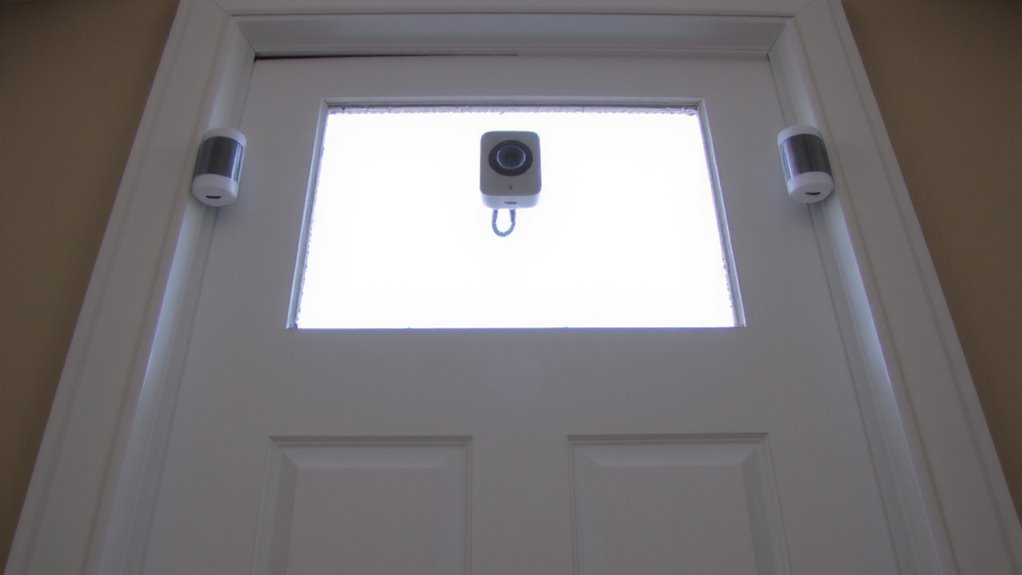
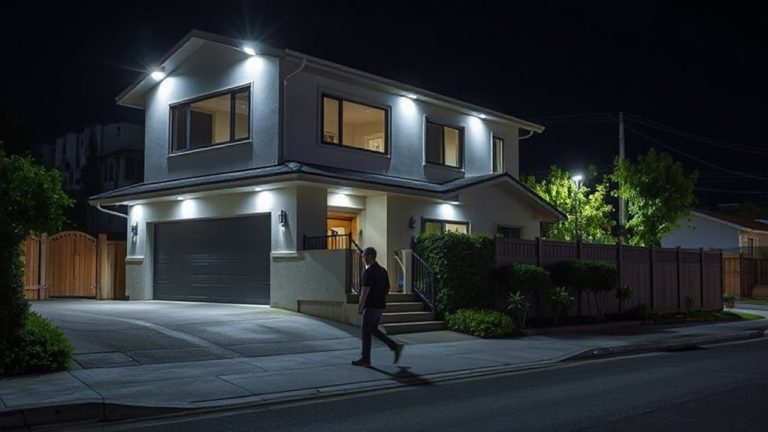
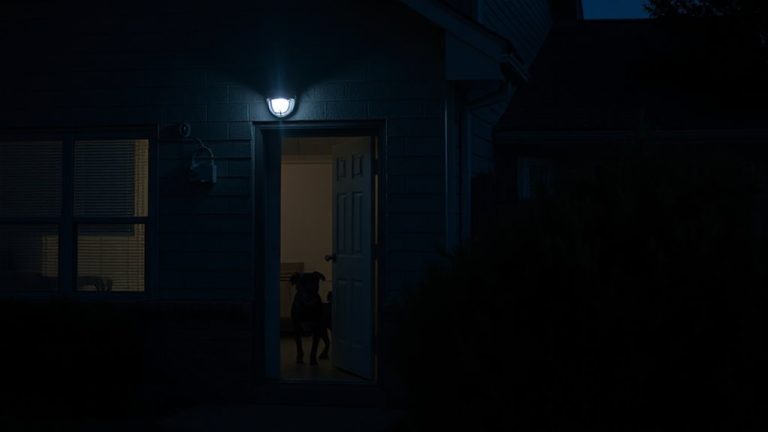
A clear photo record of your security devices strengthens your insurance claim and guarantees you’re not left disputing coverage later. Take photos from multiple camera angles to show both the full setup and close-up details like serial numbers or installation quality. Make sure lighting conditions are bright and even so nothing’s hidden in shadows. Natural daylight works best, but use a flash if necessary, just avoid glare. Capture each device in context-show how it integrates with doors, windows, or alarms. Take interior and exterior shots if applicable. Date and label the images so your insurer can verify when the system was installed. Don’t forget hard-to-see spots like basements or back entrances-these matter just as much. Good photos reduce confusion and speed up your discount approval. Poor lighting conditions or narrow camera angles could weaken your proof and delay benefits. Consider using one of the best outdoor security cameras to ensure your property is fully covered and easily documented.
Note Your System’s Model and Monitoring Plan
Your security system’s model number and monitoring plan details aren’t just technical footnotes-they’re key evidence for qualifying for insurance discounts. You should record the System model details, including brand, model number, and installation date, since insurers often require this data to verify compatibility and effectiveness. Check your system’s manual or manufacturer’s website if you can’t locate the label on the device. Include specifics about your Monitoring plan benefits, such as 24/7 professional monitoring, cellular backup, or smart home integration. These features may increase your discount eligibility. Some plans offer faster emergency response, which insurers view as risk-reducing. Compare monthly fees and contract lengths when choosing a plan, as cost affects long-term value. Keep digital and printed copies of all information. Accurate documentation strengthens your case and speeds up approval.
Submit Proof to Your Insurance Provider
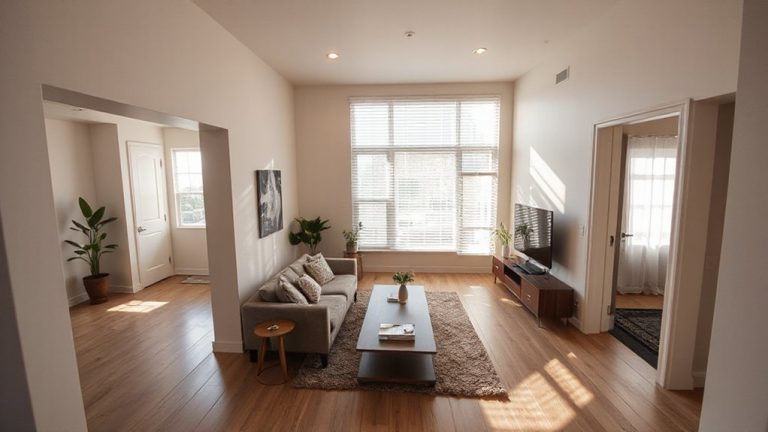
How do you turn your documented security system into real savings? Submit clear proof to your insurance provider. Gather photos, receipts, and system specifications showing your home layout and the placement of sensors, cameras, and alarms. Include monitoring plan details, like professional 24/7 service. This evidence strengthens your insurance negotiation by demonstrating verified risk reduction. Send everything via email or your insurer’s online portal, keeping a copy for your records. Be specific about installed components and their compliance with safety standards. A well-documented submission increases approval chances and helps justify premium discounts. Don’t assume the insurer knows your setup-clarify how your system covers entry points and high-risk areas. Clear, organized proof supports a smoother review process and accurate assessment of your security improvements, directly influencing potential savings without relying on assumptions.
Update Your Policy and Confirm Savings
Once the insurer reviews your submitted documentation, they’ll assess eligibility for a premium discount based on your security system’s verified features. If approved, they’ll update your policy to reflect the change, often adjusting your monthly payments immediately. You should request written confirmation of the adjustment and keep it with your records. This step guarantees clear savings verification and avoids confusion later. At your next policy renewal, double-check that the discount still applies-sometimes changes aren’t carried forward by mistake. Review your declaration在玩家中 carefully, and call your agent if the savings aren’t visible. Don’t assume automatic updates. Confirming savings gives you control and reinforces accountability. Some insurers require annual proof of system functionality, so plan to resubmit documentation if needed. Staying proactive helps maintain long-term savings and accurate coverage.
On a final note
You’ve made your home safer and could save on insurance. Keep receipts, photos, and model details of your security upgrades, and share them with your provider. Confirm which devices qualify for discounts, like alarms or cameras, and verify monitoring plans. Submit proof promptly, update your policy, and check the new rate. These steps, backed by evidence, help guarantee you get every eligible dollar.