Using Vibration Sensors on Garage Doors as an Early Intrusion Warning System
You’re likely overlooking your garage door as a security weak point, but vibration sensors fix that by detecting tampering like prying or impact. They send instant phone alerts, letting you respond before a break-in fully happens. Look for models with high accuracy, wireless setup, and compatibility with Alexa, Ring, or Google Home. Proper placement in the door’s center avoids false alarms. Most run on batteries for 1–3 years. A two-year warranty and smart integration boost reliability-knowing how these work helps you choose wisely.
Notable Insights
- Vibration sensors detect forced entry attempts on garage doors by identifying impacts or prying before a break-in occurs.
- They provide real-time alerts to smartphones, enabling immediate response to potential security threats.
- Proper placement at the door’s center ensures optimal detection while avoiding false alarms from motors or hinges.
- Wireless, battery-powered models offer easy installation and integration with smart home systems like Alexa or Ring.
- High-sensitivity sensors differentiate between everyday vibrations and suspicious activity for reliable intrusion warnings.
Why Your Garage Door Needs a Vibration Sensor
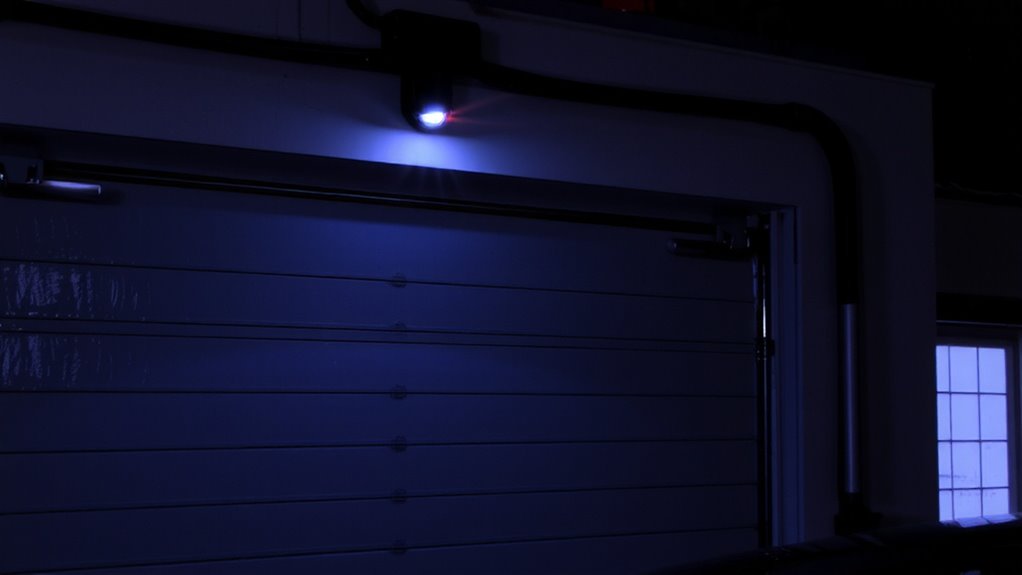
Why wait until a break-in occurs to secure your garage? You rely on garage security to protect tools, vehicles, and even access to your home, yet many overlook a key weakness-your garage door. Traditional locks and automatic openers don’t alert you to tampering. That’s where door monitoring with vibration sensors comes in. These devices detect force, like prying or impact, and send instant alerts to your phone. Studies show homes with active door monitoring are less likely to experience forced entry. Vibration sensors integrate easily with most smart home systems, usually costing $20–$50 each. Installation takes under 15 minutes. While they can’t distinguish between a heavy wind and an attempted break-in, combining them with motion detectors reduces false alarms. For stronger protection, pair sensors with reinforced doors and routine maintenance. It’s a low-cost step that strengthens your entire security plan. Top-rated models offer reliable performance and can be found in a best garage door alarm sensors roundup.
How Vibration Sensors Stop Break-Ins Early

While most break-ins start with subtle force no one sees or hears, vibration sensors catch those early signs before damage escalates. You benefit from real-time alerts when someone tampers with your garage door, giving you time to respond or notify authorities. Proper sensor sensitivity guarantees the expends detects impacts like prying or drilling without triggering false alarms from normal vibrations, such as passing traffic or household appliances. You can adjust sensitivity settings to match your environment, balancing security and reliability. Unlike motion detectors, vibration sensors focus solely on physical disturbances to the door surface, reducing unnecessary alerts. They work effectively in most conditions and integrate easily with existing security systems. While no system eliminates all risks, a well-calibrated vibration sensor markedly increases your garage’s resilience to early-stage intrusion attempts, offering practical, data-supported protection at a reasonable cost.
Choose the Best Vibration Sensor for Your Garage

What makes one vibration sensor better than another for your garage? Sensor accuracy and installation flexibility are key. You want a sensor that reliably detects impacts and prying without false alarms from wind or appliances. Look for models tested to distinguish between everyday vibrations and suspicious activity-high sensor accuracy means fewer missed threats and unnecessary alerts. Installation flexibility matters, too. Choose a sensor that works on metal, wood, or insulated doors without special tools. Wireless options offer easier placement, often letting you adjust position later if needed. Check whether it integrates with your existing security system or smart home hub. Some sensors cost under $30, while advanced ones reach $70 but offer better sensitivity tuning. Read reviews for reliability data, and pick one with at least a two-year warranty. Consider checking the Top Garage Door Sensors – Expert Picks & Buying Tips for verified models that combine reliability, ease of installation, and smart home compatibility.
Install the Sensor in 5 Minutes or Less
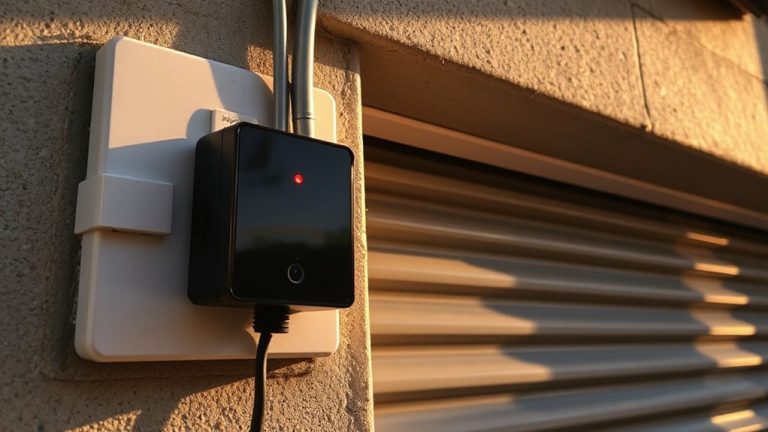
A five-minute installation is possible with the right vibration sensor and a clear plan. Start by choosing ideal sensor placement-attach the device near the center of the garage door, where vibrations from forced entry are most detectable. Avoid mounting near hinges or motors, which can cause false alerts. Most sensors use adhesive strips or screws, so clean the surface first for strong adhesion. Check the power source: battery-powered models offer quick setup and flexibility, while hardwired options need electrical access but provide continuous operation. Most battery sensors last 1–3 years, depending on usage. Confirm the sensor is level and firmly secured. Test it by gently tapping the door to guarantee it registers motion. Proper installation guarantees reliable detection, making your garage more secure with minimal effort. Plan carefully, and the whole process stays under five minutes.
Connect It to Alexa, Ring, or Google Home
You can connect most modern vibration sensors to smart home systems like Alexa, Ring, or Google Home with minimal effort, usually through the sensor’s companion app. Smart home integration lets you receive real-time notifications when motion is detected on your garage door, enhancing security. Once linked, you can enable voice alerts so Alexa or Google Assistant announces intrusions aloud, even if you’re in another room. This feature adds convenience and immediate awareness. Make sure your sensor supports the platform you use-check compatibility before purchasing. Some systems may require a hub or subscription for full functionality. Setup usually takes under ten minutes. Voice alerts work best when paired with app notifications, giving you both audible and visual cues. Consider using multiple alert types for reliability. Smart home integration improves response time, but test the system regularly to verify accuracy and proper syncing across devices.
On a final note
You can boost your home security by adding a vibration sensor to your garage door. These sensors detect forced entry attempts early, sending instant alerts to your phone or security system. Most models work with Alexa, Ring, or Google Home, and installation takes under five minutes. Choose one with adjustable sensitivity and reliable connectivity. While they enhance protection, use them alongside other alarms. Expect to pay $20–$50 per sensor.