Driveway Alarm Systems: Options for Early Warning of Vehicle Approach
A driveway alarm gives you early warning-up to 30 seconds-when a vehicle enters your property, using PIR, magnetic, or radar sensors with ranges from 300 to 1,200 feet. Wired models offer reliability but need installation; wireless ones are easy to set up but can face interference. Look for adjustable sensitivity, weather resistance, and long battery life. Many systems now support smart alerts and integration, often for $100–$250. Key features help reduce false alarms while keeping you informed. You’ll find options that match your home’s layout, budget, and security needs.
Notable Insights
- Driveway alarms use PIR, magnetic, or radar sensors to detect approaching vehicles and provide early warnings.
- Wireless systems offer easy DIY installation, while wired systems ensure reliable performance with minimal interference.
- Adjustable motion sensitivity reduces false alerts from animals, weather, or nearby heat sources.
- Alerts include audible chimes, visual signals, or smart notifications, with some models integrating with Wi-Fi and voice assistants.
- Weather-resistant designs and long-range signals up to 1,200 feet ensure reliable operation in varied conditions.
Why You Need a Driveway Alarm for Home Security
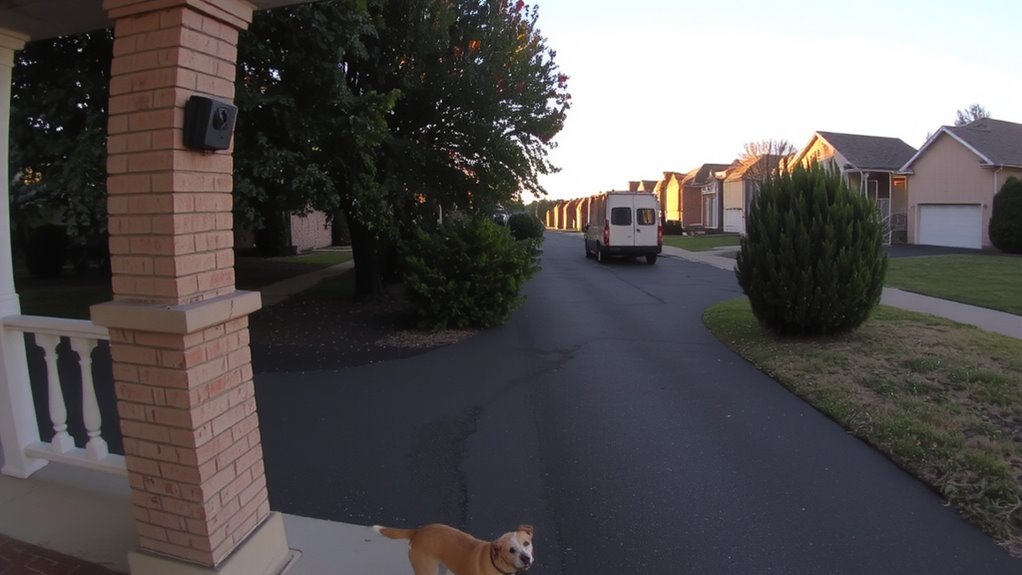
While your home’s main security system offers valuable protection, adding a driveway alarm gives you an early warning that can make a real difference. You gain extra time to respond when someone approaches, whether it’s a delivery, guest, or potential intruder. This early detection supports effective property monitoring, especially in rural or low-visibility areas where traditional alarms may not activate until it’s too late. Driveway alarms integrate easily with existing systems and often include features like motion sensors, wireless alerts, and customizable range settings. They’re typically affordable, with basic models starting around $100. For most homeowners, the investment boosts peace of mind without complexity. Unlike broad surveillance, these systems focus on access points, reducing false alarms. You’ll know when vehicles arrive before they reach your door, improving situational awareness. Overall, a driveway alarm complements your security plan with reliable, real-time updates tailored to your property’s layout and needs. Top options include systems with long-range detection and weather-resistant sensors, such as those featured in the best driveway alarms roundup.
How Driveway Alarms Know When a Vehicle Arrives
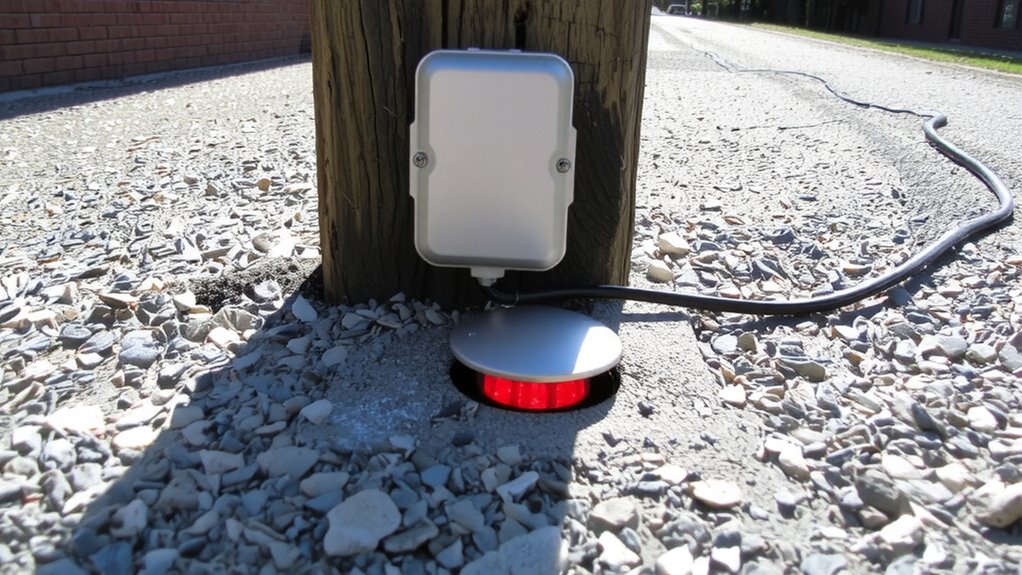
How do driveway alarms detect a vehicle before it reaches your door? They rely on sensor types that spot movement or changes in the environment. Passive infrared (PIR) sensors notice body heat from vehicles, while magnetic sensors detect metal changes in the driveway. Some systems use radar or break-beam infrared for higher accuracy. Once triggered, the sensor sends a signal to the indoor receiver. The signal range varies by model-typically between 300 and 1,200 feet-so you’ll want to measure your driveway before buying. Longer ranges work better for winding or sloped driveways. Most sensors activate within seconds of detecting motion, giving you timely alerts. You’ll need to place the sensor where it has a clear view and minimal interference from trees or structures. Choosing the right sensor type and ensuring strong signal range helps avoid false alarms and missed detections. For reliable performance over long distances, consider models highlighted in the best long-range driveway alarms roundup.
Wired vs Wireless Driveway Alarms: Which Is Right for You?
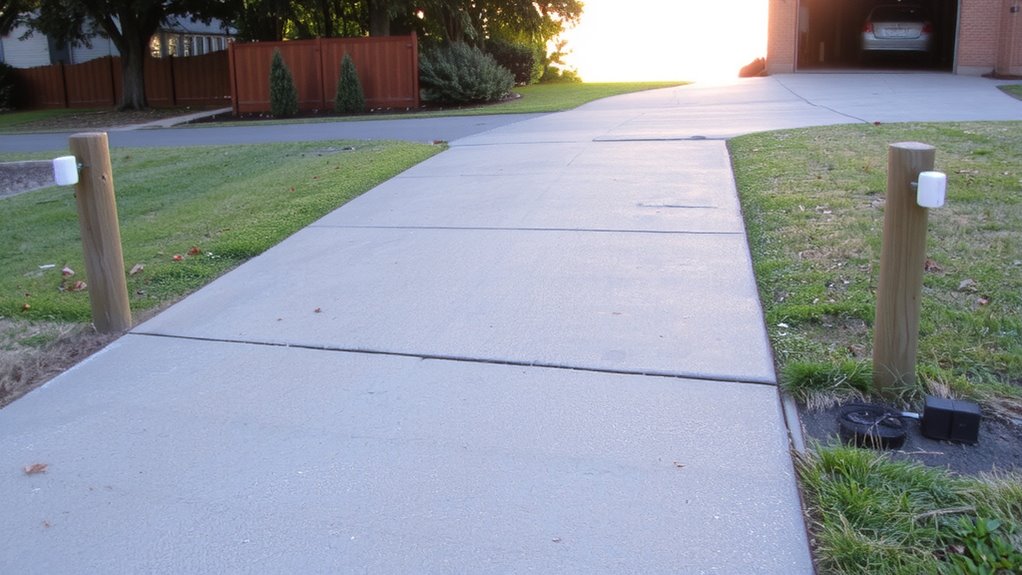
What if your driveway alarm could work without running wires across your yard? Wireless systems offer easy installation and flexibility, but they’re prone to signal interference from walls, trees, or weather. Wired alarms deliver consistent performance with minimal signal interference, ideal for long driveways, though installation requires trenching. Consider your property layout and reliability needs.
| Feature | Wired System | Wireless System |
|---|---|---|
| Installation | Complex, labor-heavy | Simple, DIY-friendly |
| Signal Interference | Minimal | Possible |
| Power Consumption | Higher, uses home power | Lower, often battery-powered |
Wired models suit those prioritizing reliability. Wireless fits renters or those avoiding construction. Assess driveway length, terrain, and power consumption preferences. Both types detect vehicles effectively-your choice depends on setup tolerance and environmental factors like signal interference.
Must-Have Features in Modern Driveway Alarms
Reliability starts with smart design when choosing a modern driveway alarm. You need solid motion sensitivity that accurately detects vehicles without false alarms from animals or weather. Adjustable sensitivity settings let you fine-tune detection based on your property’s layout and traffic patterns. Night vision is essential for 24/7 monitoring, providing clear visuals even in total darkness. Look for infrared technology, which maintains performance at night without extra lighting. Weather resistance guarantees durability across seasons, while long-range signals keep your indoor alert unit informed. Battery life should last months, reducing maintenance. Choose models with both audio and visual alerts for better awareness. Modern alarms with these features offer proven performance, giving you timely warnings of approaching vehicles. They’re practical upgrades for security and convenience. Prioritize these core capabilities for dependable, round-the-clock driveway monitoring.
Best Driveway Alarms by Budget and Need
While your budget and specific needs shape the right choice, driveway alarms fall into clear categories that match performance with value. For tight budgets, basic magnetic or infrared sensors offer reliable detection at low cost-these budget options work well for short driveways without heavy foliage. If you’re monitoring a long or curved driveway, wireless RF systems provide better range and fewer false alarms. A thorough need assessment helps determine whether you require visual alerts, smartphone integration, or multi-zone detection. Mid-range models often include adjustable sensitivity and weather resistance, balancing cost and capability. High-end systems support smart home integration and video verification, ideal for larger properties or enhanced security. Always compare power sources, warranty length, and ease of maintenance. Prioritizing features based on your property size and threat level guarantees smarter spending without overspending.
DIY Driveway Alarm Installation Tips
You’ve already picked the right driveway alarm based on your budget and security needs, so now it’s time to get it installed the right way. Proper sensor placement is key-position sensors at least 3 to 5 feet high and aimed across the driveway’s path to detect vehicles accurately. Avoid placing them near trees or heat sources that could interfere with detection. Check your power options: battery-powered units offer quick setup and flexibility, while hardwired or solar models provide long-term reliability with less maintenance. If using batteries, choose lithium for longer life in extreme temperatures. Follow the manufacturer’s range specifications between sensor and receiver, and test the system before final mounting. Secure outdoor components tightly to prevent misalignment from weather or animals. With correct sensor placement and reliable power options, your system will function efficiently for years.
Smart Home Integration: Syncing Your Driveway Alarm
If your driveway alarm operates in isolation, you’re missing out on a key advantage-integration with your smart home ecosystem can enhance both convenience and security. When synced with voice assistants like Alexa or Google Assistant, you can receive audible alerts through smart speakers, letting you know someone’s approaching, even if you’re in another room. Remote monitoring allows you to view real-time notifications on your phone or tablet, whether you’re at work or on vacation. Some systems send push alerts and video clips directly to your device, improving response time. Integration often requires a hub or Wi-Fi-enabled sensor, which may increase upfront costs by $50–$150. While setup can be more complex than standalone models, the added functionality supports faster decisions and better home awareness. Choose systems with strong encryption to protect privacy.
On a final note
You now know the key types and features of driveway alarms, from wired reliability to wireless flexibility. Choose based on range, power needs, and weather resistance. Look for adjustable sensitivity and integration with smart systems. Higher-end models offer video and app alerts, but basic units work well for simple notifications. Plan placement carefully and follow installation guidelines. A well-chosen system improves awareness and security efficiently.