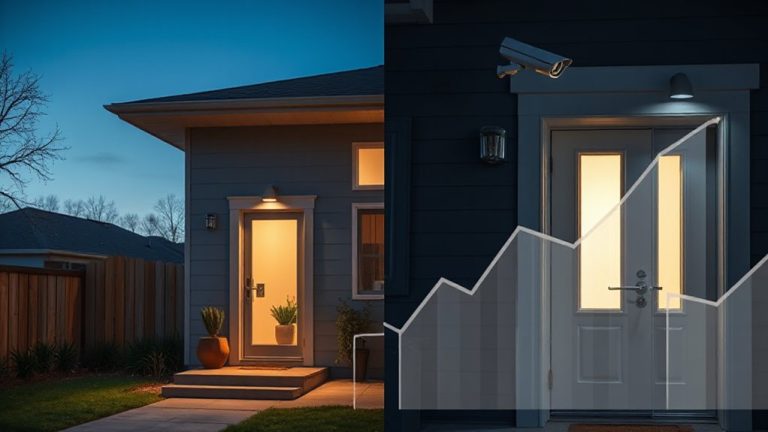
How to Secure Your Home During Extended Absences or Vacations for Long Periods
Secure your home during long absences by reinforcing doors with solid cores and deadbolts, and locking all windows-add sensors for extra protection. Install remote-viewing security cameras with motion detection and night vision at key entry points. Use timers or smart plugs to simulate occupancy with varying light and appliance patterns. Arrange for a house sitter or trusted neighbor to check the property, and suspend mail and newspaper deliveries. Set your thermostat to prevent damage, and shut off water to avoid leaks. Share emergency contacts with your security provider. You’ll also want to think about how timing and technology choices affect overall effectiveness.
Notable Insights
- Reinforce entry doors with solid cores and install deadbolts with a one-inch throw for increased resistance to break-ins.
- Secure all windows with high-quality locks and consider adding window sensors for enhanced monitoring.
- Install motion-detecting security cameras with night vision and remote viewing to monitor activity in real time.
- Use programmable timers or smart plugs to simulate occupancy by cycling lights and appliances at varying times.
- Prevent signs of vacancy by suspending mail and newspaper delivery and arranging for trusted person to check the property.
Reinforce Doors and Lock All Windows
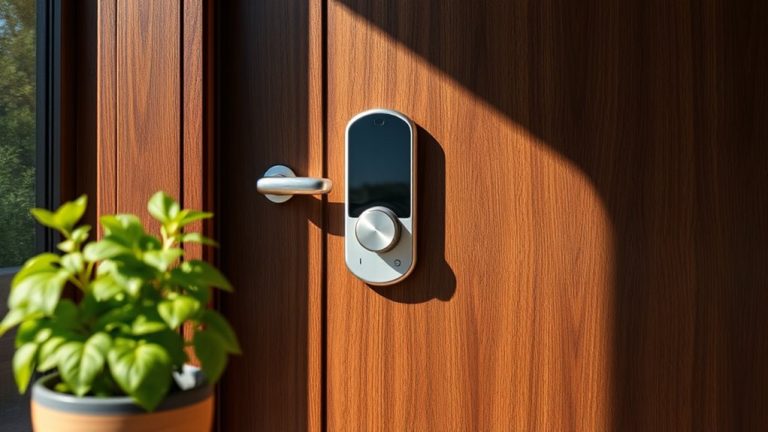
While you’re away on vacation, your home’s weakest entry points-doors and windows-become prime targets for intruders, so reinforcing them is one of the most effective ways to deter break-ins. You should check your door materials: solid core or steel doors resist forced entry better than hollow wood. Upgrade if needed, and always use deadbolts with at least a one-inch throw. For windows, inspect the window seals regularly; damaged seals reduce both energy efficiency and security. Tight, intact seals make windows harder to jimmy open. Pair this with high-quality locks on all accessible windows. Consider adding window sensors if your security system supports them. Reinforcement is cost-effective-typically $100–$300 per door or window, depending on materials and labor. Simple upgrades markedly reduce vulnerability. Focus on durability and proper installation. For maximum protection, choose locks tested for resistance to tampering and forced entry, such as those with best door lock ratings.
Install Security Cameras With Remote Viewing
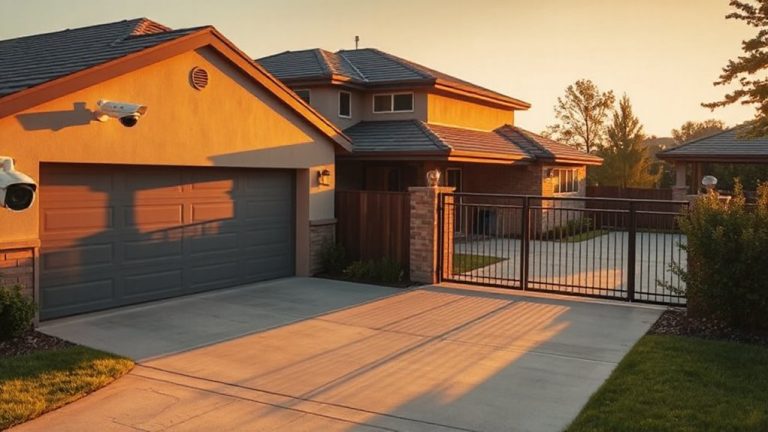
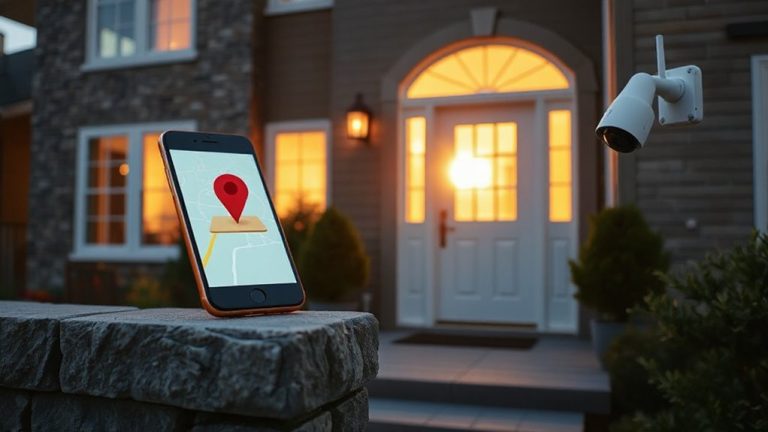
Since you can’t monitor your home in person while on vacation, installing security cameras with remote viewing gives you real-time oversight and a strong deterrent against potential intruders. Choose models with motion detection to receive instant alerts when activity is sensed, reducing false alarms and helping you respond quickly. Cameras with night vision guarantee clear footage in low light, so you’re covered 24/7. Position them at entry points like doors and garages for maximum effectiveness. Look for systems offering cloud storage and mobile app access so you can check live video from anywhere. Wired options are more reliable, but wireless cameras are easier to install. Expect to spend $100–$300, depending on features. Test your setup before leaving to confirm strong Wi-Fi and proper angles. With remote viewing, night vision, and motion detection, you gain peace of mind and better protection for your home. Top models include features like wireless security cameras with seamless remote access and reliable performance.
Turn On Timers to Simulate Home Occupancy
If you want to make it look like someone’s home even when you’re away, setting up timers for lights and electronics is a simple, effective strategy. Timers provide reliable light control by turning lamps on and off at different times, mimicking natural activity. For even better results, use multiple timers to vary the schedule-this prevents predictability and enhances the illusion of occupancy. Appliance cycling, like turning a TV or radio on briefly, adds another layer of realism. Digital timers are affordable and easy to program, typically costing under $15 each. Smart plugs offer more flexibility, allowing remote adjustments via phone apps, though they cost more. Use timers in high-visibility areas like living rooms and entryways. Avoid setting them on strict routines-mix up times daily. This method won’t replace a security system, but it’s a low-cost, proven way to deter casual intruders by making your home seem lived-in.
Arrange a House Sitter or Neighborhood Check-In
A trusted presence in your home makes a big difference in preventing break-ins while you’re away, and arranging for a house sitter is one of the most effective ways to maintain both security and routine. They can handle pet care and garden maintenance, guaranteeing your property looks lived-in and well-kept. A neighbor check-in works too, though less frequently. Consider the table below when deciding:
| Option | Pet Care | Garden Maintenance |
|---|---|---|
| Professional Sitter | Yes | Limited |
| Trusted Friend | Yes | Possible |
| Neighbor Check-In | No | Occasional |
| Family Member | Yes | Yes |
| Service Agency | Yes | No |
Choose based on needs, cost, and reliability. Professional sitters cost $25–$50/day but offer consistency. Neighbors are affordable but may lack time. Guarantee clear instructions and keys are secure.
Stop Mail and Pause Newspaper Delivery
While you’re away, a stuffed mailbox or a stack of newspapers by the door signals that no one’s home-making your house an easy target for burglars. Mail accumulation is a clear red flag, so arrange for delivery suspension before you leave. Most postal services offer a hold option for up to 30 days, preventing mail buildup at your door. Similarly, contact your newspaper provider to pause deliveries temporarily. Both steps eliminate visible signs of vacancy. Delivery suspension is free for mail through the U.S. Postal Service, but newspapers may require advance notice and could offer varying refund or credit policies. Schedule the hold to start the day after your departure and end a few days after return. Ask a trusted neighbor to check periodically, just in case. These small actions markedly reduce burglary risk by maintaining the appearance of occupancy.
Adjust Thermostat & Cut Water to Prevent Leaks
When you’re away from home, leaving your systems unattended can lead to avoidable damage, especially if a pipe bursts or your HVAC runs nonstop. Adjusting your thermostat helps prevent extreme temperatures that strain pipes and equipment. If you have a smart thermostat, use smart thermostat settings to maintain a safe range-around 60°F in winter, 80°F in summer-reducing energy waste without risking freeze damage. Even with smart controls, long absences increase leak risks. Locate your main water shutoff valves and turn them off before leaving. This simple step stops potential flooding from burst or failing pipes while you’re gone. For added security, consider installing an automatic water shutoff device that detects leaks and cuts supply instantly. Though these devices cost $200–$500, they’re cost-effective compared to water damage repairs. Combine both strategies-smart thermostat settings and closed water shutoff valves-for reliable protection during extended trips.
Alert Your Security Provider and Share Contacts
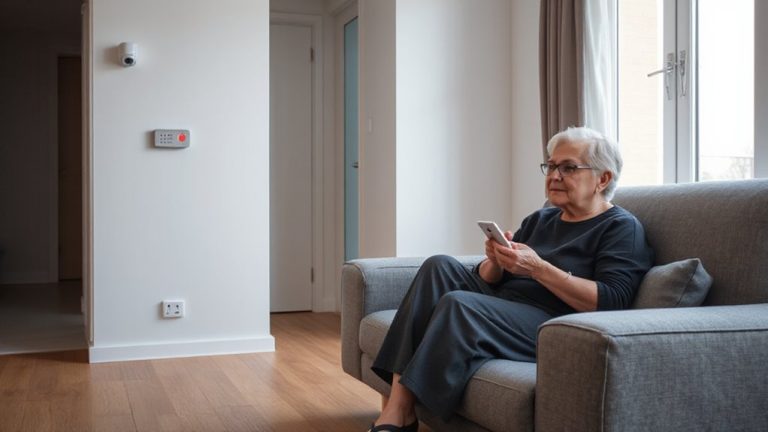
Don’t leave your home’s safety to chance-make sure your security provider knows you’re going on vacation so they can update your account and monitor for unusual activity. Confirm your alarm monitoring is active and set up alerts for any triggers while you’re away. Share trusted emergency contacts with your provider, like a neighbor or family member, so they can respond quickly if an alarm goes off. These contacts should have permission to enter your home if needed. Double-check that your provider has current phone numbers and travel dates on file. This small step guarantees faster response times and reduces false alarm fees. Some systems even allow remote access so you can check status anytime. Updating your plan takes minutes but adds strong protection. It’s a simple, effective way to keep your home secure without extra cost.
On a final note
You’ve taken key steps to protect your home during long absences. Reinforced doors, locked windows, and security cameras with remote access deter intruders, while timers make your house look lived-in. A house sitter or regular check-ins add extra safety. Stopping mail, pausing deliveries, and adjusting your thermostat prevent leaks and alert others to problems. These measures, proven to reduce break-ins and damage, are affordable and easy to plan.