Upgrading Greenhouse and Sunroom Window Locks for Consistent Security
You should upgrade weak or outdated locks on greenhouse and sunroom windows to boost security, since flimsy latches and poor seals make them easy targets. Install slide bolts, compression locks, or key-operated handles for stronger protection-especially with aluminum or wood frames. Use stainless steel hardware to resist corrosion, and align lock type with frame thickness and material. Proper installation and routine maintenance improve both safety and efficiency. Next steps reveal how to install and maintain them for long-term protection.
Notable Insights
- Upgrade to compression locks or key-operated handles for stronger, reliable security in sunrooms and greenhouses.
- Replace worn latches and flimsy sliding locks to eliminate common security vulnerabilities in older installations.
- Use stainless steel or brass locks to resist corrosion in humid greenhouse environments.
- Match lock type to frame material and thickness for secure fitting and optimal performance.
- Install reinforced strike plates with long screws to enhance lock durability and resistance to forced entry.
Why Window Locks Are Your First Line of Defense
While it might seem like a small detail, securing your greenhouse or sunroom starts with the basics-specifically, the window locks. You’re not just protecting plants or furniture; you’re creating intruder deterrence by making unauthorized entry harder. Most break-ins occur through vulnerable, unsecured windows, so quality locks act as a visible barrier. This doesn’t guarantee absolute protection, but it reduces risk considerably. Studies show homes with functional window locks experience fewer break-in attempts. That means real peace of mind, especially when you’re away. Modern locks often include keyed cylinders or reinforced latches, which are affordable-typically $10–$25 per window. Installation is simple with basic tools. Though no lock is foolproof, consistent use across all windows improves overall security. Upgrade older models, inspect regularly, and pair with lighting or alarms for stronger defense. For optimal protection, consider installing best window locks that combine durability, ease of use, and resistance to tampering.
Common Security Flaws in Greenhouse and Sunroom Windows
If you’ve overlooked the security of your greenhouse or sunroom windows, you’re not alone-many homeowners assume these spaces are too insignificant for intruders to target, but they often present easy access points due to weak or outdated locking mechanisms. Weak seals around windows not only compromise security but also lead to poor insulation, making your space less energy-efficient. You might not realize that gaps from worn weatherstripping allow both cold air and potential intruders to slip through. Older latches or flimsy sliding window locks can be forced open in seconds. Poor insulation often signals structural vulnerabilities that affect both comfort and safety. These flaws are more common in older builds but can appear in newer models with low-grade hardware. Addressing them early helps prevent break-ins and reduces energy costs. Check for visible gaps, loose frames, and difficulty in latching-each a red flag needing attention. Upgrading to reliable top sliding window locks can significantly improve both security and energy efficiency.
Best Window Lock Types for Sunrooms and Greenhouses
You’ve likely already noticed how weak or outdated locks on your greenhouse or sunroom windows create both security and energy risks, but the good news is that upgrading doesn’t have to be complicated. A slide bolt offers simple, reliable locking for infrequently used windows, requiring minimal installation and providing solid resistance to forced entry. For higher traffic areas, compression locks or key-operated locking handles add convenience and stronger protection. When installed properly, slide bolts reduce air leakage and improve energy efficiency. Lock reinforcement, like metal strike plates or longer screws, increases resistance by anchoring the frame securely. These upgrades typically cost $10–$30 per window and can be installed in under an hour. Choose durable materials such as stainless steel or brass to resist corrosion. Consistent use of these lock types improves overall security, reduces energy loss, and enhances peace of mind.
How to Choose the Right Lock for Your Window Frame
A well-chosen lock starts with matching the right type to your window frame material and design, since not all locks work equally well on vinyl, wood, aluminum, or fiberglass. Material compatibility is critical-choose hardware specifically rated for your frame’s composition to prevent warping, stripping, or corrosion. For instance, stainless steel locks suit moisture-prone greenhouses, while aluminum frames often need reinforced strike plates. Frame thickness also affects your options; thicker frames allow for longer screws and deeper latch engagement, boosting security. Measure your frame carefully before buying-most locks list compatible thickness ranges in the product specs. Surface-mounted locks work well on thinner or uneven frames, while mortise locks offer stronger hold but require more precise installation. Always check manufacturer guidelines for both the lock and your window model to guarantee proper fit and function. For maximum protection, consider upgrading to smart locks with built-in alarm systems.
Install a Tamper-Resistant Window Lock in 5 Steps
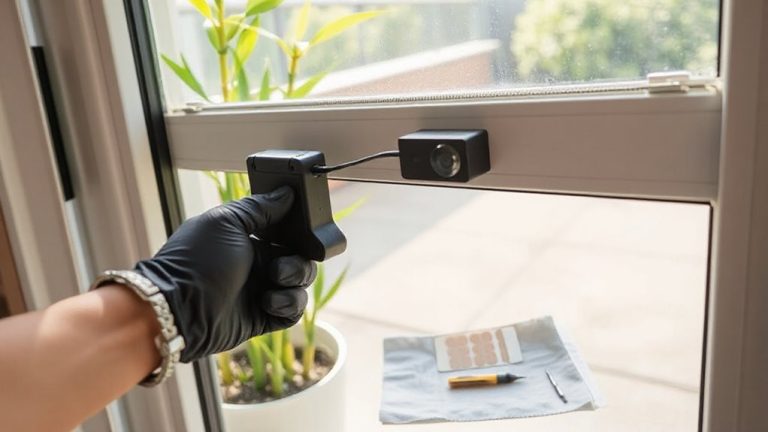
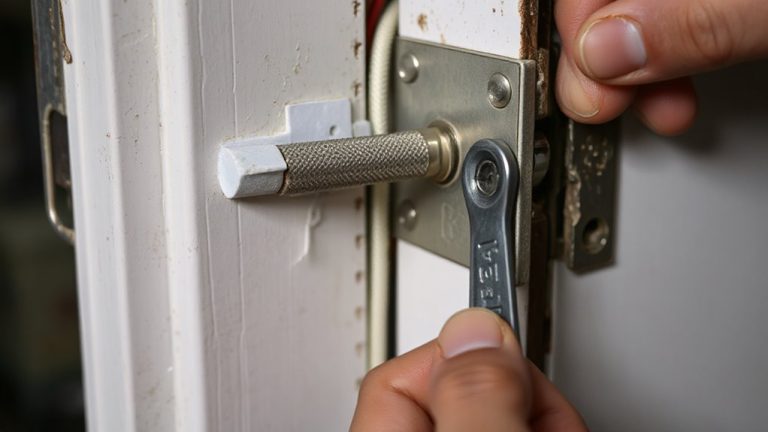
Picking the right tamper-resistant window lock depends on both your window frame type and how it opens, which is why matching hardware to your frame material and thickness matters before installation begins. For DIY installation, start by marking drill points with a pencil, then pre-drill holes to avoid cracking the frame. Attach the lock base securely using the included screws-stainless steel is best for durability. Align the moving part with the catch, ensuring the window opens and closes smoothly. Test the mechanism before final tightening. Tamper resistance improves when locks include non-removable pins or recessed screws. Most kits cost $15–$30 and take under 20 minutes per window. Choose models with a keyed or push-button release based on accessibility needs. Proper placement on the lower sash or frame maximizes security without interfering with daily use.
Do Window Locks Improve Energy Efficiency?
While window locks are primarily designed for security, they can contribute to improved energy efficiency when they help guarantee a tight seal between the window sash and frame. When locked, many windows press the sash firmly against weatherstripping, enhancing thermal sealing and reducing air leakage. This tighter fit prevents drafts, helping your greenhouse or sunroom maintain a consistent temperature. Over time, this means less strain on heating and cooling systems, potentially lowering energy bills. Not all locks provide the same level of compression, though-look for models that secure firm closure without warping the frame. While the energy benefit is a side effect, not the main purpose, choosing locks that promote better sealing gives you dual advantages. You’re not just securing the space; you’re also minimizing air leakage and supporting overall energy performance. Proper installation is key to achieving these results.
Maintenance Tips for Long-Lasting Window Locks
Securing your greenhouse or sunroom windows properly does more than keep out intruders-it can also support energy efficiency by guaranteeing a tight seal, as discussed earlier. To keep your window locks working well, regular maintenance is key. Check lubrication frequency every three to six months, using a silicone-based spray to guarantee smooth operation without attracting dust. Avoid oil-based products, as they can gum up over time. Inspect locks frequently for signs of wear or moisture buildup, which can lead to corrosion. For rust prevention, choose locks made from stainless steel or aluminum, especially in humid environments. Wipe down metal parts with a dry cloth and consider applying a protective coating if needed. Replacing worn components early avoids costly repairs. Proper care extends lock life, maintains security, and supports consistent performance year-round.
On a final note
You’ve secured your home’s weak spots by upgrading greenhouse and sunroom locks. Choose tamper-resistant models like keyed latches or multi-point locks for stronger defense. They fit most frames and boost security without high costs. Proper installation and yearly maintenance prevent wear. While locks won’t drastically cut energy bills, tighter seals can help. Focus on durable materials and correct fit-small upgrades offer measurable protection over time.