Upgrading Garage-to-House Entry Door Security to Match Exterior Door Standards
Your garage-to-house door is a common security weak spot, often bypassed by intruders. Install a solid-core door for strength and fire resistance, and reinforce the frame with a 4-inch metal strike plate and 3-inch screws into wall studs. Upgrade to a Grade 1 or 2 deadbolt with a 1-inch steel bolt, and secure hinges with pin caps. Add motion-sensing lights and integrate the door with a smart alarm system for real-time alerts. Costs range $20–$50 for hardware, with most upgrades taking under an hour. Stronger protection starts with these key steps-there’s more to optimize.
Notable Insights
- Install a solid-core door to match exterior door strength and resist forced entry.
- Reinforce the door frame with a metal strike plate and 3-inch screws anchored into wall studs.
- Upgrade to an ANSI Grade 1 or 2 deadbolt with a 1-inch hardened steel bolt.
- Use secure hinges with non-removable pins or caps to prevent door detachment.
- Add motion-sensing lights and integrate smart security for real-time alerts and monitoring.
Recognize Your Garage Entry Door as a Security Weak Spot
While it might seem like a secondary access point, your garage entry door is often one of the most vulnerable spots on your home’s security perimeter. You likely lock your front door without thinking, but this interior garage door is a blind spot vulnerability criminals can exploit. Because it leads directly into your home, it’s an overlooked access point-especially if it’s thin, hollow, or lacks a strong lock. Studies show many break-ins start here, not through the garage door itself but through this internal door. It’s often weaker than exterior doors and may not even have a deadbolt. You can’t assume your garage is secure just because the main door closes automatically. Upgrading this entry means evaluating its current weaknesses. Treat it like any exterior door: reinforce the frame, upgrade the lock, and guarantee proper door alignment for maximum resistance. For optimal protection, install one of the best door locks featuring advanced smart lock technology to match your home’s exterior security standards.
Install a Solid-Core Door for Maximum Strength
A solid-core door is your best defense against forced entry through the garage. Unlike hollow-core models, solid-core doors offer superior strength, fire resistance, and sound insulation. They’re denser, heavier, and harder to break through, giving you more time to respond during a break-in. For safety and comfort, these benefits matter every day.
| Feature | Benefit |
|---|---|
| Solid wood or composite core | Increases impact resistance |
| Fire resistance (20–60 min) | Slows fire spread from garage |
| Sound insulation (STC 25–35) | Reduces noise transmission |
| Heavier weight (70–100 lbs) | Requires sturdy hinges and frame |
| Cost ($150–$400) | Higher than hollow-core, but cost-effective long-term |
Upgrade now-your home’s safety depends on it.
Reinforce the Frame to Prevent Kick-Ins
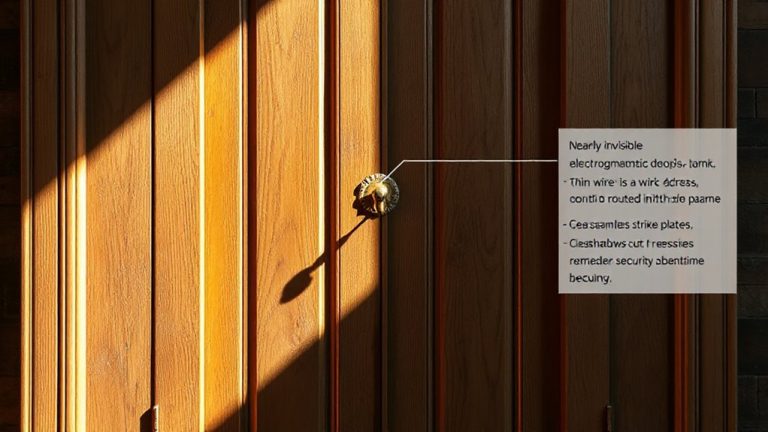
Many break-ins start with a kick to the door frame, especially near the lock, where wood or metal can splinter or bend under pressure-so reinforcing the frame isn’t optional, it’s crucial. You need strong door jamb strength to resist forced entry, and simple frame reinforcement makes a substantial difference. Install a metal security strike plate, at least 4 inches long, with 3-inch screws that anchor into the wall stud behind the jamb. This upgrade prevents the strike plate from pulling out during an attack. Replace thin, hollow jambs with solid wood or use a steel-reinforced frame kit designed for high-traffic entry points. These kits enhance both frame reinforcement and overall durability. Most installations take under an hour and cost $20–$50. Properly reinforced, the jamb can withstand repeated impacts, notably slowing down intruders. Don’t overlook this crucial step-it’s a cost-effective way to match your garage entry’s strength to your home’s main exterior doors. For maximum protection, consider installing one of the best security doors for your home that combine reinforced frames with advanced locking mechanisms.
Upgrade to a Grade 1 or 2 Deadbolt on the Garage Entry
You’ve reinforced the frame to resist kick-ins, so now turn your attention to the lock itself-the deadbolt. Upgrading to a Grade 1 or 2 deadbolt markedly improves security compared to basic residential locks. These ratings, set by ANSI, reflect durability and strength: Grade 1 withstands 800,000 cycles, Grade 2 handles 400,000. Higher deadbolt quality means better resistance to picking, drilling, and forced entry. Choose one with a minimum 1-inch hardened steel bolt that extends deep into the reinforced frame. Solid brass or steel construction adds longevity. Check lock maintenance regularly-lubricate the mechanism yearly with graphite spray and inspect for wear. Avoid cheap key-in-knob sets; pair the deadbolt with a high-security handle. Most Grade 1 and 2 models cost $75–$150 installed, a worthwhile investment for long-term safety. For even greater convenience and access control, consider upgrading to a smart lock that meets Grade 1 or 2 standards.
Fortify Hinges and Strike Plate Against Prying
While reinforcing hinges and strike plates isn’t as visible as upgrading locks, it’s just as critical for stopping forced entry. Exterior-grade doors can still fail if hinges are weak or the strike plate isn’t properly secured. You should install hinge pin caps to prevent attackers from easily knocking out hinge pins and removing the door. They’re affordable, easy to install, and block a common pry method. For the strike plate, replace the standard three-inch screws with security strike mounts that anchor into wall framing, not just the door jamb. This prevents the plate from pulling away under force. Use 4-inch screws with a reinforced metal plate for best results. Proper installation guarantees resistance to prying, a frequent break-in method. Total cost is typically under $30, and installation takes under 30 minutes.
Add Motion Lighting and Alarms at the Entry Point
A well-placed motion-sensing light can reduce break-in attempts by up to 80%, making it one of the most effective deterrents for garage entry points. You should install motion sensors above the door or along entry pathways to detect movement in low-light conditions. These sensors activate lighting quickly, startling intruders and drawing attention to the area. Pairing motion sensors with bright LED floodlights guarantees wide coverage. For added protection, link the system to alarm triggers on your home security setup. When triggered, alarms emit loud sounds and can notify you via smartphone. Hardwired systems offer reliability but cost more to install-typically $150–$300. Wireless models are easier to DIY but may need frequent battery changes. Choose models with adjustable sensitivity and timers to reduce false alerts. This combination of lighting and alarm triggers strengthens your entry point without requiring complex upgrades.
Integrate Your Garage Entry Door With a Smart Security System
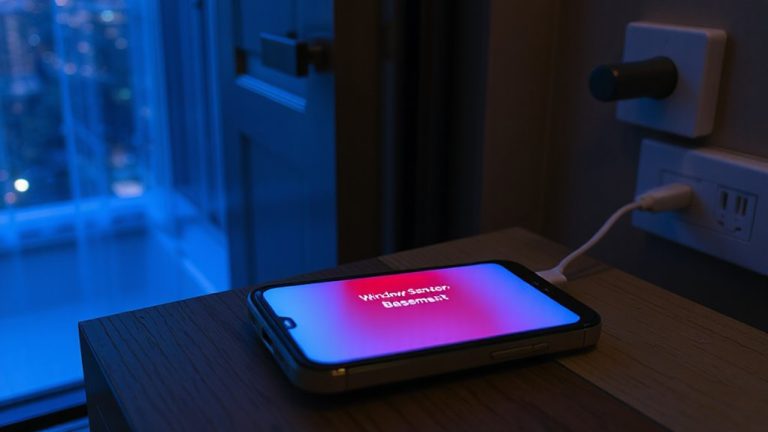
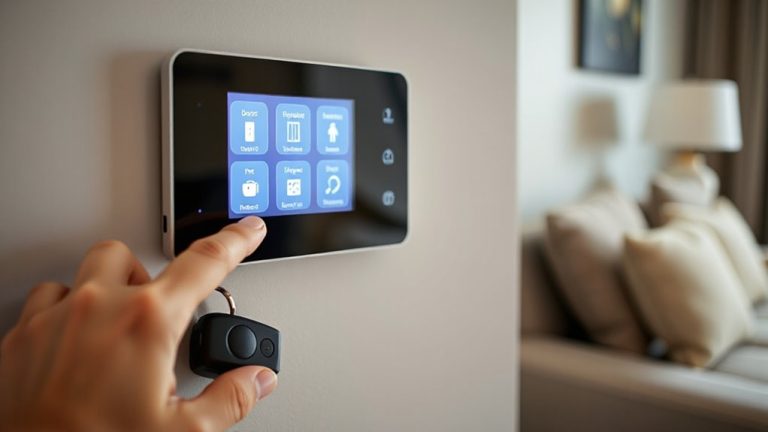
What if your garage door could alert you the moment it opens-whether at home or halfway across the world? With smart integration, you can link your garage entry door to a full security system using Wi-Fi-connected sensors and controllers. Automated monitoring sends real-time alerts to your phone if the door is opened, left ajar, or tampered with. Most systems work with platforms like Google Home, Alexa, or Apple HomeKit, allowing voice commands and remote control. Setup typically requires a hub, smart garage controller, and a mobile app, costing $100–$250 total. While smart integration improves response time and tracking, it depends on stable internet and power. Some models include access logs and scheduling features. For best results, choose UL-listed devices with end-to-end encryption to guarantee reliable, secure performance.
On a final note
You should treat your garage entry door like any main exterior door. A solid-core door, reinforced frame, and Grade 1 or 2 deadbolt markedly reduce break-in risks. Strengthen hinges and the strike plate to resist prying and kicking. Add motion lights and alarms for early detection. Integrating the door into a smart security system gives real-time alerts. These upgrades cost $200–$500 but improve safety, peace of mind, and home value.