Reinforcing Garage Entry Doors With Commercial-Grade Locks and Bracing Kits
You can strengthen your garage entry door by installing commercial-grade locks, which use hardened steel and longer bolts to resist break-ins, and pair them with bracing kits that reinforce weak points like hinges and center panels. These upgrades cost $50–$150 and often install in under an hour. Use 3-inch screws anchored to wall studs for maximum hold. Reinforcing weak spots reduces vulnerability during emergencies and improves overall home security-for even greater protection, consider how system integration boosts effectiveness.
Notable Insights
- Upgrade to commercial-grade locks with hardened steel and longer bolt throws for superior resistance to forced entry.
- Install bracing kits with steel reinforcement bars to strengthen vulnerable hinge and panel areas against prying.
- Use UL-rated bracing systems that include smart sensors to detect breaches and send real-time alerts.
- Reinforce the door jamb with a steel plate and 3-inch screws anchored into wall studs for solid lock support.
- Ensure proper hardware alignment and compatibility with door material to prevent false locking and structural damage.
Why Your Garage Door Is a Security Weak Spot
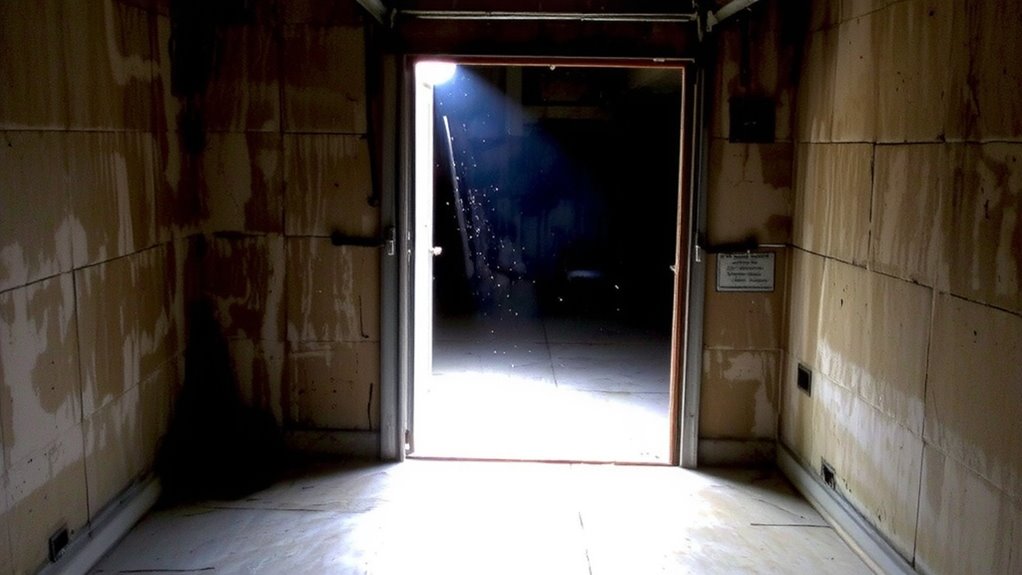
While your garage door might seem like just another entry point, it’s often the most vulnerable part of your home’s security system. Automatic openers make access convenient, but they also introduce hidden vulnerabilities. Many models rely on outdated codes or unencrypted signals, letting hackers gain entry in seconds. Older remotes and openers especially lack modern encryption, making them easy targets. The door’s large surface, especially if made of thin steel or un-reinforced sections, can be pried open with minimal effort. Roll-up designs have gaps at the edges where tools can slip in. Even with a locked overhead door, intruders can disconnect it from the opener manually. Your garage also typically leads directly into your home, giving attackers immediate access once inside. Most standard locks on residential models offer minimal resistance. Hidden vulnerabilities like weak hinges, thin tracks, or exposed emergency release cords make forced entry simple. Inspecting your current setup, especially the opener and manual override, is a necessary first step.
Why Upgrade to Commercial-Grade Garage Locks
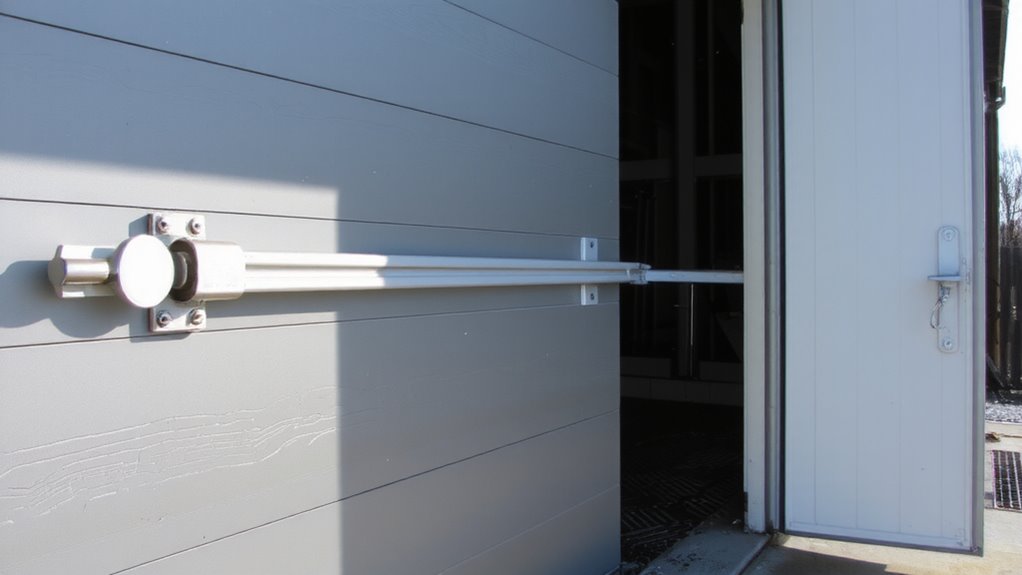
You can strengthen your garage’s weak points by upgrading to commercial-grade locks, which are built to resist forced entry better than standard residential models. These locks provide commercial durability, meaning they withstand repeated use and harsh conditions without failing. Materials like hardened steel and reinforced strike plates make them harder to pry, drill, or break. You get enhanced protection through features such as pick-resistant cylinders and longer bolt throws, which secure the door more effectively. While they cost more-typically $80 to $150-this investment improves long-term security. Installation may require professional help, adding to upfront costs, but the payoff is measurable in delayed breach times during break-in attempts. Commercial-grade models also meet higher industry testing standards, offering proven performance. For homeowners seeking reliable, long-lasting defense, upgrading delivers clear, data-backed advantages over basic hardware. According to expert evaluations, the most effective upgrades include best door locks that combine robust construction with advanced security features.
Best Bracing Kits for Stronger Garage Security
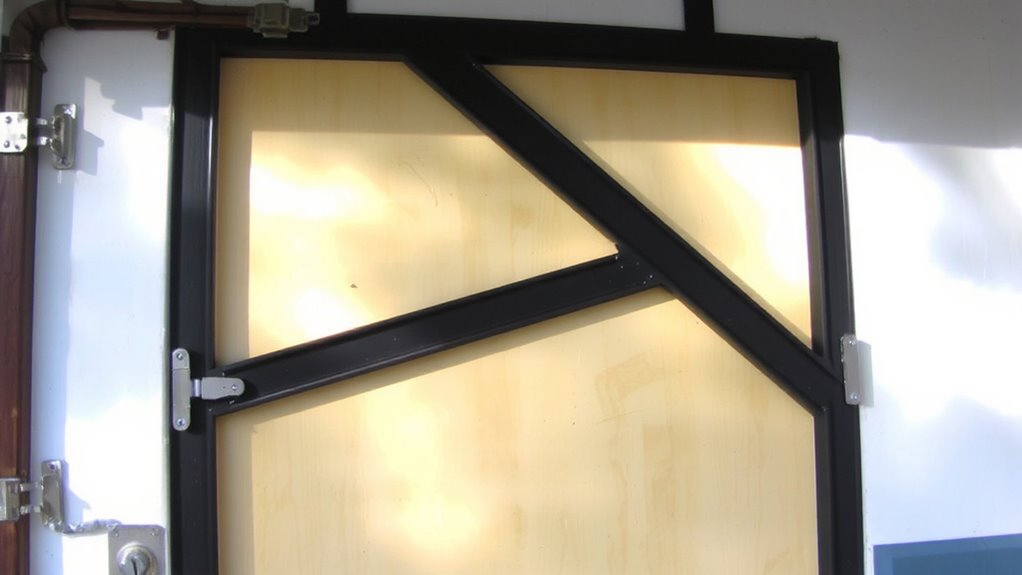
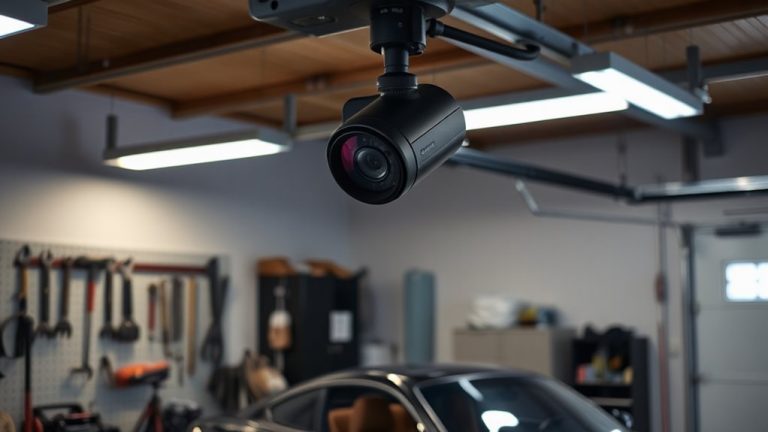
Reinforce your garage door with a sturdy bracing kit to block common attack points used by intruders. You’ll want a kit that strengthens the central panel and hinge areas-common weak spots. Look for heavy-duty steel construction with adjustable braces that fit standard and custom door sizes. Some top models include built-in garage sensors that detect forced entry or abnormal movement, sending smart alerts to your phone. These real-time notifications let you respond quickly, even when you’re away. Most kits install with basic tools and take under an hour. Prices range from $50 to $150, with higher-end kits offering weather-resistant finishes and reinforced mounting hardware. While they don’t replace locks, bracing kits add a critical layer of resistance. Choose a UL-rated option for proven performance. Pairing a quality brace with garage sensors and smart alerts gives you measurable, practical security improvement.
Install a Deadbolt Reinforcement Kit in 4 Steps
If your garage entry door uses a standard deadbolt, adding a reinforcement kit can markedly improve resistance to forced entry. Start by removing the strike plate and marking the door jamb for reinforcement hardware. Use the template from your kit to guarantee proper deadbolt alignment-this prevents binding and improves lock function. Next, attach the steel reinforcement plate over the jamb, securing it with 3-inch screws that reach the wall framing. These screws maximize reinforcement torque, making it harder for intruders to kick in the door. Then, reinstall the strike plate on the reinforced area, checking that the deadbolt extends fully and smoothly. Finally, test the lock multiple times to confirm consistent operation. Most kits install in under 30 minutes and cost $20–$40. Proper installation guarantees long-term security and improves overall door integrity.
Choose Garage Security Hardware by Door Type
Security starts with the right fit-choosing garage entry door hardware that matches your door type guarantees both functionality and protection. Your door material determines what hardware will work best, so check whether you have wood, steel, or fiberglass. Steel doors support heavy-duty deadbolts and reinforced strike plates, while wood doors offer solid backing but may warp over time. Fiberglass can crack under stress, so you’ll need hardware designed for lighter impact. Always confirm hardware compatibility before buying-some locks require specific thickness or internal framing. For example, commercial-grade deadbolts often need a minimum 1¾-inch door depth. If your door is thinner, consider a through-bolt kit for added strength. Aluminum or vinyl frame doors need reinforced mounting blocks. Planning ahead saves money and effort, so measure your door and review manufacturer specs. Good hardware tailored to your door type improves security without overengineering. A reliable front door lock can provide insight into high-security locking mechanisms suitable for garage entry points.
Avoid These 5 Garage Lock Installation Mistakes
You’ve picked the right lock for your garage entry door based on material and build, but even the best hardware won’t help if it’s installed wrong. Improper alignment is a common mistake-you must guarantee the strike plate lines up perfectly with the latch to prevent binding or false locking. Gaps or misalignment weaken security and strain the mechanism. Inadequate anchoring is another issue; screws that are too short or soft framing fail to hold under force. Use at least 3-inch hardened screws into wall studs or reinforced framing. Avoid installing locks near unstable door edges or warped sections. Test the door’s movement before finalizing placement. Poor measurements lead to repeated drilling and compromised structural integrity. Double-check your layout with a level and measuring tape. Proper installation takes time, but it ensures reliable, long-term protection without retrofitting. Integrating a smart garage door opener can enhance security but requires careful coordination with lock placement to avoid interference.
When to Call a Pro for Garage Door Security Upgrades
How confident are you that your DIY efforts will truly stop a determined intruder? While upgrades like commercial-grade locks help, some situations demand expert knowledge. If your garage door shows signs of misalignment, unusual noises, or failed components, it’s time for a professional inspection. Attempting complex installations without experience can compromise security and lead to costly emergency repairs later.
Consider the following before deciding:
| Factor | DIY Risk | Professional Benefit |
|---|---|---|
| Lock alignment | Poor fit reduces effectiveness | Precision installation |
| Structural integrity | Hidden damage may go unnoticed | Full assessment included |
| Time investment | Several hours, potential rework | Efficient, one-visit fix |
| Cost | $50–$150 in tools/materials | $150–$300, includes warranty |
| Long-term safety | Uncertain under stress | Reliable, code-compliant results |
A professional inspection guarantees lasting protection, especially when emergency repairs are needed.
On a final note
Upgrading your garage entry door with commercial-grade locks and bracing kits boosts security where most homes are vulnerable. These reinforcements deter forced entry and work best when matched to your door type. While DIY installation saves money, avoid common mistakes like misaligned hardware. For maximum effectiveness, combine deadbolts with proper framing support. When in doubt, consult a professional-proper setup guarantees long-term protection.