French Door Sensors: Multi-Point Latching Guide (1/4″ Gap Rule)
Install a magnetic sensor at each latching point on your French doors, keeping gaps under 1/4 inch for reliable detection. Use low-profile, wireless sensors in neutral finishes to blend with trim and avoid frame damage. Adhesive backing allows non-invasive installation-test placement first. Guarantee sensors use Z-Wave, Zigbee, or Wi-Fi for smart home compatibility and check signal strength near metal frames. They cost $10–$20 each and last 1–3 years on battery. Test monthly for alignment and response within 1–2 seconds. Models with corrosion-resistant contacts offer better long-term reliability. You’ll find more tips on optimizing placement and maintenance that can improve system performance.
Notable Insights
- Install a magnetic sensor at each latching point to ensure full security coverage on French doors.
- Maintain sensor-to-magnet spacing under 1/4 inch for reliable circuit closure and detection.
- Use low-profile sensors under 2 inches to blend discreetly with door trim and aesthetics.
- Choose wireless sensors with adhesive mounting to avoid drilling and preserve door integrity.
- Test sensor alignment monthly and ensure compatibility with Z-Wave, Zigbee, or Wi-Fi security systems.
Use Magnetic Sensors for Each Latching Point on French Doors
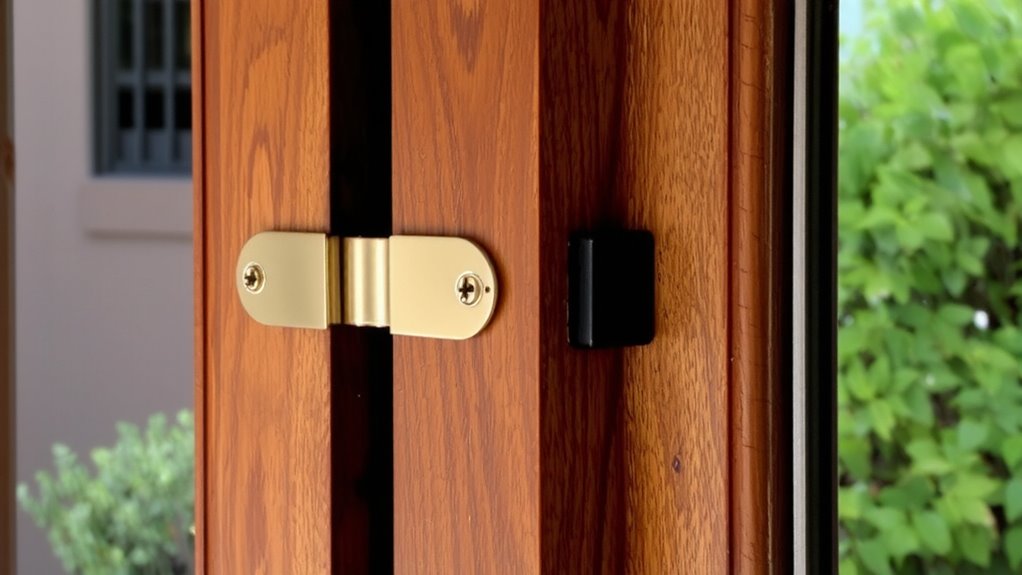
Every latching point on your French doors should have a magnetic sensor to guarantee complete coverage-missing even one latch creates a security gap. You need reliable detection across all entry points, and magnetic sensors deliver consistent performance when properly installed. Pay close attention to magnetic alignment; if the magnet and sensor don’t line up precisely, the circuit won’t close correctly, leading to false alarms or undetected openings. Sensor spacing matters too-the gap between magnet and sensor should be no more than 1/4 inch for ideal function. These sensors are affordable, with most costing $10–$20 per unit, and they integrate easily with most security systems. While they require accurate placement, the setup is straightforward with a level and measuring tape. Unlike motion-based options, they offer specific door position data. Plan your layout before installation, counting each latch to determine how many sensors you’ll need. For added reliability, consider models frequently recommended in expert roundups of the Top Garage Door Sensors.
Pick Low-Profile Door Sensors for French Doors That Look Good
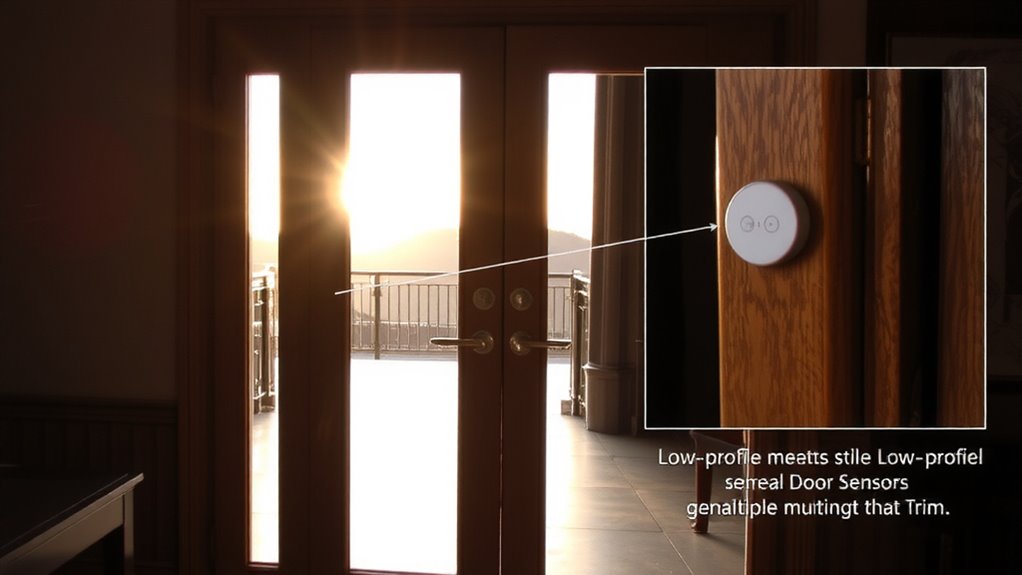
A sleek, low-profile door sensor keeps your French doors secure without drawing attention to wiring or bulk. You want an aesthetic design that blends with your home’s style, not fights it. These slim sensors install neatly on the door and frame, making sensor placement easier and less obtrusive. Most measure under 2 inches, so they stay discreet near trim or glass. Look for models with a minimalist housing-white, gray, or satin finishes typically match better. Wireless options reduce visible cords, enhancing the clean look. While low-profile sensors offer better visual appeal, some may have slightly shorter detection ranges. Plan placement carefully to maintain reliable contact between magnet and sensor. Proper alignment guarantees consistent performance. These sensors often cost $15–$25 each, balancing price and function. Choose based on your security needs and decor preferences-smart sensor placement and aesthetic design go hand in hand.
Install French Door Sensors Without Damaging the Frame
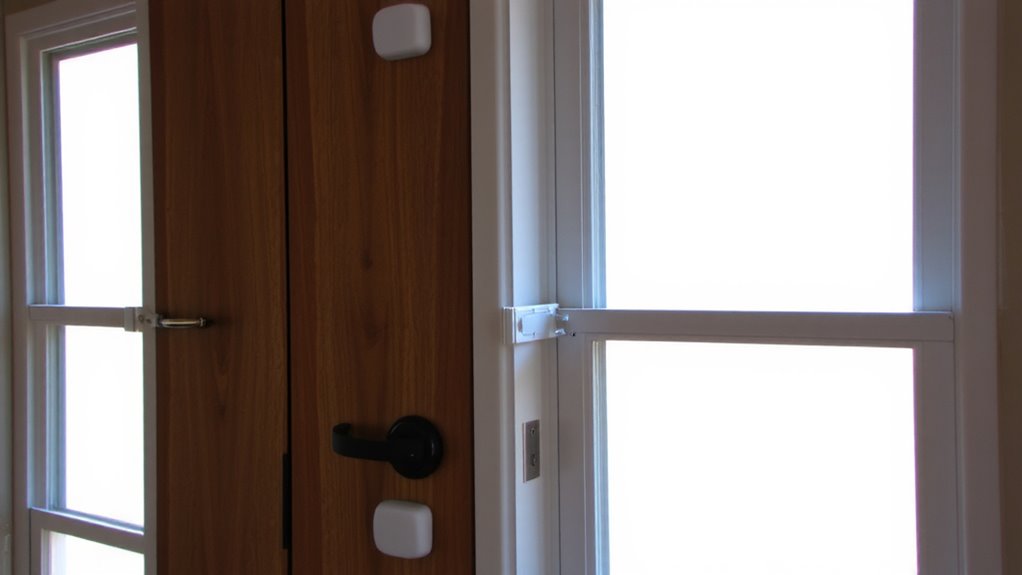
You’ve chosen a low-profile sensor that keeps your French doors looking clean and secure, but now comes the next step-getting it installed without harming the door or frame. A non invasive installation protects both the sensor and the door’s integrity. Use adhesive-backed sensors instead of drilling, as they offer strong hold without compromising wood or finish. Opt for high-bond double-sided tape designed for security devices-it withstands temperature shifts and humidity. For alignment, test placement with masking tape first, then press the sensor firmly into place. Magnetic sensors with slim profiles suit this method best, ensuring reliable contact without gaps. Frame preservation is critical, especially on vintage or stained wood. Avoid screws unless absolutely necessary, and never route wires through the frame. Wireless sensors simplify setup and reduce physical modifications. With careful planning, you maintain security, aesthetics, and structural value-all without damage. Top-rated models often feature garage door alarm sensors with advanced wireless connectivity and weather resistance.
Ensure All Door Sensors for French Doors Are Connected
While proper installation protects your French doors’ appearance and structure, making sure each sensor is fully connected guarantees your security system works as intended. You need reliable wireless connectivity so every sensor communicates instantly with your hub, especially across multiple latching points. Check the signal strength during setup-walls or metal frames can interfere, weakening the connection. Use sensors with strong, consistent wireless connectivity to avoid delays in alerts. Also, monitor battery life closely; weak power causes communication lapses. Most sensors last 1–3 years on a single battery, but frequent alerts or low temperatures shorten that. Choose models with low-battery alerts so you can replace them in time. Test each sensor after installation by opening and closing every door panel, confirming the system registers each movement accurately. A fully connected setup means no gaps in protection.
Integrate French Door Sensors With Your Smart Home
Since smart home compatibility affects both functionality and convenience, picking door sensors that integrate smoothly with your existing system guarantees you get real-time alerts and automated responses without hassle. Choose sensors that support major platforms like Alexa, Google Home, or Apple HomeKit so you can use voice control to check door status hands-free. Integrated sensors work with automation routines-like turning on lights when a door opens at night or arming your security system when all doors are closed. Make sure your hub supports Z-Wave, Zigbee, or Wi-Fi for reliable connectivity. Some systems offer geofencing, which triggers actions when you leave or return home. While smart sensors cost more upfront, they reduce false alarms and improve response times. Always verify compatibility before purchasing, and consider setup complexity. Wireless models simplify installation, especially on multiple latching points. A reliable setup starts with choosing the right smart home hubs.
Test Your French Door Sensors Monthly for Gaps
Regularly testing your French door sensors helps guarantee they detect gaps and trigger alarms as intended. You should perform this check monthly to guarantee reliable gap detection, especially since French doors have multiple latching points that can shift over time. Simply open each door slightly and verify the alarm activates within one to two seconds. If it doesn’t, inspect the sensor alignment-misaligned sensors are a common cause of failure. Both magnetic and contact sensors rely on precise positioning; even a 1/8-inch gap can prevent proper signaling. Test every latching point individually, as one misaligned sensor can compromise the entire system. Consistent testing helps catch issues early, maintaining peak security performance. This small effort guarantees your sensors respond accurately, giving you dependable protection without costly false alarms or overlooked breaches.
Maintain French Door Sensor Contacts for Long-Term Use
Your French door sensor’s long-term reliability depends on keeping the contacts clean and properly aligned. Dust, moisture, or misalignment can disrupt signal transmission, leading to false alarms or undetected openings. Wipe both contact surfaces monthly with a dry cloth to maintain connection quality. Check sensor alignment: the magnet and sensor should line up within 1/8 inch when the door is closed. Even slight shifts from door settling or weather changes can affect performance. Proper alignment guarantees consistent triggering and extends contact durability. Avoid forcing doors shut, as impact stress reduces sensor lifespan. For best results, choose models with reinforced housings and corrosion-resistant contacts to improve contact durability in humid or sunny areas. Replacing worn components early prevents system gaps. With regular care and attention to sensor alignment, your French door sensors can perform reliably for years, supporting your home’s overall security plan without costly upgrades.
On a final note
You should use one magnetic sensor per latching point to guarantee full coverage, as gaps can let intruders bypass alarms. Low-profile sensors blend well and won’t damage frames when installed with adhesive or shallow screws. Always connect sensors to your security system properly-test monthly for alignment issues. Pair them with a smart hub for remote alerts. Regular cleaning of sensor contacts prevents false alarms. Plan for $15–$30 per sensor, balancing cost and reliability.