Choosing the Right Motion Sensors for Large Yards With Pets and Wildlife
Choose dual-tech sensors combining PIR and microwave for reliable detection in large yards. Mount them 6–8 ft high to avoid pets and wildlife, and pick models with pet immunity up to 85 lbs. Opt for IP65-rated, weather-resistant units to withstand outdoor wear. Avoid aiming at heat sources or foliage. Sensors with adjustable shields and radar tech help reduce false alarms. Higher-end thermal models offer precision but cost more. You’ll find specific models and setup tips that fine-tune performance.
Notable Insights
- Choose dual-tech sensors combining PIR and microwave for reliable motion confirmation and reduced false alarms.
- Select pet-friendly models that ignore animals up to 85 lbs using shielding and height-based detection filters.
- Install sensors 6–8 feet high to avoid triggering from small wildlife and ground-level movement.
- Use environmental barriers like fences or hedges to block unwanted detection zones and focus coverage on entry points.
- Opt for weather-resistant units with IP65+ rating to maintain performance in harsh outdoor conditions.
How Outdoor Motion Sensors Really Work
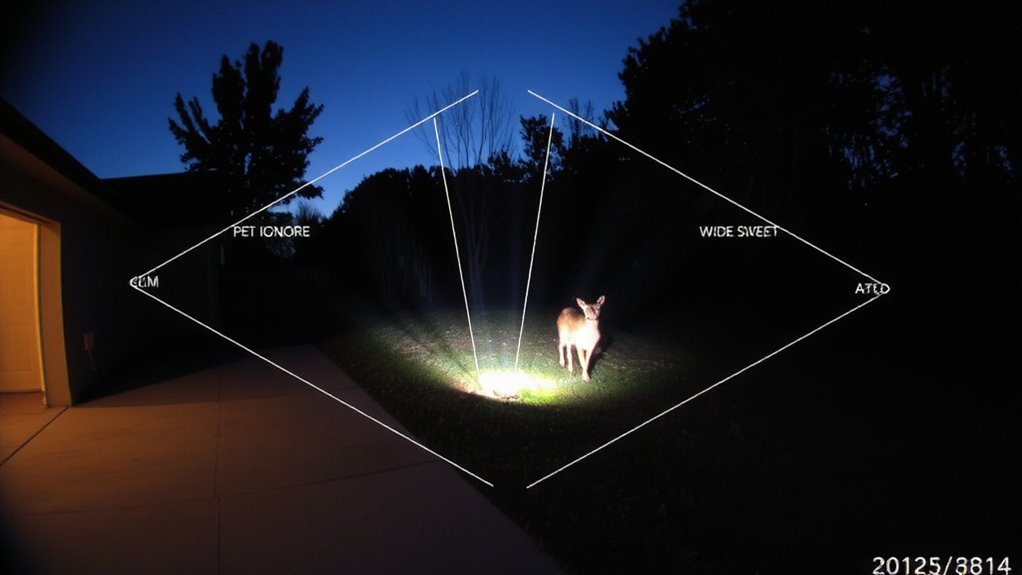
While you might think motion sensors just detect movement, they actually rely on specific technologies to distinguish between a passing animal and a potential intruder. Most outdoor models use passive infrared (PIR) to detect heat signatures, while others combine microwave or dual-tech systems for better accuracy. These sensors analyze motion patterns and temperature changes, but they’re not immune to issues like signal interference from nearby electronics or dense foliage. Environmental degradation-such as dirt buildup, extreme temperatures, or UV exposure-can also reduce sensitivity over time. Proper placement, around 6 to 10 feet high and away from heat sources, helps maintain performance. Look for weather-resistant housings (IP65 rating or higher) to combat wear. Higher-end models offer better immunity to interference and longer lifespans, though they cost more upfront. Regular maintenance improves reliability in large yard setups. For seamless automation, consider models that are fully compatible with Home Assistant.
How Pet-Friendly Sensors Avoid False Alarms
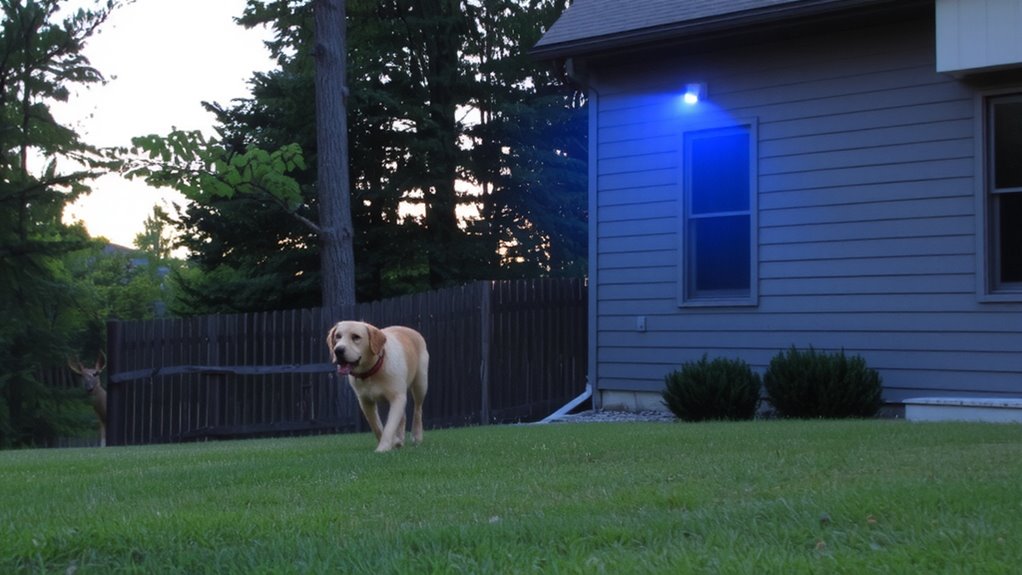
You can keep your yard secure without constantly reacting to your dog or cat thanks to pet-friendly motion sensors. These sensors use intelligent design to ignore animals based on pet size and positioning. Advanced sensor shielding blocks detection close to the ground, where pets usually move. This way, your dog wandering at night won’t trigger an alarm, but a person walking through stays visible to the system. Proper mounting height and angle are essential to effectiveness. For reliable performance, consider models highlighted in expert product roundup guides that evaluate detection accuracy and pet immunity.
| Feature | Standard Sensor | Pet-Friendly Sensor |
|---|---|---|
| Detects Pet Size | No | Up to 85 lbs |
| Sensor Shielding | Limited or none | Adjustable shielding zones |
| False Alarm Risk | High with pets | markedly reduced |
| Best Mounting Height | 6–7 feet | 5–6 feet |
Choose pet-friendly models with adjustable shielding and weight filters for reliable, accurate detection.
Wildlife-Resistant Sensor Technologies Compared
A variety of motion sensor technologies can help reduce false alarms caused by wildlife, especially in large yards where animals like raccoons, deer, or rabbits are common. Thermal imaging sensors detect body heat and can distinguish larger animals from smaller ones, but they’re often more expensive and may struggle in extreme temperatures. Radar scanning sensors use radio waves to sense movement and are highly accurate, with fewer false triggers from small creatures. They work well in varied weather but might require careful setup to avoid sensitivity issues. When comparing the two, thermal imaging is better for identifying animal size, while radar scanning offers consistent motion tracking. Both technologies outperform basic infrared sensors in wildlife-prone areas. You’ll typically pay more for these advanced features, but the investment may be worth it for reliable security. Choose based on your yard’s conditions and local animal activity.
Smart Placement for Fewer False Alarms
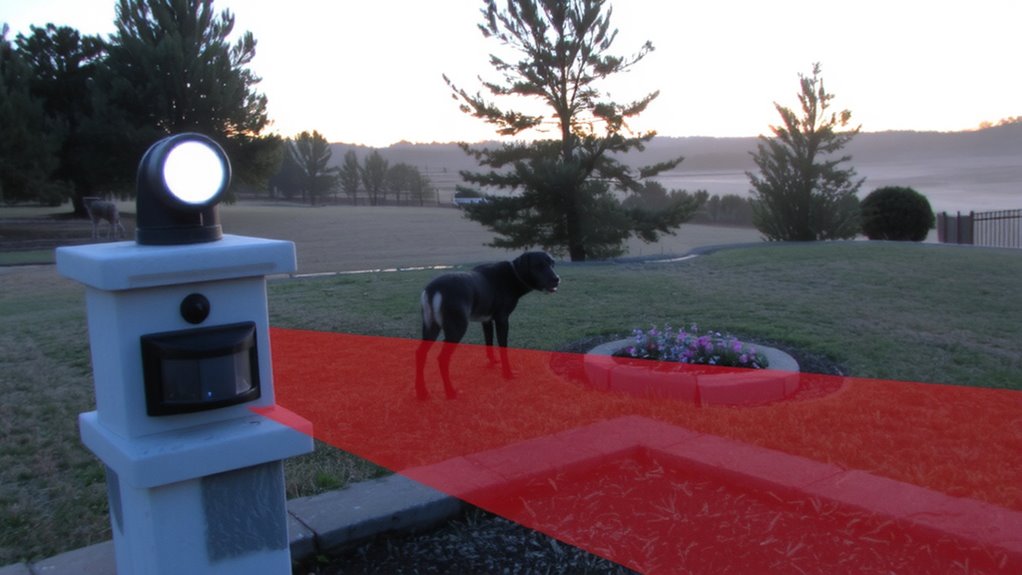
How can you guarantee your motion sensors actually catch intruders instead of reacting to every passing squirrel? Smart placement is key. Mount your sensors at the correct sensor height-usually 6 to 8 feet-to reduce ground-level triggers from pets and small animals. Avoid pointing them directly at roads, trails, or dense foliage where wildlife moves frequently. Use environmental shielding, like hedges or fences, to block unwanted detection zones without limiting coverage. Position sensors to cover entry points such as gates and doors, where human intruders are likely to approach. Avoid heat sources like vents or driveways that create thermal turbulence. Proper angling and placement minimize false alarms while keeping security effective. With careful planning, you boost reliability without expensive upgrades. Top-rated models often feature adjustable sensitivity settings to further refine detection accuracy.
Top Dual-Tech Sensors That Ignore Animals
Several top dual-tech sensors on the market reliably detect human intruders while ignoring animals, thanks to combined passive infrared (PIR) and microwave technologies that reduce false alarms. You’ll want models with advanced heat differentiation, so they distinguish between the thermal signatures of humans and smaller animals. Signal filtering helps discard non-threatening movements from wildlife or pets under 50 pounds. Units like the Bosch TriTech II and Honeywell DT900 use dual confirmation-one tech triggers, the other validates-cutting false alerts. These sensors typically cover up to 40 feet with a 110-degree range, ideal for large yards. Mount them 6 to 8 feet high, away from heat sources. They cost $75–$120 each, which is reasonable for the reliability you get. While microwave signals can penetrate thin materials, proper placement avoids internal false triggers. Choose weather-resistant housings for durability. Overall, dual-tech sensors give you effective outdoor security without nuisance alarms.
On a final note
You’ll cut false alarms by choosing dual-tech sensors with pet immunity up to 50–80 lbs and mounting them at 6–7 feet. Look for models using both infrared and microwave detection to better distinguish animals from people. Place sensors away from fences, trees, and animal paths, and aim them across, not toward, walkways. Higher-end units cost $80–150 but offer better accuracy and longer range, making them worth the investment for large yards.