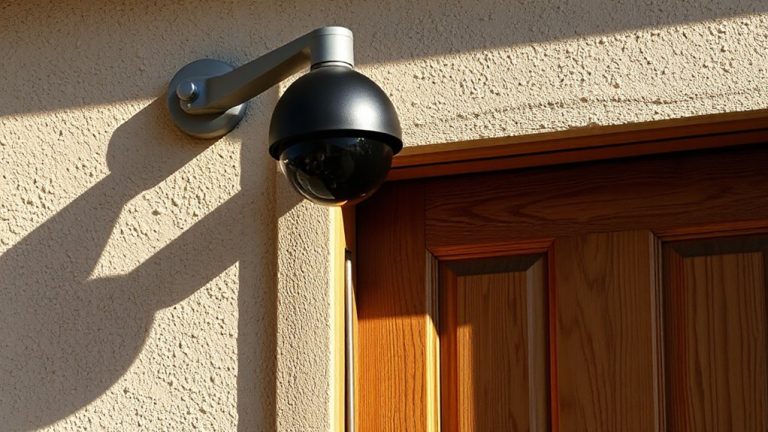
Positioning Wide-Angle Cameras at Gate Entrances to Capture License Plates
Mount your wide-angle camera 8 to 10 feet high and tilt it down 10 to 15 degrees to keep license plates centered and clear. Place it 15 to 25 feet from the gate for ideal detail, using at least 4K resolution and 15–30 fps. Reduce edge distortion with lens correction software, and avoid extreme angles on slopes or multi-lane entries. At night, combine IR illumination with white-light LEDs and adjust exposure to prevent glare-consistent lighting improves accuracy. Key adjustments guarantee reliable plate capture under real-world conditions, and there’s more to enhancing performance just beyond these basics.
Notable Insights
- Mount wide-angle cameras 8–10 feet high to balance coverage and minimize distortion at gate entrances.
- Tilt the camera down 10–15 degrees to center license plates and improve focus depth.
- Position the camera 15–25 feet from the gate for optimal plate capture with wide-angle lenses.
- Apply lens correction software to reduce edge distortion and maintain plate readability.
- Use IR illumination with adjustable intensity to ensure clear plate images in low-light conditions.
Mounting Height and Angle for Clear License Plates
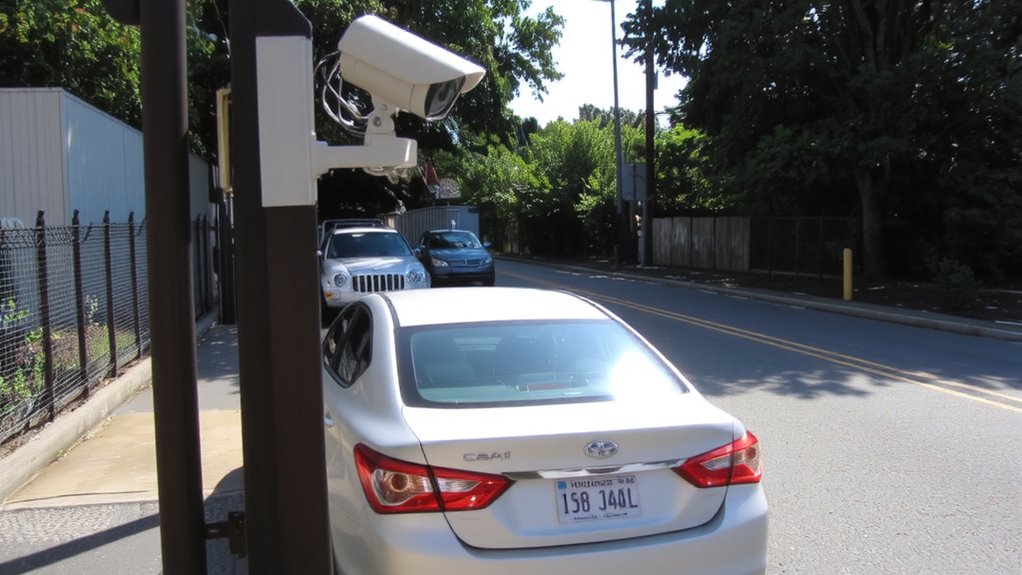
When installing a wide-angle camera at a gate entrance, getting the mounting height and angle right is key to capturing clear license plates. Mount the camera between 8 and 10 feet high-this range balances coverage and image scaling, reducing distortion at the edges. Tilt it downward slightly, about 10 to 15 degrees, to center the plate in the frame. This angle improves focus depth, ensuring both close and distant vehicles remain sharp. Avoid mounting too high, or you’ll lose plate detail; too low, and you risk glare or blind spots. Use a fixed focal length lens to maintain consistent focus depth across the field. Proper positioning also minimizes the need for digital zoom, which degrades image quality. Test your setup with real vehicles at night and day. Small adjustments make a measurable difference in plate capture success. For optimal performance, consider pairing your camera with one of the best outdoor wired security camera systems designed for high-resolution license plate capture.
Ideal Camera Distance for Plate Capture Accuracy
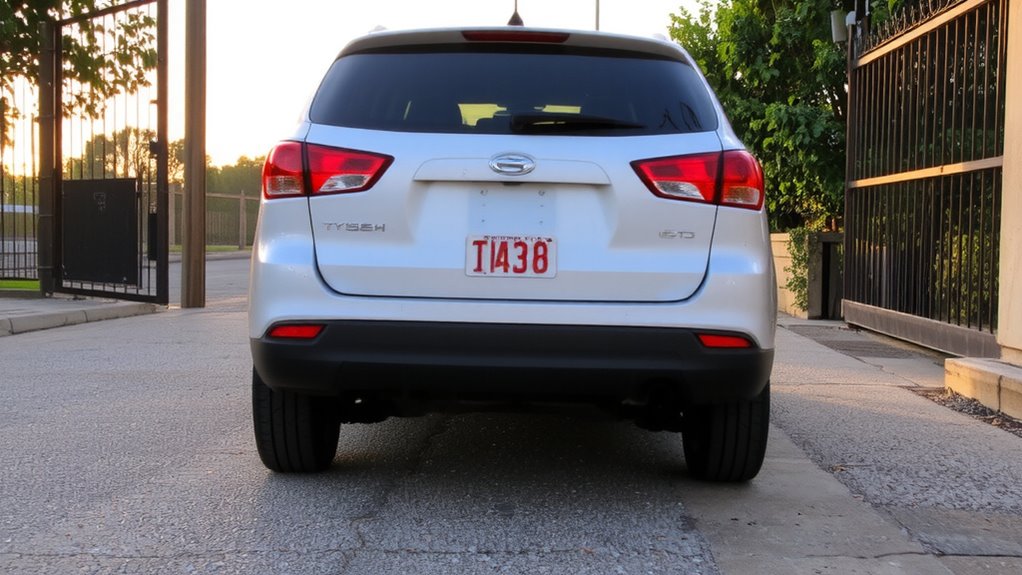
Although wider coverage seems helpful, placing your camera too far from the gate can reduce license plate clarity-aim to position it 15 to 25 feet away for best capture accuracy. At this distance, your camera resolution should be at least 4K to guarantee plates remain legible, especially at night or in rain. Higher resolution captures finer plate details, which is essential when vehicles approach quickly. Pair this with a frame rate of 15 to 30 fps to avoid motion blur and maintain smooth video playback. If the frame rate is too low, fast-moving plates may appear blurry. Too high, and you’ll use more storage without noticeable gains. You’ll also want to guarantee lighting is adequate, as poor illumination undermines both resolution and frame rate benefits. Test different distances during installation, reviewing captured footage to confirm readability before finalizing placement. For optimal results, consider models highlighted in expert reviews of the best home security cameras.
Reducing Wide-Angle Distortion at Gate Entrances
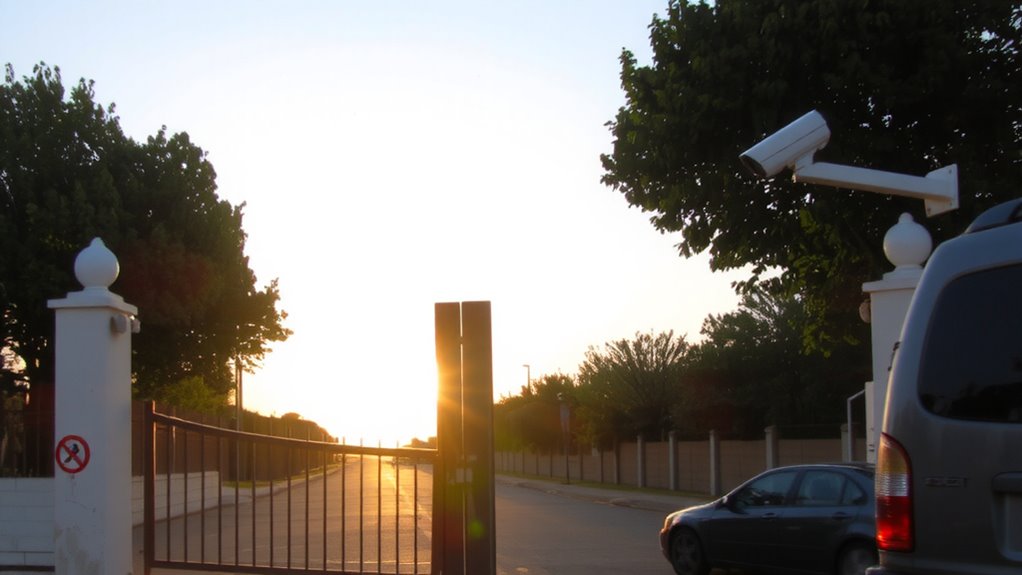
Because wide-angle lenses capture more of the scene, they often warp the edges of the image-a distortion that can stretch license plates near the frame’s outer margins and reduce recognition accuracy. You can minimize this by applying lens correction in your camera’s software, which adjusts for the natural curvature wide lenses introduce. Image calibration is also essential; it aligns the camera’s output with real-world geometry, ensuring plates stay proportional across the entire view. Most modern security systems offer built-in calibration tools that guide you through the process using a reference grid. While these features improve accuracy, they may slightly reduce processing speed or require more storage due to corrected image sizes. For best results, use cameras with strong lens correction support and regularly perform image calibration after installation or environmental changes. This small effort boosts plate readability without costly hardware upgrades.
Placing Cameras for Multi-Lane & Sloped Entries
You’ve already minimized distortion with proper lens correction and calibration, but now you need to position cameras where multiple lanes or uneven ground complicate coverage. For multi-lane entries, center your camera slightly toward the lane with the highest traffic flow, ensuring each lane stays within the field of view. Mounting higher helps, as it gives you a better angle to capture plates across lanes without obstructions. On sloped entries, avoid placing cameras at the top or bottom of inclines-position them mid-slope to reduce the chance of glare or obscured plates. Always consider vehicle speed; faster traffic demands wider angles and faster shutter settings to prevent blur. Test your setup during peak hours to verify plate readability under real conditions. Aim for symmetry in coverage, and use overlays to map lanes digitally for accuracy. A reliable farm security camera will offer the durability and image clarity needed for these challenging entry conditions.
How IR and Lighting Boost Nighttime Plate Readability
When visibility drops after dark, pairing infrared (IR) illumination with supplemental lighting sharply improves license plate capture, especially in areas where shadows or glare otherwise hide critical details. You’ll want cameras that switch to the infrared spectrum automatically, as they detect heat signatures and illuminate plates without visible light. This makes characters stand out clearly, even in total darkness. But IR alone isn’t always enough-adding white-light LEDs boosts lighting contrast, helping your system differentiate between plate borders and background surfaces. Look for models with adjustable IR intensity and built-in lighting to avoid overexposure. Cameras with smart exposure settings reduce glare from headlights, while proper positioning minimizes reflection. Though hybrid IR-plus-light setups cost more upfront, they deliver consistent, readable images. For reliable nighttime data, combine both technologies and test settings during different hours to optimize performance.
Why Wide-Angle Cameras Work Best for Gate Monitoring
While standard lenses might capture a narrow entry point, wide-angle cameras give you a broader field of view that’s essential for monitoring gate activity effectively. You’ll see more of the approach area, vehicles, and pedestrians, reducing blind spots. A wider field of view means fewer cameras needed per gate, cutting installation and maintenance costs. These cameras work well with motion detection, triggering alerts when movement occurs across a larger area. That helps you respond faster, especially during off-hours. Just make sure the lens quality supports sharp edges, since some wide-angle models can distort at the corners. Pair your camera with proper lighting and a stable mount to maximize coverage. For most residential or small commercial gates, a 90- to 110-degree field of view offers the best balance. You’ll get clear visuals without sacrificing detail, ensuring reliable monitoring day and night.
On a final note
You’ll get the clearest license plate captures by mounting wide-angle cameras 8 to 10 feet high at a 30-degree downward angle, positioned 15 to 25 feet from the gate. This reduces distortion and guarantees readable plates day and night. Use infrared and proper lighting for reliable nighttime imaging. While wide-angle views cover more area, they require careful placement to avoid warping. Balance coverage with clarity, and expect to spend $150–$300 per camera for dependable performance.