Exploring The Advantages Of Home Automation In Implementing Personal Safety Measures Within Your Household
Smart locks cut break-ins by up to 35% compared to traditional locks, and they eliminate key theft risks with keyless entry. You get instant alerts from motion-activated cameras, customizable to avoid false alarms. Live monitoring lets you check your home anytime, while integrated sensors detect fires or gas leaks and can shut systems down automatically. Remote door control confirms lock status and grants temporary access securely. Reliable Wi-Fi and encryption are essential, and some features require subscriptions-knowing these details helps you choose wisely.
Notable Insights
- Smart locks reduce break-ins by up to 35% and eliminate risks from lost or copied keys.
- Instant alerts with motion detection enable real-time threat response via mobile notifications and video clips.
- Live monitoring provides 24/7 remote video access with night vision and secure cloud or local storage.
- Emergency systems automatically detect fires or gas leaks and can alert services or shut off utilities.
- Remote door control allows real-time locking, unlocking, and access monitoring from any location.
Stop Break-Ins With Smart Locks and Cameras
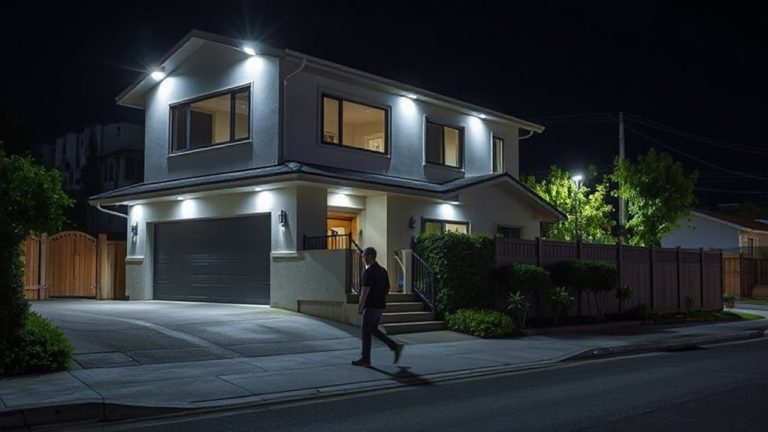
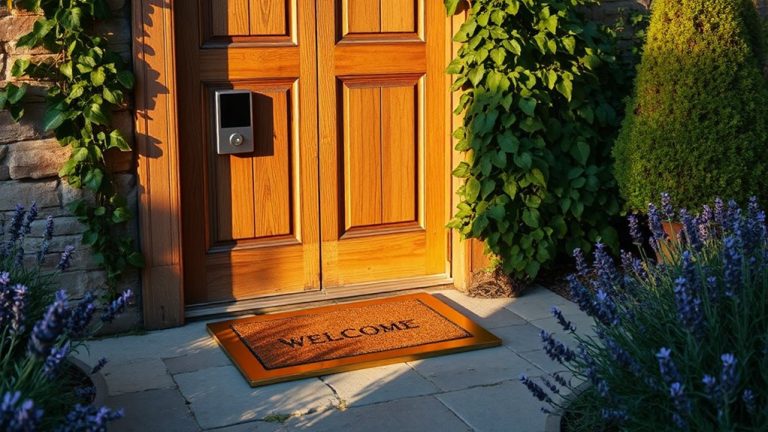
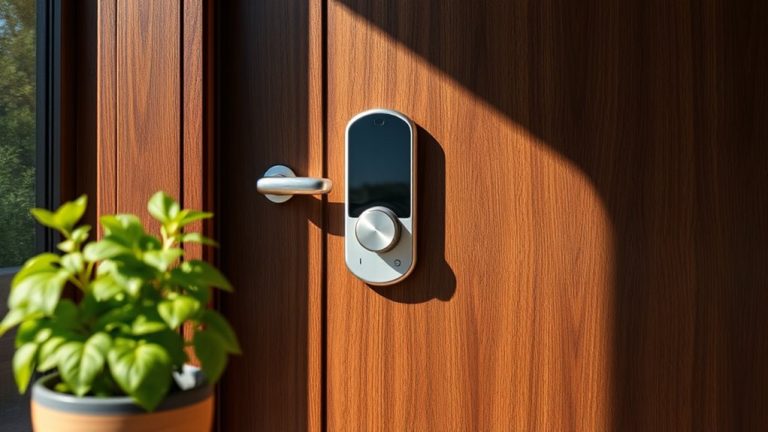
While traditional locks and basic alarms once formed the backbone of home security, smart locks and surveillance cameras now offer measurable improvements in preventing break-ins. You get smart access control, allowing you to manage entry remotely through an app. Keyless entry eliminates the need for physical keys, reducing risks from lost or copied keys. Research shows homes with smart locks experience up to 35% fewer forced entries. Most models support temporary access codes, useful for guests or service workers, and integrate with home automation systems. However, consider backup power options-some locks use batteries that may fail. Prices range from $100 to $300 per lock, plus potential installation fees. Pairing smart locks with indoor/outdoor cameras strengthens monitoring. Choose models with end-to-end encryption for better protection. Plan for Wi-Fi reliability and software updates to maintain long-term security effectiveness. For reliable options, consider checking out the best smart locks as recommended by security experts.
Get Instant Alerts for Suspicious Motion
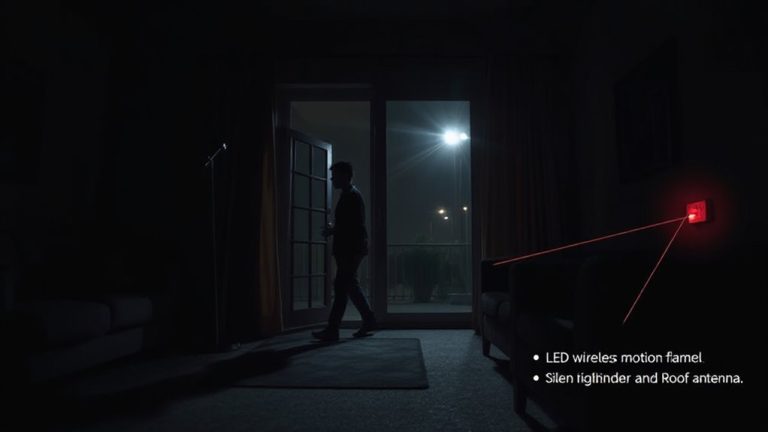
Smart locks and cameras give you control and visibility, but catching threats early means knowing when something’s off in real time. With motion detection, your system notifies you the moment movement is sensed in predefined areas, like your front porch or backyard. You can use alert customization to filter notifications by time, location, or sensitivity, reducing false alarms from pets or passing cars. Some systems even let you set unique alerts for each zone, so you’re only informed when it matters. These alerts arrive instantly on your phone or tablet, often with a snapshot or short clip. Studies show homes with real-time alerts respond faster to incidents, improving outcomes. For best results, choose devices that integrate well and offer customizable, delay-free alerts. Most quality systems cost $200–$500 upfront, with optional cloud plans for alert history. For seamless integration with Home Assistant, consider best motion sensors that are known for reliability and detailed event logging.
Monitor Your Home Live: 24/7
When you want constant awareness of what’s happening at home, live monitoring gives you real-time video access anytime, day or night. With real time monitoring, you can check in remotely using your smartphone or tablet, whether you’re at work or on vacation. This form of continuous surveillance allows you to see who’s at the door, monitor children or pets, and confirm if appliances are off. High-resolution cameras with night vision and wide-angle lenses improve visibility and reliability. Most systems offer cloud storage, though local storage can reduce subscription costs. While continuous surveillance enhances security, consider privacy and internet stability. A strong Wi-Fi connection is essential to avoid lag or downtime. Look for systems with encryption to protect your data. For best results, place cameras at entry points and common areas. Real time monitoring isn’t just convenient-it’s a practical tool for maintaining awareness and safety in your home every hour of the day. Top-rated systems often include features like motion detection alerts and best home security cameras for comprehensive protection.
Activate Emergency Responses for Fires and Gas Leaks
If a fire or gas leak occurs, your home automation system can act faster than you might realize, sending immediate alerts and triggering responses to protect everyone inside. Integrated fire detection and gas monitoring sensors constantly scan your home, identifying hazards like smoke, high heat, or dangerous gas levels. When an issue is detected, the system notifies you via smartphone and can automatically shut off gas lines, activate exhaust fans, or open doors for easier escape. Many systems also alert emergency services directly, reducing response time. Units with UL-certified sensors provide reliable performance, and models that use dual-sensor tech reduce false alarms. Installation usually takes under an hour, with costs ranging from $150 to $400 depending on features. Subscription plans, often $10–$30/month, may include professional monitoring. Choose a system that supports both fire detection and continuous gas monitoring for complete protection.
Remotely Secure Doors and Verify Safety Anywhere
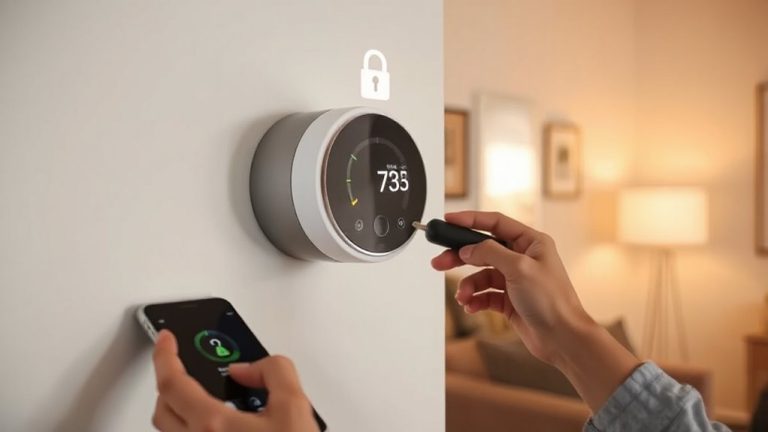
Your home automation system doesn’t stop at detecting emergencies-it extends control to your doors, letting you lock, open, and verify access from anywhere. With remote access, you can secure doors using your smartphone, even when you’re at work or on vacation. Real time verification guarantees you instantly know whether doors are locked or if someone enters. Smart locks integrate with your security system and send alerts when access occurs, helping prevent unauthorized entry. Most systems support user codes, temporary access, and activity logs. Installation is straightforward for standard doors, and prices range from $100 to $300 per lock. Reliable internet and strong passwords are essential. While battery-powered models work during outages, consider backup power for maximum uptime. Remote access and real time verification give you consistent oversight, making your home safer no matter where you are.
On a final note
You can strengthen home safety by using smart locks and cameras to deter break-ins, with motion alerts and live monitoring giving real-time awareness. Systems detect fires or gas leaks quickly, triggering emergency responses. Remote access lets you secure doors from anywhere. These tools offer proven benefits, though setup costs vary. Choose devices with strong encryption and reliable service. Plan for installation and monthly fees, and test regularly to maintain effectiveness.