Legal Requirements and Privacy Laws for Residential Security Cameras
You should place cameras to monitor only your property, avoiding neighbors’ yards or windows to stay legal and respectful. In most states, recording audio without consent breaks privacy laws-many systems disable it by default. Post clear signs to deter intruders and reduce liability, especially where required by law. Never record bathrooms or bedrooms without explicit written consent. Pointing cameras at private areas risks legal action, even between neighbors. Know your local rules, adjust camera angles, and use warning signs to stay compliant-there’s more to think about for full protection.
Notable Insights
- Position cameras to monitor only your property, avoiding neighbors’ yards and windows to respect privacy and property lines.
- Audio recording requires consent; check if your state is one-party or all-party consent before enabling sound on cameras.
- Post visible surveillance signs to deter trespassers and comply with laws requiring notification of recording in some areas.
- Never record inside private indoor spaces like bathrooms or bedrooms without explicit, informed, and written consent.
- Avoid pointing cameras at areas where neighbors have a reasonable expectation of privacy, such as backyards or bedroom windows.
Can I Record My Neighbor’s Yard With a Security Camera?
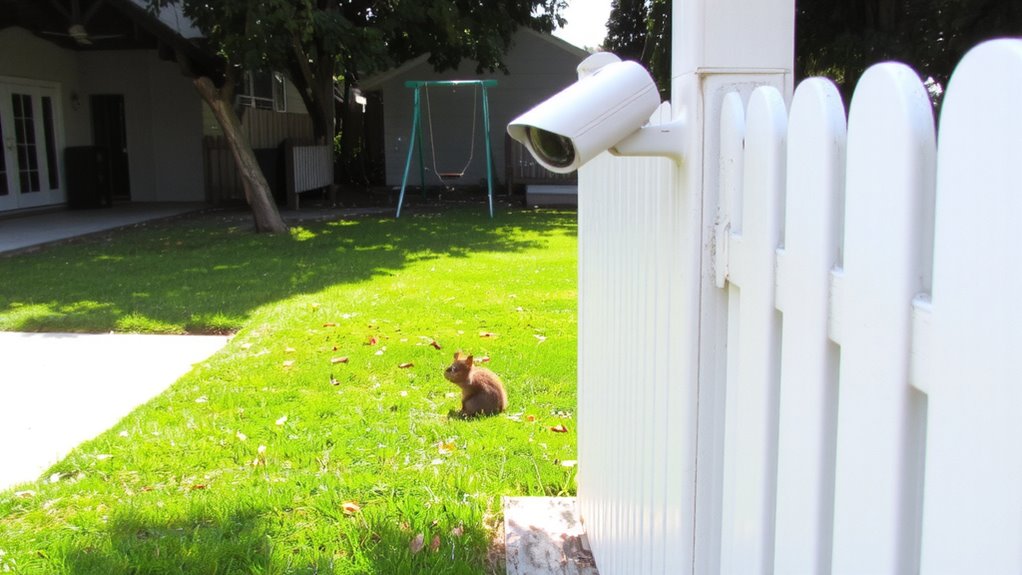
Why would you point your security camera toward your neighbor’s yard? Recording beyond your front yard boundaries can lead to privacy concerns and legal risks. Most laws protect individuals from being recorded in areas where they expect privacy, even outdoors. If your camera captures your neighbor’s yard, especially in a way that shows private activities, you could face complaints or liability. Property line disputes often arise in these situations, escalating tension unnecessarily. To avoid issues, position your camera to monitor only your property. Use adjustable mounts to fine-tune the angle and guarantee it doesn’t extend past the property line. Check local ordinances-some cities restrict camera placement near neighboring homes. A well-placed system deters crime without overreaching. Prioritize clear sightlines of entry points, not adjacent yards. This approach keeps your security effective, respectful, and legally sound.
Is It Legal to Record Audio on Home Security Cameras?
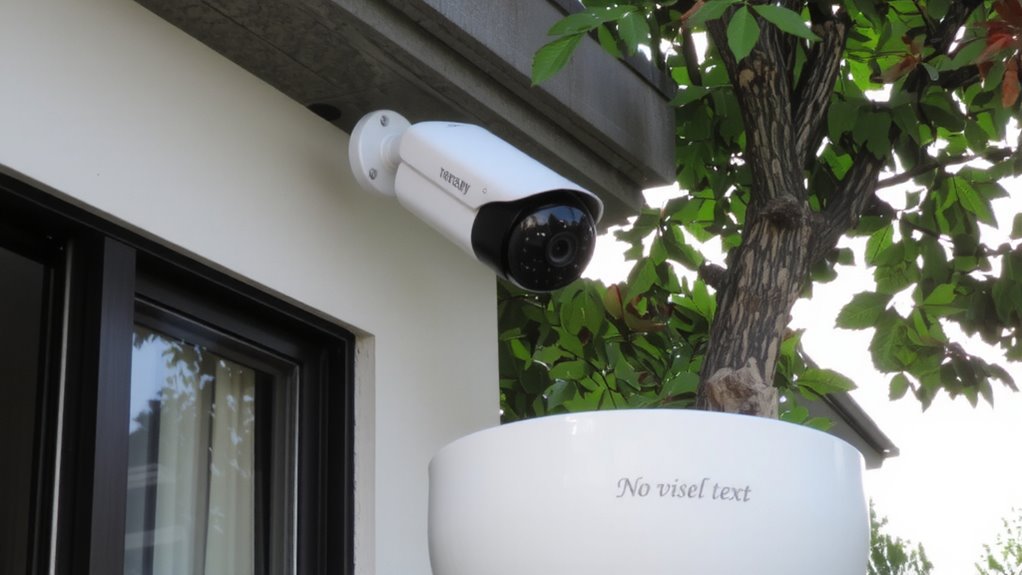
Recording audio with your home security camera isn’t as straightforward as capturing video, and doing it the wrong way could get you into legal trouble. Audio recording is subject to stricter consent laws than video in most states. If you’re in a one-party consent state, you can legally record audio if you’re part of the conversation. But in all-party (two-party) consent states, everyone involved must agree, or it’s a violation. Many homeowners don’t realize this and unknowingly break the law. Installing a camera with audio adds useful clarity, but increases legal risk. Check your state’s rules before enabling sound. Most doorbell cameras default to no audio recording to avoid issues. When in doubt, disable audio or consult a legal professional. Proper planning helps you stay compliant while protecting your property.
Should You Post Camera Warning Signs?
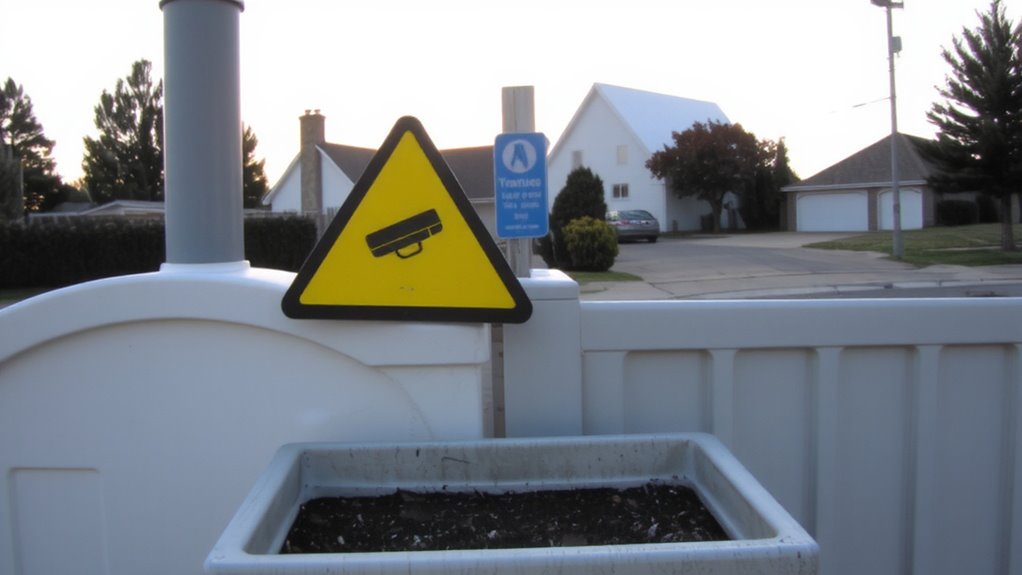
While some homeowners assume surveillance is private by default, letting people know they’re being recorded can protect you legally and reduce liability risks. Camera visibility deters crime, and clear sign placement informs visitors of monitoring areas. Many states require visible notices for recordings, so posting signs keeps you compliant. Consider both effectiveness and legal safety when deciding.
| Factor | Benefit | Consideration |
|---|---|---|
| Deterrence | Reduces trespassing and theft | Overuse may desensitize people |
| Legal Protection | Shows transparency and compliance | Required in some jurisdictions |
| Camera Visibility | Increases perceived security | May reveal blind spots |
| Sign Placement | Guides where people see warnings | Should cover all entry points |
| Cost | Low expense for high impact | Quality signs last longer |
Signs are an easy, affordable step to strengthen security and follow privacy norms.
Can You Legally Record Bathrooms or Bedrooms?
It’s never legal to record audio or video inside private spaces like bathrooms or bedrooms without explicit consent, even in your own home. These areas are considered highly sensitive, and privacy laws strictly protect them. Consent requirements must be met in writing and with full disclosure-just assuming someone agrees isn’t enough. Installing cameras in these rooms, even for security, violates both legal standards and personal privacy. Most states classify such actions as unlawful surveillance or even criminal offenses. Avoid pointing cameras near doorways or vents that could capture partial views of private spaces. If monitoring is necessary-for caregiving, for example-consult legal counsel, guarantee all parties consent, and limit recording to essential times. Always follow state-specific rules and consider non-recording alternatives like motion-activated lights. Violating privacy laws can lead to fines, lawsuits, and damage to personal relationships. Protecting privacy builds trust and keeps your home secure the right way.
Do Home Security Cameras Violate Neighbor Privacy Laws?
Could your home security camera unintentionally cross legal boundaries? Yes, if it records areas where neighbors have a reasonable expectation of privacy. While you have the right to monitor your property, pointing cameras directly at a neighbor’s bedroom or backyard may violate privacy laws. Boundary disputes often arise when footage captures private activities without implied consent. In many states, recording audio or private behavior without permission is illegal. To avoid conflict, position cameras to focus on your own property and common entry points. Open communication with neighbors can also prevent misunderstandings. Most courts side with homeowners if recordings stay within public view areas and don’t intentionally invade privacy. Be proactive-check local laws before installing, as regulations vary. Respecting implied consent and property lines helps keep your security system legal and neighborly.
What Are the Legal Limits for Outdoor Camera Placement?
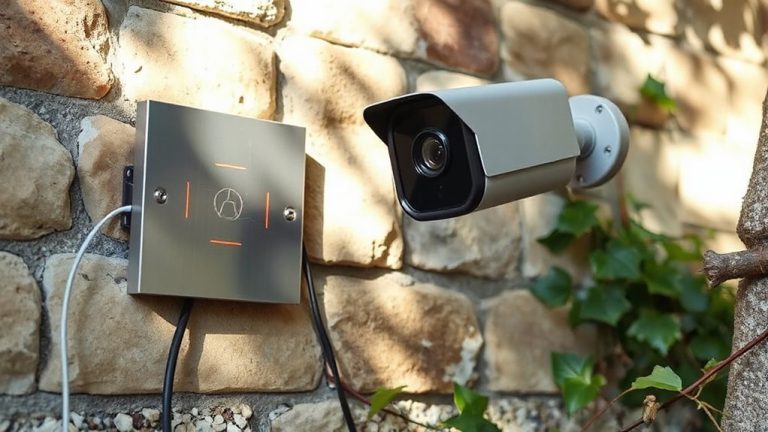
Where should you place outdoor cameras without breaking the law? You should position them to monitor your own property while respecting property boundaries and avoiding intrusion into private spaces. Don’t point cameras at neighbors’ homes, backyards, or windows-that could violate privacy laws. While it’s legal to record public areas like sidewalks or streets if they touch your property, do so only for security needs. Be cautious not to capture excessive footage of people passing by, as some states limit recording in places where individuals expect privacy. Mount cameras at entry points-doors, garages, driveways-for best results and legal compliance. Consider features like motion detection and adjustable angles to minimize unnecessary recording. Check local laws before installation, since rules vary by city and state. Planning a thoughtful camera layout keeps your home secure without crossing legal or ethical lines.
On a final note
You should only point cameras at your own property and avoid recording neighbors’ private areas. Audio recording may break wiretap laws, so disable it unless allowed. Never film bathrooms or bedrooms. Posting signs is wise and sometimes required. Follow local laws to avoid legal trouble, and plan placements carefully-angled properly, they boost security without crossing legal lines.