Preventing Spoofing Attacks on Smart Door Locks With Dynamic Codes
You can prevent smart lock spoofing by using dynamic codes that change with each use, making stolen signals useless. Unlike static codes, which hackers can reuse, dynamic codes refresh every 30 to 60 seconds or upon request, limiting exposure. Look for locks with encrypted communication, two-factor authentication, and precise time synchronization. Choosing event-triggered systems often offers better security for homes. Strong encryption and regular updates keep your system ahead of threats-there’s more to explore on securing your setup effectively.
Notable Insights
- Dynamic codes change with each use, making captured codes useless for future spoofing attempts.
- Real-time validation ensures codes are only accepted at the moment of generation, blocking replay attacks.
- Encrypted, time-synchronized communication prevents interception and cloning of access signals.
- Event-triggered code generation reduces exposure by creating codes only when access is requested.
- Combining dynamic codes with biometrics and two-factor authentication strengthens overall lock security.
What Is Smart Lock Spoofing: and How Does It Work?
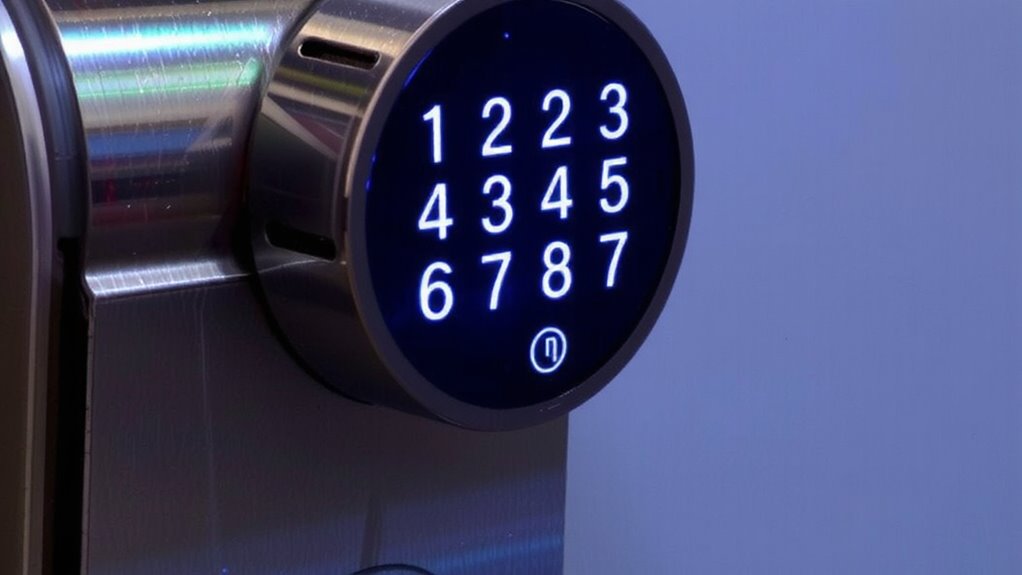
Visualize arriving home, opening your smart door lock with your phone, and walking in-only to realize later that someone else accessed your home the same way, without your permission. That’s smart lock spoofing: a hacker mimics your device’s signal to gain entry. This often happens through Bluetooth cloning or signal interception. With Bluetooth cloning, attackers copy your phone’s unique signal, tricking the lock into thinking the fake device is yours. Signal interception captures the communication between your phone and lock, especially when using weak or outdated protocols. These attacks exploit static or predictable data. Dynamic authentication methods reduce risk by changing the access code with each use. Look for locks using encrypted, time-sensitive signals. While more secure, such systems can cost $50–$200 and may require a hub. Always update firmware and avoid public Bluetooth settings near your door. Top Z-Wave locks offer enhanced security through Z-Wave smart locks that support dynamic codes and secure hub integration.
Why Static Codes Fail Against Hacking Attempts
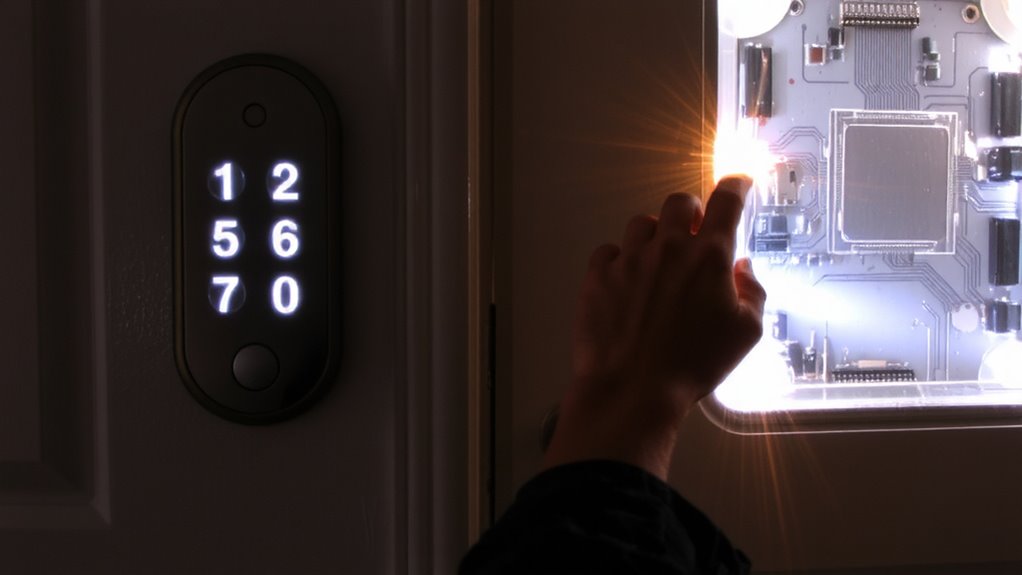
You just saw how hackers can mimic your phone’s signal to open your smart door, and that risk grows even greater when the lock relies on static codes. These unchanging passwords make it easy for attackers to exploit through brute force methods, trying every possible combination until one works. Worse, once a hacker captures your code, they can use code reuse to open the door anytime, even days later. Unlike dynamic systems, static codes don’t expire or change, so a single intercepted transmission is all it takes. No extra tools are needed-basic hardware available online is enough. This predictability is their core weakness. Studies show locks with fixed codes are compromised faster, especially if users choose simple patterns. There’s no real defense once the code is exposed. That’s why experts recommend moving away from static setups. They’re cheaper upfront, but the long-term security risks far outweigh the savings.
How Dynamic Codes Stop Spoofing in Real Time
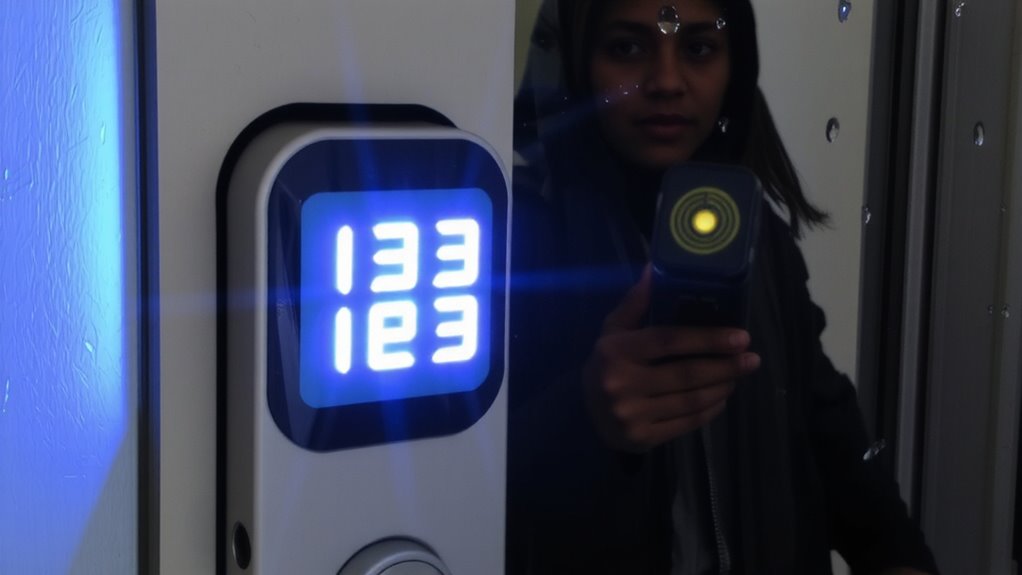
A single stolen static code can compromise your home for good, but dynamic codes eliminate that risk by changing with every use. Each time you access your lock, the system generates a new code synchronized with the server through secure code synchronization, so old codes are useless. This means even if someone captures a code, it won’t work again. Your lock confirms each entry attempt using real time validation, checking if the code matches what’s expected at that exact moment. This process blocks spoofing attempts instantly. Since the code is only valid once and for a short window, replay attacks fail. The technology relies on precise timing and encrypted communication between your device and the lock. Most systems update codes every 30 to 60 seconds, ensuring strong protection. No two entries use the same code, making unauthorized access far less likely. Real time validation and code synchronization work together to keep your home secure with minimal user effort. Leading models in the best smart locks category now feature this dynamic code technology as a standard security enhancement.
Time-Based vs. Event-Triggered Dynamic Codes
How do dynamic codes actually work when securing smart door locks-do they rely on time or events? You’ll find two main types: time-based and event-triggered. Time-based codes change every 30 to 60 seconds using synchronized clocks. But if your device experiences time drift, even slightly, it can cause failed entries or security gaps. Event-triggered codes generate a new code only when needed-like when you request access-reducing exposure. However, frequent use can raise the risk of code collision, where two codes might accidentally match. Time-based systems work well with apps like Google Authenticator but depend heavily on precise synchronization. Event-triggered ones cut down on unnecessary code generation, lowering collision chances. For most homes, event-triggered systems offer better balance-less vulnerability to time drift, reduced code collision, and more responsive access. Choose based on your lock’s sync ability and usage frequency.
Essential Features of Spoof-Resistant Smart Locks
While no smart lock can guarantee complete immunity to spoofing, the most secure models incorporate multiple layers of protection that work together to minimize risk. You should look for biometric authentication, like fingerprint scanning, which reduces reliance on codes that can be stolen or guessed. Paired with strong encryption protocols, your data stays protected during transmission, making it far harder for attackers to intercept. These locks often use military-grade encryption, ensuring signals between your phone and lock stay secure. Many also support two-factor authentication, adding another barrier. Though biometric sensors can struggle with dirty fingers or low light, they’re still more reliable than passwords. Encryption protocols must be regularly updated, so choose brands with a history of prompt security patches. Higher-end models cost more, but they offer better long-term protection. Prioritize certified hardware with proven defenses. Kwikset’s top models integrate dynamic code technology to refresh access codes automatically, enhancing resistance to replay attacks. Kwikset smart locks provide a strong balance of security and smart home compatibility.
Setting Up Dynamic Codes for Home Security
You’ve already seen how biometric authentication and strong encryption help protect smart locks from spoofing attempts, but another powerful layer is dynamic passcodes. These codes change after each use or at set intervals, enhancing user authentication by ensuring old codes can’t be reused. Most systems let you generate temporary access codes through a mobile app, which you can share with guests or service workers. Code expiration is built in-typically after 5 to 15 minutes or a single use-so even if someone sees the code, it quickly becomes useless. Popular models support multiple dynamic codes, letting you track who enters and when. Setup usually takes under 10 minutes via Bluetooth or Wi-Fi. While they cost $10–$30 more than basic smart locks, the added security is worth it for most households. Always choose locks with time-based code expiration and app logging features.
Avoiding Common Dynamic Code Security Mistakes
Since dynamic codes rely on timely expiration and secure distribution, failing to configure them properly can leave your smart lock vulnerable. You should avoid code reuse, as repeating old codes increases the chance an attacker can capture and replay them. Each code must be unique and expire quickly-ideally within minutes-to reduce exposure. Don’t allow predictable sequences, since pattern prediction makes it easier for hackers to guess future codes. Use systems that generate random, cryptographically secure codes via authenticated channels like encrypted apps or SMS with two-factor verification. Avoid sharing codes through unsecured texts or email. Check your lock’s update log and disable unused access. Higher-end models offer time-limited, single-use codes and audit trails, which help track entry attempts. Though pricier, they’re worth it for rental properties or frequent guests. Plan access carefully, and review settings monthly.
On a final note
You can stop spoofing attacks by using smart locks with dynamic codes. Unlike static codes, which stay the same and are easy to hack, dynamic codes change automatically-either by time or event. This makes stolen codes useless quickly. Look for locks with strong encryption, two-factor authentication, and tamper alerts. Set up dynamic codes through your lock’s app, and avoid reusing codes or sharing them carelessly.