How to Use Smart Yard Sensors to Detect Unauthorized Ground Movement
You can use smart yard sensors to detect unauthorized ground movement by installing them in open areas near fences or entry points, where they’ll monitor for vibrations, digging, or soil shifts. These sensors combine microwave radar, PIR detection, and vibration sensing to distinguish between animals and potential intruders. They send real-time alerts to your phone, work in all weather, and last 12–24 months on a single battery. Models with AI reduce false alarms, and integration with Alexa, Google Home, or Apple HomeKit enables automated responses. Starter kits range from $100–$300, offering reliable, low-maintenance protection. You’ll also see how actual users stopped trespassers early using their system’s alerts.
Notable Insights
- Install sensors near fences or entry points to monitor for unauthorized ground movement using vibration and motion detection.
- Use dual-technology sensors with PIR and microwave radar to distinguish intrusions from natural disturbances like animals or erosion.
- Position sensors in open, stable ground areas to avoid false alarms from slopes or dense vegetation blocking detection.
- Enable AI-powered alerts to filter out environmental noise and focus on suspicious digging or foot traffic.
- Connect sensors to a smart home system for real-time notifications and automated responses like outdoor lighting activation.
Why Your Yard Needs Smart Security Sensors
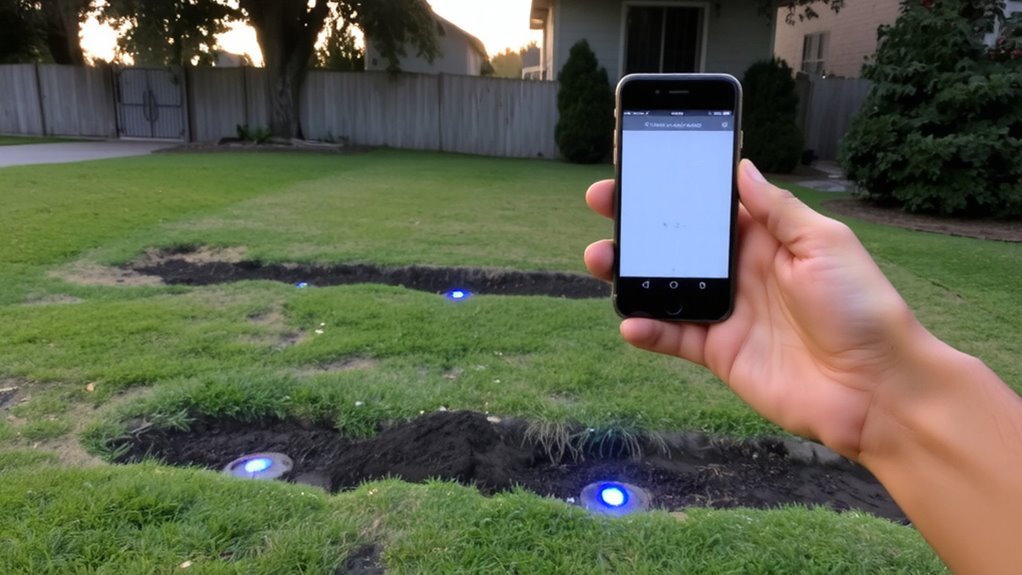
What if you could detect shifts in your yard’s soil before they become a costly problem? Smart security sensors help you do just that by monitoring for soil erosion and unexpected ground movement. These systems provide early warnings, letting you act before damage worsens. Left unchecked, erosion can weaken foundations, damage landscaping, and even trigger boundary disputes with neighbors. With precise data, sensors offer objective evidence of changes over time, which can be crucial if property lines are questioned. Most models are easy to install, connect to your Wi-Fi, and send alerts to your phone. While prices range from $80 to $200 per unit, the investment may save thousands in repairs or legal fees. Though false alarms can occur, proper placement reduces errors. For long-term yard and property protection, these sensors are a practical, data-driven choice.
How Smart Yard Sensors Detect Intruders and Animals
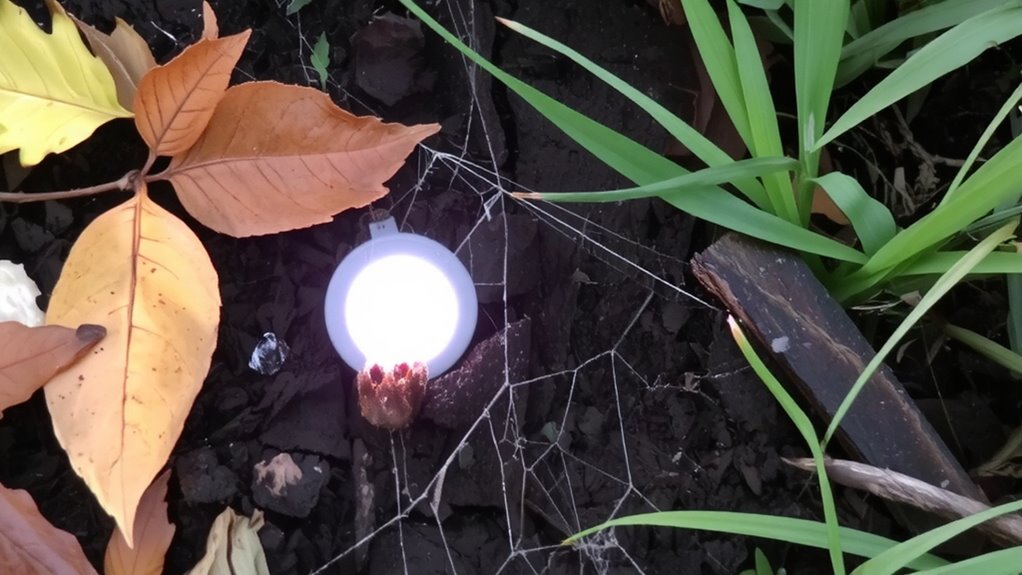
Even though their primary role is monitoring soil stability, many smart yard sensors also detect motion from intruders and animals using passive infrared (PIR) technology or microwave radar. You’ll benefit from dual functionality: these sensors spot unexpected movement above ground while tracking subsurface changes tied to soil composition and root disturbance. PIR sensors identify body heat from people or animals, triggering alerts when warm objects move across their field of view. Microwave radar detects motion through vegetation, making it reliable in varied landscapes. Because disturbances in soil layers or root systems can indicate digging or tunneling, the sensors link surface motion with subsurface shifts. This helps distinguish between minor animal activity and potential intrusions. You should position sensors near entry points and areas with loose soil composition, where root disturbance is more likely to signal unauthorized activity.
Key Features: AI Alerts, Vibration Sensing, and Weather Resistance
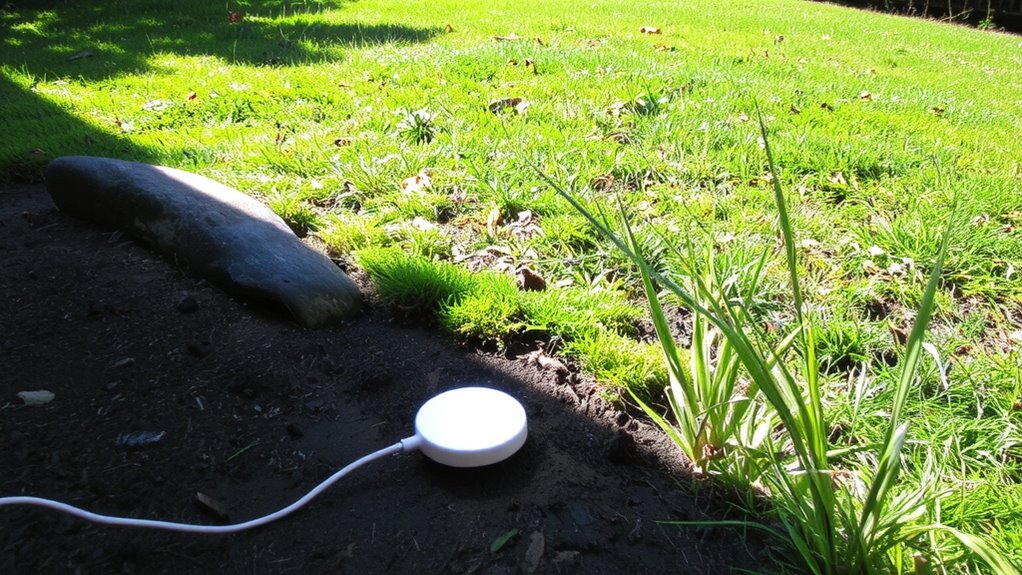
Because smart yard sensors must operate reliably in dynamic outdoor environments, manufacturers integrate AI alerts, vibration sensing, and weather resistance to enhance detection accuracy and durability. You’ll benefit from AI alerts that use noise filtering to distinguish real threats from environmental distractions. Vibration sensing detects subtle ground shifts, while tamper detection warns if someone tries to disable the unit. Built-in weather resistance guarantees performance in rain, heat, or snow.
| Feature | Benefit |
|---|---|
| AI Alerts | Reduces false alarms with noise filtering |
| Vibration Sensing | Detects foot traffic and digging |
| Weather Resistance | Works year-round; supports tamper detection |
These features work together to give you reliable, data-backed ground monitoring without constant maintenance or false triggers. Choose sensors rated for your climate and site conditions.
Set Up Smart Yard Sensors in Minutes
You now understand how AI alerts, vibration sensing, and weather resistance keep your smart yard sensor reliable in tough outdoor conditions, so setting one up should be just as straightforward. Begin with proper sensor placement-position the device in open ground near vulnerable areas like fences or back entrances, avoiding dense shrubs or slopes that may block detection. Most models use simple stakes or mounts, allowing you to install them in under ten minutes without tools. Battery life typically lasts 12–24 months, depending on usage and wireless signal strength, so check manufacturer estimates before buying. Guarantee the sensor pairs quickly with your home network and confirms status through a mobile app. Choose models with low-battery alerts to maintain continuous monitoring. With minimal effort and smart planning, you’ll have a functional, long-lasting perimeter monitoring system up and running fast.
Link to Alexa, Google Home, or Apple HomeKit
While most smart yard sensors work independently, linking them to voice assistants like Alexa, Google Home, or Apple HomeKit can expand control and monitoring options. Voice integration lets you check sensor status or receive alerts hands-free, improving convenience and response time. Just say a command to ask if motion was detected near your backyard. You can also build smart routines that trigger actions across devices-like turning on outdoor lights when a sensor activates at night. These routines help deter intruders and improve visibility. Most top sensors support major platforms, but confirm compatibility before buying. Setup usually takes minutes in the respective app. Keep in mind that deeper integration with Apple HomeKit may require additional hardware like a HomePod. While voice control adds flexibility, it depends on stable Wi-Fi and cloud service uptime. For seamless Google Home connectivity, consider pairing your yard sensors with one of the best smart locks for Google Home.
When Sensors Actually Prevent Break-Ins (Real Examples)
A growing number of homeowners have avoided break-ins thanks to timely alerts from smart yard sensors, and real-world cases back this up. You get notified the moment unusual ground movement occurs, often before intruders reach your doors. In one case, motion near a backyard gate triggered an alert, letting a homeowner contact police before a break-in. Another user spotted a prowler on live camera feed after their sensor detected subtle vibrations-later confirmed as someone testing weak points. Modern systems reduce false alarms with AI that distinguishes between pets, wind, and human movement. Still, you may encounter signal interference if walls or large trees block transmission. Opt for models with mesh networking or signal boosters to maintain reliability. At $100–$300 for a starter kit, these sensors offer measurable deterrence. Plan placement carefully for full coverage, avoiding common interference sources.
On a final note
You can rely on smart yard sensors to detect unauthorized ground movement using vibration sensing and AI alerts. They work in all weather, link to Alexa, Google Home, or Apple HomeKit, and install quickly. Real cases show they help prevent break-ins when placed near entry points. For best results, combine with outdoor lighting and cameras. Costs range from $50–$150 per sensor, with battery life lasting 6–12 months.