Practical Tips for Securing Windows and Doors Against Unauthorized Entry
Reinforce your door frames with steel and 3-inch screws anchored into studs to resist kicks, and install security hinges with non-removable pins. Upgrade to high-security deadbolts with pick-resistant cores or hybrid biometric locks for better access control. Use laminated glass-4.4mm or thicker-for windows, paired with reinforced locks aligned properly to prevent forcing. Add alarm sensors on all entry points, ensuring gaps between sensor and magnet are under 1/8 inch for reliable detection. Costs range from $20–$150 per upgrade, often DIY-friendly with basic tools. You’ll find more nuanced strategies worth considering.
Notable Insights
- Reinforce door frames with metal strike plates and 3-inch screws anchored into wall studs to resist forced entry.
- Upgrade to high-security deadbolts with pick-resistant cores and smart key or biometric access technology.
- Replace standard hinge screws with longer ones and use security hinges or pin collars to prevent hinge attacks.
- Install laminated glass windows with thickness of at least 4.4mm and ensure proper professional fitting for impact resistance.
- Add door and window alarm sensors with precise sensor-magnet alignment for early intrusion detection and deterrence.
Secure Your Doors With Strong Frames and Hinges
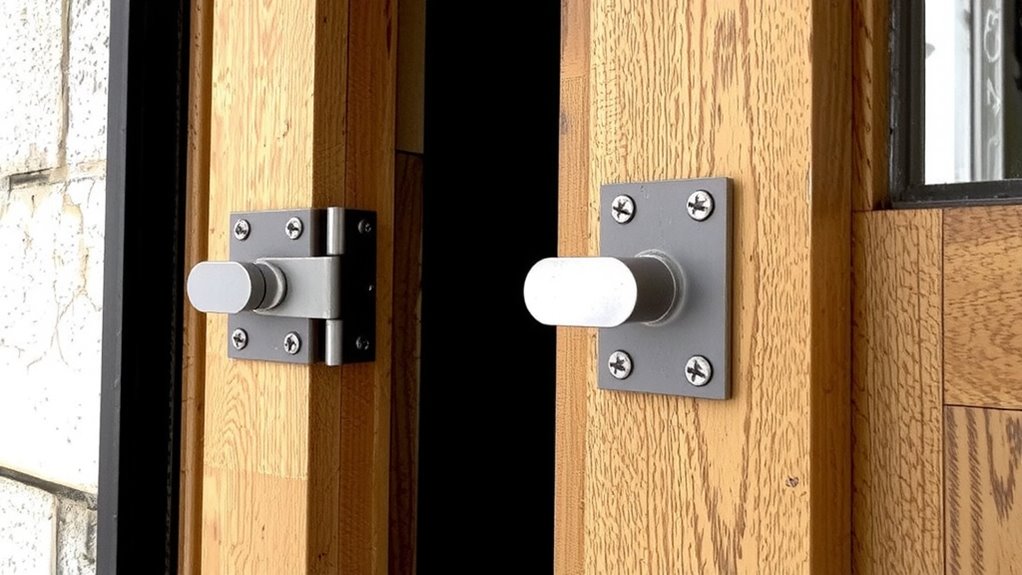
A solid door won’t help much if the frame and hinges are weak, so reinforcing these components is a key step in preventing break-ins. You need proper door reinforcement to make forced entry harder. Install metal strike plates with at least four 3-inch screws that anchor into wall studs-this simple upgrade greatly improves security. For hinge protection, use security hinges with non-removable pins or add hinge pin collars to keep hinges from being pried apart. Standard hinge screws are short and can be easily knocked out, making your door vulnerable. Reinforced steel door frames or frame stiffeners add extra resistance against kicks or shoulder rams. These upgrades cost $20–$50 and take under an hour to install with basic tools. While not as flashy as smart locks, solid frame and hinge protection form a critical foundation. You’ll gain measurable strength where intruders often strike first-around the door’s weakest points.
Upgrade to High-Security Door Locks
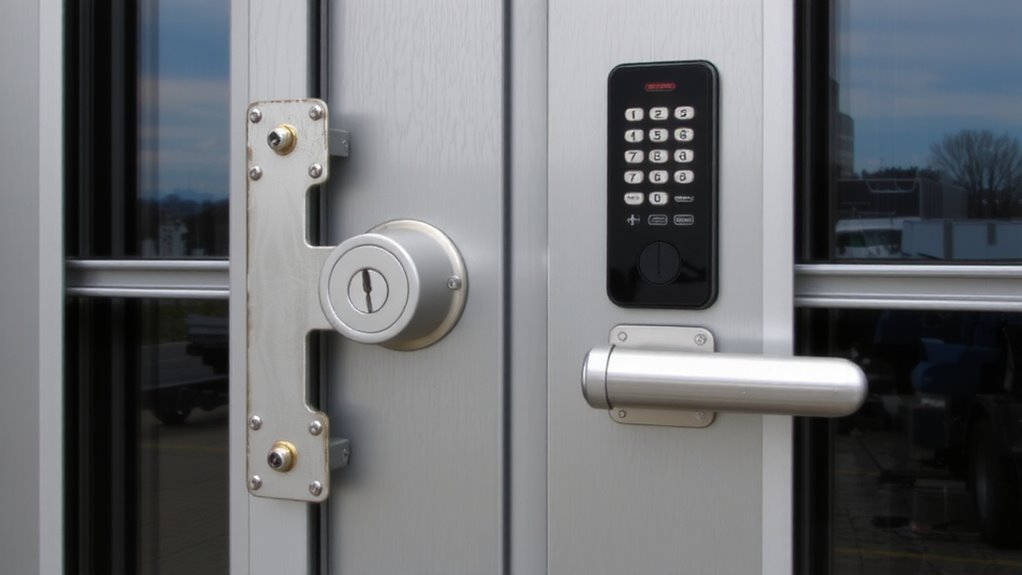
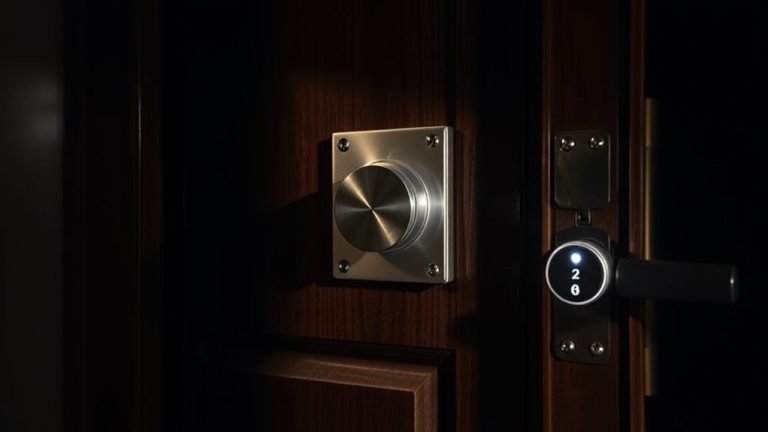
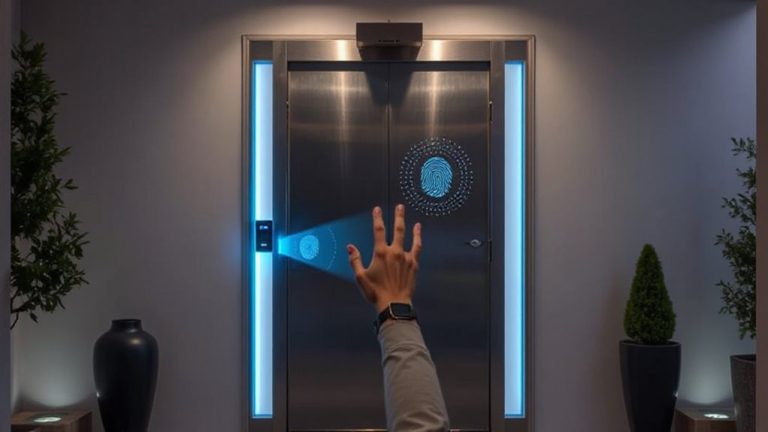
You’ve reinforced the frame and hinges, so now it’s time to focus on the lock itself-where real resistance begins. Upgrading to high-security door locks greatly improves home safety. Look for features like pick-resistant cores and reinforced strike plates. Smart key technology prevents unauthorized duplication, while biometric access control offers keyless convenience and verified entry. These systems rely on unique biological traits, reducing lost key risks. High-quality security systems often integrate monitoring features similar to those found in top high-quality cameras, ensuring comprehensive home protection. Below is a comparison of common high-security options:
| Lock Type | Smart Key Tech | Biometric Access Control |
|---|---|---|
| Deadbolt (High-Security) | Yes | No |
| Smart Lock | Yes | Optional |
| Electronic Lock | Limited | Yes |
| Keyless Keypad Lock | No | No |
| Hybrid Biometric Lock | Yes | Yes |
Choose based on your security needs, budget, and ease of use.
Reinforce Windows With Laminated Glass and Locks
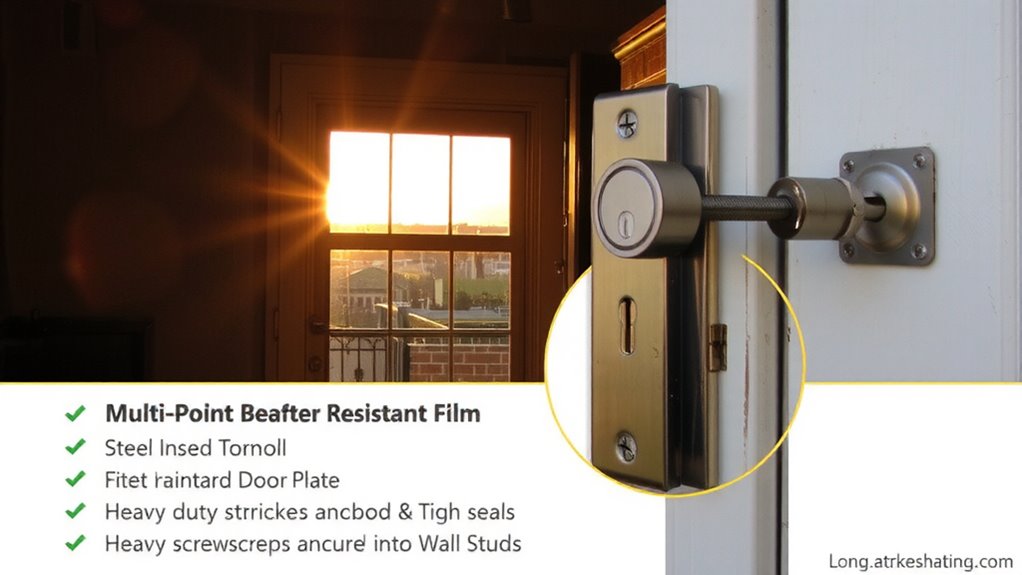
Laminated glass paired with upgraded window locks offers a proven way to strengthen home security. The interlayer in laminated glass holds the pane together even when cracked, making forced entry much harder. You’ll want to take into account glass thickness-typically 4.4mm to 7.5mm-since thicker units resist impact better but cost more and may require sturdier frames. Pairing this with secure locks improves protection, but lock alignment is essential; misaligned hardware won’t engage properly, leaving windows vulnerable. Check that latches meet strike plates without forcing the sash. Some windows need reinforcement brackets to support stronger locks. Installation by a professional ensures proper fit and alignment, usually costing $50–$150 per window. While DIY kits are cheaper, inaccuracies in glass thickness or lock alignment reduce effectiveness. Upgrading both elements together creates a more cohesive barrier against intrusion. For maximum effectiveness, choose among the best window locks based on your window type and security needs.
Add Door and Window Alarm Sensors
When it comes to boosting your home’s security, installing door and window alarm sensors is one of the most cost-effective steps you can take. These sensors alert you instantly if a door or window is opened, deterring intruders and providing early warning. Proper sensor placement is essential-install them on all accessible entry points, ensuring the sensor and magnet align when closed. Gaps larger than 1/8 inch can lead to false alarms or missed triggers, so check alignment carefully. Most modern systems offer seamless alarm integration, linking sensors to central hubs that connect to your smartphone or security service. This lets you receive real-time alerts and arm/disarm the system remotely. Wired systems are reliable but harder to install; wireless models offer flexibility with battery-powered operation. Expect to pay $15–$30 per sensor, with DIY kits starting around $100. For garage entry points, consider installing Top Garage Door Sensors to enhance overall home security and prevent unauthorized access.
Install Slide Bolts and Security Bars
While alarm sensors provide early detection, adding slide bolts and security bars gives you stronger physical protection for vulnerable doors and windows. These devices resist forced entry by reinforcing weak points. For best results, focus on proper security bar placement-position bars to block outward-opening windows and sliding doors at the track’s weakest points. Regular slide bolt maintenance guarantees smooth operation and rust-free performance. Use stainless steel or reinforced hardware to prevent tampering. Anchor all components into solid framing, not just drywall or trim.
| Feature | Benefit |
|---|---|
| Slide bolts | Affordable, easy to install |
| Security bars | Visible deterrent, high resistance |
| Steel construction | Resists bending and cutting |
| Wall anchors | Prevents pull-out under force |
| Indoor mounting | Allows quick emergency exit |
Check locks monthly and tighten loose fittings.
Pair Upgrades With Daily Security Habits
Strong locks and security bars add real resistance, but those features only work if you use them consistently. You must pair hardware upgrades with daily security habits to see real benefits. Always secure doors and windows, even when you’re home or just stepping out briefly-most break-ins happen during daylight hours. Use smart lighting on timers or motion sensors to deter intruders by making your home appear occupied. These systems are affordable, easy to install, and work well with routines. Make it a habit to do routine patrols of your home’s perimeter, checking for unsecured points or signs of tampering. This only takes a few minutes each night. Pairing technology like smart lighting with simple personal checks strengthens your security far more than devices alone. Consistent habits turn upgrades into real protection.
On a final note
You can markedly improve home security by reinforcing doors with strong frames and deadbolts, upgrading to laminated window glass, and adding alarm sensors. Slide bolts and security bars offer extra protection, especially on lower-level entries. Pair these upgrades with consistent habits like locking doors and closing windows. While initial costs range from $20 for locks to $300+ for glass, the investment reduces break-in risks. Plan carefully based on your home’s layout and local crime trends.