Magnetic Reed Switch Troubleshooting: 5 Fixes for False Alarms
Check your reed switch alignment-keep the gap under 1/4 inch to guarantee the magnet fully activates it when the door closes. Misalignment or weak magnets can cause false alarms by preventing the circuit from closing. Test the switch with a multimeter for continuity, and inspect wiring for loose or corroded connections. If the magnet seems weak, try a stronger neodymium one. Reversing the magnet may fix polarity issues. A systematic check often resolves the problem. You’ll learn how each step improves reliability with further details.
Notable Insights
- Ensure proper alignment between the reed switch and magnet, with a gap no greater than 1/4 inch for reliable operation.
- Check magnetic polarity; reversing the magnet may resolve activation issues caused by incorrect orientation.
- Test for weakened magnet strength by using a neodymium magnet; replace if the original fails to trigger the switch.
- Inspect wiring connections for looseness or corrosion, and clean terminals with isopropyl alcohol if needed.
- Use a multimeter to verify reed switch function-expect continuity when the magnet is close and an open circuit when away.
Is Your Reed Switch Misaligned?
Have you checked whether the reed switch and magnet are properly aligned on your door frame and door? Proper alignment guarantees the switch closes fully when the door shuts. If the gap exceeds 1/4 inch, misalignment may occur, reducing reliability. Even slight shifts over time due to door movement or frame warping can affect performance. Consider the switch age-older units may degrade internally, leading to inconsistent contact. Magnetic polarity matters, too: if the magnet is flipped incorrectly, the field won’t activate the reed contacts as designed. Test by reversing the magnet; if function improves, polarity was the issue. Units over five years old are more prone to failure due to material fatigue. Replacing both magnet and switch together guarantees compatibility. Use manufacturer specs for correct spacing and orientation. Budget for replacement every 5–7 years to maintain alarm integrity. For optimal home security, consider pairing your door alarm with one of the best household alarms recommended for comprehensive protection.
Misaligned Reed Switch? How It Causes False Alarms
Why does your door alarm sometimes trigger when no one’s there? A misaligned reed switch is often the culprit. When the magnet and switch don’t line up perfectly, the magnetic field weakens at the sensor, causing inconsistent operation. Even slight shifts from door settling or frame warping can lead to magnetic drift, where the intended field alignment changes over time. This misalignment may reverse switch polarity unintentionally, making the circuit think the door is open when it’s closed. False alarms follow. Check the gap-most manufacturers recommend no more than 1/4 inch between magnet and switch. Use a level and measuring tape to realign both components precisely. Secure them with strong adhesive or screws to prevent future movement. Proper alignment guarantees reliable performance, reduces nuisance alerts, and extends system life. Regular inspection helps catch small shifts before they become big problems.
Is Your Magnet Too Weak to Trigger the Alarm?
Could a failing magnet be why your alarm isn’t triggering when the door opens? Over time, magnet strength can degrade, especially in older or low-quality magnets, reducing their ability to activate the reed switch. If the magnetic field isn’t strong enough, the sensor won’t detect the door movement, even with proper alignment. Sensor sensitivity varies between models, so a weak magnet might work with one unit but fail with another. Test by holding a stronger magnet near the switch-if the alarm triggers, the original magnet likely lacks sufficient strength. Cheap or damaged magnets are common culprits, especially in outdoor or high-temperature environments. Replacing the magnet with a neodymium type often restores reliability. Guarantee compatibility with your system’s sensor sensitivity to avoid future issues. Upgrading both magnet and sensor together may offer better long-term performance.
How to Find Wiring Faults in Door Sensors
What’s stopping your door alarm from working-could it be a wiring issue? Start by inspecting the wires that run from the reed switch to the control panel. Look for loose connections where the wires attach to the sensor or the system terminals. Even slightly unsecured wires can break the circuit. Also, check for corroded terminals, especially in humid areas like basements or garages. Corrosion can block electrical flow, preventing the alarm from triggering. Gently tug on the wires to see if any pull free-this often reveals hidden faults. Use a small screwdriver to tighten any loose terminal screws. If you spot greenish or white buildup, clean terminals with a dry cloth or a bit of isopropyl alcohol. Repairing these issues often restores function without replacing components, saving time and money. For those upgrading their system, consider using sensors compatible with modern garage door sensors for enhanced reliability and integration.
How to Test Your Reed Switch With a Multimeter
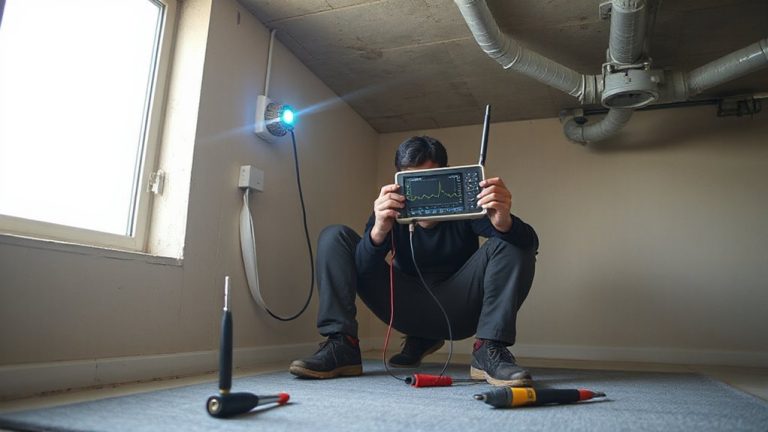
If you’ve checked the wiring and still can’t figure out why your door alarm isn’t responding, the issue might lie within the reed switch itself. You can test it quickly with a multimeter set to continuity or resistance. First, guarantee proper reed polarity and switch orientation-misalignment prevents accurate readings. Separate the magnet from the switch and note the multimeter response. Then bring the magnet close and observe any change.
| Test Condition | Multimeter Reading |
|---|---|
| Magnet away | Open circuit (no beeping) |
| Magnet close | Closed circuit (beep) |
| Reversed polarity | No response |
If there’s no change, the switch may be faulty. Always test with correct switch orientation, as reversed mounting impacts performance. This quick check saves time and confirms whether replacement is needed. For broader security integration, consider how these switches are used in driveway alarm systems.
On a final note
You’ve checked alignment, magnet strength, wiring, and tested the switch with a multimeter-key steps to diagnose issues. A properly positioned magnet and securely connected wires prevent most false alarms. While reed switches are reliable and low-cost, they wear over time. Consider upgrading to solid-state sensors if problems persist. Regular testing guarantees your door alarm stays effective. For most, simple fixes improve performance without high expenses. Plan annual checks to maintain security.