Mastering Home Security: a Comprehensive Guide to Protecting Your Family From Intruders
Secure your doors with deadbolts that extend at least one inch into reinforced frames, and use shatter-resistant glass on ground-level windows to deter break-ins-these measures can reduce risk with a $100–$300 investment. Install motion-activated lights at entry points, set 6 to 10 feet high to prevent false triggers. Use threat-detecting cameras with night vision and encrypted storage. Connect smart devices for real-time alerts, remote control, and continuous monitoring. Establish nightly and weekly security routines with all household members to maintain consistent protection-there’s more to explore on optimizing each layer effectively.
Notable Insights
- Install deadbolt locks and reinforced door frames to strengthen entry points against forced entry.
- Use motion-activated lights around doors and windows to deter intruders with instant illumination.
- Place threat-detecting security cameras with night vision and remote access for constant property monitoring.
- Integrate smart devices to receive real-time alerts and control locks, lights, and cameras remotely.
- Establish daily security habits like locking doors and checking windows to reduce vulnerability consistently.
Start With the Basics: Secure Doors and Windows
While it might seem obvious, securing your doors and windows is the foundation of any effective home security strategy, and skipping these basics can leave even the most advanced systems vulnerable. You should install deadbolt locks on all exterior doors-they’re proven to resist forced entry better than basic latches. A solid deadbolt extends at least one inch into the door frame, making it harder to pry open. Pair these with reinforced frames, which prevent hinges and latch points from being compromised under pressure. Steel or reinforced u-channel frames add durability without high costs. Windows should have secure locks and shatter-resistant glass, especially on ground levels. Most break-ins happen through weak entry points that take under a minute to breach, so investing $100–$300 upfront for quality hardware saves risk later. Simple upgrades greatly reduce intrusion chances. For maximum protection, consider upgrading to best door locks that combine advanced technology with robust physical security.
Use Motion-Activated Lights to Deter Intruders
Motion-activated lights are a proven deterrent against intruders, adding a layer of visibility that makes unauthorized access risky and less appealing. You’ll want to focus on light placement to cover dark entry points like doors, windows, and side yards. Position sensors to avoid false triggers from trees or roads, typically between 6 and 10 feet high. Modern options offer excellent energy efficiency, especially LED models powered by solar or low-voltage wiring, reducing costs over time. These lights activate only when movement is detected, saving power while still delivering bright illumination when needed. Look for adjustable sensitivity and timer settings so you can customize performance. While installation is usually straightforward, proper angle and height improve reliability. Though not a standalone solution, when combined with secure entry points, motion lights enhance your home’s overall defense by stopping threats before they escalate. For reliable performance and ease of installation, consider one of the top-rated motion sensor flood lights.
Install Home Security Cameras That Detect Threats
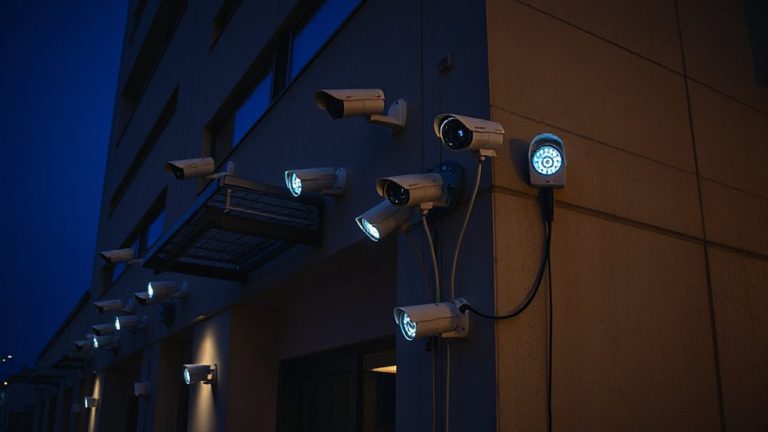
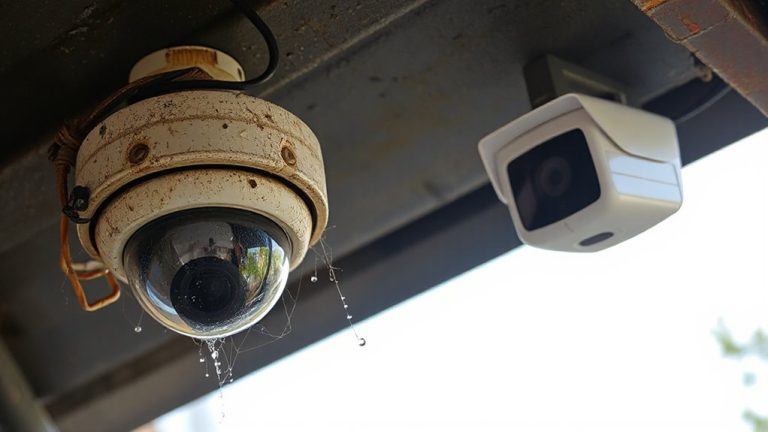
A well-placed security camera acts as both a deterrent and an early warning system, giving you real-time alerts when potential threats appear. Modern cameras with motion detection and threat recognition software help reduce false alarms by distinguishing people from animals or moving shadows. Night vision guarantees clear footage in low light, while remote access lets you check your home from anywhere using a smartphone or tablet. Top models offer advanced video analytics for smarter detection and improved home security.
| Feature | Benefit | Consideration |
|---|---|---|
| Night Vision | Records clearly in total darkness | Range varies by model (up to 100 ft) |
| Remote Access | Monitor live feed offsite securely | Requires stable internet connection |
| Motion Detection | Alerts you instantly to movement | Adjust sensitivity to avoid false alerts |
Choose models with weather resistance and encrypted storage for best results.
Monitor Your Home in Real Time With Smart Devices
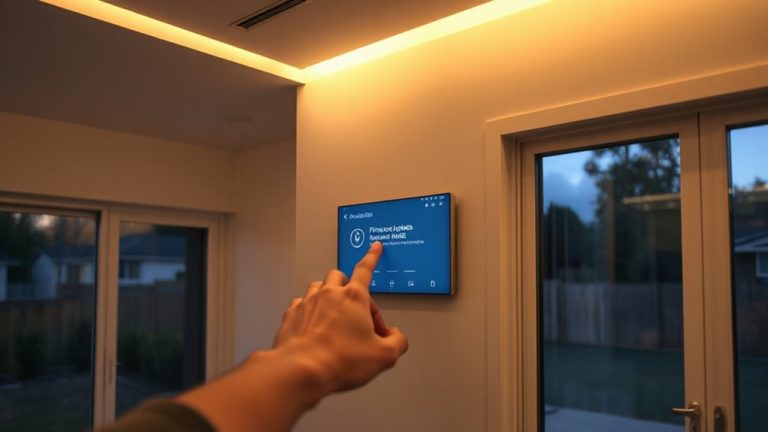
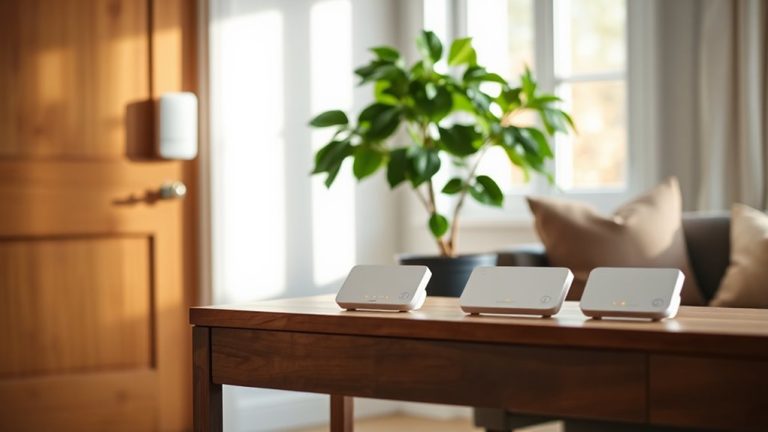
You can extend your home’s visibility beyond cameras by connecting them to a network of smart devices that keep you informed no matter where you are. These systems offer real-time updates through smart alerts, notifying you of unusual activity like a door opening or motion detected. With remote access, you can view live footage, lock doors, or turn on lights using a smartphone or tablet, whether you’re at work or on vacation. Most smart hubs integrate with motion sensors, door/window contacts, and alarms, creating a responsive security layer. Systems typically require a monthly subscription for cloud storage, ranging from $3 to $10, though some offer local storage options. Reliable internet is essential for consistent performance. While smart alerts reduce false alarms, make certain devices are updated to prevent vulnerabilities. Remote access adds convenience and control, making it easier to respond quickly and effectively to potential threats.
Build Daily Habits for Long-Term Security
Often, the most effective security measures are the ones you do every day without thinking. Making security part of your routine guarantees long-term protection. Start with routine checks: lock doors, close windows, and confirm your alarm is armed each night-this takes less than a minute but reduces break-in risks markedly. Perform weekly inspections of locks, lighting, and blind spots around your home. Pair these actions with awareness training: teach everyone in your household to recognize suspicious activity and respond calmly. Practice what to do if they hear an intrusion or notice an open window. Consistent habits build resilience. These steps don’t rely on expensive gear, just discipline and attention. Over time, they become automatic. Data shows homes with established routines face fewer incidents. Begin tonight. Small, repeated actions today create a safer home tomorrow.
On a final note
You’ve taken the right steps to protect your family. Securing doors and windows, using motion lights, installing threat-detecting cameras, and monitoring with smart devices all reduce break-in risks. Daily habits, like locking entry points and activating alarms, strengthen your defenses. While systems vary in price and complexity, even basic setups improve safety. Plan based on your home’s layout and needs, balancing cost with reliable, tested features for long-term security.