How to Test and Maintain Door Sensors to Ensure Continuous Alarm System Functionality
Test your door sensors monthly by disarming the system, opening the door slowly, and confirming the control panel responds. Check for dirt, misalignment, or interference from metal objects and electronics-common causes of false alarms. Clean sensors gently, realign every few months, and replace batteries every six months using lithium for longer life. If problems persist, replace the sensor for $25–$50. Proper maintenance keeps your system accurate and reliable-learn what else affects sensor performance and how to optimize every detection.
Notable Insights
- Disarm the system and test each door sensor by opening slowly while monitoring the control panel or app for timely response.
- Check sensor alignment every few months using a level and tighten mounting screws to prevent false alarms or missed triggers.
- Clean sensors monthly with a dry or slightly damp cloth to remove dust and debris that can cause false alarms.
- Test batteries every six months and replace corroded or weak ones with manufacturer-recommended types to maintain reliable power.
- Identify and eliminate electrical interference by relocating sensors away from routers, microwaves, and large metal objects.
Test Your Door Sensors in 3 Steps
Start by checking your door sensor’s operation to guarantee it’s communicating properly with your security system. First, disarm your system and open the door slowly-watch for a timely response in the control panel or app. This confirms alarm integration is active. Next, test sensor sensitivity by gently placing a piece of paper between the sensor and magnet, then close the door. If the alarm doesn’t trigger, the sensor may be too insensitive. Finally, repeat this for all entry points, noting delays or failures. Accurate sensor sensitivity ensures threats aren’t missed, while proper alarm integration guarantees signals reach the central system. Testing monthly helps maintain reliability. Most systems cost $200–$600 upfront, with professional testing adding $50–$100 annually. DIY checks save money and improve response accuracy. Record each test result to track performance trends. Immediate attention to weak signals prevents security gaps. For optimal performance, consider upgrading to one of the top garage door sensors recommended by experts.
Check for Common Sensor Problems
Why do some door sensors fail when you need them most? Because over time, sensor drift and electrical interference can throw off performance. Sensor drift happens when the sensor’s sensitivity changes, causing false alarms or missed triggers. You might not notice it until the system underperforms during a critical moment. Electrical interference from nearby devices like routers or microwaves can also disrupt signal transmission, especially in wireless models. To check for issues, inspect sensor alignment and test response consistency monthly. Look for flickering indicator lights or delayed alerts-signs of interference. Guarantee sensors are installed away from large metal objects or high-EMF appliances. While hardwired systems resist interference better, they’re costlier to install. Wireless units are easier to set up but need battery checks. Catching these problems early keeps your system reliable and effective. For added security, consider pairing your door sensors with the best motion detectors available to enhance overall coverage and reliability. The best motion detectors offer advanced sensitivity controls and seamless integration with existing alarm systems.
Realign or Replace Faulty Sensors
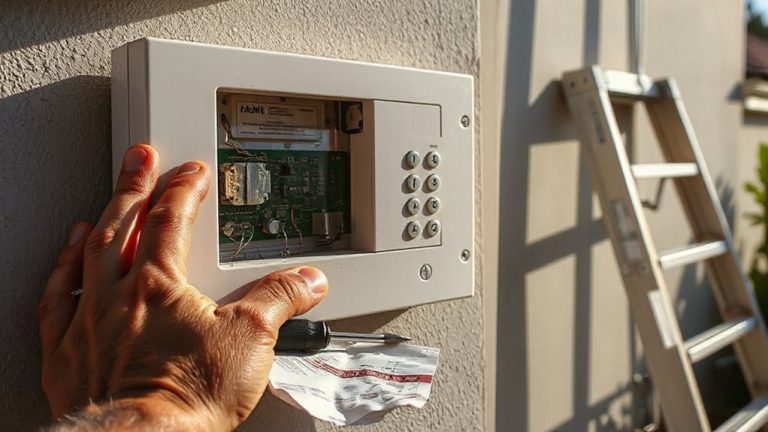
How often should you check your door sensors if alarms keep triggering for no reason? Every few months, or immediately when problems arise. Misaligned sensors are a common culprit, so start with sensor alignment. If realigning doesn’t fix the issue, you may need hardware replacement. Use a level and measuring tape to guarantee both parts are even and within range. Choosing one of the top-rated garage door sensors can significantly reduce false alarms and improve system reliability.
| Issue | Solution | Cost Estimate |
|---|---|---|
| Slight misalignment | Adjust mounting position | $0 |
| Loose mounting screws | Tighten & recheck | $0 |
| Damaged housing | Seal or replace | $15–$30 |
| Persistent false triggers | Replace sensor | $25–$50 |
| Outdated model | Upgrade system | $100+ |
Proper sensor alignment prevents errors, while timely hardware replacement guarantees long-term reliability.
Clean Sensors to Prevent False Alarms
One in five false alarms stems from dirty or obstructed sensors, making regular cleaning a key step in maintaining your system’s accuracy. You should inspect each sensor monthly, wiping gently with a dry or slightly damp cloth to remove dust, dirt, or cobwebs. Buildup can cause sensor calibration issues, leading the system to misread door positions. Even small obstructions may trigger environmental interference, especially in areas with high humidity or temperature swings. Avoid using liquids or abrasive cleaners, as they can damage sensitive components. Keeping sensors clean supports consistent performance and reduces unnecessary alerts. Think of it as routine maintenance-quick, simple, and effective. When surfaces are clear, your system remains reliable and responsive. This small effort improves overall security, extends sensor life, and guarantees your alarms activate only when needed. Clean sensors mean fewer disruptions and better protection for your home.
Swap Out Dying Sensor Batteries
Though they often go unnoticed, weak sensor batteries can compromise your entire security system, so staying ahead of replacements is essential. You should test batteries every six months using voltage testing to guarantee they’re delivering the required power. Most door sensors run on small lithium batteries that last 1–3 years, but performance drops over time. When replacing them, check for battery corrosion-white or green residue that can damage contacts and hinder connection. Carefully clean affected areas with a cotton swab and baking soda solution before installing new batteries. Always use the manufacturer-recommended type to avoid compatibility issues. Keep spare batteries on hand, as unexpected failures can leave gaps in coverage. Proactively swapping out dying batteries guarantees consistent operation and extends sensor lifespan, supporting long-term reliability without costly repairs or replacements.
Confirm the Alarm Still Detects Doors
After replacing old batteries, you’ll want to make sure your alarm system still recognizes each door sensor properly. Testing ensures sensor accuracy and maintains detection reliability across all entry points. Simply arm your system and open each monitored door slowly. The alarm should trigger instantly. If it doesn’t, recheck the sensor alignment or connection.
| Door Tested | Alarm Response |
|---|---|
| Front Door | Triggered |
| Back Door | Triggered |
| Garage Door | No Response |
A failed test indicates reduced detection reliability, possibly due to misalignment or communication issues. Address any non-responsive sensors immediately. Consistent sensor accuracy is critical to keeping your home protected. Regular checks like this one guarantee long-term performance. Don’t wait for a breach to find a flaw-verify function now to maintain system integrity and confidence in your security setup.
Understand How Door Sensors Work
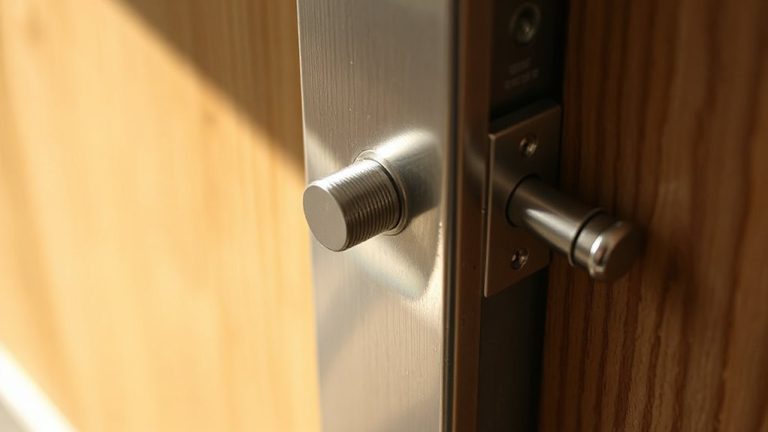
While you might not think about them daily, door sensors play a critical role in your home security system by detecting when a door opens or closes. Most use a magnetic contact design, with one part on the door and the other on the frame. When the door is shut, the magnet and sensor align, completing a circuit. Opening the door breaks that connection, triggering the alarm. Proper sensor placement matters-install both pieces within 1/4 inch of each other for reliable detection. Misalignment risks false negatives, where the system doesn’t respond. Check alignment during maintenance, especially on settling homes or warped doors. These sensors are low-cost, energy-efficient, and easy to install, though they can fail if placed on loose frames or metal surfaces that interfere with the magnetic contact. Ensuring correct setup now prevents security gaps later.
On a final note
You should test your door sensors regularly to keep your alarm system reliable. Check alignment, clean the surfaces, and replace weak batteries every 6–12 months. Misaligned or dirty sensors cause most false alarms. Realign or replace them as needed. After maintenance, confirm the system detects open and closed doors properly. Proper upkeep guarantees consistent protection, reduces malfunctions, and extends equipment life, saving you time and money over the long term.