Optimizing Energy Efficiency While Maintaining High-Level Security at Home
You can optimize energy efficiency while boosting home security by upgrading insulation and windows, which tighten your home’s envelope and reduce break-in points. Smart thermostats cut waste and simulate occupancy, while solar-powered cameras run off-grid. Automated LED lighting deters intruders and uses 75% less energy. Smart locks and dual-use sensors save power and provide alerts. A central hub ties everything together, often saving on insurance and energy bills-options start under $100. More smart integrations await to streamline both safety and savings.
Notable Insights
- Upgrade insulation and weatherstripping to enhance energy efficiency and deter forced entry.
- Install smart thermostats to reduce energy use and simulate occupancy for security.
- Use solar-powered security cameras for reliable, off-grid surveillance in sunny locations.
- Automate LED lighting with motion sensors to cut energy costs and deter intruders.
- Integrate smart hubs and dual-use sensors for unified energy management and real-time security alerts.
Why Energy Efficiency and Home Security Go Hand in Hand
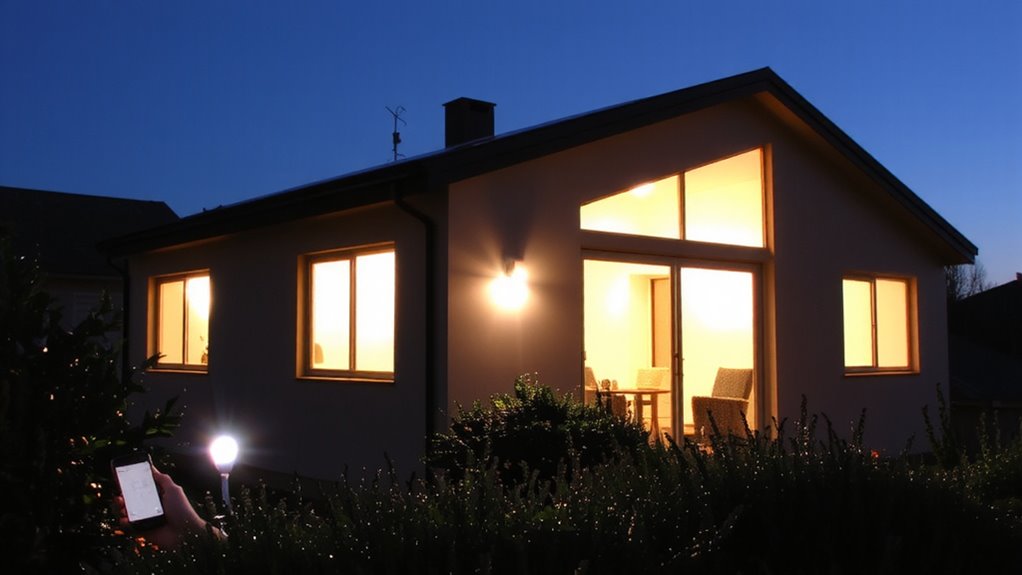
While cutting energy costs might seem separate from protecting your home, the two actually support each other in practical ways. You improve security just by boosting energy efficiency. Strong insulation quality seals your home, making it harder for intruders to access hidden spots or exploit weak points. Plus, homes with high energy ratings often have better-constructed envelopes, including reinforced doors and windows that also deter break-ins. Upgraded insulation and weatherstripping reduce drafts and increase resistance to forced entry. These improvements aren’t just about comfort-they make your home less appealing to criminals. When evaluating materials or planning upgrades, check both insulation quality and energy ratings to maximize benefits. Higher-rated systems cost more upfront but lower utility bills and may reduce insurance premiums. A well-insulated, energy-efficient home isn’t only safer-it’s smarter, offering long-term savings and stronger protection.
How Learning Thermostats Save Energy and Simulate Occupancy
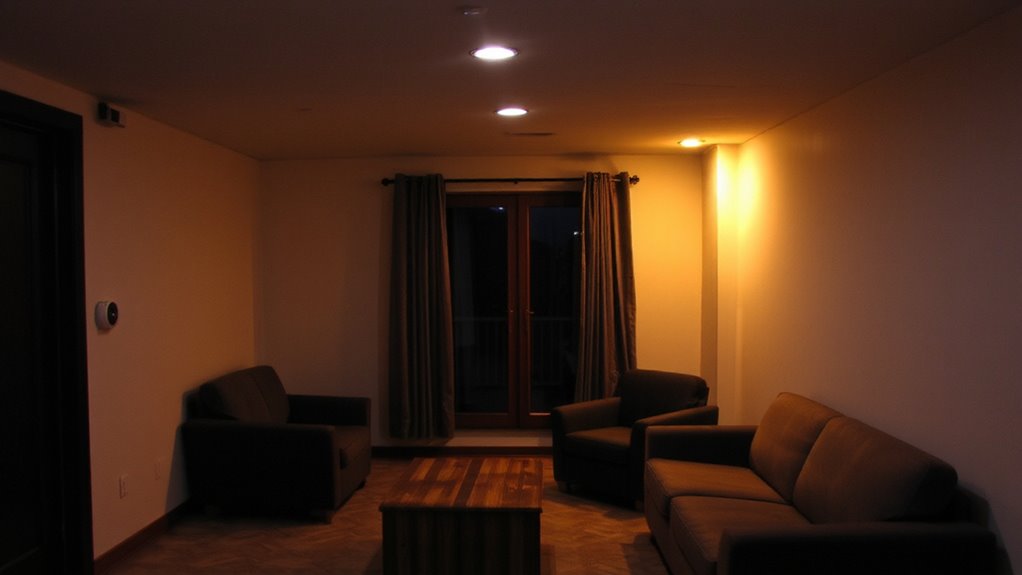
Smart thermostats do more than keep your home comfortable-they actively cut energy use and boost security by making it look like someone’s always there. With adaptive scheduling, these devices learn your routine and adjust the temperature automatically, so you’re not heating or cooling an empty house. Over time, they refine their settings based on your behavior, reducing waste and lowering bills. Predictive heating guarantees your home reaches the right temperature just before you return, avoiding unnecessary early starts. Most models let you control settings remotely, so unexpected trips won’t disrupt efficiency. Plus, by simulating occupancy-cycling heat as if you’re home-they deter intruders. While upfront costs range from $100 to $250, the long-term savings often justify the investment. Look for ENERGY STAR-rated models with strong app support and easy installation for best results.
Solar-Powered Cameras: Secure and Off-Grid
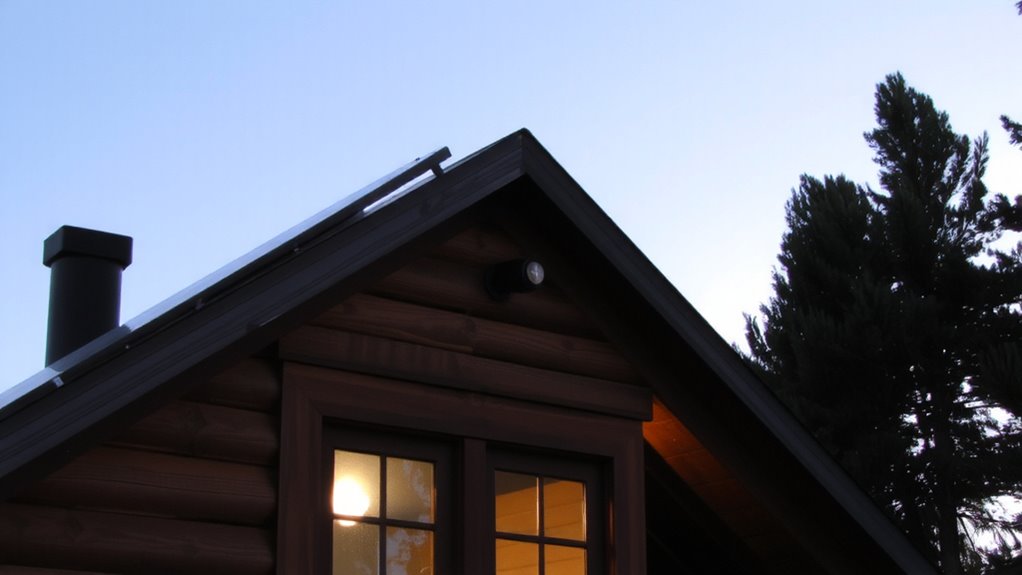
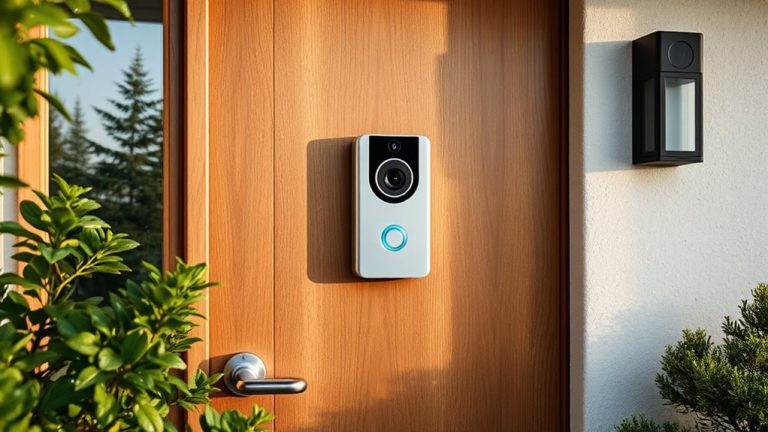
If you’re looking to strengthen your home security without adding to your electricity bill, solar-powered cameras offer a reliable, off-grid solution. These devices use sunlight to power high-resolution video monitoring, so you’re not drawing from the grid. Most models include wireless connectivity, letting you receive alerts and access footage from your phone or tablet. You’ll want to place them where they get consistent sun, but not so much that glare affects the lens. With solid weather resistance, they hold up in rain, snow, and extreme heat. Installation is usually simple, with mounting hardware included. Expect to pay between $100 and $250 per unit, depending on features like night vision or two-way audio. While performance depends on sun exposure, pairing them with a battery backup guarantees continuous operation. They’re a smart, sustainable upgrade for long-term security. For trustworthy models, consider checking out the Best Solar Security Cameras based on expert testing and user reviews.
Automate Lighting to Deter Intruders and Cut Waste
When lights turn on automatically at dusk or in response to motion, they can make your home look occupied even when you’re not there, which helps discourage potential intruders. You’ll benefit from motion activated lighting in key areas like entrances and side yards, where unexpected movement triggers illumination. It’s both a security boost and an energy saver. Pair this with scheduled brightness control to adjust light levels based on time of day, reducing unnecessary power use. Smart systems let you set these rules easily, adapting to your routine. Most models use LED bulbs, cutting energy costs by up to 75% compared to incandescents. Installation is simple, often needing just a few hours and under $200 for basic setups. While some systems require Wi-Fi, others work independently. You maintain control and efficiency without complexity.
Smart Locks That Offer Convenience Without the Energy Cost
Though they add a layer of modern convenience, smart locks don’t rely heavily on power, making them a practical upgrade for both security and efficiency. You get remote access to lock or open doors from anywhere, which is useful if you forget to secure the house or need to let in a guest. Most models run on batteries, and with good battery life-often lasting 6 to 12 months-you won’t need constant replacements. Low-battery alerts notify you in advance, so you’re never locked out. Smart locks use minimal energy because they only draw power when actively locking or opening. Many integrate with home automation systems without increasing your energy bill. While upfront costs range from $100 to $300, the long-term benefits include better control and monitoring. Choose models with strong encryption to guarantee security isn’t sacrificed for convenience. Top options like the Aqara U100 offer seamless Home Assistant integration with reliable performance.
Dual-Use Sensors: Detect Intruders and Leaks Early
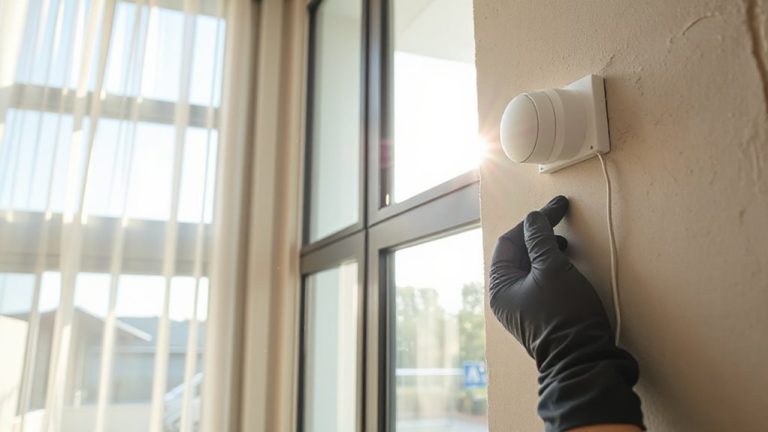
What if one device could protect your home from both break-ins and water damage? Dual-use sensors do just that, combining motion sensing and water detection in a single, efficient unit. These devices alert you to unauthorized movement while also monitoring for leaks near appliances or pipes. With motion sensing, they detect intruders and trigger alarms or notifications. Simultaneously, water detection helps prevent costly damage by catching drips early. Most models connect to your Wi-Fi, sending real-time alerts to your phone. They’re easy to install, often battery-powered, and work in basements, bathrooms, or laundry rooms. Prices range from $25 to $60 each, with no monthly fees for basic functions. While they save space and reduce gadget clutter, they require proper placement to avoid false alarms. Choose units with smart home compatibility for future flexibility.
Unify Security and Efficiency With a Smart Home Hub
Dual-use sensors simplify home protection by combining security and water leak detection, but managing multiple smart devices can still get complicated without a central system. A smart home hub ties everything together, letting you monitor security and energy use in one place. With voice control, you can arm your system or check locks hands-free using a compatible assistant. Energy monitoring gives real-time data on device usage, helping you cut waste and lower bills. Look for hubs that support major platforms like Zigbee or Z-Wave for wider device compatibility. Most require a one-time purchase, ranging from $50 to $150, with no monthly fees. Some integrate with security services for added protection, though subscriptions may apply. Choose a hub that updates automatically and supports encryption to keep your data safe. A unified system improves control, efficiency, and long-term savings. Best Smart Home Hubs offer seamless integration and reliable performance across various devices and protocols.
On a final note
You can save energy and stay secure by combining smart devices. Learning thermostats cut heating and cooling costs while making your home seem occupied. Solar cameras run off-grid, reducing power use. Automated lights deter intruders and prevent waste. Smart locks offer keyless entry with low energy draw. Dual-use sensors spot leaks or intruders early. A central hub links systems efficiently, helping you monitor both security and energy use in one place.