Installing Heat Sensors Instead of Smoke Detectors in Kitchens to Reduce Nuisance Alarms
You should install heat sensors in kitchens because cooking often triggers false alarms with smoke detectors. These sensors respond to rapid temperature rises, not steam or smoke, reducing unnecessary alerts. They’re ideal near stoves but shouldn’t replace smoke detectors entirely. Most activate at 135°F–165°F and cost $20–$40. Proper placement is 5–10 feet from appliances, away from drafts. They meet fire codes in many areas-but check local rules. A full setup keeps safety high and alarms low. There’s more to optimizing kitchen detection effectively.
Notable Insights
- Heat sensors reduce false alarms in kitchens by detecting temperature changes instead of smoke or steam.
- Install heat sensors within 5 to 10 feet of cooking appliances but avoid placing them within 3 feet of stoves or ovens.
- Use ceiling or high wall mounting to capture rising heat, avoiding drafts from vents or windows.
- Choose fixed-temperature or rate-of-rise heat sensors that activate above 135°F to ensure fire detection while minimizing nuisance triggers.
- Check local fire codes-some require UL/ETL-certified heat sensors and may restrict placement near cooking areas.
Why Kitchens Need Heat Sensors Instead of Smoke Detectors
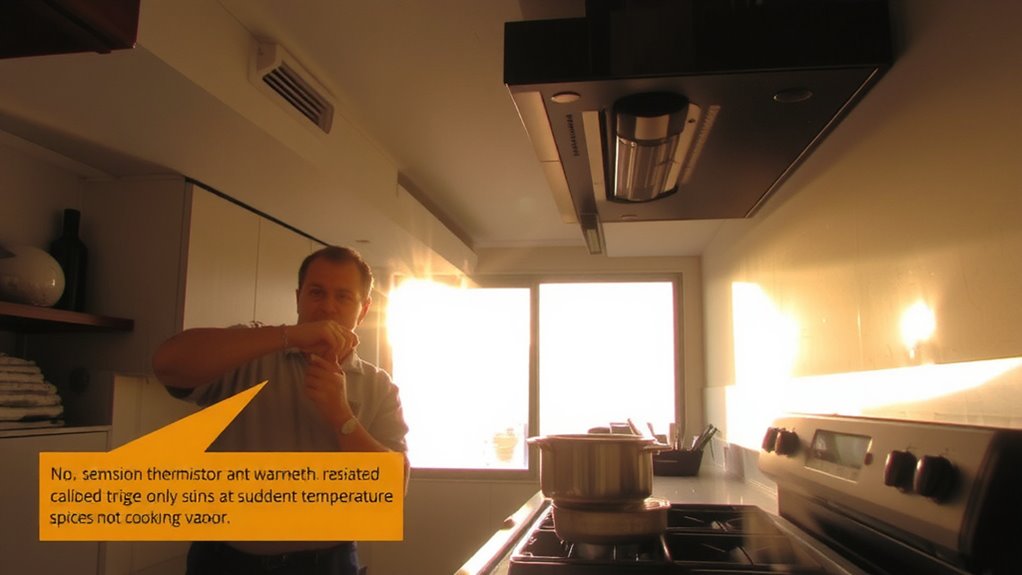
While smoke detectors are essential in most areas of the home, they’re not always the best choice for kitchens because cooking regularly produces smoke and steam that can trigger false alarms. Your cooking habits-like frying, toasting, or even boiling water-can send harmless particles into the air, confusing smoke detectors and creating unnecessary disruptions. That’s why fire safety experts often recommend heat sensors instead. Unlike smoke detectors, they respond to rapid temperature increases, not airborne particles, making them better suited for kitchen environments. They won’t go off when you burn toast or create steam, reducing nuisance alarms. Though heat sensors won’t detect slow, smoldering fires as early as smoke detectors, they excel where flames are more likely to ignite quickly, such as near stoves. For best fire safety, install heat sensors in the kitchen and smoke detectors nearby, but not too close.
How Heat Sensors Stop False Alarms: Safely
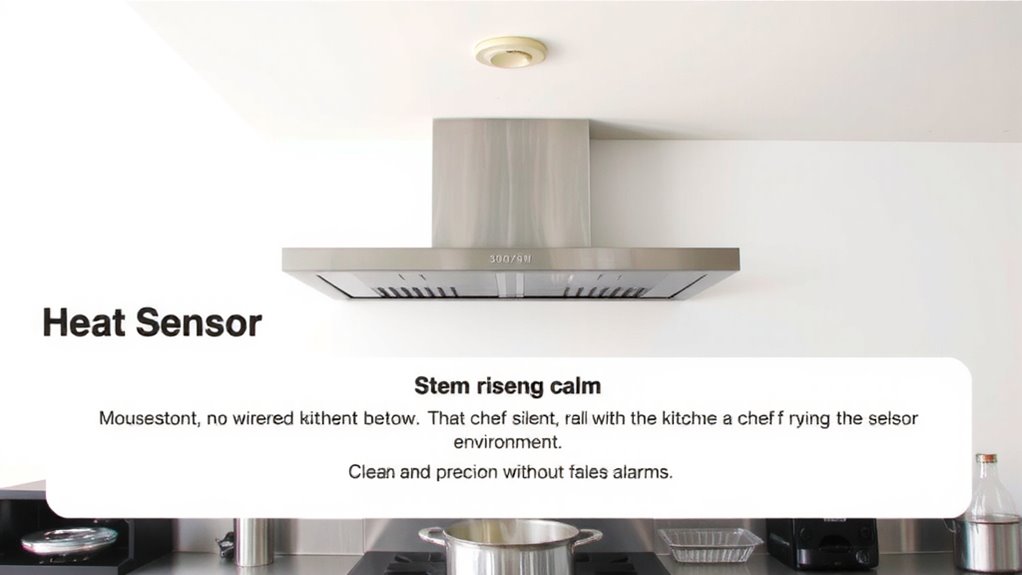
Heat sensors prevent false alarms by triggering only when they detect a significant and rapid rise in temperature, not from smoke or steam that commonly occur while cooking. You benefit from better sensor accuracy since they ignore everyday kitchen byproducts like burnt toast or boiling water. Their response time is optimized for real fire conditions, reducing unnecessary disruptions. Unlike smoke detectors, heat sensors won’t go off just because you’re sautéing or steaming vegetables. They activate only when heat levels exceed safe thresholds, typically above 135°F, ensuring reliable detection during actual fires. This makes them ideal for kitchens where smoke alarms frequently cause false alerts. With consistent performance and fewer interruptions, you gain peace of mind and maintain safety without constant reset hassles. Proper function depends on quality sensor accuracy and fast response time, both essential for effective kitchen fire monitoring.
Heat Sensor Placement: Where to Install in a Kitchen
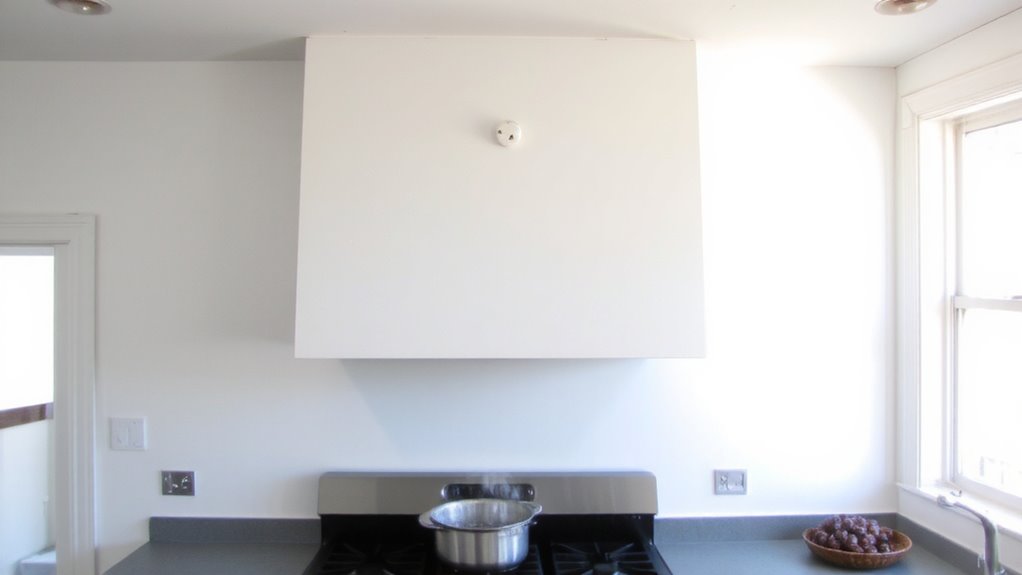
Since kitchen fires often start near appliances or cooking surfaces, placing your heat sensor within 5 to 10 feet of these areas guarantees it responds quickly to rising temperatures. Avoid installing it too close-less than 3 feet-since normal heat from ovens or stovetops might interfere. Mount the sensor on the ceiling, centered in the room or along a wall if necessary, as heat rises and spreads upward first. Different sensor types, like fixed-temperature or rate-of-rise, have varying activation thresholds-typically triggering between 135°F and 165°F. Choose based on your kitchen’s layout and cooking habits. Keep the sensor away from vents or windows, where drafts could delay detection. Proper placement assures reliable performance, minimizes false alerts, and supports faster emergency response when real danger is present. Always follow manufacturer guidelines for best results.
Smoke Detector vs. Heat Sensor: Which One Belongs in Your Kitchen?
You’ve likely thought about where to place a heat sensor in your kitchen, but now it’s time to contemplate whether that’s even the best type of device for the space. Smoke detectors respond quickly to smoldering fires but often trigger false alarms from cooking steam or toasting bread. Heat sensors, by contrast, activate only when temperatures reach a set threshold, reducing nuisance alerts while still supporting fire suppression. They don’t detect smoke, so they won’t warn you of slow, smoky fires. For appliance monitoring, heat sensors offer targeted response near ovens or stoves, where rapid temperature rises signal danger. While smoke detectors are more sensitive overall, heat sensors provide reliable, low-maintenance protection in high-heat zones. Experts recommend using both types nearby for full coverage. Heat sensors typically cost $20–$40, need replacement every 10 years, and require minimal calibration. Choose based on your cooking habits and kitchen layout.
Do Heat Sensors in Kitchens Meet Fire Code?
How do you know if a heat sensor in your kitchen meets local fire code? You check your area’s fire code exceptions and approved device listings. While smoke detectors are typically required nearby, some jurisdictions allow heat sensors in kitchens to reduce false alarms from cooking. These allowances depend on fire code exceptions specific to your region, so confirm with your local authority before installing. Sensor certification requirements also matter-only use devices certified by recognized testing labs like UL or ETL. Certified sensors meet strict performance standards and are more likely to be approved. Heat sensors respond to rapid temperature rises, not smoke, making them suited for kitchens but not a full replacement elsewhere. Install them at least 10 feet from cooking appliances and follow manufacturer instructions. When properly placed and certified, heat sensors can comply with fire safety rules while cutting nuisance alarms.
On a final note
You should install heat sensors in kitchens because they reduce false alarms from cooking smoke. Unlike smoke detectors, heat sensors respond only to rapid temperature rises, making them safer for kitchen use. They meet most fire codes when placed correctly, typically on ceilings away from appliances. While they don’t detect smoke, they provide reliable fire response. Combined with smoke detectors in other rooms, this setup improves overall safety efficiently and affordably.