Setting Up Smart Sensors on Sliding Glass Doors to Detect Tampering
You secure your sliding glass door with a smart sensor because burglars often exploit weak locks or flimsy frames. These devices detect tampering instantly, sending phone alerts when the door opens or vibrates unexpectedly. Look for models with Wi-Fi or Z-Wave, long battery life, and vibration detection. Most install in minutes using adhesive-no tools needed. Pair with Alexa, Google, or Apple Home for voice alerts and remote monitoring. Test monthly and adjust sensitivity to avoid false alarms. You’ll find setup tips and model comparisons that can help fine-tune your system.
Notable Insights
- Choose smart sensors with tilt or vibration detection to identify forced entry attempts on sliding glass doors.
- Install sensors using built-in adhesive on clean glass surfaces for a tool-free setup in under five minutes.
- Position the sensor on the moving door panel and the magnet on the fixed frame for accurate open/close detection.
- Connect the sensor to Wi-Fi or Z-Wave to enable instant phone alerts and integration with smart home systems.
- Test the sensor monthly and adjust sensitivity to prevent false alarms while ensuring reliable tamper detection.
Why Burglars Target Sliding Glass Doors
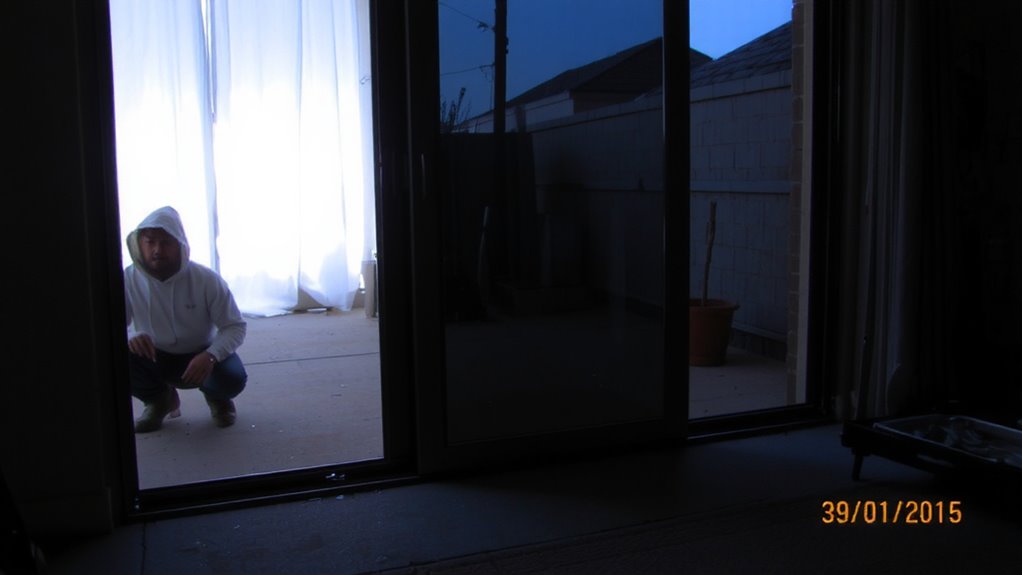
A sliding glass door is often one of the most vulnerable entry points in a home, and that’s exactly why burglars target them. You might not realize it, but these doors offer easy access methods due to weak locks, flimsy frames, or improper installation. Unlike solid exterior doors, sliding glass models can be lifted, jimmied, or shattered quickly, especially if they lack security features. Studies show homes with unprotected sliding doors face higher break-in risks, making them prime targets. Burglars look for the path of least resistance, and without reinforcement, your door becomes a clear choice among vulnerable entry points. You can reduce risk by upgrading hardware, adding locking bars, or installing secondary alarms. Though these fixes cost time and money, they’re practical steps. Simple retrofits enhance deterrence, slow intrusion attempts, and increase the chances of catching activity early-without requiring a full door replacement.
How Smart Sensors Stop Sliding Door Break-Ins
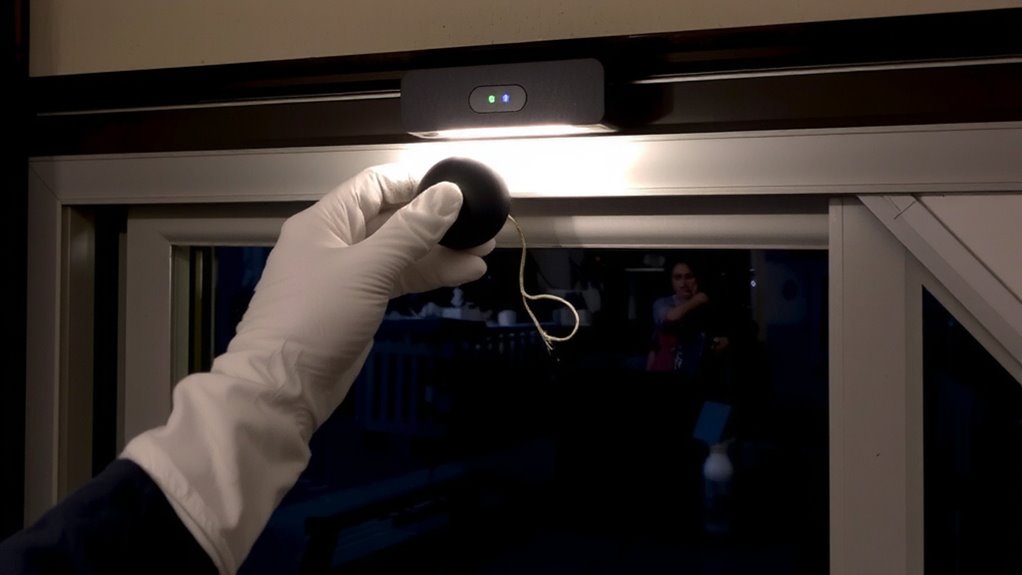
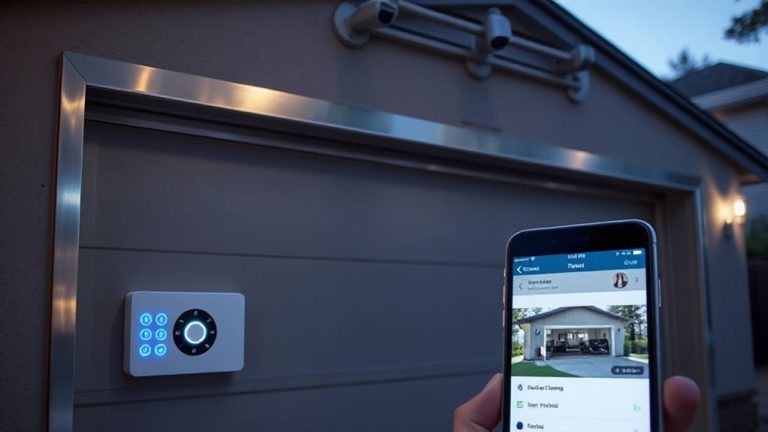
How do you know if someone’s tampering with your sliding glass door while you’re asleep or away? Smart sensors detect unexpected movement or changes in position, sending instant alerts to your phone. They work by monitoring the door’s status-closed, opened, or forced-and trigger alarms when tampering occurs. Proper sensor sensitivity reduces false alarms, ensuring pets or breezes don’t cause unnecessary notifications. Too high sensitivity may increase false alarms; too low might miss real threats. You’ll want to adjust sensitivity based on your door’s alignment and environment. These sensors integrate with home security systems, enabling remote monitoring and faster emergency responses. Reliable models use magnetic contact technology and operate on long-lasting batteries. Installation is usually simple, often requiring no drilling. When chosen and set up correctly, smart sensors act as a strong, proactive barrier against break-ins. Some systems can even pair with best smart locks for sliding doors to provide layered security.
Best Smart Sensor Features for Home Security
Spotting break-in attempts with smart sensors is just the beginning-knowing what features actually boost your home’s security helps you choose wisely. Look for sensors with reliable connectivity, like Wi-Fi or Z-Wave, so alerts reach your phone instantly. A long battery life-ideally 12 months or more-means fewer replacements and consistent performance. Sensors with tilt or vibration detection add extra layers, spotting tampering without triggering false alarms from pets or drafts. Many models use adjustable sensitivity to reduce false alarms, which keeps your system trustworthy. Choose those with encryption to protect data. Higher-end models cost more but offer better durability and integration with smart hubs. Read reviews to compare real-world battery life and alarm accuracy. Pick one that balances cost, reliability, and compatibility with your existing setup for the best protection. For seamless automation, consider sensors compatible with Home Assistant.
Install a Sensor in 5 Minutes (No Tools Needed)
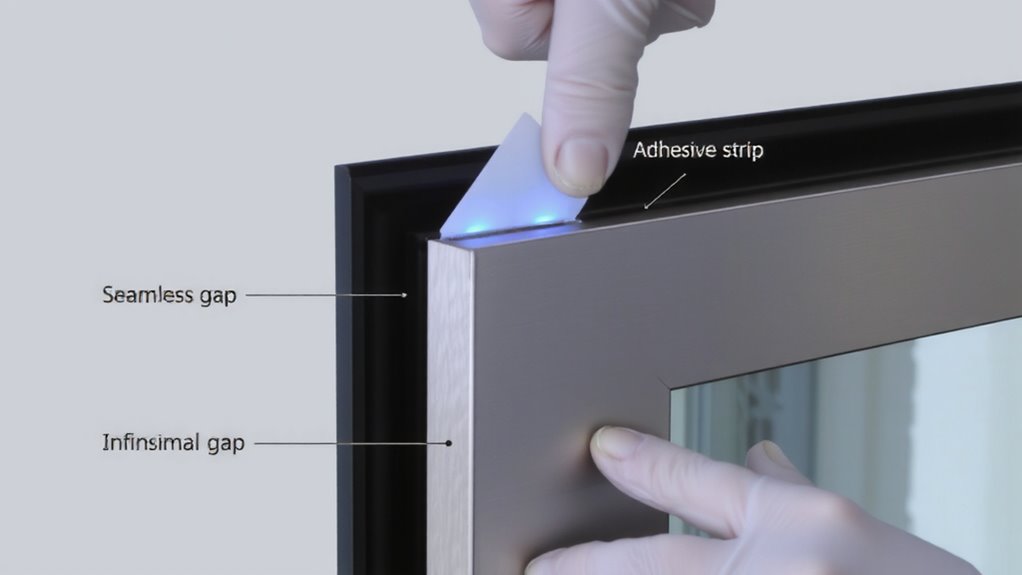
You can set up most modern smart sensors on sliding glass doors in under five minutes, and many require no tools at all. Just peel off the backing and press the sensor firmly into place using the built-in adhesive. Strong adhesive strength guarantees it stays put, even with daily door vibrations. Position the sensor on the sliding panel and its counterpart on the fixed frame, making sure they align properly. Correct magnetic alignment is essential-when the door opens, the magnetic field breaks and triggers the alert. Test the placement by sliding the door open and closed a few times. Poor alignment or weak bonding may lead to false alarms or missed detection. For best results, clean the surface with alcohol first and allow 24 hours before expecting full adhesion. Affordable and simple, these sensors offer a reliable first step in tamper detection. Consider pairing your sensor with Top Sliding Window Locks for enhanced physical and digital security.
Connect to Google, Alexa, or Apple Home
A well-integrated smart sensor works best when it connects seamlessly with your existing smart home ecosystem, and most modern models support direct pairing with Google Assistant, Amazon Alexa, or Apple Home. You’ll want voice integration so you can ask if your sliding glass door is secured, without checking your phone. Once linked, you’ll get app notifications the moment the sensor detects movement, letting you respond quickly. Setup usually takes under five minutes in the respective app-just follow the prompts to add the device. Google and Alexa offer broader device compatibility, while Apple Home emphasizes privacy and works best if you use iPhones or iPads. Some sensors work with all three, so check before buying. Voice integration adds convenience, and app notifications guarantee you never miss an alert. Choose based on your current devices and long-term smart home plans.
Test the Sensor and Fix Common Issues
Once your smart sensor is connected to Google, Alexa, or Apple Home, the next step is making sure it works as expected under real-world conditions. Test it by gently sliding the door open and closed while checking your app or voice assistant for alerts. If alerts don’t trigger, check sensor calibration-many models need small adjustments in position to align the magnet with the sensor properly. Misalignment often causes missed detections. False alarms can occur if the sensor is too sensitive or if vibrations from wind or slamming doors interfere. To reduce false alarms, guarantee the sensor and magnet are securely mounted and avoid placing them near moving metal objects. Some apps let you adjust sensitivity settings or set alert delays. Always retest after making changes. Regular testing-once a month-ensures reliability and peace of mind.
On a final note
You’ve learned why sliding doors are vulnerable and how smart sensors help. With strong detection, easy setup, and compatibility with Google, Alexa, or Apple Home, these sensors offer reliable, low-cost protection. Most install in minutes, no tools needed. Look for long battery life, instant alerts, and easy syncing to your system. Test regularly and replace batteries as needed. For under $30, you gain measurable peace of mind and stronger home security.