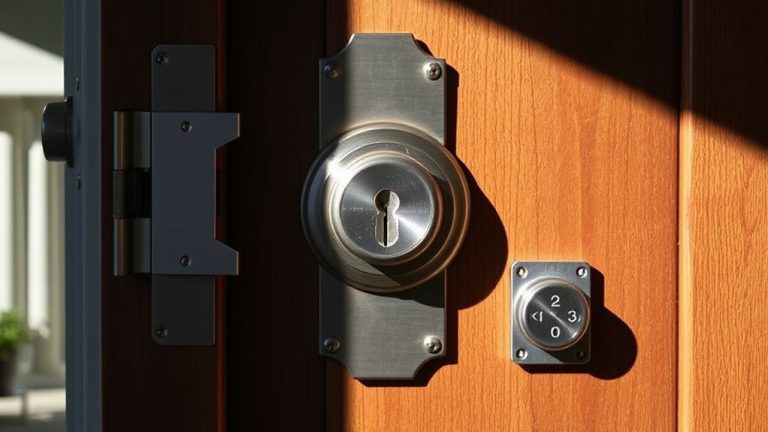
Creating a Customized Home Defense Plan Tailored for Specific Family Needs
You should start by identifying risks like poor lighting, weak locks, or unresolved neighbor tensions that could compromise safety. Map all entry points-doors, windows, basement access-and plan clear escape routes. Choose reliable security tech such as smart locks and motion-sensing cameras, ensuring they fit your home’s Wi-Fi capacity and power setup. Assign roles to family members based on ability, practice responses regularly in low light, and use quiet signals to stay coordinated. A well-documented plan adapts to your household’s needs and improves with each drill. You’ll find more strategies that refine your approach and boost long-term preparedness.
Notable Insights
- Assess household-specific risks like poor lighting, weak locks, or neighbor conflicts to prioritize security upgrades.
- Map all entry points and escape routes using a floor plan to identify vulnerabilities and safe exit paths.
- Select security technology such as smart locks and cameras that align with your family’s lifestyle and home structure.
- Assign family members clear roles and communication methods based on age and ability for coordinated emergency responses.
- Conduct regular practice drills in low light to reinforce escape plans and improve response efficiency under stress.
Identify Household Risks First
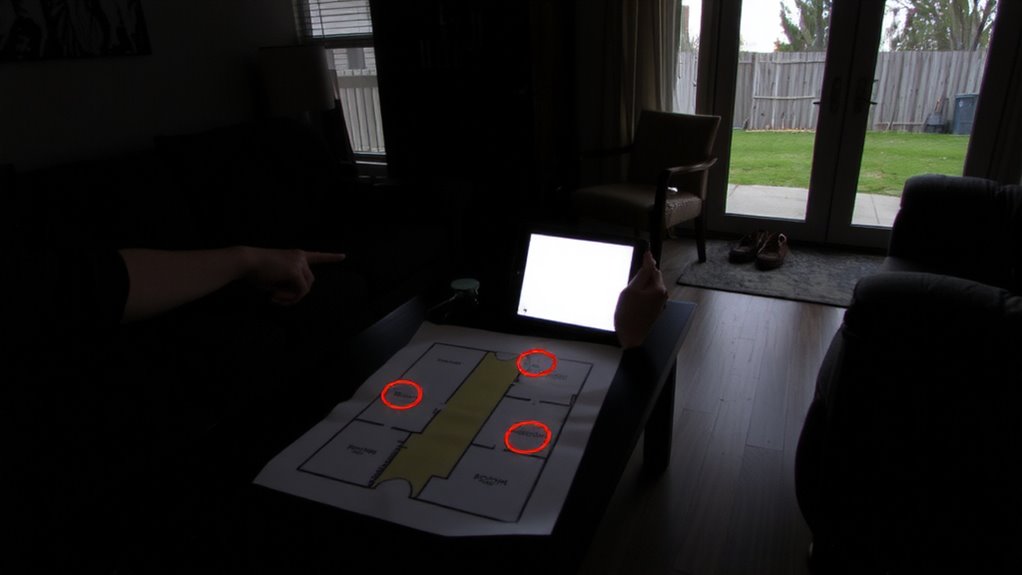
What could make your home more vulnerable to intruders or accidents? You might overlook everyday risks, like poor lighting or weak locks, but deeper issues like neighbor disputes can escalate and compromise safety. Tension with neighbors may lead to intentional property damage or delayed help during emergencies. Address conflicts early through calm communication or mediation. Pet safety is another key concern-unsecured pets can bolt during chaotic moments, or worse, be targeted if outdoor enclosures are weak. Guarantee fencing is sturdy and supervise animals closely. Evaluate your household’s routines, including when doors are left open or windows opened. Document these risks systematically to prioritize fixes. A clear assessment helps you create a defense plan suited to your home’s unique environment, improving security for everyone-including your pets. Upgrading to best door locks can significantly deter break-ins and enhance overall home security.
Map Entry Points and Escape Routes
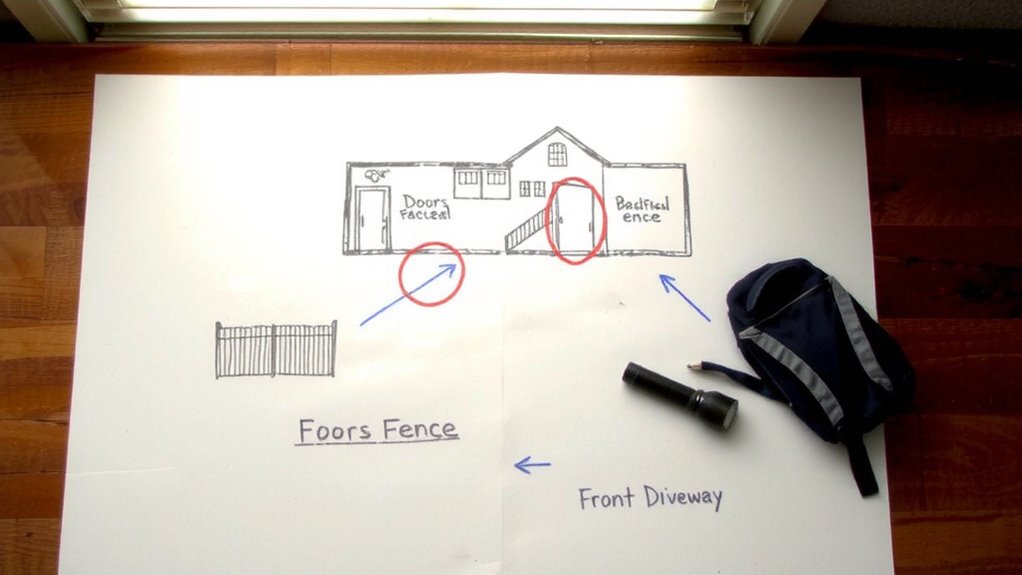
Now that you’ve identified the risks unique to your household, it’s time to focus on how someone might actually enter or leave your home during an emergency. Start by mapping every entry point, including doors, window access points, and any basement entry routes. These are potential vulnerabilities, so knowing their locations helps you plan responses. Use a floor plan sketch to mark each point clearly-external windows on the first floor are common break-in spots, while basement entry often goes overlooked but can be just as accessible. For each, determine if it’s likely to be used by intruders or as a safe escape. Consider natural obstacles, locks, and visibility. Escape routes should be unobstructed and easily accessible under stress. Installing a best peephole camera can provide real-time visual verification of who is at your door, enhancing situational awareness during potential threats.
Choose Security Tech That Fits Your Life
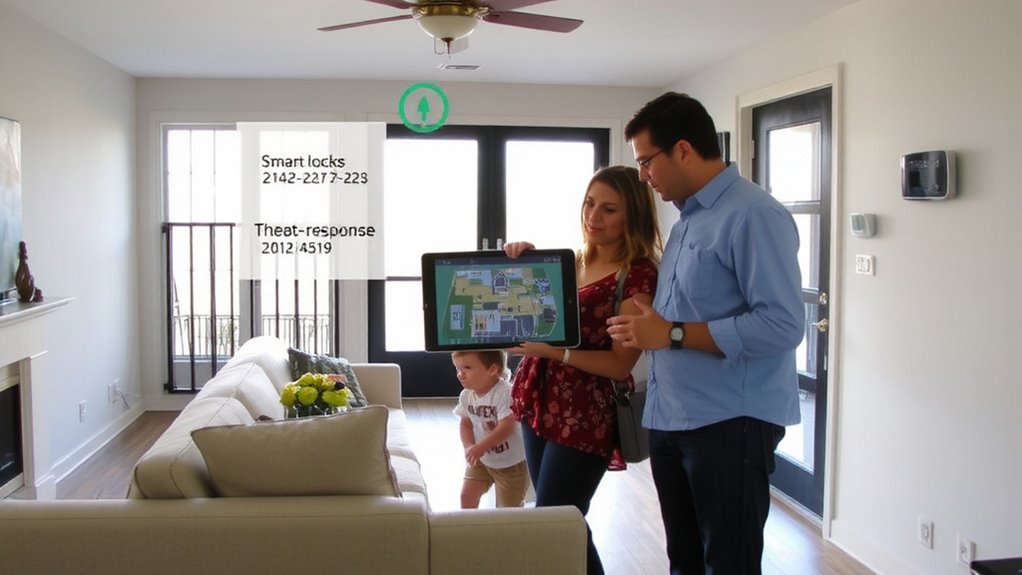
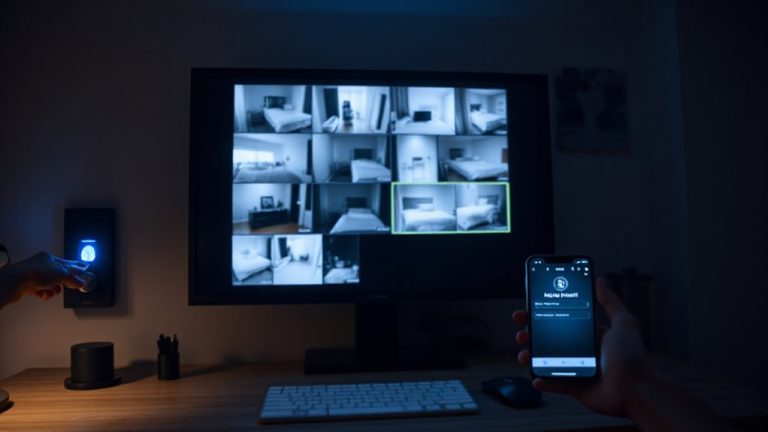
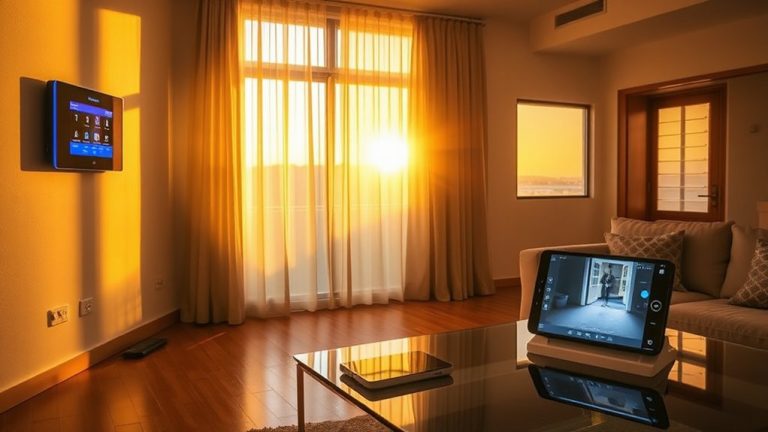
How do you know which security tech actually works for your home instead of just adding noise or false confidence? Start by evaluating your daily routines and actual risks. Smart locks offer keyless entry and remote access, which is great if you often forget keys or need to grant access to family or trusted helpers. They work best when paired with strong door frames and deadbolts. Surveillance cameras help monitor activity, especially near entry points mapped earlier. Look for models with night vision, motion alerts, and local storage to avoid subscription fees. Wired systems tend to be more reliable than battery-powered ones. Avoid overloading your Wi-Fi with too many devices. A mix of smart locks and surveillance cameras can reduce break-in risks by up to 60% when properly installed. Test devices monthly and budget $200–$500 for basic, effective coverage. For tailored recommendations, consider the best home security cameras based on expert testing and real-world performance.
Plan How Your Family Responds Together
When chaos strikes, will everyone in your home know exactly where to go and what to do? Planning how your family responds together is essential for safety and efficiency under pressure. Start by defining clear family roles based on age, ability, and familiarity with your home’s layout. Adults might handle communication or defense tools, while older children can assist younger siblings. Establish reliable communication strategies, like using quiet signals or a group messaging app, to avoid confusion. Keep phones charged and accessible, and identify backup plans if systems fail. Assign meeting points inside and outside the home, ensuring everyone knows both primary and alternate routes. Avoid complex jargon or unrealistic expectations-focus on simple, repeatable actions. A well-coordinated response increases your odds of staying safe, especially when seconds count.
Practice Your Home Defense Together
While having a plan is a critical first step, it won’t mean much unless your family practices it regularly under realistic conditions. You should run team drills at least quarterly to guarantee everyone knows their role during an emergency. These drills help identify weak points in your response, like delayed reactions or blocked escape routes. Use clear communication signals-such as a specific whistle tone or flashlight blink pattern-so family members can signal safely without shouting. Practice in low light to simulate nighttime threats and reinforce quiet coordination. Children should participate but with age-appropriate tasks. Rotate roles occasionally so each person understands multiple responsibilities. Document each drill’s outcome to track improvements. Consistent practice builds muscle memory, reduces panic, and strengthens response efficiency. Real preparedness comes not from theory, but from repeated, structured action.
On a final note
You’ve assessed your household risks and mapped entry points, so now you can choose security tech that fits your lifestyle. Practice your plan regularly with your family to guarantee everyone knows their role. A well-practiced defense strategy increases safety more than any device alone. Combine smart locks, sensors, and lighting with clear communication for best results. Review your plan every six months or after major life changes.