Evaluating the Effectiveness of Various Motion Detection Algorithms Used in Surveillance
You can choose the best motion detection algorithm by matching it to your environment’s lighting and activity. Background subtraction works well in steady light but struggles with sudden changes, while optical flow handles subtle movements and lighting shifts with greater accuracy. Machine learning reduces false alerts by learning your scene over time. For low light or crowded areas, GMM or infrared with deep learning boosts performance. Each method balances speed and precision-pick one that fits your priorities. You’ll find the ideal fit by comparing how each handles your specific conditions.
Notable Insights
- Background subtraction effectively isolates moving objects but struggles with sudden lighting changes or camouflaged targets.
- Optical flow excels in detecting subtle motion under variable lighting but demands higher computational resources.
- Frame differencing provides fast motion detection yet often triggers false alarms due to shadows or flickering lights.
- Machine learning methods reduce false positives by adapting to environments and recognizing anomalous motion patterns.
- Hybrid approaches combining edge computing with GMM or deep learning improve accuracy in low-light and crowded scenes.
What Is Motion Detection in Surveillance?
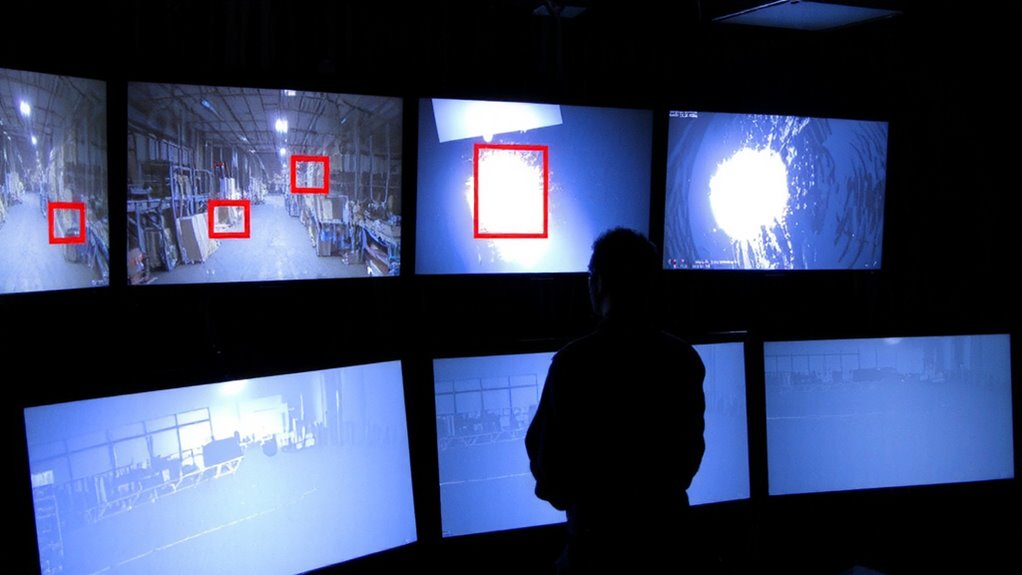
Motion detection in surveillance is a key feature that helps identify changes in a camera’s field of view, alerting you when something moves. You benefit from this because it reduces unnecessary recordings and focuses your attention on real events. The system works by analyzing pixel changes between video frames. When movement is detected, it triggers alerts or starts recording. Advanced systems use motion tracking to follow moving objects, improving accuracy and response. Video segmentation helps separate moving objects from the background, making detection more reliable. These techniques depend on algorithms that balance sensitivity and false alerts. High sensitivity catches small movements but may increase false alarms from shadows or pets. Lower settings save storage but might miss subtle activity. For home use, look for cameras offering adjustable motion zones and event-based alerts. Many models include cloud or local storage; pricing varies based on features. Plan your setup by considering lighting, camera angle, and desired coverage area. Top-performing systems often integrate best motion detectors for enhanced reliability and smarter alert filtering.
The Role of Background Subtraction in Motion Detection
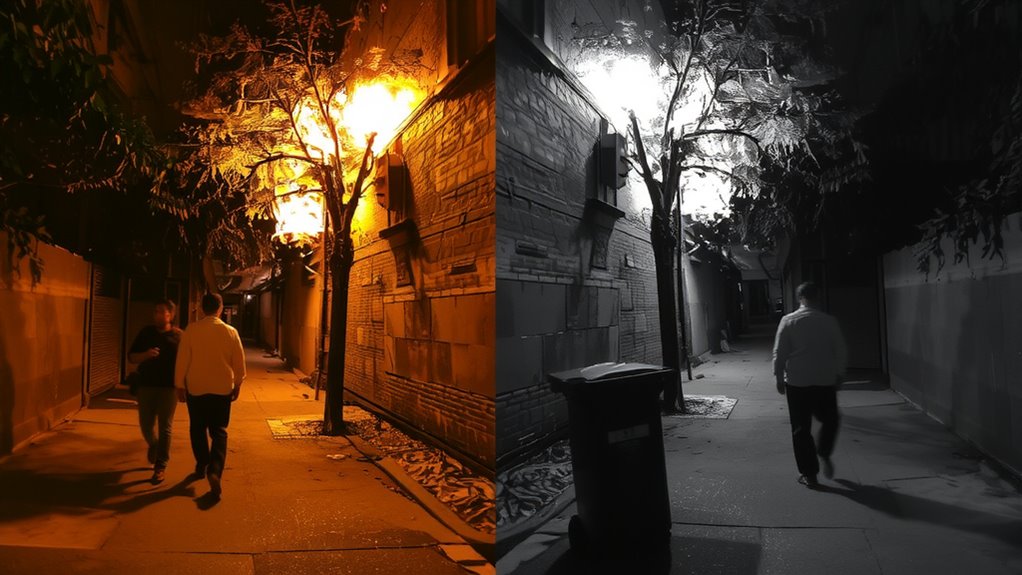
While most modern systems rely on changes in the video feed to spot activity, one of the most effective methods behind the scenes is background subtraction, which helps separate moving objects from static scenes. You’ll see this approach shine when handling consistent lighting and slow environmental changes. By maintaining a dynamic model of the background, it enables accurate foreground isolation, pulling out people or vehicles as they move. Temporal differencing, often used alongside, compares consecutive frames to flag motion, but it’s less precise on its own. Background subtraction reduces false alarms from flickering lights or shadows, making it ideal for home security. It does struggle with sudden light shifts or camouflage, though. Systems using this method typically cost more but deliver better long-term reliability. When choosing a camera, check whether it combines background subtraction with noise filtering.
How Optical Flow Detects Motion Patterns
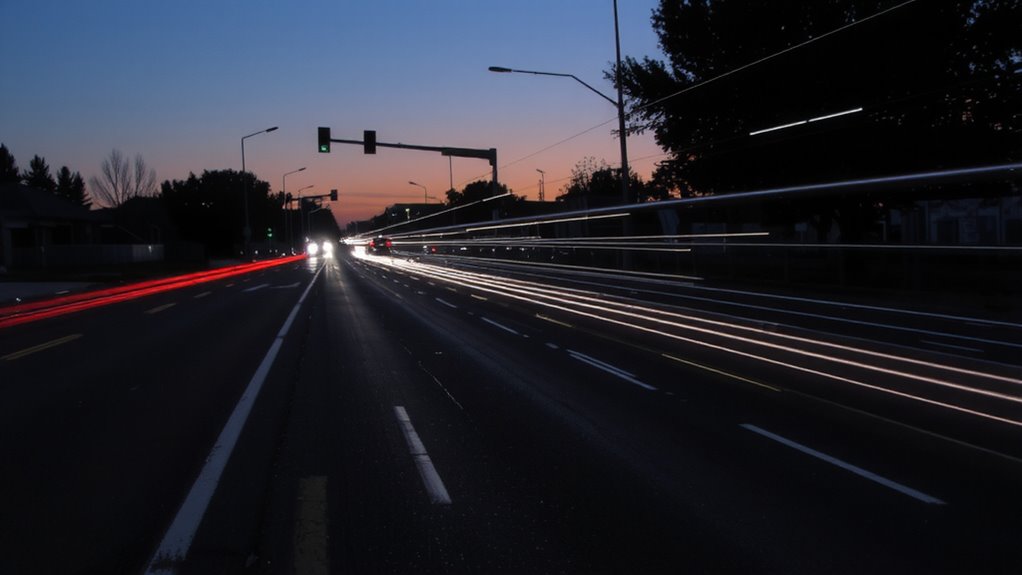
You’ve seen how background subtraction helps isolate moving objects by distinguishing them from a stable scene, especially in controlled lighting conditions. Now, optical flow takes motion detection further by analyzing pixel displacement between consecutive video frames. You’ll notice it tracks how each pixel moves, calculating motion vectors that show direction and speed across the image. This method works well when lighting changes or objects move subtly, where background subtraction might fail. Motion vectors give you detailed insight into movement patterns, helping identify not just presence but behavior. While accurate, optical flow demands more processing power, which can affect system cost and response time. It’s best suited for environments needing precise motion analysis, like monitoring driveways or entry points. Just keep in mind: higher accuracy comes with higher computational cost, so balance performance needs with hardware capabilities when choosing your setup.
How Machine Learning Improves Motion Detection Accuracy
Because traditional methods can struggle with complex environments, machine learning has stepped in to make motion detection smarter and more reliable. You benefit from adaptive learning, which lets the system improve over time by recognizing patterns in the video feed. Instead of relying on fixed thresholds, the model adjusts to lighting changes, weather, or moving trees, reducing false alerts. Anomaly recognition plays a key role-you’re alerted only when behavior deviates from the norm, like a person walking where no movement usually occurs. This means fewer false positives from pets or shadows. Machine learning models, trained on vast datasets, detect subtle motion cues humans might miss. While setup can cost more upfront, the long-term accuracy saves time and increases trust. Systems with these features often include cloud analysis and regular updates, ensuring your surveillance evolves without constant manual tuning.
Speed vs. Accuracy in Real-World Motion Detection
Machine learning has made motion detection smarter by adapting to environments and reducing false alarms, but even the most advanced models face a constant trade-off between speed and accuracy. You need fast processing to catch events in real time, yet high accuracy guarantees you don’t waste time on false triggers. Frame differencing is quick and lightweight, ideal for immediate motion alerts, but it often mistakes shadows or glare for movement. Motion clustering improves accuracy by grouping pixels into meaningful objects, though it demands more processing power and slows response. For home systems, balancing both means choosing hardware that supports real-time analysis without lag. Cameras with edge computing can handle frame differencing locally, then apply clustering only when motion is detected. This hybrid approach saves bandwidth and boosts reliability. Prioritize models offering configurable sensitivity and temporal filtering to fine-tune speed versus precision based on your environment and recording needs.
Top Motion Detection Algorithms for Low Light and Crowds
How do motion detection systems perform when visibility drops or people gather in tight spaces? In low light, traditional algorithms struggle with noise reduction, leading to false alerts. You’ll want methods like Temporal Median Filtering or Gaussian Mixture Models (GMM) that adapt to changing lighting and suppress sensor noise. GMM handles varying crowd density better by modeling multiple background states, making it effective in busy areas. However, it demands more processing power. Optical flow algorithms detect motion direction and speed, useful when traversing high crowd density, but they’re less reliable in dim conditions without infrared support. Modern systems often combine infrared imaging with deep learning models for improved performance. These hybrids offer strong noise reduction and adaptability but can increase costs. For home use, prioritize cameras with built-in IR and smart algorithms that balance sensitivity and accuracy, especially in variable lighting and moderate crowd scenarios.
How to Choose the Right Motion Detection for Your Environment
What if your security camera triggered alarms every time leaves rustled in the wind or missed a person walking past in dim light? Choosing the right motion detection means balancing sensitivity and accuracy. If your area has heavy environmental noise-like swaying trees or passing cars-opt for algorithms that filter out false triggers. For outdoor or low-light zones, thermal imaging helps distinguish humans from animals or heat distortions. While more reliable in darkness, thermal systems cost more and may need extra setup. Evaluate your environment: urban areas need motion discrimination, while rural spots benefit from wider thermal coverage. Pair your choice with adjustable sensitivity settings, so you can adapt to changing conditions. Always test detection range during installation. And remember: higher accuracy often means higher initial cost, but it saves time and reduces false alerts in the long run. Plan for both immediate needs and future adjustments.
On a final note
You’ll find background subtraction works well in stable lighting but struggles with shadows and flicker. Optical flow tracks complex movement, though it demands more processing power. Machine learning models, like YOLO or TensorFlow-based detectors, offer high accuracy, especially in crowds or low light, but cost more and need training data. For most home systems, hybrid methods balance speed and reliability. Choose based on your environment, budget, and whether you prioritize real-time alerts or fewer false alarms.