The Role of Machine Learning in Improving Video Analytics Performance Within Security Systems
You’re relying on cameras that miss threats because they can’t tell a raccoon from a burglar, but machine learning changes that by learning what normal looks like and flagging true risks. It cuts false alarms by over 70% by recognizing patterns in movement, people, and behavior. AI detects loitering, unusual approaches, or fast motion in real time, even in low light. It adapts as your environment changes, improving accuracy without extra effort from you-and works with existing systems to boost protection smarter over time. There’s more to discover about how it evolves.
Notable Insights
- Machine learning enhances video analytics by distinguishing normal behavior from potential threats in real time.
- AI reduces false alarms by learning to differentiate between humans, animals, and environmental disturbances like weather.
- Behavioral analysis enables early detection of suspicious activities, such as loitering or unusual movement patterns.
- Systems improve over time through adaptive learning, refining threat detection based on historical and real-time data.
- Integration with existing cameras allows machine learning to upgrade legacy systems without costly hardware replacements.
Why Security Cameras Miss Threats: And How AI Fixes It

Why do security cameras often fail to catch threats, even when they’re recording 24/7? Because they rely on fixed angles and human monitoring, leaving blind spots where danger can go unnoticed. Outdated hardware worsens this-older cameras lack resolution, night vision, or processing power to capture clear footage. You might think continuous recording means full coverage, but without intelligent analysis, important events get lost in hours of irrelevant video. These systems often miss subtle signs of intrusion or loitering, especially in low light or crowded areas. The footage is only useful after an incident, not before. You need proactive protection, not just passive recording. Upgrading isn’t just about better cameras-it’s about smarter ones. Investing in modern systems reduces gaps in coverage and improves detection accuracy. Consider compatibility, installation costs, and storage needs when planning your upgrade.
Detecting Threats Instantly With AI Vision
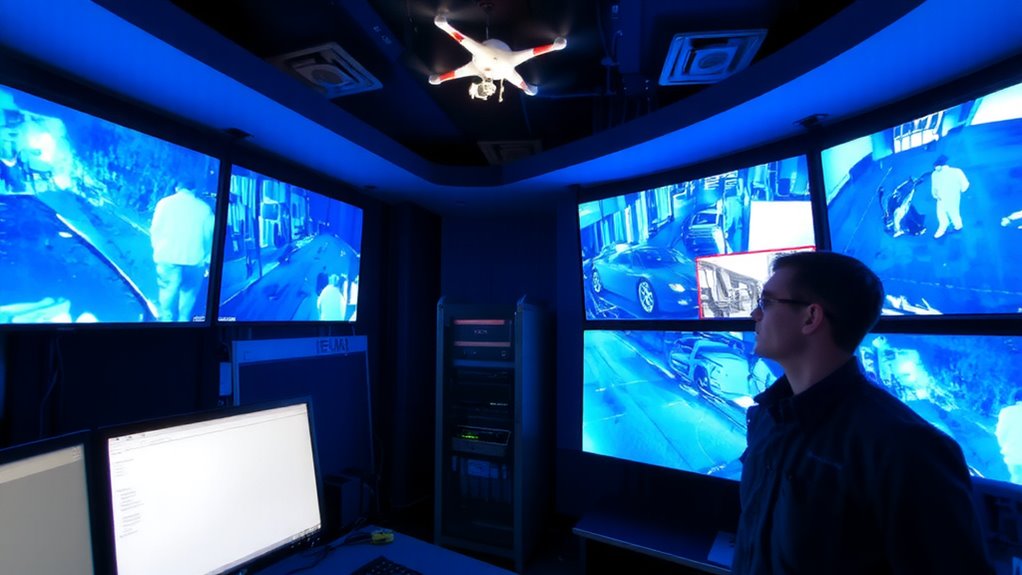
How can you guarantee threats are spotted the moment they happen, not hours later when it’s too late? With AI vision, you get real time detection that analyzes video the second it’s captured. Instead of just recording footage, your system actively watches for danger using behavioral prediction to identify suspicious actions-like someone loitering or moving quickly toward a restricted area. This isn’t guesswork; it’s data-driven pattern recognition trained on thousands of scenarios.
| Feature | Benefit |
|---|---|
| Real time detection | Alerts sent instantly when threats are identified |
| Behavioral prediction | Reduces delayed responses by anticipating risk |
You don’t need expensive upgrades-many AI cameras work with existing systems. Expect to pay more upfront, but the drop in response time makes it worthwhile. You’re not just watching; you’re preventing. Leading models in 2024 now feature best home security cameras with enhanced AI integration for seamless threat detection.
Stopping False Alarms: When Normal Movement Isn’t a Threat

AI-powered video analytics can detect potential threats the moment they occur, but knowing when activity isn’t a threat matters just as much. You don’t want alerts every time a cat crosses your yard or wind shakes the trees. Machine learning helps by analyzing patterns over time, so it learns what normal looks like for your property. It can distinguish between animal movements and human intruders, reducing false alarms markedly. The system adapts to common weather patterns, like rain or snow, that might otherwise trigger unnecessary alerts. These models use real-world data to improve accuracy, often cutting false positives by 70% or more. While setup might cost slightly more upfront, the long-term benefit is fewer disruptions and better reliability. Make sure your system updates regularly and supports environmental learning. This way, you get security that’s smart, not just sensitive. Top wireless models increasingly integrate machine learning algorithms to enhance detection accuracy and reduce nuisance alerts.
Spotting People and Objects Before Threats Escalate
Ever wonder how some security systems detect a person loitering near your back gate before anything happens? You can thank machine learning. These systems use behavior clustering to group typical actions-like walking the dog or grabbing the mail-so they recognize what’s normal for your property. When someone lingers too long or approaches a side window repeatedly, the system flags it using anomaly prediction. That means threats are spotted not after they happen, but before they escalate. Behavior clustering helps reduce false alarms, while anomaly prediction boosts response time. Many modern setups analyze movement patterns over days to sharpen accuracy. Look for systems offering real-time alerts and customizable sensitivity, though expect higher upfront costs. Some require monthly subscriptions for advanced features. Plan your budget accordingly, and prioritize models with strong data privacy policies. For homeowners, choosing the right camera involves evaluating features like night vision and best home security cameras based on reliable testing and expert reviews.
Self-Improving Security: Systems That Learn Over Time
While most security systems rely on preset rules, the newest models actually get smarter the longer they’re in use. You benefit from adaptive learning, which lets the system recognize patterns in daily activity and adjust what it considers normal. Over time, it reduces false alarms caused by pets, shadows, or weather. These systems use predictive modeling to anticipate potential risks based on historical data, like detecting loiter上司ing before a break-in occurs. You’ll see fewer missed events and faster response times as the model improves. Most platforms update automatically, requiring no extra setup from you. A downside is the need for consistent video input-limited footage slows learning. Initial costs may be higher, but long-term performance gains often justify the price. Look for systems with cloud support and regular firmware updates to guarantee ongoing improvement.
Adding ML to Your Current Security System
You can boost your existing security setup without replacing it entirely-many modern machine learning (ML) tools are designed to work alongside your current cameras and sensors. System integration is easier than ever, with plug-and-play devices that connect directly to your network. Before upgrading, perform a cost analysis to compare long-term savings from reduced false alarms and better threat detection. Here’s what to expect:
| Feature | Benefit |
|---|---|
| Real-time alerts | Immediate notifications for suspicious activity |
| Edge processing | Faster response, less bandwidth use |
| Cloud compatibility | Easy access and storage |
| API support | Smooth system integration |
ML enhances accuracy without requiring new hardware in most cases. You’ll save money and improve performance. Focus on solutions offering strong support and clear metrics. Plan around your specific needs and budget.
On a final note
You can rely on machine learning to make your security cameras smarter over time. It reduces false alarms by learning what normal activity looks like, detects real threats faster, and identifies people or objects accurately. Systems improve with use, but setup costs and privacy rules matter. Choose models with strong analytics, cloud or local storage, and regular updates. Test features before upgrading.