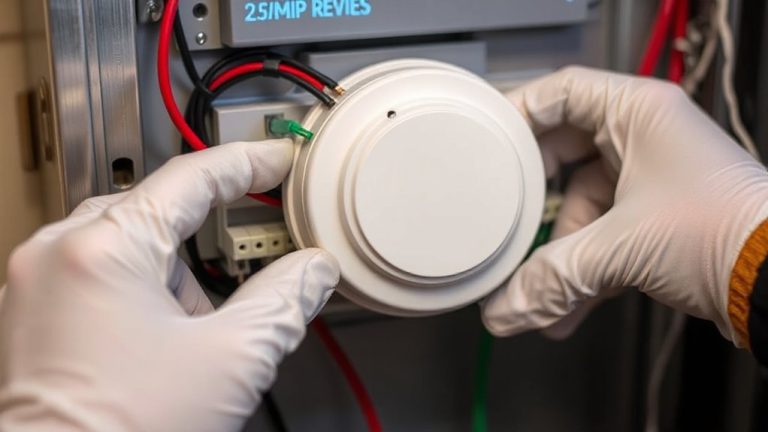
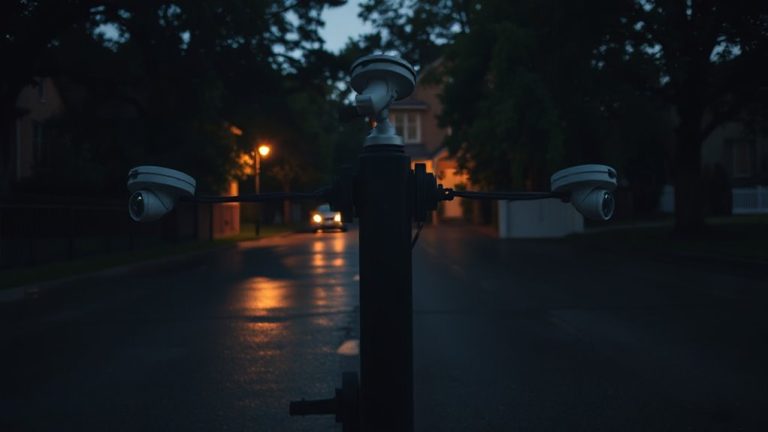
Gate Access Control Systems for Residential Properties and Driveways
You can secure your home with a residential gate access control system that offers remote operation via smartphone, real-time visitor monitoring, and multiple access options like keypads, fobs, or license plate recognition. Swinging, sliding, and bi-folding gates suit different driveway sizes, with costs typically ranging from $2,000 to $8,000 installed. Professional installation guarantees safety and reliability, while smart features like cameras and lighting boost security and curb appeal-options worth considering for long-term protection.
Notable Insights
- Residential gate access systems enhance security with remote control, video intercoms, and real-time visitor management.
- Swinging, sliding, and bi-folding gates offer varied space-saving and aesthetic options for driveway entry automation.
- Access methods include keypads, key fobs, smartphone apps, and license plate recognition to prevent unauthorized entry.
- Professional installation ensures proper setup, safety compliance, and optimal performance of automated gate systems.
- Smart gate features like surveillance, weather-resistant hardware, and battery backups boost security and reliability.
Residential Gate Access Control Explained
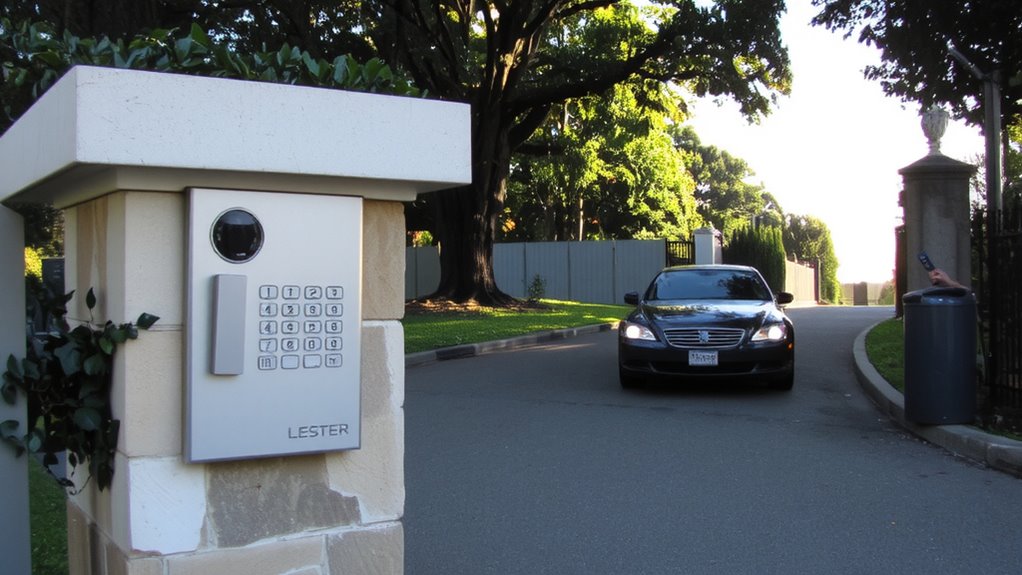
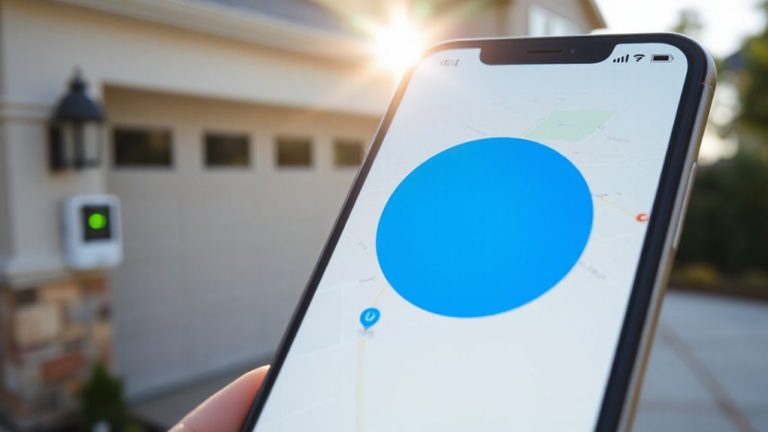
While you might think gate access control is only for commercial properties, residential systems offer measurable security benefits for homeowners too. You gain remote access to your gate through smartphone apps, letting you open or close it from anywhere-ideal when you’re away and expecting deliveries or service workers. Visitor management becomes simpler, as you can monitor, approve, or deny entry in real time using video intercoms and logs. Systems often include access codes, key fobs, and license plate recognition to reduce unauthorized entry. Installation costs range from $2,000 to $6,000 depending on features and gate type. While DIY setups save money, professional installation guarantees reliability and correct integration with existing security systems. Most homeowners report increased peace of mind and reduced porch piracy. Consider battery backups and cellular connectivity to maintain operation during outages. These systems are scalable, supporting future upgrades like smart home integration.
Top Driveway Gate Entry System Types
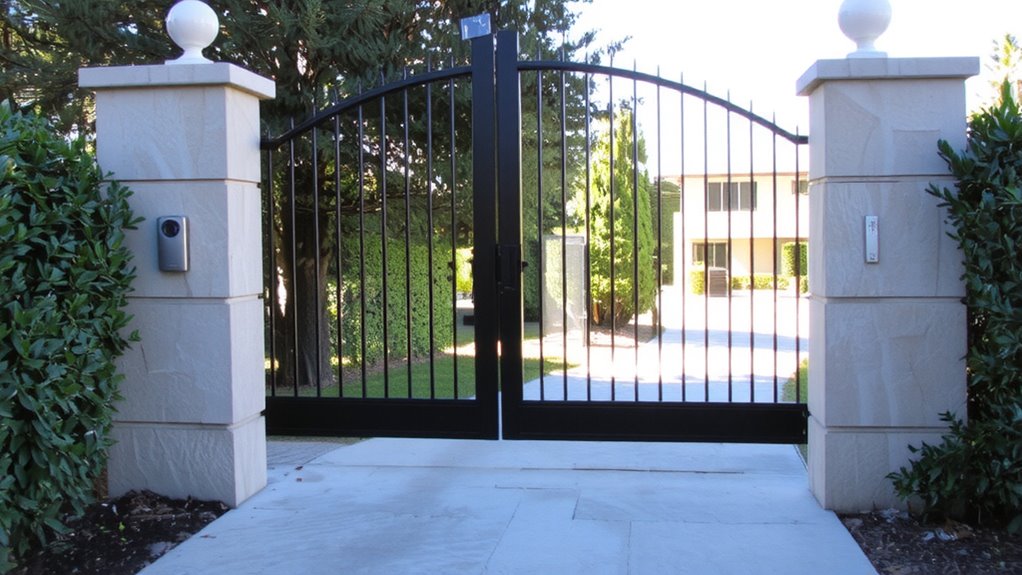
What kind of driveway gate system fits your needs? Swinging gates work well for wide entrances but need space to open. Sliding gates save space and suit narrower driveways, gliding sideways on a track. Bi-folding gates offer a modern option, opening in sections like an accordion. Your choice impacts both security and curb appeal. Aesthetic materials like wrought iron, aluminum, or wood change how your gate looks and lasts-iron’s strong but may rust, while aluminum resists weather and needs less upkeep. Gate automation is essential for convenience and control. Hydraulic or electromechanical operators run the system, with DC types using less power. Consider climate and usage frequency when picking a motor. Automated systems typically cost $2,000 to $5,000 installed, depending on size, material, and automation complexity. Choose based on your driveway layout, security needs, and long-term maintenance willingness.
Must-Have Features in Home Access Control
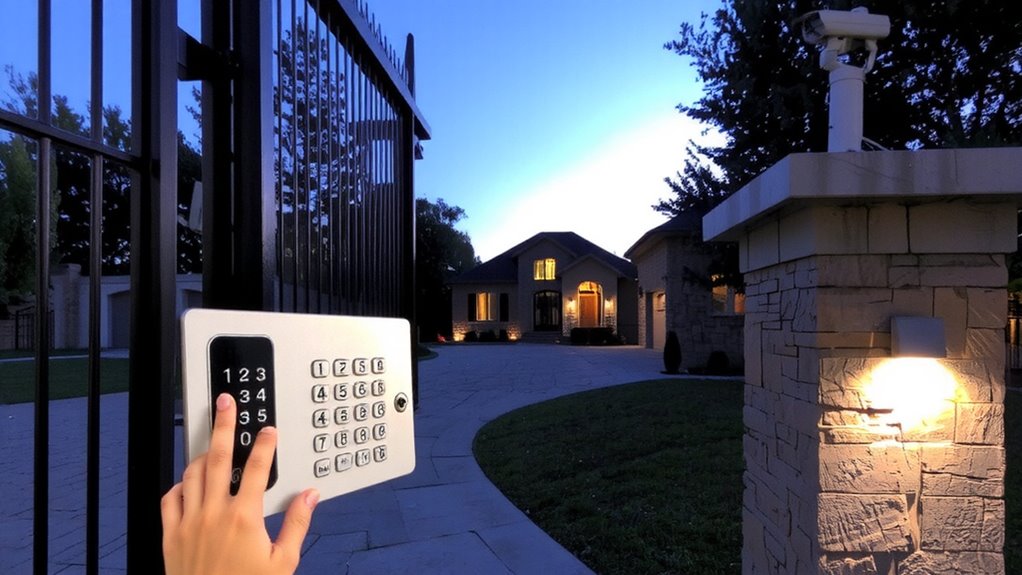
A well-designed home access control system includes several key features that boost security, convenience, and property value. You’ll want reliable user authentication, like keypads, RFID tags, or smartphone apps, to guarantee only authorized people enter. Biometric scanners add extra security, though they cost more. Remote monitoring lets you view gate activity in real time through mobile apps, so you can see who’s at your driveway, even when you’re not home. Systems with activity logs help track entries and boost accountability. Choose models compatible with your internet and local network for smooth operation. Look for weather-resistant hardware and battery backups to maintain function during outages. Avoid cheap systems with poor encryption, since they can be hacked. Prioritize user authentication strength and dependable remote monitoring to get the most protection and control from your investment.
DIY vs Professional Gate Installation
Choosing the right gate access control system sets the foundation for home security, but how it’s installed affects performance and reliability just as much. If you’re handy, a DIY installation might seem appealing, especially with lower upfront costs. However, the cost comparison often shifts when factoring in potential errors, warranty issues, or improper wiring that lead to long-term fixes. Professional installation typically guarantees correct setup, compliance with local codes, and access to technical support. The installation timeline for professionals is usually faster-often completed in one or two days-while DIY efforts can stretch over a week, depending on experience and equipment complexity. Pros also calibrate automation systems properly, reducing wear and improving safety. For most homeowners, the higher initial investment in professional help pays off through fewer malfunctions and better system longevity.
Smart Gates That Boost Security and Curb Appeal
While traditional gates offer basic security, smart gates take protection and aesthetics further by combining automation, surveillance, and design into one integrated system. You can control access remotely via smartphone, receive real-time alerts, and monitor activity through built-in cameras. These systems often include aesthetic lighting that enhances visibility and style, illuminating pathways and architectural details at night. With proper landscape integration, the gate blends seamlessly into your property’s design, using natural features like trees or hedges to complement its structure. Materials such as wrought iron or wood can be customized to match your home’s exterior. Smart gates typically cost $3,000–$8,000 installed, depending on features. They offer improved security over manual models, though power outages and technical issues require backup planning. Choose models with battery backups and low maintenance requirements for long-term reliability.
On a final note
You should choose a gate access system that balances security, convenience, and property layout. Wired systems offer reliability, while wireless models reduce installation costs. Key features like remote access, smartphone integration, and motion sensors improve control and monitoring. Automated gates with sturdy materials boost both safety and value. Professional installation guarantees proper setup, especially for complex systems, though DIY works for simpler kits. Plan for ongoing maintenance and power needs.